Impakter
  • Environment
    • Biodiversity
    • Climate Change
    • Circular Economy
    • Energy
  • FINANCE
    • ESG News
    • Sustainable Finance
    • Business
  • TECH
    • Start-up
    • AI & Machine Learning
    • Green Tech
  • Industry News
    • Entertainment
    • Food and Agriculture
    • Health
    • Politics & Foreign Affairs
    • Philanthropy
    • Science
    • Sport
  • Editorial Series
    • SDGs Series
    • Shape Your Future
    • Sustainable Cities
      • Copenhagen
      • San Francisco
      • Seattle
      • Sydney
  • About us
    • Company
    • Team
    • Partners
    • Write for Impakter
    • Contact Us
    • Privacy Policy
No Result
View All Result
Impakter logo
No Result
View All Result
small island nations

Small Island Nations Turn to UN Court for Protection Against Climate Change

In the first ocean protection case, a group of small island nations, including the Bahamas, Tuvalu, Vanuatu, Antigua and Barbuda, are seeking legal rulings to help protect them from the damage caused by climate change

David BassbyDavid Bass
September 12, 2023
in Climate Change
0

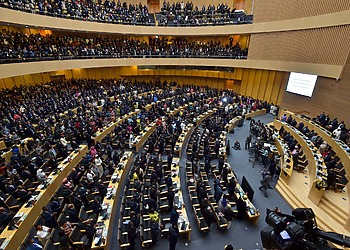
The case is officially being brought by the Commission of Small Island States on Climate Change and International Law (Cosis) and will take place over two days, starting on September 11,  at the International Tribunal for the Law of the Sea (Itlos) in Hamburg, Germany.

Representing Cosis, Prime Minister Gaston Browne of Antigua and Barbuda and Prime Minister Kausea Natano of Tuvalu provided the evidence to the court, with Natano stating: 

“We come here seeking urgent help, in the strong belief that international law is an essential mechanism for correcting the manifest injustice that our people are suffering as a result of climate change.”

The subject being decided will be whether carbon emissions absorbed by the ocean should be considered marine pollution and crucially — what obligations nations have to protect the marine environment.

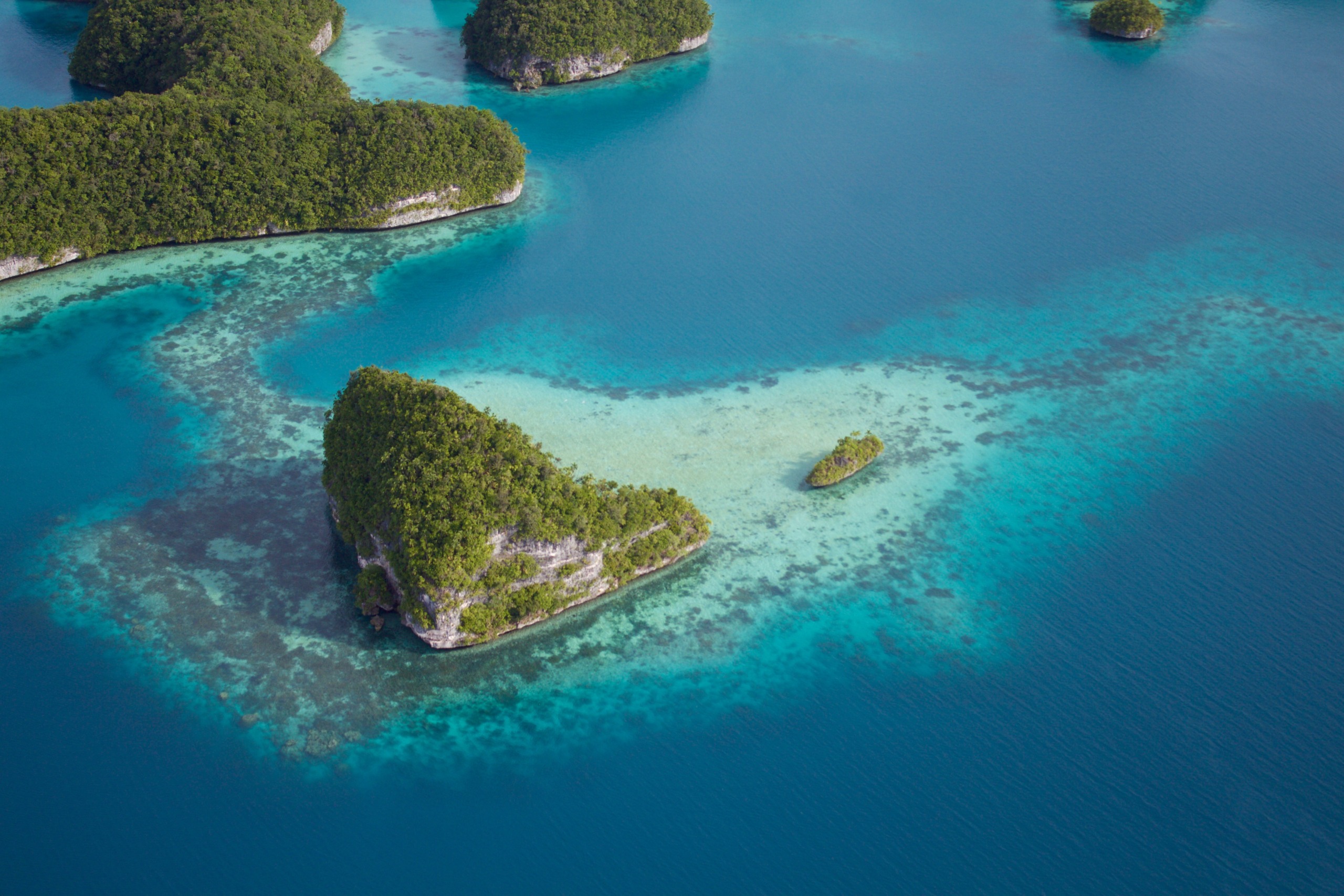
Small island nations are particularly at risk from the effects of climate change, especially rising sea levels, and could even face being submerged if measures are not taken. 

“Today is indeed a historic day… As we seek to get answers to a couple of questions to determine the obligations of states parties,” Prime Minister of Antigua Gaston Browne said following the hearing.

What is the Law of the Sea?

The Law of the Sea is a body of international law that regulates the rights and duties of states in maritime environments and aims to maintain order, productivity and peaceful regulations on the sea. Adopted by the United Nations in 1982, it is considered to be one of the most important international agreements on ocean law and governance. 

It sets out a legal framework for the use and management of the world’s oceans and seas, including their resources, environment and navigation. 

The court will hear the cases set out by the small island nations, and a ruling is hoped that will set out the obligations of polluting nations towards the health of the world’s oceans. 

Why is protecting the oceans so important?

The small island nations making their case, as well as other low-lying islands throughout the world, are at severe risk of becoming submerged if climate change is not brought under control. In a 2019 report by the Intergovernmental Panel on Climate Change (IPCC), this argument is supported by warnings that low-lying islands and coasts face disproportionately higher risks from oceans and cryosphere changes. 

There are also several other reasons we need guidelines on keeping our oceans healthy. The health of our oceans directly affects the health of the planet and its inhabitants, providing food, energy, water and industries such as fishing.


Related articles: Island Nations Turn to World’s Highest Court for Climate Justice | What the International Court of Justice’s Upcoming Advisory Opinion Means for Climate Action | Tiny Pacific Island-Country to Become World’s First Digital Nation

The oceans also play a crucial role in regulating the Earth’s climate by absorbing carbon dioxide and heat from the atmosphere. The ocean is a huge carbon sink, absorbing 25% of carbon dioxide emissions and capturing 90% of the heat of the world. 

“Sea levels are rising rapidly, threatening to sink our lands below the ocean […] Extreme weather events, which grow in number and intensity with each passing year, are killing our people and destroying our infrastructure. Entire marine and coastal ecosystems are dying in waters that are becoming warmer and more acidic.”

— Kausea Natano, the Prime Minister of Tuvalu.

What next?

Under the current UN convention on the law of the sea, many countries are required to put in place measures to prevent and control pollution. 

The case brought by the island nations aims to extend protection to include damage from climate change brought by carbon emissions. If successful, a tribunal will issue an advisory option on legal matters that, while not legally binding, would help guide nations in crafting climate protection laws.

As WWF’s Oceans Practice Lead Pepe Clarke explains: “These hearings represent a significant step toward defining the climate-related obligations of states under the UN Convention on the Law of the Sea.”


Editor’s Note: The opinions expressed here by the authors are their own, not those of Impakter.com — Featured Photo Credit: Pablo_marx.
Tags: Antigua and BarbudaBahamasClimate ChangeCommission of Small Island States on Climate Change and International LawInternational Tribunal for the Law of the SeaLaw of the SeaOcean ProtectionSea Level Risesmall island nationsTuvaluUNUN CourtVanuatu
Previous Post

How Sustainable Is Amazon?

Next Post

Life Beyond Earth? NASA Finds Potential Signs

Related Posts

Who Owns the Ocean’s Genetic Wealth?
Politics & Foreign Affairs

Who Owns the Ocean’s Genetic Wealth?

As the High Seas Treaty takes effect, developing states risk being sidelined in a new era of ocean geopolitics. When...

byTommy Hendra Purwaka - Professor in the Faculty of Law at Catholic University of Atmajaya Jakarta
February 25, 2026
Protests arise against Wall street’s oil deals, Big tech accounts for half of global clean energy, EU proposes stricter standards for corporate vehicles, DHL introduces new portfolio offerings for reducing scope 3 impacts
Energy

Activists Protest Against Wall Street’s Oil Deals

Today’s ESG Updates Protests' Strategies Change Amidst Banks' Inaction: Wall Street fossil fuel deals push climate groups to shift tactics,...

byFedor Sukhoi
February 24, 2026
Trump Admin Weakens Coal Plant Mercury Regulations
Business

Trump Admin Weakens Coal Plant Mercury Regulations

Today’s ESG Updates: Coal Plants Get Reprieve on Mercury Limits: Trump's EPA is rolling back mercury emission limits to cut...

byEge Can Alparslan
February 20, 2026
How Climate Change Is Reshaping Arctic Geopolitics
Climate Change

How Climate Change Is Reshaping Arctic Geopolitics

Once a remote and largely inaccessible region, the Arctic has become the focus of far-reaching international developments. In recent years, competition among...

byPier Paolo Raimondi - Senior Researcher at the Energy, Climate and Resources (ECR) Program of the Istituto Affari Internazionali (IAI)
February 20, 2026
How an Intersectional Approach Can Help Us Address Vulnerability to Climate Change
Climate Change

How an Intersectional Approach Can Help Us Address Vulnerability to Climate Change

Different forms of discrimination and marginalization — such as racism, ableism, and discrimination on the basis of gender identity —...

byInternational Institute for Sustainable Development (IISD)
February 20, 2026
Underwater Wall to Protect the ‘Doomsday Glacier’: Necessary Intervention or Costly Distraction?
Climate Change

Underwater Wall to Protect the ‘Doomsday Glacier’: Necessary Intervention or Costly Distraction?

Thwaites Glacier in Antarctica earned its dramatic nickname, the “Doomsday Glacier,” because its collapse could trigger a catastrophic rise in...

byBenjamin Clabault
February 19, 2026
biodiversity loss
Biodiversity

The Economics of Biodiversity Loss

In the 1990s, India’s vulture population collapsed due to the unintended knock-on effect of a veterinary drug for cattle, with...

byStefano Giglio - Professor at Yale Universityand2 others
February 19, 2026
Trump’s Board of Peace Can Provide a New Opportunity for the United Nations
Politics & Foreign Affairs

Trump’s Board of Peace Can Provide a New Opportunity for the United Nations

While President Trump has frequently criticized the United Nations (UN), the planned February 19 initial meeting of his Board of...

byA. Edward Elmendorf - Former U.S. Mission to the UN Diplomat, UN Secretariat Staff Member, and President and CEO of UN Association of USA
February 18, 2026
Next Post
NASA life

Life Beyond Earth? NASA Finds Potential Signs

Recent News

A red heart composed of binary code

AI Health Advice: Useful Tool or Harmful Gimmick?

February 25, 2026
Eyebrow design: high-angle female beautician doing eyebrow treatment woman in Dubai

The Definitive Guide to the Best Brow Studios in Dubai: 2026 Edition

February 25, 2026
Who Owns the Ocean’s Genetic Wealth?

Who Owns the Ocean’s Genetic Wealth?

February 25, 2026
  • ESG News
  • Sustainable Finance
  • Business

© 2025 Impakter.com owned by Klimado GmbH

No Result
View All Result
  • Environment
    • Biodiversity
    • Climate Change
    • Circular Economy
    • Energy
  • FINANCE
    • ESG News
    • Sustainable Finance
    • Business
  • TECH
    • Start-up
    • AI & Machine Learning
    • Green Tech
  • Industry News
    • Entertainment
    • Food and Agriculture
    • Health
    • Politics & Foreign Affairs
    • Philanthropy
    • Science
    • Sport
  • Editorial Series
    • SDGs Series
    • Shape Your Future
    • Sustainable Cities
      • Copenhagen
      • San Francisco
      • Seattle
      • Sydney
  • About us
    • Company
    • Team
    • Partners
    • Write for Impakter
    • Contact Us
    • Privacy Policy

© 2025 Impakter.com owned by Klimado GmbH