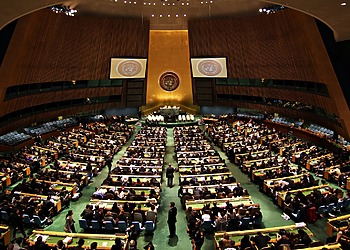
On 8th October 2018, Intergovernmental Panel on Climate Change (IPCC) published a ‘special’ report on the state of global warming. The opening line of the press release reads, “Limiting global warming to 1.5 deg C would require rapid, far-reaching and unprecedented changes in all aspects of society.” This created a sense of fear and urgency. The damaging impact of climate change is now in such visible future, that sustainability is no more about protecting future generations, but it is about saving our own lives.
Every problem brings with it an opportunity. An opportunity to solve the problem. After the White House, the most powerful government seat in the world concluded climate change to be a hoax, Silicon Valley the most powerful seat of innovation and disruption has decided to take up this opportunity. Silicon Valley is challenging the problem in a way they know best: through technology.
In the context of IPCC, the team at Y Combinator, the most successful Silicon Valley accelerator concluded that Plan A of shifting to renewable energy has failed. YC could see it coming as early as January 2017 when one of its blogs states, “We’re optimistic we will beat climate change. However, at the same time, we need to prepare for things to get worse.” Things have indeed gotten worse in these 21 months, and YC is now acting on Plan B. Plan B supports ‘frontier technologies’ that can suck carbon from our atmosphere to save the world and humanity. They will invest in and pursue a new wave of technological solutions that maybe science fiction today, but will probably be our best bet.
The impact and influence Silicon Valley has over the technological trends in the world will surely be noticed and fuel many others to follow a similar path. This path, in my opinion, is cyclical. A way where we first create a problem and the solve it, in turn, creating new problems that again are to be solved. We think this cyclical path is taking us forward as a society and humanity but at some point, we should probably begin to question whether this is indeed true.
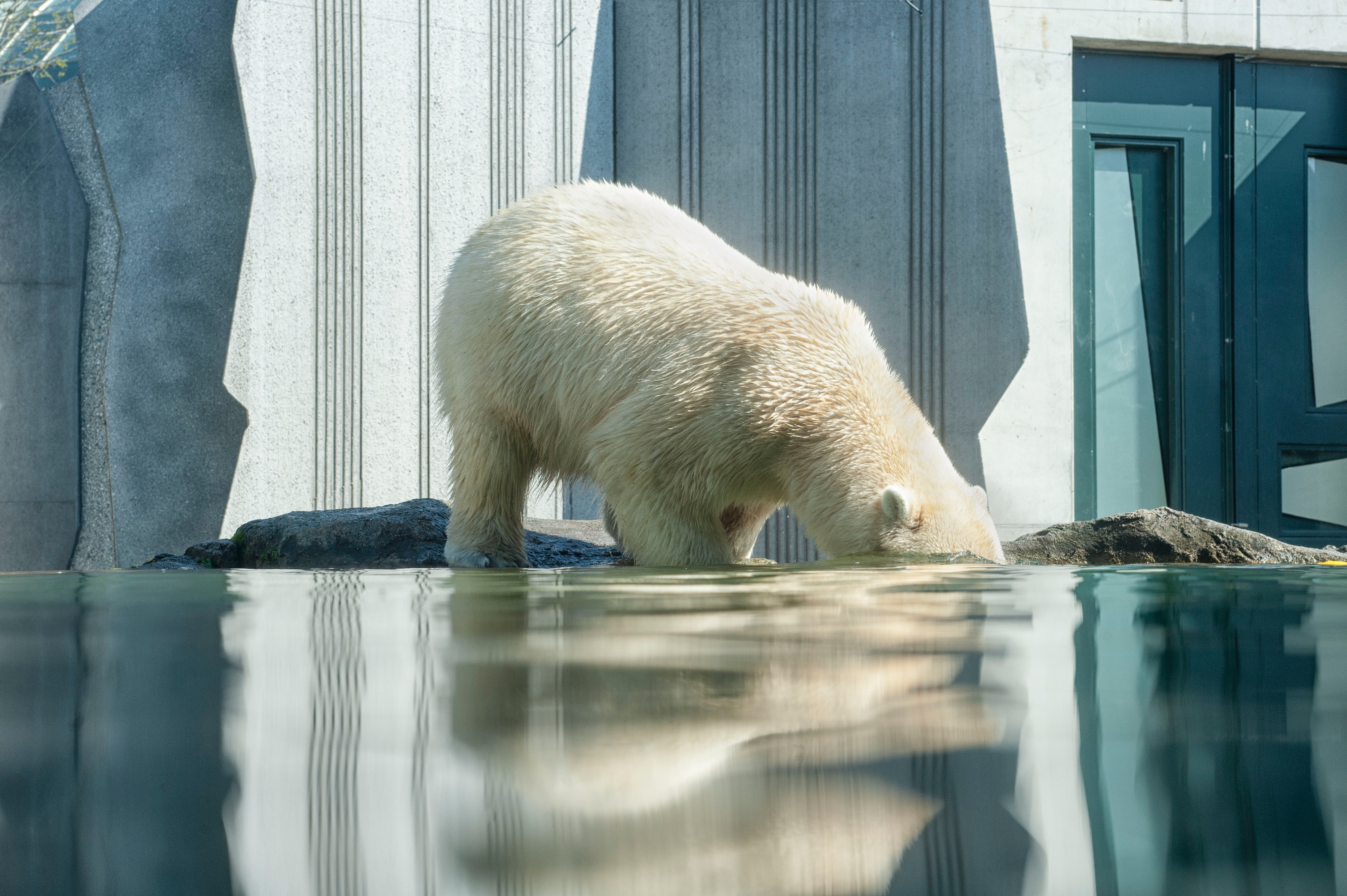
In the photo: lack of sea ice is a concern of global warming. Photo credit: Jacqueline Godany
Here’s an example of a similar cyclical problem and solution approach. Obesity is caused by excessive food intake, lack of physical activity or genetic susceptibility. It is mostly preventable through a combination of social changes and personal choices which means diet and behavioural changes. Obesity is a man-made 20th-century phenomenon created by the invention of fast & junk food and extremely misleading and influential advertising. We did not realise the scale of the problem until it became an epidemic of sorts. So when we got down to solving it, we looked at new business opportunities rather than just asking, ‘why’ does the problem exist? We created paraphernalia of new multi-billion dollar businesses masking the real issue behind obesity. We incubated and supported new pharmaceutical companies, synthetic health foods, new surgery procedures, sports and fitness brands, all as a solution to obesity. The result, obesity continues to rise alongside all the answers that claim to fight it creating trillions of dollars in wealth. This is maybe growing us economically in short-term with severe long-term ramifications on our society. The parallel movement which advocated for eating healthy, eating less, cooking at home or focused on simple lifestyle changes received no incubation, no acceleration and could never scale.
I invite you to close your eyes, relax and take a break from reading this article. Think for a moment about the problem of climate change, global warming and carbon emissions. Now apply the classic and straightforward technique developed by Sakichi Toyoda of five why’s. According to Toyoda, by repeating ‘why’ five times, the nature of the problem, as well as its solutions, become more evident. Let’s try it together:
- Why does climate change exist?
- Because we are releasing too much carbon
- Why are we releasing too much carbon?
- Because we are consuming more and more.
- Why are we consuming more?
- Because not only we like to consume more, we also waste more?
- Why are we consuming more and at the same time wasting more?
- Because we see everyone else doing it, so we don’t question it.
- Why don’t we question our consumption?
- Because we are made to believe it is hard to consume responsibly. There will always be an externality that we will need to solve later.
You can do this ‘five whys’ exercise your way, and you can come up with completely different ‘why’ in the end. However, I can bet, the solution to that last ‘why’ will never be ‘technological innovation to clean up carbon’.

In the picture: technology could be used to help solve global warming. Photo credit Markus Spiske
There is an assumption, which arises mainly from Silicon Valley, that technology has and will change the world for better. This profoundly ingrained value system masks the real problem while we continue our pursuit looking for disruptive technology. The guys at YC recognise that there could be an alternative path, but they believe that the current path is the only way a society could move forward in short-term, “We can’t seem to get around the idea that emitting carbon provides great individual benefit today even though it comes at a great cost to us in the future.”
The answers are in front of us, but we are too afraid to take the plunge. Even though Silicon Valley is built on the idea of ‘being fearless and embracing failure’, the alternative path that we could emit less carbon and still build a better society is too scary and risky for even the Silicon Valley. Silicon Valley loves reaching out for ‘moonshots’ which are extreme bold ideas considered as difficult as going to the moon. Why don’t we believe the alternative path of teaching ourselves the right values, reducing our consumption and carbon footprint over the next few decades as an equally essential and forward moving moonshot? Maybe we need to go back and redesign our cars, aircraft, plastic factories, cities, homes and just about everything. Maybe we invest in giving a voice and support to all those individuals, small communities of people or neighbourhood businesses which are trying to do the right thing. Boldness may not be in the ideas to be incubated but in the incubator itself. An incubator to not build another business but to solve a problem. Solutions that will empower each of us to take control of our lives, our planet and that would give us the strength to the right thing. Supporting these tiny shooting stars may not be spectacular but would still be worth it. We are talking about saving humankind, what could be more spectacular than that.