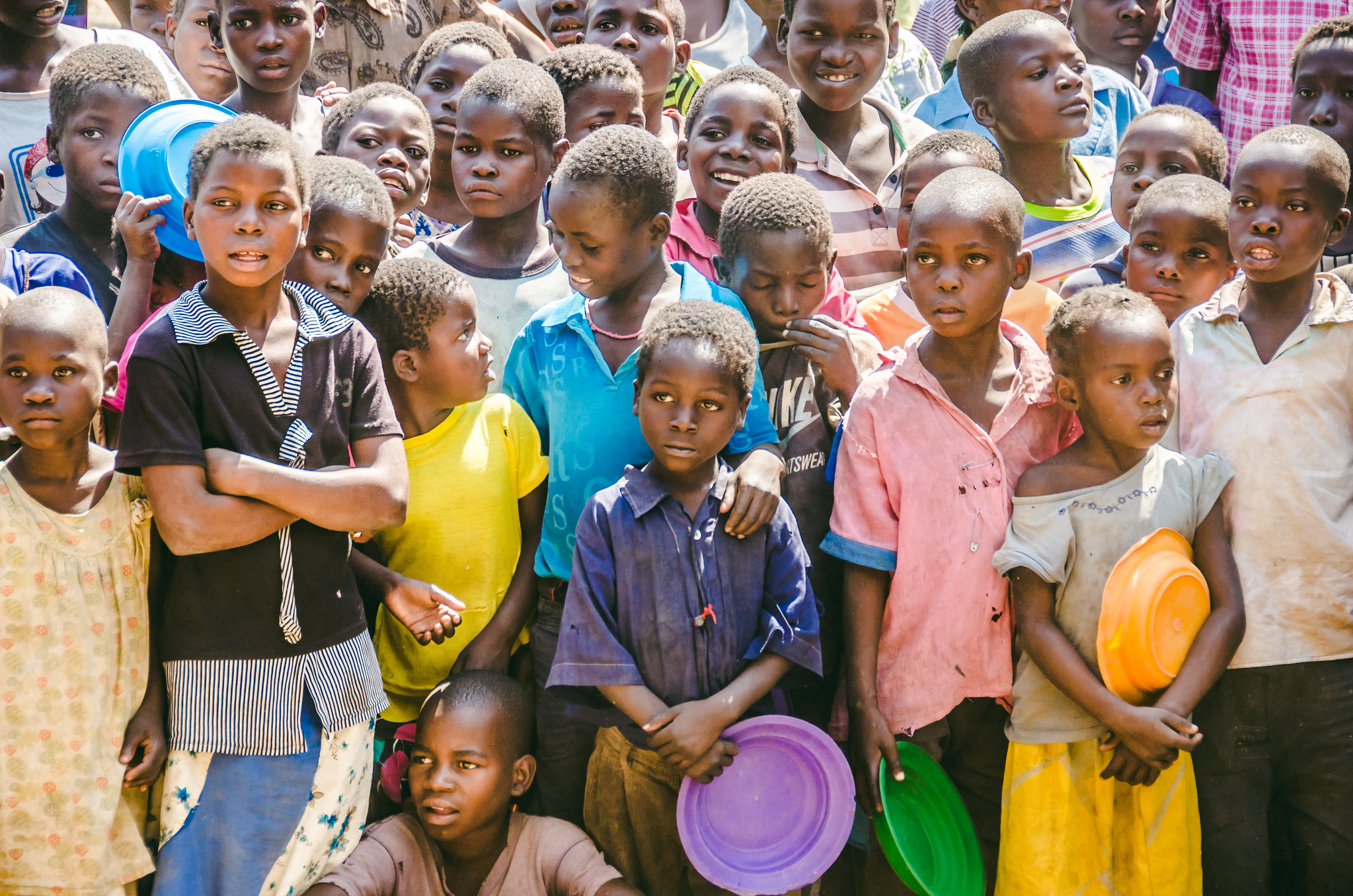
Food scarcity is a deep-rooted, global issue that has been exacerbated by the climate crisis and Covid-19 pandemic. After gradually declining for a decade, world hunger is now on the rise. It currently affects around 828 million people, which equates to approximately one in ten.
The Committee on World Food Security (CFS) is the foremost intergovernmental and international evidence-based platform related to food security and nutrition (FSN). They are consequently one of the key bodies working to analyse the underlying issues that are allowing the issue of food scarcity to persist.
CFS published a note in July 2022 detailing seven key themes tied to FSN that were selected by the platform’s High Level Panel of Experts on Food Security and Nutrition (HLPE-FSN).
The note aims to define the agenda of the CFS in the coming years and provide the basis for the CFS plenary scheduled to take place Oct 10-13.
The following are overviews of the seven topics CFS believe to be at the forefront of the critical, enduring, and emerging issues currently facing food systems:
1: Building resilient and equitable supply chains for food security and nutrition
The first issue CFS highlight is the structural vulnerability of global food supply chains to disruptions such as pandemics, extreme weather events, and wars, making food scarcity inevitable.
As they explain in the note, supply chains are dominated by a small number of large transnational firms reliant on well-functioning transportation networks, vast quantities of land, millions of workers, and massive amounts of water and fossil fuel energy.
Due the length and complexities of these transnational chains, they can easily become strained when one of the factors involved is impacted negatively by uncontrollable circumstances like pandemics and wars.
Inequalities and unsustainable practices are also deeply entrenched in the current food distribution system, as it is the actors with the least power – women, youth, indigenous peoples, and refugees – that shoulder risks disproportionate to the rewards they are granted.
The CFS, therefore, stresses the importance of “making these supply chains more inclusive and equitable” as well as promoting “more coherent policies for supply chain resilience” and “strengthening infrastructure to support supply chains at multiple scales, including the local and regional level.”
"CFS is the UN System's unique platform around #FoodSecurity & #Nutrition."
Ahead of #CFS50, get to know more about CFS in this #CFSConversations interview with CFS Secretary @ChrisHegadorn ➡️ https://t.co/xDqYRXkOaj pic.twitter.com/Ca4SEj2g9z
— CFS (@UN_CFS) September 23, 2022
2: Strengthening urban and peri-urban food systems in the context of urbanization and rural transformation
Almost 60% of the global population currently reside in urban centres because of the role these spaces play in employment and growth, producing over 80% of the global GDP.
However, urban zones are now also experiencing increased rates of extreme weather events, poverty, inequality, and food scarcity. These issues are particularly prominent in Africa, where the 15 fastest growing cities in the world are all located.
CFS asserts that “the informal food sector is critical to the food security of poor urban households in most rapidly growing towns and cities in the Global South.”
This “informal” sector includes local farmers as well as street and market food vendors. However, since these actors have very little support in terms of scaling their business or ensuring the quality of their goods, these producers and vendors are left incapable of properly addressing the food scarcity in the towns and regions they operate within.
In answer to this issue, CFS suggest a more in-depth analysis of food systems in the context of urbanisation and rural transformation. They also emphasise the need to protect farmland and land tenure against competing interests and invest in rural infrastructure to help to sustain and grow the “informal” food sector in urban zones.
3: Conflicts and the fragility of food systems
In 2021, 70% of people experiencing acute hunger were living in countries affected by conflict. This figure is particularly high because of the interfaces occurring in many countries between conflict and other issues such as the climate emergency and infectious disease.
Conflict-driven food scarcity is particularly problematic given its ability to spread to neighbouring areas through displacement and migration. It is also very difficult to assuage because of how challenging it can be for humanitarian responses to reach these populations in conflict-affected areas.
CFS stress that “although long-term development assistance and investment are key to breaking the vicious problems of hunger and conflict, without peace-building, the impacts of such efforts are limited.”
However, to address the needs of those affected by conflict in the more immediate term, the note highlights a number of strategies recommended by the HLPE-FSN in 2020:
- Provide timely, adequate nutritious emergency food relief.
- Enable access to clean water and sanitation to facilitate food production, preparation, and utilisation.
- Build functioning food systems in post conflict situations.
The Carbon Footprint of the Food Supply Chain 🍔https://t.co/9mgZ47DP7U pic.twitter.com/sL4ocNapRZ
— Visual Capitalist (@VisualCap) September 25, 2022
4: Revitalising climate policies for food security and nutrition
The effects of climate change – warming average temperatures, sea level rise, ocean acidification, and extreme weather events – all contribute to food scarcity and malnutrition, particularly in developing countries.
Food systems are “deeply impacted by climate change at all points along agrifood supply chains.” On the demand side, for example, in times of disasters consumers are turning towards ultra-processed foods with long shelf lives. In terms of supply, many small-scale producers are frequently being left unable to work and / or access the market due to severe weather events.
Related Articles: World Facing Unprecedented Hunger Crisis: “Famine Around the Corner” in Horn of Africa | Global Food Crisis Becomes Strategic Pivot in Russo-Ukrainian War
However, food systems are also an integral part of the problem, producing between 21 and 37% of the globe’s greenhouse gas (GHG) emissions. Intensive, single-crop land use and animal agriculture are named by CFS as two of the largest culprits.
To begin to address this issue, the note calls for a re-evaluation of the existing food policies with recent global climate change commitments in mind. This should be carried out with the aim of prioritising the rights and livelihoods of groups most vulnerable to FSN.
5: Recognising the role and rights of food system workers
Despite their fundamental roles in food systems, the workers, particularly children, women, and undocumented migrants, “have long been underpaid and undervalued, facing occupational hazards, poverty, and food insecurity.”
These workers commonly lack protection from labour legislation and are not unionized. Those in restaurants and fast-food chains are also often employed under informal, temporary arrangements and are subjected to long working hours in hazardous conditions.
The COVID-19 pandemic has proved detrimental to the lives of many workers across the food system as they had little access to healthcare, were excluded from many economic stimulus programmes, and were made particularly vulnerable to the virus by the cramped spaces they work within.
According to CFS, vast improvements could be made for workers in the food system by enhancing the role and capacity of unions, linking the right to food to the right to work, extending social protection systems to the informal sector, and working to eliminate the root causes of child labour.
6: Building a meaningful interface for diverse knowledge systems, technologies, and practices for food security and nutrition
Food systems rely on a range of knowledge systems and technologies, from modern approaches to more traditional and indigenous practices.
These different systems are essential since, as stated in the note, “diverse knowledge systems help to democratize knowledge production.” However, to make food systems more resilient and improve FSN globally, “it is important to bridge the gap between multiple forms of knowledge in equitable and integrated ways.”
CFS suggests that the first step in addressing this issue through further study into many areas including:
- How to establish more meaningful engagement between indigenous and mainstream scientific knowledge systems.
- What system change is required to enable equitable, easy access to knowledge, especially for smallholder farmers, women, and indigenous and local communities.
- How to make local / traditional knowledge and agricultural heritage equally authoritative, and protect against appropriation.
7: Emerging and re-emerging infectious diseases and other biological hazard events challenging food security and nutrition
Zoonotic epidemics – of which COVID-19 is the sixth since 1980 – are becoming increasingly frequent and severe as people encroach on wildlife habitats and livestock and fish production intensifies to meet global demand.
This unprecedented rate of infectious disease emergence and the need to sustainably feed the growing world populace represent “two of the most formidable ecological and public health challenges of the twenty-first century.”
A concern closely linked to FSN is the rise of anti-microbial resistance (AMR).
AMR is fuelled by the misuse of antibiotics in human medicines and agricultural production. This issue, coupled with the increased use of pesticides, poses a great threat to human nutrition and health.
“These complex dynamics need to be investigated,” CFS states, specifically referring to the multiple entry points for disease created by the way that food is produced, transported, processed, sold, and consumed today.
🗓️ TWO WEEKS TO GO UNTIL #CFS50
From 10 to 13 October 2022, the Committee on World Food Security will hold its 50th plenary session on a wide array of issues, including the global #FoodCrisis, #Youth, responsible #Investments & more
Join us ➡️ https://t.co/d6dJClLb6g pic.twitter.com/JbsZrduRrM
— CFS (@UN_CFS) September 26, 2022
These seven concerns will be further explored in CFS’s annual plenary to be held Oct 10-13 in Rome, though it will also be webcast, as they continue to work towards the aim of ensuring food security and nutrition for all.
One can only hope that the world will move as fast as possible from the studies the CFS is calling for to examine the issues. Such studies are certainly needed to determine the best way forward. But there is also a need to get some action done as soon as possible. And, what is encouraging, is that there are now many areas identified where this is possible, making the so-called “international right to food” no longer an unattainable ideal but an actual fact, where everyone is finally food secure.
Editor’s Note: The opinions expressed here by Impakter.com columnists are their own, not those of Impakter.com.— Featured Photo: Children in Malawi. Photo Credits: Flickr.