Editor’s Note: This is the third piece in a series in collaboration with the SDSN-Y exploring the Sustainable Development Goals. See the introduction to the series here and SDG-12 here.
The newly adopted Sustainable Development Goals spelled out a number of hard truths. Prominent among them is that our way of caring for and working the land has been inadequate for quite some time. Land-use change and land degradation, unsustainable use of resources, pollution, invasive alien species, and climate change are threatening the food security and livelihoods of the world’s poorest people, affecting biodiversity and stressing ecosystems, often beyond their capacity.
Sustainable Development Goal (SDG) 15, Protect, restore and promote sustainable use of terrestrial ecosystems, sustainably manage forests, combat desertification, and halt and reverse land degradation and halt biodiversity loss, is among the most comprehensive and focused goals of the new 2030 Agenda, a welcome shift from the Millennium Development Goals (MDGs) where a single goal, MDG7, and just four targets tackled environmental sustainability in its entirety.
For communication purposes, SDG15 has been abbreviated to protecting life on land but it is much more than that. Its 12 targets cover deforestation, reforestation and afforestation; wetlands, mountains and drylands; flora, fauna, genetic resources and alien species. It is the language of the first target, By 2020, ensure the conservation, restoration and sustainable use of terrestrial and inland freshwater ecosystems and their services, that defines the goal and sets the SDG apart from its MDG predecessor, which failed to refer explicitly to the need for sustainable use and management of land.
THE POWER OF FORESTS
Forests, which cover 31 percent of the world’s land area and house more than 80 percent of terrestrial plants and animals, are integral to the shift in approach presented in SDG15. Target 15.2 aims by 2020, [to] promote the implementation of sustainable management of all types of forests, halt deforestation, restore degraded forests and substantially increase afforestation and reforestation globally. The need to sustainably manage forests was the focus of September’s World Forestry Congress in Durban, where almost 4,000 policymakers and experts from governments, civil society, intergovernmental organizations, NGOs, universities, research institutes and the private sector gathered to discuss a vision for the future of forests and forestry.
In sync with the holistic approach of SDG15, the Congress set out the Durban Declaration, a three-point vision for how forests must look to guarantee a sustainable future to 2050 and beyond. Firstly, forests must be recognized for their key role in providing food security and improved livelihoods. ‘You can’t eat forests’ is an oft-repeated phrase, but forests do actually provide food, directly or indirectly, to more than a billion people living in and around them. Wild animals and insects provide protein, and leaves, nuts, roots, and seeds contribute essential vitamins and minerals, improving the nutrition of some of the world’s poorest people. Revenues from forest products – wood like timber, and non-wood such as oils, gum arabic, honey, shea and rattan – provide vital household income, contributing to poverty eradication and food security. And forests also deliver the means to cook meals, as one in three households worldwide use wood as their main cooking fuel.
The planet is still losing 3.3 million hectares of net forest area a year – an area the size of Belgium. To harmonize policies on forests and agriculture, there is an urgent need to address the drivers of deforestation and to end conflicts over land.
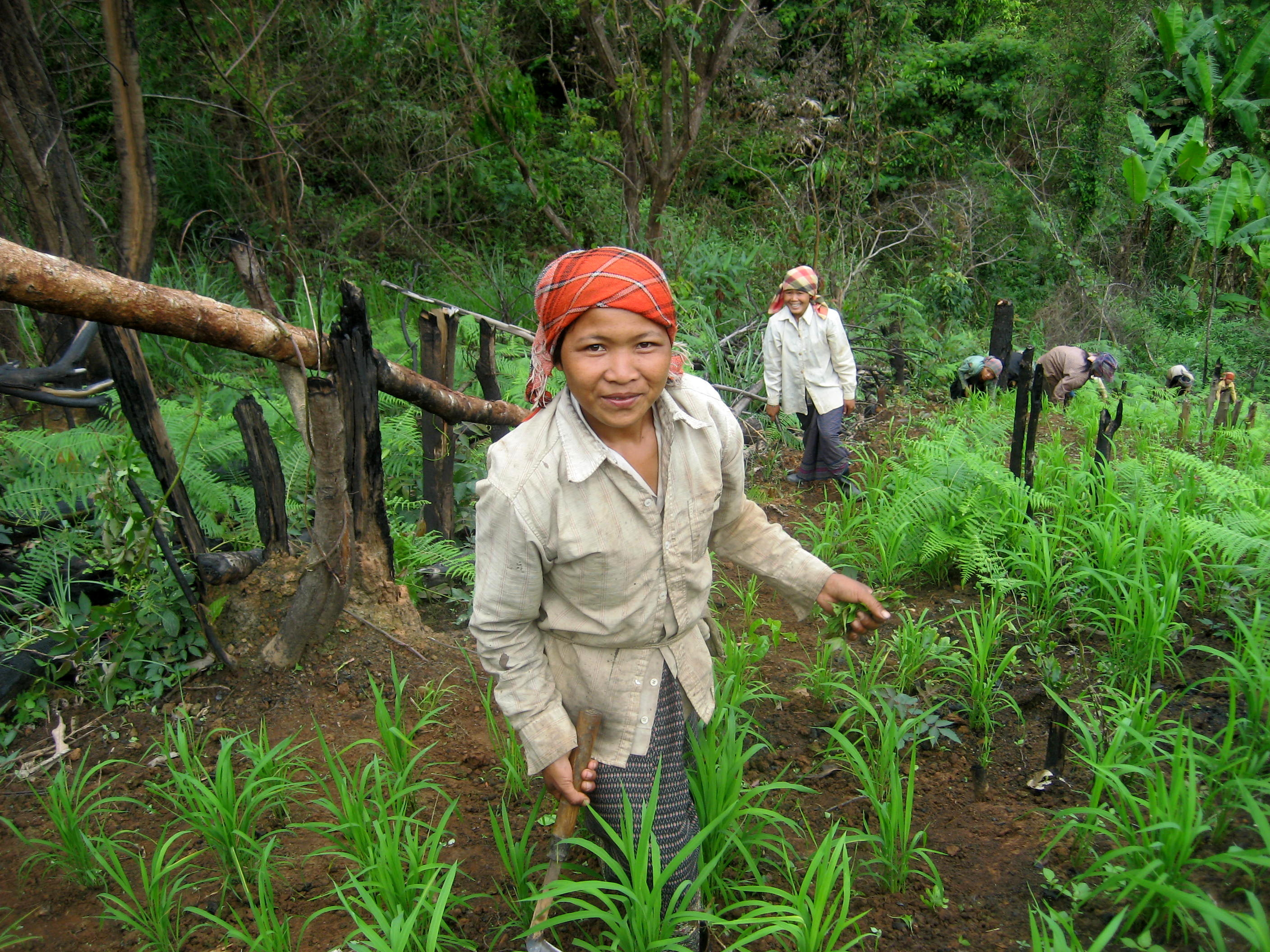 In the Photo: Upland women weed their swidden rice fields, an integrated method of agro-forestry. The photograph was taken in the Mokpon village of the Pha Oudon Distric in the Bokeo Province of Laos. – Photo Credit: United Nations Forum on Forests Photo Competition
The second point made is that forests must be integrated with other land uses. The argument that you need to clear forest land to produce enough food for a growing world population does not stand up to scrutiny, especially considering that one third of food produced for human consumption is lost or wasted. The truth is we need forests to sustain agriculture. Forests stabilize soils, regulate water flows, and are a genetic reservoir for crops and a habitat for crop pollinators, etc. Although the rate of deforestation has slowed since 1990, data from the Food and Agriculture Organization of the United Nations (FAO) shows that the planet is still losing 3.3 million hectares of net forest area a year – an area the size of Belgium. To harmonize policies on forests and agriculture, there is an urgent need to address the drivers of deforestation and to end conflicts over land.
The third point that Congress highlighted in its vision is that forests of the future must be an essential solution to combating climate change. Forests and tree growth absorb carbon dioxide. The latest estimates show that the world’s forests store 296 gigatonnes of carbon in their tree branches, roots, litter and soils – an average of 75 tonnes per hectare. That’s about three-quarters as much carbon as we find in the entire atmosphere. On the flip side, deforestation and forest degradation increase the concentration of greenhouse gases in the atmosphere. Carbon emissions from deforestation and forest degradation may have slowed by more than 25 percent between 2001 and 2015, but that merely underlines the need to continue to optimize the role of forests and trees in absorbing and storing carbon.
Related articles: “#SDGSTORIES – LAUNCH OF OUR SUSTAINABLE DEVELOPMENT GOALS SERIES”
“ZERO HUNGER GENERATION – THE ROAD IS PAVED”
DESERTIFICATION AND DEGRADATION
Forests are not the only natural resource on land under threat. The amount of fertile soil on the planet has been diminishing at an alarming rate, compromising the ability of farmers to grow food for a global population. Soil, which was the focus of a UN international year in 2015, provides nutrients, water and minerals to plants and trees, stores carbon and is home to billions of insects, small animals, bacteria and many other micro-organisms.
But what is particularly worrying is that soil, like oil or natural gas, is a finite resource. It is non-renewable and its loss cannot be recovered within a human lifespan. In fact, it can take hundreds to thousands of years to form one centimetre of soil from parent rock, but that centimetre of soil can be lost in a single year through erosion. Target 15.3 aims by 2030, [to] combat desertification, restore degraded land and soil, including land affected by desertification, drought and floods, and strive to achieve a land degradation-neutral world.
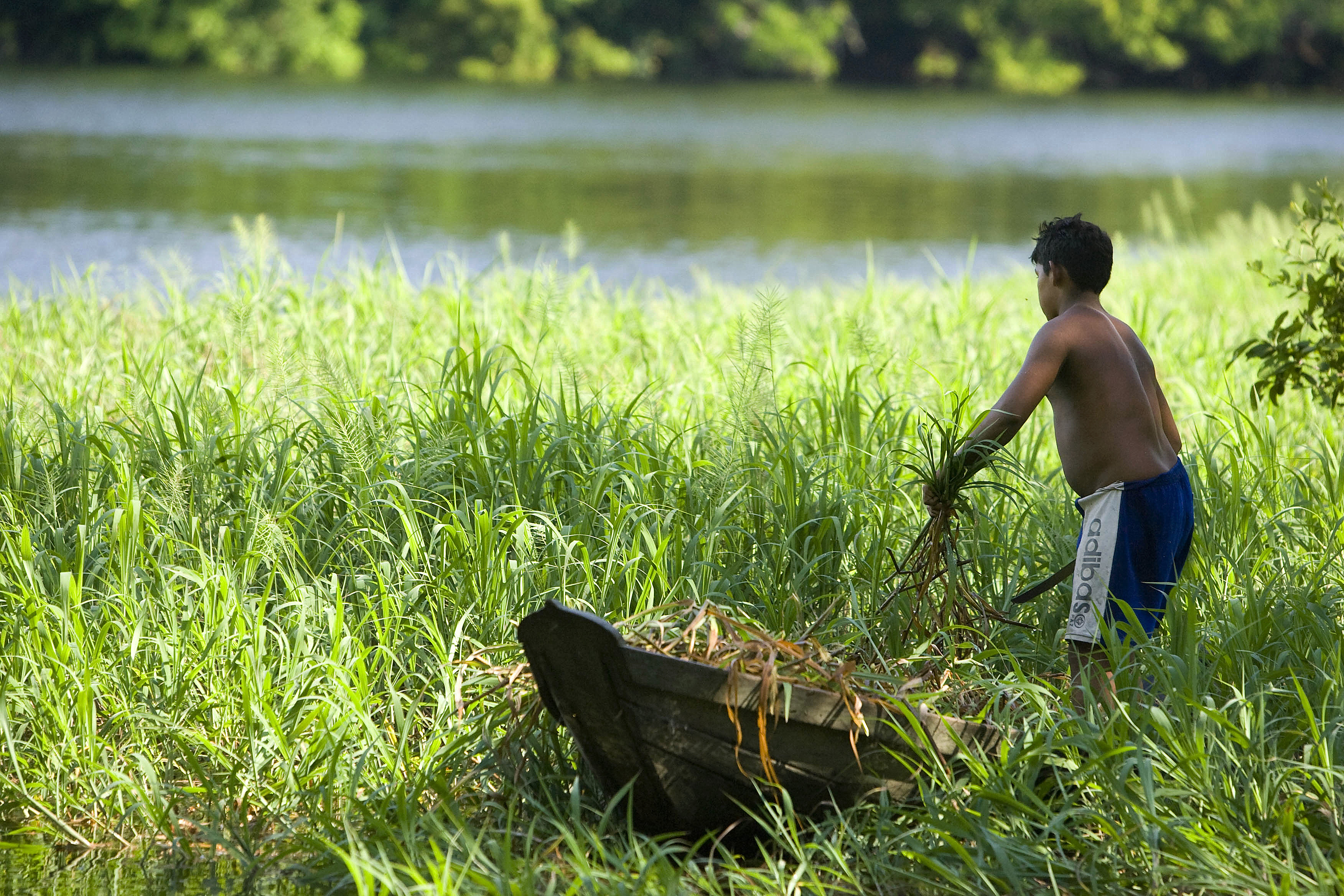 In the Photo: Brazil, the largest and most populous country in Latin America and the fifth largest in the world in both area and population is also where nearly 40 percent of all the tropical rainforest left in the world is found. In the National Tapajos forest, in the state of Para, about 7000 people in 35 communities live in government protected forests. These photos are taken inside the protected area and portray the coexistence of the forest and the people. – Photo Credit: United Nations
FOCUS ON RESTORATION
FAO, through its Forest and Landscape Restoration Mechanism, is currently providing comprehensive support to selected countries to help them achieve wide-scale restoration of degraded lands that will increase agriculture productivity while ensuring a continuous supply of ecosystem goods and services that underpin sustainable production. In Guatemala, Peru and several other countries, national workshops are bringing together stakeholders from agriculture, forestry and environmental sectors to carry out joint planning exercises that will ensure that impacts of land use activities across sectors are better understood in order to more effectively achieve common objectives, while building synergies through collaborative action using an integrated landscape approach. These efforts will contribute directly to achieving a land degradation-neutral world as called for under SDG 15.3.
As Mr Higinio Pu, Representative of the Red de Autoridades y Alcaldías Indígenas de Guatemala noted:
“In our communities we are increasingly suffering from the damage we made to the land as society. In our Mayan culture we use the word “toj” to mean devolve or restitute to the land what we have taken out. We do communal work to restore our cropland, rivers and denuded hills, but we need the government to assist us with the work, help us recover our production and in their commercialization”
THREATS FROM INVASIVE SPECIES
Declining forest health due to invasive alien species and abiotic stresses such as prolonged drought have impacted thousands of livelihoods in Africa, Asia and the near East and countries of South America. Outbreaks of invasive alien species have caused dieback of trees in Zimbabwe, Zambia, Mozambique and Malawi. In these countries local communities rely heavily on wood lots and planted forest for cooking and heating sources.
In the Wedza district, (139 kilometers South of Harare City), the Nyamutasa tree woodlot is just one of the many throughout across the Zimbabwe that have been affected by the alien pests. The once thriving trees are dying and with them, the livelihoods of the community. Diana Matyatya from the community commented:
“we have not seen these pests before, we used to plant the trees and monitor the progress of the growth and harvest but now we have to deal with the pests in order to protect the trees.”
To address the threat posed by these invasive species, the FAO and the Forestry Commission of Zimbabwe and the national forest organizations of other affected countries are helping the farmers to find solutions to manage these fast spreading pests.
PROTECTING MONTANE REGIONS
SDG15 also tackles socio-economic and ecological threats to mountains, areas that cover almost a quarter of Earth’s land surface, provide 70 percent of the world’s freshwater and are home to more than one tenth of the human population. Target 15.4 stresses the importance of conserving ecosystems and biodiversity of mountains, areas subjected to increasing pressure by human activities as well as by climate change.
Related articles: “FORESTS: INNOVATION FROM MULTIPLE TO SEASONAL CROPPING”
“SDG12: PLACING CONSUMERS AND PRODUCERS AT THE HEART OF SUSTAINABLE DEVELOPMENT”
MAKING IT ALL WORK
Whether it be mountains, soils, forests or other natural resources, the most critical aspect to achieving SDG15 is their sustainable management.
Multistakeholder alliances such as the the Collaborative Partnership on Forests, Global Soil Partnership, and the Mountain Partnership have been working to promote sustainable approaches to natural resource management. But concerted efforts are needed by countries to adopt long-term approaches that integrate natural resource-specific policies into national sustainable development strategies to provide an urgent response to current challenges, including climate change, hunger and poverty eradication. Equally crucial will be inclusive governance approaches at all levels, where all stakeholders and actors participate in the decision-making process to ensure that outcomes are fair, equitable and implementable.
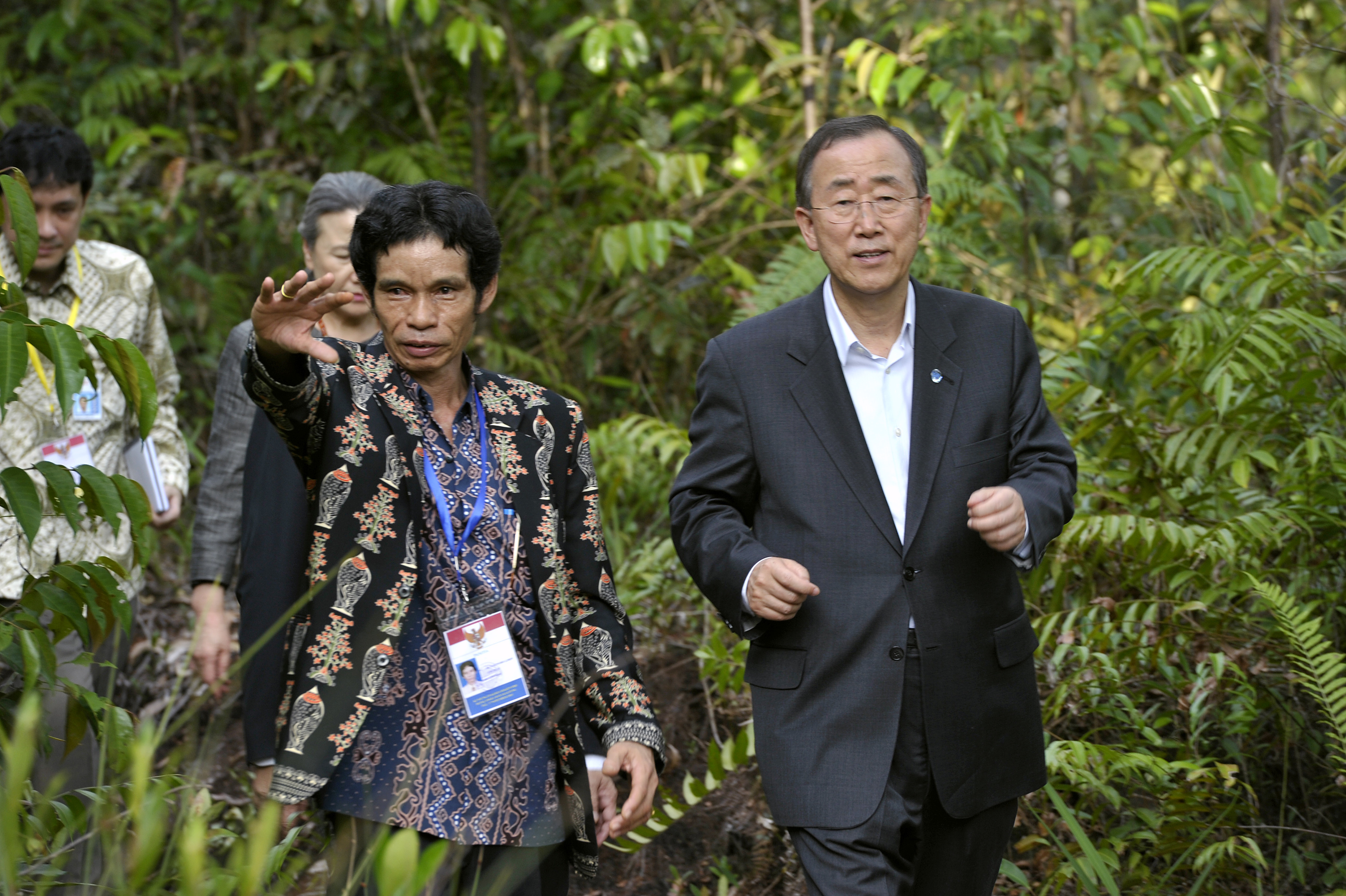 In the Photo: Secretary-General Ban Ki-moon (right) is guided by a leading scientist on the study of peat fields, in an area affected by deforestation in Central Kalimantan Province, Indonesia. The UN programme on Reducing Emissions from Deforestation and Forest Degradation (REDD+) operates projects in Central Kalimantan and assists in the conservation and sustainable management of its forests. – Photo Credit: United Nations
The sustainable management of our forests, mountains and soils is not just critical to achieving SDG15 but to many of the other 16 SDGs, specifically those related to eradicating hunger and poverty, promoting sustainable agriculture, ensuring access to sustainable energy for all and climate change.
If SDG15 targets fail to hit their mark by 2030 and we do not safeguard the world’s natural resources, then the goal of a more balanced and equitable planet may be a very long time coming.
——-
This article is part of our series in collaboration with the Sustainable Development Solutions Network Youth Division on the Sustainable Development Goals (SDGs) – #SDGStories. Follow the stories with #SDGStories and look for the next installment to our weekly series to learn more about achieving the SDGs across the globe. We can achieve them, and we must.