Can new Forest ecosystems be designed and developed to provide the same type of stable and seasonal revenue as Croplands?
Hilly and mountainous areas that once were thickly-wooded or covered with forests are often reduced to stony, unproductive ground by years of ruthless felling of trees for timber and firewood, over-grazing, over-browsing and even burning in an attempt to clear the land of weeds and promote the growth of grasses for pastures.
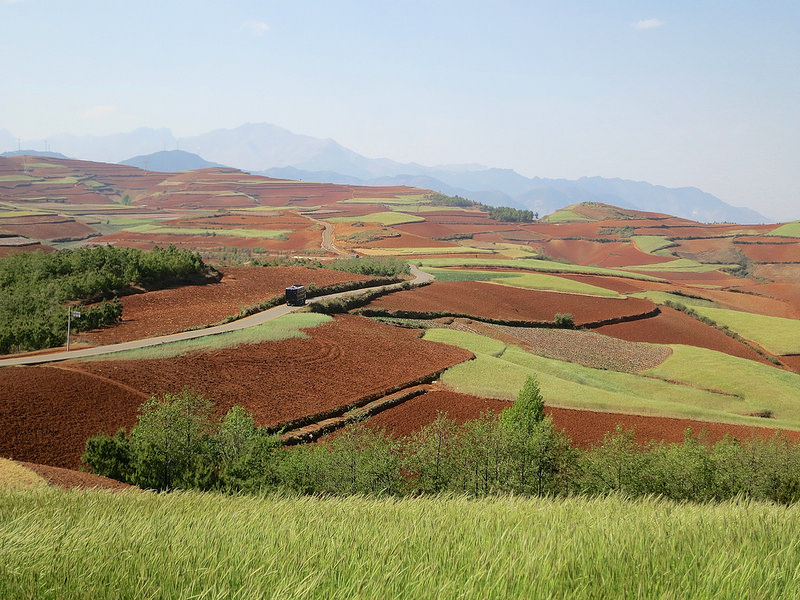 In the photo: Afforestation patches subsidized by the Conversion of Cropland to Forest Program. Red Earth Township, Dongquan County, Yunnan Province, China. Xinjiang barley is growing in the foreground. Photo by Louis Putzel for Center for International Forestry Research (CIFOR).
At the end of this deforestation process the soil is often washed away by rain and wind until only the base rock or infertile subsoil is left. Forest soils, built up over thousands of years, are often lost for ever.
Reforestation programmes should be designed and launched before this irreversible stage of degradation is reached. Large amounts of money, labour and time are involved, but the results do not always come up to expectations.
If the area is large and the programme difficult, particularly in poor developing Countries, international aid is requested and provided by UNDP or through bilateral agreements or from specialized agencies such as FAO, the World Food Programme, IFAD, the United Nations Environment Programme, UNESCO, etc.
Conventional forest plantation
In classical reforestation schemes, a single species (e.g. of Pinus, Abies, Quercus species, etc.) or a mixture of species adapted to local climatic and soil conditions are planted, mainly for the purpose of producing timber, preventing soil erosion and facilitating appropriate watershed management.
If the soil is badly degraded, the replanted area must be immediately protected from grazing animals and human trespassers by the erection of fences and/or by the employment of forest warders.
However, although in theory this type of reforestation is extremely important, it is often almost impossible to succeed, particularly in populated areas, even with the imposition of strict regulations or punishments.
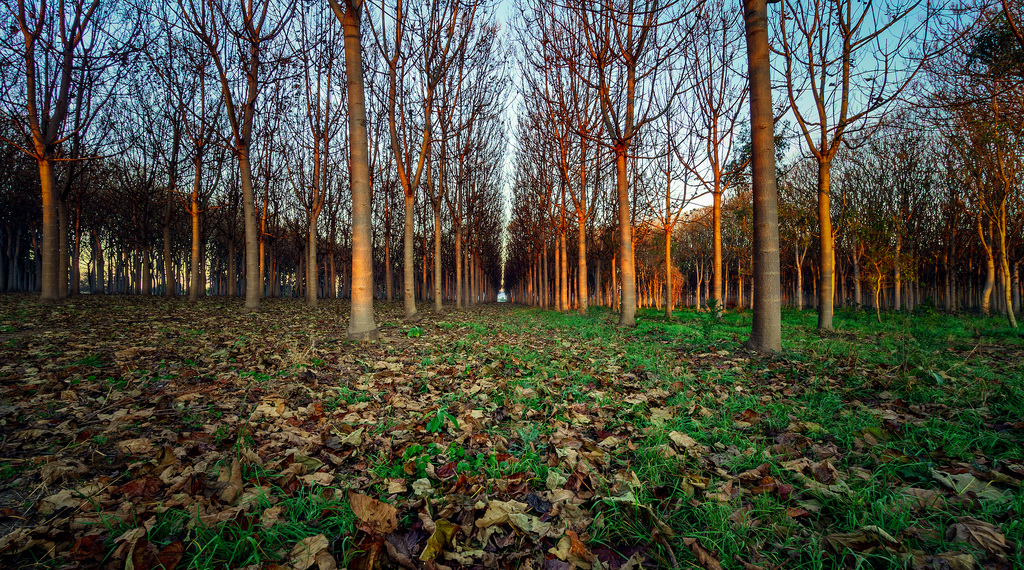
 In the photo: Tree Plantation by the Murray River – Photo credits to VisitVictoria
Understandably, the local populations, who have become accustomed to collecting firewood and letting their livestock graze in these areas, refuse to be excluded from them. Particularly if the land is a communal property, often the young trees are not allowed to reach maturity, for poor people living in the area cannot wait 10 to 20 years for a first revenue from the land.
For them, the vast areas involved in reforestation schemes cannot be considered productive, even if the end result will be the geological stability of the mountain sides and valleys, improved soil protection, the prevention of flooding and silting of artificial lakes, etc. Therefore, if the newly-planted areas are to be respected, a possible solution could be to develop a plantation and a different development system providing also a stable annual or seasonal revenue, somehow similar to those that can obtained from normally cropped lands. There is reason to believe that this can be achieved by what could be called “forest cropping”, a different approach to reforestation which attempts to maintain the advantages of the traditional forest, as well as introducing sources of income and thereby inducing local populations to protect, taking care and even improve the forest cover.
Multi-storey and multi-purpose Forest cropping: an integrated approach to Reforestation
Perennial and woody species can be used for reforestation provided it has adaptation to local pedology and environment conditions.
In many areas of the world several species of Eucalyptus, originating in Australia, have been used, as well as species of Pinus, Cedrus or Abies etc. and several others providing high value timber (teak, rosewood, walnut etc.).
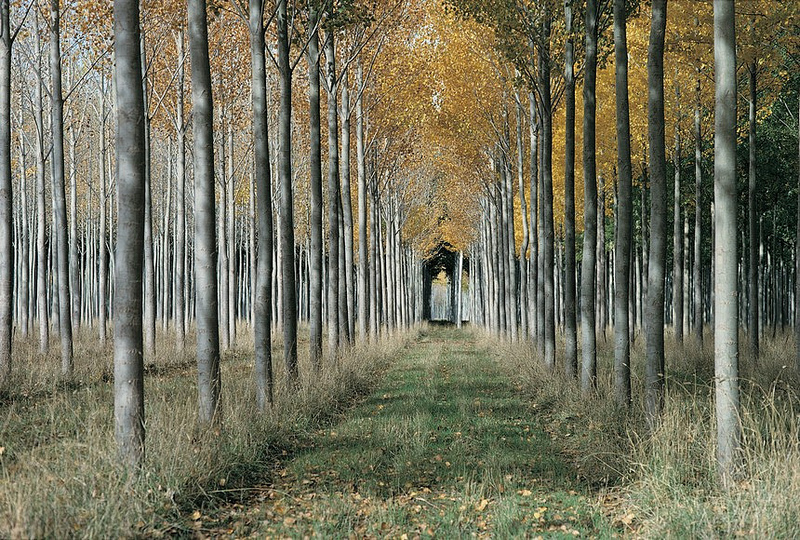
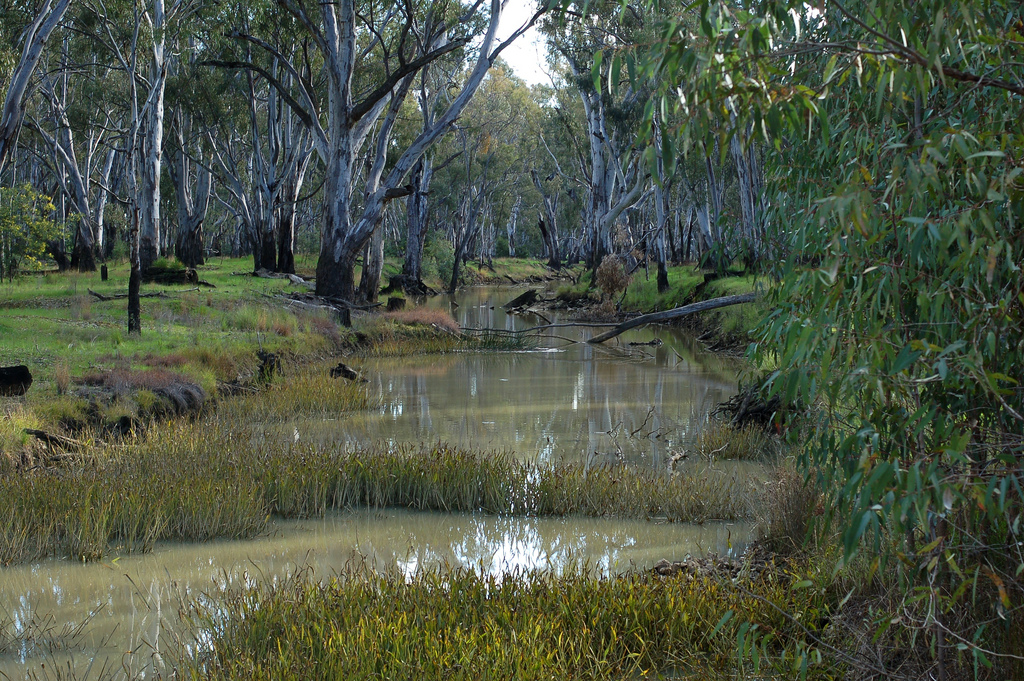 In the photo: Red Gum forest along the Murray river – Central Victoria AUS – Photo credit to: Elizabeth Donoghue
The basic concept of this approach to reforestation is to substitute a single species usually planted (mainly for timber or wood production), with a number of different species which, every year, eventually after the juvenile period, will yield a valuable edible product.
Among these we could mention, for temperate areas, many species of fruit trees, fruit shrubs and herbaceous fruits ( like hazelnut, apple, pears, quince, grapes, sour black cherry, strawberry blueberry etc.) and also forage trees and shrubs, like elm, american species of Vitis, Robinia, mulberry (on which silkworms and several domestic animals could be fed) providing food, feed and/or industrial products which would foster the development of cottage and agro-industries. Other components could be the artificial sowing, in reforestation areas, of shade-tolerant forage grasses or shrubs. In fact, a controlled pasture exploitation is often a necessary component of an intelligent reforestation. Even grain legumes, (like climbing pea, beans, Vigna etc.), adapted to manual harvesting, could be inter-planted.
Tropical areas could be planted with a mixture of rubber trees, oil palms, peach palms, sago palms, coconuts, avocado, mango, papaya, tropical Citrus etc. Also other shrubs producing fruits and other valuable edible products, like coffee, cocoa etc, could be present.
All these species should be planted in random mixtures, using seeds coming from different cultivars, lines and ecotypes of each species utilized, in order to establish a living germplasm collection, where natural selection could be acting and new re-combinations could be produced by natural crosses and seed natural dissemination. It is rather obvious that this mixed flora could be subject to diseases and parasites, but presence of very different genotypes could limit the damage and would promote natural selection of tolerant or resistant genotypes.
Another source of income could come from mycorrhizal fungi, producing edible mushrooms or truffles. A specific cultivation technique could be developed in order to favour both the growth of specific species of trees and the production of an edible, high value food. A very simple cottage industry (drying, canning, etc.) could then be developed, providing additional revenue to the population.
A rather common utilization could also be the promotion of adapted wild fauna, like wild goats, rabbits and hares, wild large birds, like pheasants, to be properly managed and periodically collected,
Another possibility could be bee-keeping, which requires a low initial investment and increases fruit and seed production through pollination of entomophilous species as well as providing honey, wax, etc.
Snail collection and/or snail farming could provide another source of food and income.
Basic research required
So let’s look at what can be done. The basic research required before undertaking this approach is:
The identification of food producing trees, shrubs and other perennial and annual species with the required environmental adaptation characteristics. Their possible association with useful mycorrhizas (photo below):
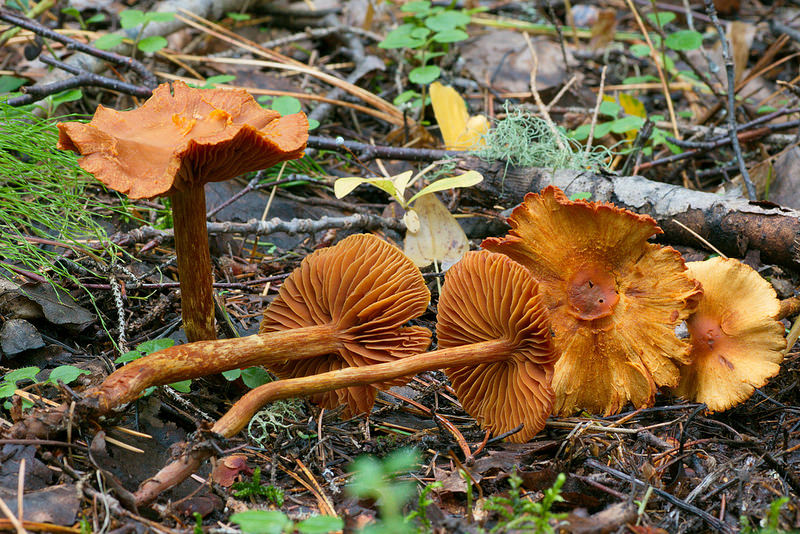 In the photo: Cortinarius cf. gentilis – Photo cedit to Tatiana Bulyonkova
Finally we can look at the best association of species and the appropriate planning of the layers of vegetation involved: a) trees, b) shrubs, c) terrestrial annuals and perennials, d) fungi and useful symbiotic bacteria, all adapted to the several basic ecological conditions (humid or dry temperate and medium or high elevation areas). Clonally or vegetatively propagated material should be avoided for reforestation purposes.
A word of warning: it is not advisable to establish, for example a normal fruit tree orchard, as it would require far more complicated management and a much more skilled labour component.
Seeds of fruit trees (like cherry, pear, walnut, chestnut etc in temperate areas) could be used for providing fruits but also high quality wood, besides representing a very important living germ plasm collection.
In this type of operation, the basic characteristics of the forest (simple and inexpensive management) and minimum capital inputs should be preserved, while man’s action should mainly be limited to harvesting the products and protecting the area from fires and erosion. Eventually, development of specialized fruit growing could follow, according to the availability of human and capital resources.
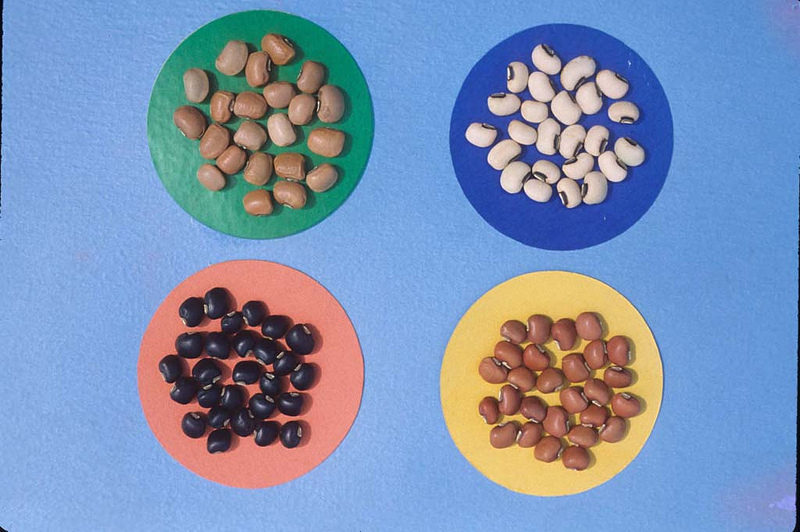 In the photo: Cowpea seed germplasm. Photo credit: IITA
These multi-storey and multi-purpose ecosystems could also develop into a very interesting source of adapted germ plasm, since several thousands (and even more) of individuals coming from seed would be involved. Seeds could be obtained, for instance, from jam or juice industries, or bought from foreign or national sources, which often would be less difficult than the procurement of seeds of conventional forest trees.
If local conditions allow it, the reforestation areas should be organized into village or cooperative enterprises, to give the local population a direct interest in protecting and developing the cultivation. Families from surrounding areas could first provide manpower for nursery development and then could take part in the replanting. Then the area could be subdivided into plots of appropriate size (in accordance with the area available and soil fertility) and allotted to these families. Technical support should be given to villages and cooperatives to ensure rational exploitation. Plots which are not taken care of or not exploited in line with the recommendations made, could be transferred to other family units. Game and wild animals adapted to local conditions should also be released or raised in the areas and considered as communal property. Hunting could then be organized under the supervision of the forest warders and the products used or sold by the community.
Finally, technical assistance to the overall project could and should be provided by skilled forest warders, helped by agriculturists, horticulturists, veterinarians, microbiologists, game experts etc.
To sum up: such an integrated approach to the establishment, cultivation and functioning of the proposed ecosystem requires research and careful planning, making full use of the information available from pilot schemes already in operation in adapted areas. It is far more complicated to implement than conventional reforestation but the potential benefits are also far greater: it achieves the kind of sustainable development that conventional reforestation so often misses out on, because local populations are called on to participate and are given a chance to appropriate the results for themselves. Reforestation is no longer an alien project occupying their lands but an opportunity to earn a return from the forest and make it their own, to grow and protect.