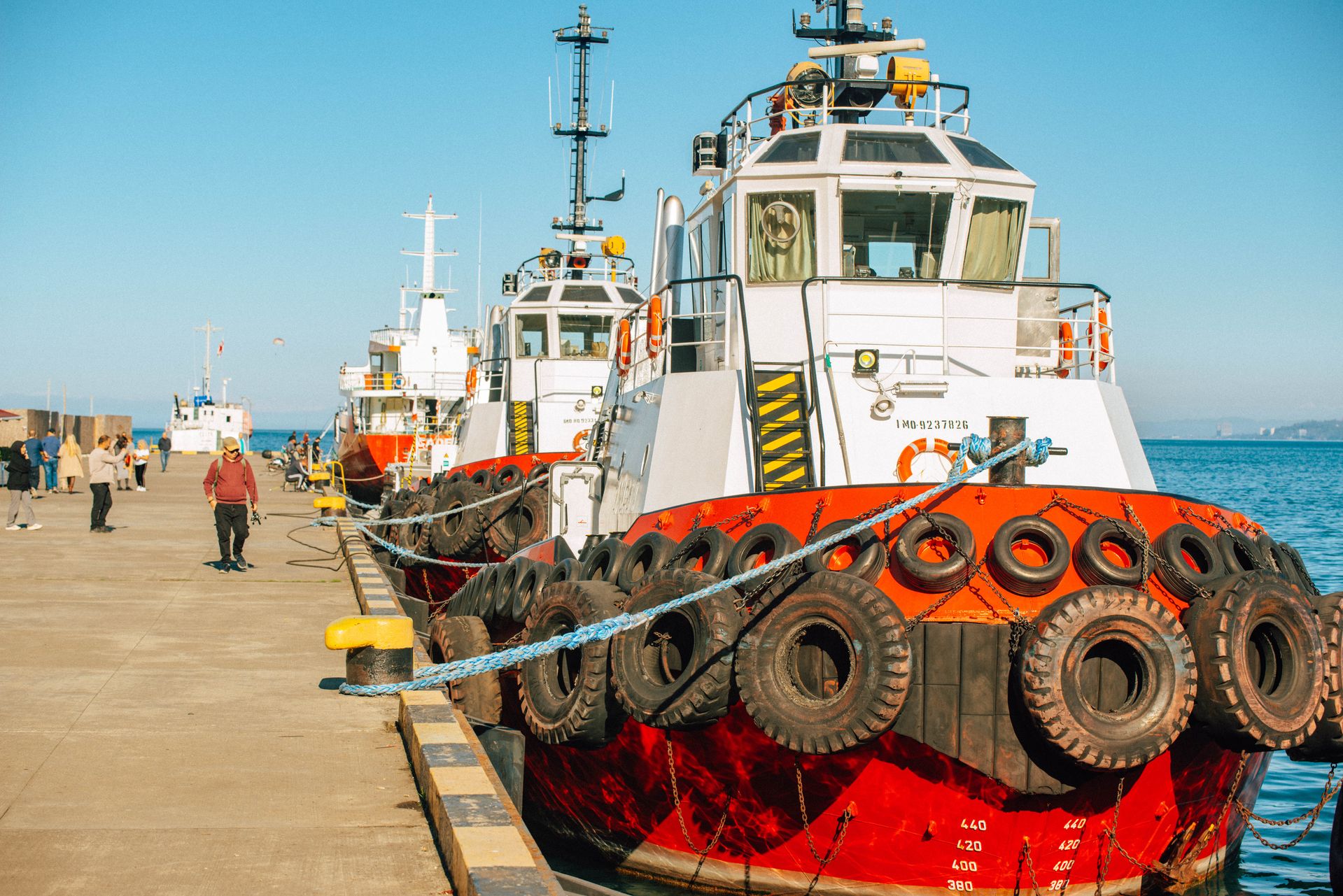
When the maritime industry discusses decarbonization, attention naturally turns to new vessels: purpose-built electric ferries, alternative-fuel ships and highly visible demonstration projects. Those investments matter. But they do not answer a harder question facing working waterfronts: What should happen to a serviceable vessel when its diesel propulsion no longer fits the environmental, operational or economic direction of the industry?
Replacing an entire boat may be the right decision in some cases. In others, the hull, deck arrangement and working equipment may still have useful life. Treating vessel replacement as the only credible route to cleaner propulsion risks leaving many smaller operators behind. It also overlooks a basic principle of resource efficiency: when an asset can be responsibly modernized, we should at least examine that option before discarding it.
The International Maritime Organization’s 2023 greenhouse-gas strategy aims for international shipping to reach net-zero emissions by or around 2050. The strategy recognizes that technological innovation, port infrastructure and alternative energy sources will be integral to that transition. In the United States, the Department of Energy’s Maritime Energy and Emissions Innovation Action Plan treats electrification as one pathway within a broader maritime-decarbonization portfolio, while DOE technical materials identify many smaller and medium vessels as suitable for electrification.
That does not mean every vessel should become battery-electric. Range, duty cycle, payload, charging access, reserve requirements, operating waters, weather, weight distribution and applicable regulations all matter. A boat that runs short, predictable routes near reliable charging infrastructure presents a different case from one that must work offshore for long periods. For suitable duty cycles, battery-electric operation will eliminate direct onboard exhaust and support quieter propulsion. Its full environmental result still depends on the electricity source, battery lifecycle, vessel efficiency and mission profile. Electrification succeeds when engineering begins with the mission profile, not with a slogan.
Harbor craft illustrate why this discussion matters. The U.S. Environmental Protection Agency describes these vessels as performing varied jobs in and around ports — including moving crews and supplies, assisting larger ships and supporting other harbor operations — and notes that they typically use diesel engines. For operators, the transition is therefore not an abstract debate. It is a practical question involving capital, downtime, maintenance, safety and whether a new system can perform the work reliably.
This is where retrofit innovation deserves more attention. A retrofit is not merely an engine swap. On a battery-electric conversion, the vessel may require a new energy-storage system, protection and isolation, cooling, controls, cabling, structural reinforcement, changes in weight and balance, and a carefully engineered connection between the hull and propulsion equipment. Certification and regulatory pathways must be considered from the beginning. The complexity is real, and disciplined retrofit development will show how more of the existing fleet can participate in the transition.
A promising direction is modularity. Designing major propulsion components for removal will make service, inspection and future replacement more practical while a vessel-specific docking structure remains installed. It will also create a clearer path for technology upgrades with less disruption to the vessel itself. Those benefits must still be demonstrated under real loads and operating conditions, but the purpose is direct: make clean-propulsion maintenance and improvement more manageable over the vessel’s useful life.
At Aqua Leaf Technology, this is the purpose behind AQ2-R, our patent-pending, early-stage battery-electric waterjet retrofit platform for suitable existing commercial working vessels. The proposed architecture combines a removable waterjet pod with a permanently installed Vessel Docking Structure (VDS), a battery system, and the controls and safety interfaces needed to make them work together. Our initial proof-of-concept target is a 100 kW-class system on a suitable 28- to 35-foot aluminum workboat.
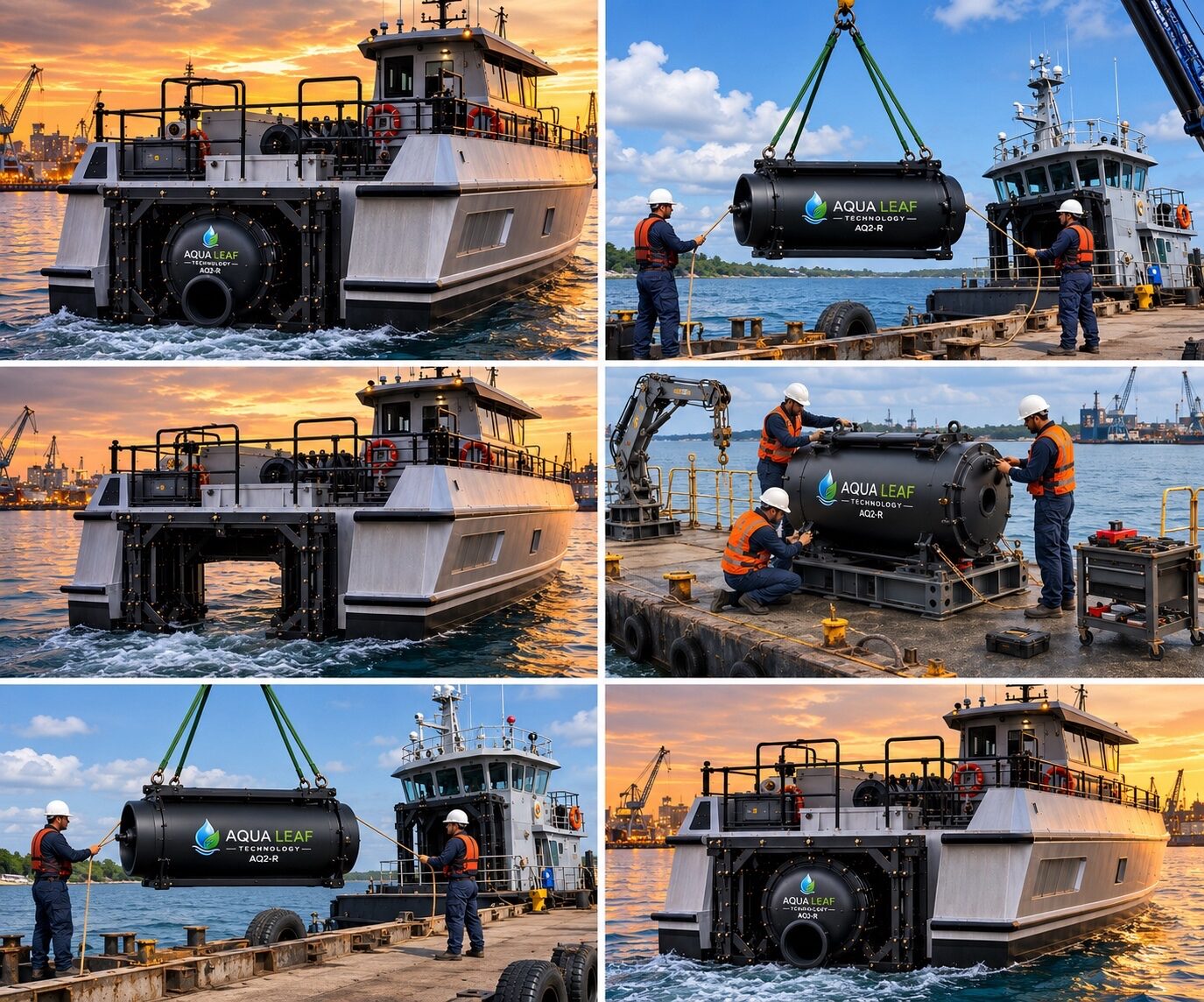
The 100 kW figure is the initial proof-of-concept design target, not the limit of AQ2-R’s future development. Successful validation of the first system will establish the engineering foundation for additional power ratings and vessel-size applications. Each later configuration will still depend on vessel surveys, duty cycles, engineering, safety and applicable regulatory requirements.
AQ2-R has not yet been built, tested, validated, certified, class-approved or commercially released. That disclosure is not a weakness; it defines the work that must happen next. A credible proof of concept should select and survey an appropriate vessel, complete vessel-specific engineering, fabricate and integrate the system, commission it dockside and conduct controlled water testing. It should document what works, what fails, what must be redesigned and which assumptions do not survive contact with the vessel.
The most important output will not be a single dramatic demonstration. It will be evidence: installation requirements, structural and electrical lessons, measured operating data, maintenance procedures, safety findings and a clearer understanding of which vessel and duty-cycle families are suitable. That knowledge will turn the first custom prototype into the engineering foundation for a repeatable retrofit approach.
The maritime transition needs more places where this type of evidence can be created. Ports, vessel owners, universities, regulators, equipment suppliers and funders can help by supporting controlled pilot projects, providing access to suitable vessels and test environments, and sharing lessons rather than guarding every failure. Public and private funding should reward measurable validation, not just polished claims.
Related Articles
Here is a list of articles selected by our Editorial Board that have gained significant interest from the public:
We should also resist framing new construction and retrofits as competing answers. The industry will need both. New vessels can be optimized around clean propulsion from the first drawing. Retrofits will bring suitable existing assets into the transition without assuming that every serviceable hull must be replaced. Different routes, loads and communities will require different solutions.
The principle guiding our work is simple: Replace the Propulsion System. Not the Vessel. This is a practical direction for suitable vessels, and validation will determine where it fits best. It challenges the maritime sector to test a broader possibility. If we want decarbonization to reach beyond showcase projects, we must build practical pathways for the working vessels and operators already carrying out essential jobs on the water.
Editor’s Note: The opinions expressed here by the authors are their own, not those of Impakter.com — AQ2-R is an early-stage, patent-pending platform. It has not yet been built, tested, validated, certified, class-approved, or commercially released. Learn more about AQ2-R and support the initial proof-of-concept campaign on Indiegogo.