The European Commission presented on May 18 its €300 billion plan on how the European Union can wean itself from Russian fossil fuels “well before 2030” and at the same time fast forward Europe’s green transition.
The plan, called REPowerEU, is a package of documents, including legal acts, recommendations, guidelines and strategies. It’s based on four pillars: saving energy, substituting Russian gas with other energy sources (including other fossil fuels such as LNG), boosting green energy and financing new “cross-border and national infrastructure as well as energy projects and reforms.”
We are stepping up Europe's energy security and independence.
Today, we present the #REPowerEU Plan to rapidly reduce our dependence on Russian fossil fuels, and fast forward the green transition.
How do we plan to achieve it? ⬇️
— European Commission (@EU_Commission) May 18, 2022
The invasion of Ukraine by Russia, Europe’s top gas supplier, has prompted the European Union to rethink its energy policies amid sharpened concerns of supply shocks. The goal of the initiative is to deprive Russia of tens of billions in revenue from energy sales and strengthen the EU’s climate policies. Besides that, 85% of Europeans believe that the EU should reduce its dependency on Russian gas and oil as soon as possible to support Ukraine.
The recent accumulation of climate reports with alarming results also flags the urgence to step up plans for a rapid decrease in emissions and replace fossil fuels.
“There is a double urgency to transform Europe’s energy system: ending the EU’s dependence on Russian fossil fuels, which are used as an economic and political weapon and cost European taxpayers nearly €100 billion per year, and tackling the climate crisis,” writes the Commission.
With the measures in the REPowerEU plan, the EU hopes to replace fossil fuels through “energy savings, diversification of energy supplies, and accelerated roll-out of renewable energy.” According to the EU Commission, the plan could gradually remove at least 155 bcm of fossil gas use, which is equivalent to the volume imported from Russia in 2021.
Nearly two-thirds of that reduction can be achieved within a year, according to the European Commission’s proposal, ending the EU’s over-dependence on a single supplier in just 12 months.
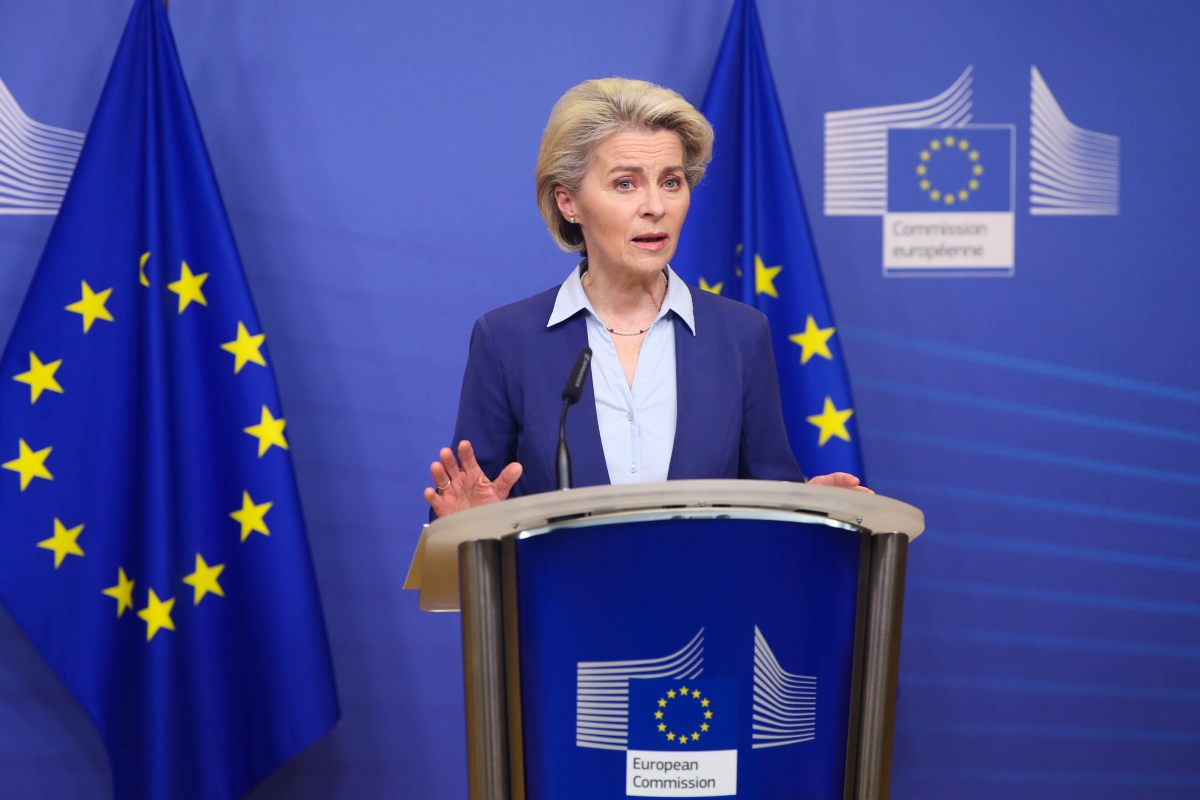
“Today we’re taking our ambition to yet another level to make sure that we’ll be independent of Russian fossil fuels as quickly as possible,” said Commission President Ursula von der Leyen. “REPowerEU will help us to save more energy, to accelerate phasing out of fossil fuel and most importantly to kick start investment on a new scale. This will be the speed charging of our European Green Deal.”
The Commission wants to raise the target of green power in the EU’s energy mix to 45% by 2030 from its current target of 40%. It’s planning to do that by, for example, simplifying permitting processes for renewable energy projects, and introducing a legal obligation to install solar panels on all new residential buildings by 2029.
The budget for REPowerEU will come largely from the EU’s Recovery and Resilience Facility, the Union’s pandemic recovery program. As the Commission said, countries can access the unused €225 billion in facility loans. An additional €20 billion in grants would come from selling 250 million CO2 emission permits on the EU’s Emissions Trading System.
Countries will also have the right to transfer up to 12.5% of their cohesion policy funds and 7.5%of agricultural funds to RePowerEU projects.
As part of the REPowerEU plan, the Commission has launched on Wednesday a call for proposals for key cross-border EU energy infrastructure projects under the Connecting Europe Facility (CEF) for Energy, with an estimated budget of up to €800 million. The call contributes to the EU’s aim of increasing the resilience of the EU-wide energy system in order to phase out dependency on fossil fuels.
Delivering the REPowerEU objectives requires an additional investment of €210 billion between now and 2027. This is a down-payment on our independence and security. Cutting Russian fossil fuel imports can also save us almost €100 billion per year. These investments must be met by the private and public sector, and at the national, cross-border and EU level.
Several major countries announced immediately they would increase wind power: Denmark, Germany, Belgium and the Netherlands are aiming to boost offshore wind capacity to at least 150 gigawatts (GW) by 2050, a ten-fold increase compared to today’s levels.
The Netherlands is also set to ban fossil fuel boilers from 2026, with the government intending to ban new fossil fuel-centric heating system installations while introducing the mandatory use of heat pumps or connections to heat networks.
The EU’s new plan, however, received mixed reviews from climate campaigners. Although the plan calls for increasing the bloc’s 2030 renewable energy target from 40% to 45%, Greenpeace EU noted that this is “still below the 50% target that would be compatible with the Paris climate agreement’s goal” of limiting global heating this century to 1.5°C.
Greenpeace also said that “the plan focuses on diversifying Europe’s imports of oil, gas and uranium from suppliers other than Russia, rather than ending Europe’s dependence on these fuels.”
The EU aims to kick fossil fuels out, and bring renewables in, to improve European energy security and increase energy independence, and to help tackle the climate crisis. It remains to be seen whether the REPowerEU plan will ultimately help Europe to “rapidly reduce dependence on Russian fossil fuels” and solve its current energy crisis on the one hand, and, on the other hand, whether the increased targets for the bloc’s renewable energy efficiency are substantial enough to truly accelerate Europe’s green energy transition.
Editor’s Note: The opinions expressed here by Impakter.com columnists are their own, not those of Impakter.com — In the Featured Photo: European Commission President Ursula von der Leyen. Featured Photo Credit: Xinhua/Zheng Huansong