Bangladesh, often held up as a model for poverty reduction, has influenced many poverty reduction initiatives around the world.
In 2002, Bangladeshi development organisation BRAC pioneered a new approach to transform the lives of women in extreme poverty within two years. The model has been tried out in other parts of the world since, but recent evaluations deliver a lesson in why there’s no one-size-fits-all solution to poverty.
View this post on Instagram
A pilot in India’s West Bengal ran between November 2006 and August 2009. Around 300 women were chosen to participate in the pilot and were supplied with mainly goats, sheep, poultry and fish. They were prompted to organise themselves into peer-support groups and were trained to manage the revenue generated from their assets. They were also provided a basic monthly income and health support in the initial phase of the project. Local microfinance banks were asked not to offer services to the 24 villages covered by the project in order to protect the pilot from the influence of their financial services.
The pilot was evaluated in 2011 and a follow-up study was carried out in 2018. The researchers used qualitative methods, such as life histories, assessments by participants, and staff interviews. This allowed the impact of the project to be linked with the context of the participants and their individual circumstances, so that variations in impact could be explained.
It turns out extreme poverty is not the product of material deficits alone but also identities and experiences of being marginalised. The pilot in West Bengal included a mixture of disadvantaged social groups: previously “untouchable” Dalit castes, Adivasis (tribal groups) and sections of the Muslim population. These are not only among the poorest groups in India but also face the most severe discrimination.
Even though all the participants were living far below the poverty line, the project affected them differently, exacerbated by their identity, adding dependency, humiliation and discrimination to poverty, hunger and debt. Women from the different social groups differed in their ability to translate the support provided by the project into goals that they valued.
One significant factor was the human resources they were able to draw on – the ratio of earners to dependents where “dependency” reflected age, illness, disability, unemployment or irregular employment.
Another was the human capital of earning members of their household, that is, their health, skills, experience and initiative; very few had formal education. Adivasi and Dalit women had worked outside the home much longer than most, sometimes from childhood, and were better placed to take advantage of new opportunities.
Related Articles: Extreme Poverty Is on the Rise for the First Time in Two Decades | Poverty Reduction Through Community Empowerment
Marital relationships also played a role. Where there was a high level of cooperation between husband and wife, the women could implement their livelihood strategies. By contrast, where there was family conflict or a controlling male figure, the participants were less able to take advantage of opportunities. Some marital relationships changed over time as the balance of power within the marriage began to shift in favour of the women. The women who still managed to progress were those whose husbands’ behaviour improved over the course of the project, a change some attributed directly to the project.
The amount of space available to participants also dictated which forms of livestock they favoured and how many they could raise: goats were less favoured by those with limited space because they could not be tied in one place and often encroached on neighbour’s fields, leading to major conflicts. Those who had sufficient land to excavate a pond were able to take up fishing.
Finally, past experience mattered. The Adivasi community had never before been the focus of development efforts. As a result, the Adivasi women highly valued the material assets they were given as well as the training, advice and mentoring they received. But the support they received did not happen in a vacuum. Most Adivasi women very quickly replaced some or all of their project livestock with pigs, not included among the assets distributed by the project, because their community has long experience with raising and selling pigs.
Given the focus of the project, the most predictable change was the strengthening and diversification of the household asset base. The accumulated assets were also a considerable source of pride for many women and, with livestock, objects of affection. Improvements in the asset base translated into improved food security and diversity in their diet — concrete material needs.
The project opened up the idea of saving and borrowing. Most of these women had not thought of saving earlier, since they barely earned enough to survive. The practice of saving with peer-support groups, with deposits carefully recorded in each member’s savings book, and savings funds deposited in a group account with the bank, imposed an external discipline as well as protecting their savings. Many participants spoke of the personal changes that resulted from their experiences in the project.
The qualitative surveys had frequent references to concepts such as “courage,” “mental strength” and “self-confidence” to tackle new activities, to think beyond subsistence, to plan for the future and to participate in social life in a way that they had not previously thought possible.
But for some women, there was a real lack of progress. They were unable to expand, or even retain, their assets due to deaths, thefts or deliberate destruction by jealous villagers. And they did not have the strength to recover.
For women who faced restrictions on their ability to engage in outside work, such as a chronically ill family member, abandonment by a husband or lack of support from other family members, the outcomes were different. Most of their project livestock and poultry died. In other cases, the restrictions to work outside home came from jealous and violent husbands or religious conservatism among Muslim families.
While randomised control trials are often and are held up as “the gold standard” for evaluation, what they gain in rigour they can lose in depth and understanding. The qualitative approach factors in the participants’ own assessments and the particularities of their specific contexts. It is not enough to know whether a pilot worked but also why it worked, offering real implications for formulating policy.
— —
This article was originally published under Creative Commons by 360info™.
The research on poverty reduction was undertaken with support from MasterCard Foundation/Economic and Social Research Council and Department for International Development, UK.
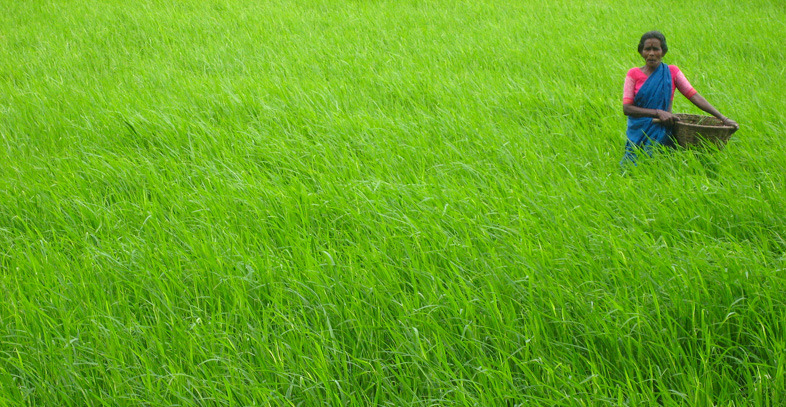
Editor’s Note: The opinions expressed here by the authors are their own, not those of Impakter.com — In the Featured Photo: The help rural women receive at home can influence whether they escape poverty as well as how successful poverty reduction programs can be. Featured Photo Credit: Meena Kadri.