

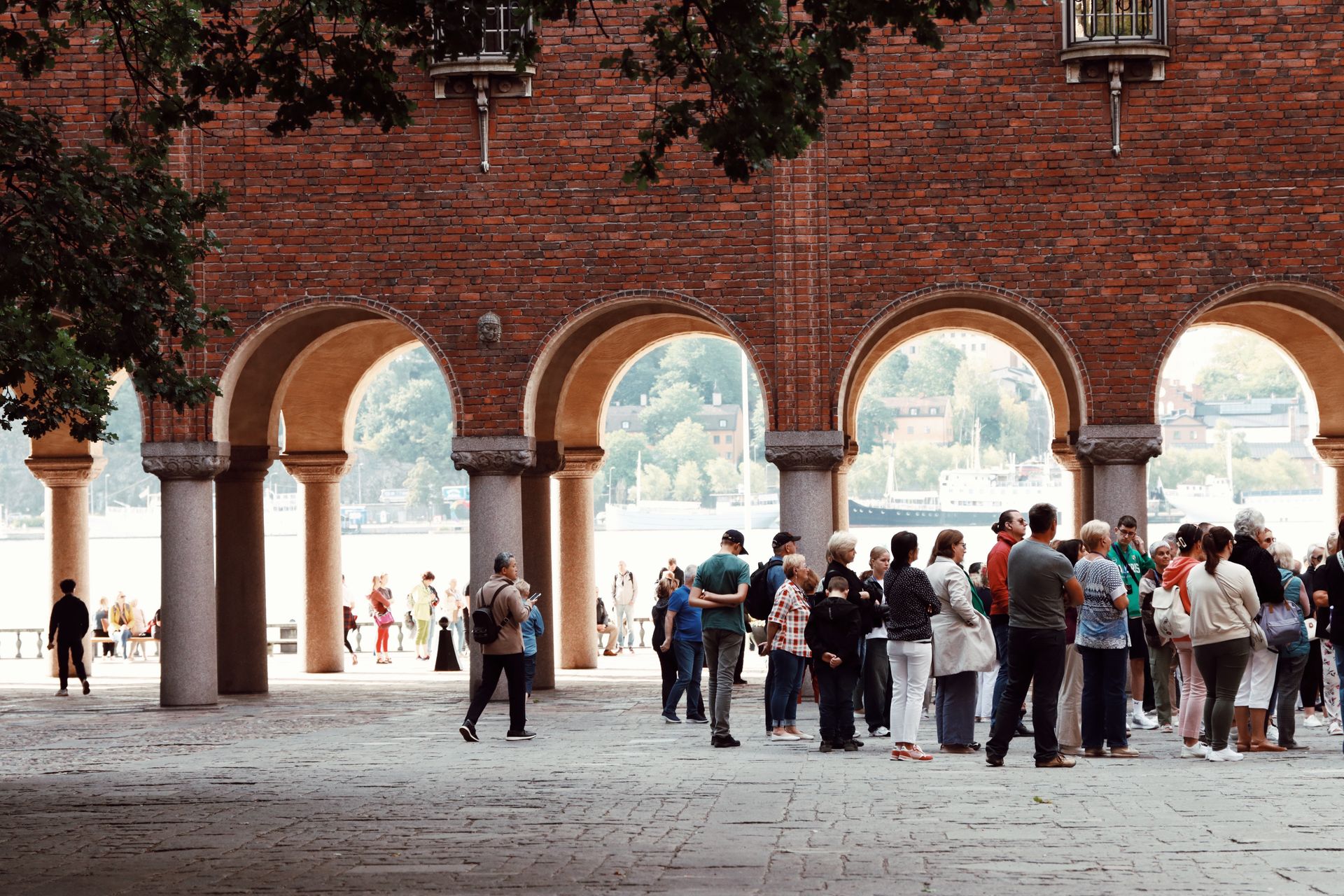
Europe’s most beloved cities are struggling with their own popularity. Venice introduced a fee for day-trippers. Barcelona and Amsterdam have tightened rules on cruise ships and short-term rentals. Lisbon, one of the continent’s breakout destinations of the past decade, has watched its historic neighbourhoods transform as apartments turned into holiday lets. The debate around overtourism is usually framed in terms of restrictions: fewer visitors, higher taxes, more rules. But there is another question worth asking. Not only how many people travel, but how they travel and where their money goes.
One surprisingly useful lens comes from a format many backpackers know well: the tip-based walking tour.
A simple model with a big idea behind it
The concept took off in Berlin in the mid-2000s and quickly spread across Europe. A local guide leads a group through the city on foot for two or three hours. There is no fixed ticket price. At the end, each participant pays what they believe the tour was worth.
On paper it sounds like a gimmick. In practice it creates an unusually direct relationship between visitor and guide. The guide is rewarded for quality, not for volume. Travellers on a tight budget can still access good storytelling and local knowledge, while those who can afford more tend to pay more. It is one of the few corners of the tourism industry where the price is negotiated, quietly and individually, between the person delivering the experience and the person receiving it.
Why walking matters for sustainability
Walking tours are, by definition, low-impact. No coaches idling outside monuments, no extra traffic in historic centres, no fuel burnt to move a group from one photo stop to the next. A group of 20 people on foot takes up a fraction of the space of a tour bus and spends its time on streets rather than in car parks.
Walking also changes what visitors see. A good guide does not just recite dates in front of famous landmarks. They explain how neighbourhoods were shaped, who lives there now and what pressures they face. In Lisbon, for example, a free walking tour Lisbon passes through Baixa, rebuilt after the devastating earthquake of 1755, and climbs into Alfama, the city’s oldest quarter, with its winding alleys and Moorish roots. These are exactly the places where the effects of mass tourism are felt most acutely, and hearing about them from a resident is a very different experience from reading a plaque.
Spreading the benefits more evenly
One of the persistent criticisms of modern tourism is that much of the money visitors spend flows to large international platforms, chains and cruise operators rather than staying in the local economy. Tip-based tours are not a silver bullet, but they do keep a significant share of spending with people who live in the city.
There is also a ripple effect. Guides routinely recommend family-run restaurants, independent cafés and small shops along the way. For a visitor arriving with no idea where to eat, that single recommendation can redirect spending away from the tourist traps around the main square and towards businesses that actually belong to the neighbourhood.
Not without challenges
It would be naive to present the model as flawless. Guides depend on the generosity of strangers, and income can be unpredictable, especially in the off-season. Some operators charge guides a per-head fee, which shifts commercial risk onto them. And popular routes can contribute to congestion in narrow streets if group sizes are not kept reasonable.
Responsible operators address this by limiting group sizes, varying routes and being transparent about how the tip-based model works. For travellers, the takeaway is simple: if the tour was good, pay as if it were a ticketed experience. “Free” describes the entry, not the value.
What this means for the way we travel
The broader lesson is that sustainable tourism is not only about policy. It is also about the small choices visitors make every day. Walking instead of taking a coach. Eating where locals eat. Spending money in a way that rewards people rather than platforms. Visiting outside peak season when possible.
Networks such as Walkative! now run tip-based tours across many European cities, from Lisbon and Madrid to Berlin and Rome, showing that this model can operate at scale while still relying on local guides and personal storytelling.
Overtourism will not be solved by any single format. But the walking tour offers a useful reminder: the most memorable way to see a city is often the slowest, the cheapest and the one that leaves the lightest footprint. And when travellers are trusted to decide what an experience is worth, many of them turn out to be fairer than we expect.
Editor’s Note: The opinions expressed here by the authors are their own, not those of impakter.com — Cover Photo Credit: Efrem Efre.