It was an ordinary sleepy Sunday, when I mundanely scrolled on the social platform, Twitter, where a viral video clip of Tom Cruise, from an interview on “The Today Show,” dating back from 2005, caught my undivided attention. The Top Gun star was seen debating psychiatry with TV host Matt Lauer.
“Here we are today, where I talk out against drugs, and psychiatrist abuses of electric-shocking people, against their will, of drugging children with them not knowing the effects of these drugs. Do you know what Adderall is? Do you know? Do you know now that Ritalin is a street drug?”
People on Twitter were stunned by Tom Cruise’s curtly delivered declaration which had garnered a staggering two million views overnight. Tom Cruise’s tirade against the promotion of a medicated society prompted thousands of replies from people all over the world, many of whom were praising him.
Upon reflection, it would not be an exaggeration to brand Tom Cruise a visionary as his words were nothing short of prophetic. Eighteen years later, we review his fiery TV appearance in the midst of a wave of pharmaceutical addictions and dependency, making the Top Gun star’s societal critique more relevant than ever.
In fact, as someone who has been prescribed Selective serotonin reuptake inhibitors by healthcare professionals over the course of years, I too, in fact, agree with Cruise’s sentiments about the dangers of immediately resorting to psychiatric drugs to treat mental disorders.
Western society is living through an age of mental health crisis
Western society is currently living through an age of a mental health crisis — and we are the most medicated society in history. More people are on psychiatric medications than ever before, more people are being diagnosed with some sort of mental health issue than ever before.
The United States is the most medicated country in the world, according to The National Center for Health Statistics, where antidepressants are typically provided for those under 60 and where an estimated 50% of the population uses prescribed medications.
In fact, in America, even fish are quite literally swimming in a tidal wave of antidepressants. The Florida International University and the Bonefish and Tarpon Trust conducted a study by gathering tissue and blood samples from tarpon and bonefish on the coast of Florida.
They discovered that out of every 93 fish, there were an average of seven drugs in their body, with some testing positive for antidepressants and pain relievers.
The United Kingdom shares a similar fate. In London’s River Thames, traces of pharmaceutical drugs, such as antidepressants, sleeping medication, beta-blockers and antibiotics were all detected flowing in its waters within the last few years.
More recently, in mid-2021, it was revealed by the National Health Service’s official statistics that an estimated 20.5 million antidepressant drugs were prescribed within the British population.
These findings have not just sent shockwaves and made national and international headlines, but brought to light the sheer extent of how normalised and widespread psychiatric drug use in Western society has become.
The global distribution of pharmaceuticals has rocketed up worldwide in the last twenty years. By 2020 it was reported that big pharma revenues collected up to an estimated 1.2 trillion U.S. dollars worldwide.
The influence of the pharmaceutical industry has been unprecedented; it has extended into the psychiatric industry, which has been able to promote their drugs (of course, regulated) to psychiatry and mental health professionals, who have, overtime, begun to use them in their practice.
This has revolutionised the way we view not just mental health, but how we understand drug use. It seems that using a drug, if prescribed by a healthcare professional, can be safe to use as psychiatric medication to treat mental illnesses.
After all, it is for the betterment of our emotional and psychological well-being, so nothing could possibly go wrong — or could it?
In recent times, trends in public stigma once attached to mental health have now significantly lessened. We have seen the normalisation of “mental health awareness week” and even “mental health awareness month” all over the globe, in order to raise awareness about mental illnesses.
As a matter of fact, the conversation surrounding mental health is drastically changing, as more major public figures are opening up about their stories revolving around mental illness.
American Gymnast Simone Biles struck up an important conversation about mental disorders and won “Athlete of the year” in 2021, by Time magazine, after she disclosed her mental health difficulties during the Tokyo Olympics.
As a consequence of such social awareness today, more and more people are seeking help and are opening up about their mental health struggles — this is, without a doubt, a good thing, as people should feel no shame in seeking help and receiving adequate treatment.
However, despite these positive developments, it is clear that as a society, we need some acknowledgment of the immensely high level of psychiatric use within everyday life.
We need to be reminded about being careful of handing out psychoactive drugs and stimulants by recognizing the very real adverse effects they can cause.
The problem with psychiatric validity and dependency on drugs
There is an uncomfortable question that must be asked: is it normal to have such widespread drug use in society — even if it is prescribed by health care professionals?
One dilemma which many people today are less willing to discuss is that psychiatric medication is trying to cure and treat an illness of the mind which can be very difficult to observe — it can even lead to an individual believing they have a serious mental illness when in actuality, they don’t.
This is because the symptoms for some psychiatric disorders can be very similar, if not the same, as normal, negative emotions that are a fundamental part of our natural psychological make-up.
For example, overthinking, sadness and even unhappiness can mimic very real brain disorders to a great extent — which makes treatment and diagnosis a stab in the dark.
This is evidenced by a study conducted in 2019 by researchers at The University of Liverpool, who concluded that “psychiatric diagnoses are scientifically worthless as tools to identify discrete mental health disorders.”
The research was conducted by uptaking an in-depth review of five fundamental sections of the newest edition of the popularly used Diagnostic and Statistical Manual (DSM), on mental disorders such as bipolar disorder and depressive disorders.
One of the most astounding findings was that nearly all diagnoses did not overtly signify the contribution of trauma or other external events. Another was that diagnoses did not reveal enough about the individual patient, so it was difficult to select the type of treatment they required.
“I hope these findings will encourage mental health professionals to think beyond diagnoses and consider other explanations of mental distress, such as trauma and other adverse life experiences,” said the study’s lead researcher, Dr Kate Allsopp.
Related Articles: Disasters Add to the Global Mental Health Crisis, Not Just Physical Destruction | What a Difference 40 Miles Makes: Policing Mental Illness | In Wartime, Mental Health and One Health Are Casualties
As many mental health conditions are directly unobservable, the onus is on the doctor to collate the various identified symptoms and come to a conclusion regarding the diagnosis.
This process then becomes problematic as it relies on self-identification as the prominent method for detecting symptoms. This may cause a false positive for following mental health assessments.
This brings an air of subjectivity into a supposedly objective process. Since many mental health patients have symptoms with the potential to impair their ability to think clearly, how much trust should doctors place in patients?
Despite such challenging revelations questioning the validity of psychiatric evaluation, today’s popular discourses around mental health issues are still heavily focused on medicating, identifying the symptoms of mental disorders, and attempting to control them with the use of psychiatric drugs.
In fact, could it be possible that copious amounts of reckless diagnoses, over-prescribed medications and the glamorisation of psychiatric disorders are fueling a mental health epidemic?
Nothing displays a better example of this phenomenon than the social media platform TikTok, where such self-diagnoses have turned into a disturbingly popular trend principally among young people.
@destinykmusic Love you all survivors! 💖Stay safe, stay educated and stay open minded💖 #selfdiagnosed #selfdiagnosis #mentalillness #mentalhealth #survivor #traumatok
Under hashtags such as #selfdiagnosed, #selfdiagnosis and #self_diagnosis, we can find innumerable video clips of young people diagnosing themselves with serious mental health disorders such as Bipolar disorder, Attention Deficit Disorder, Dissociative identity disorder and even obsessive-compulsive disorder.
https://www.tiktok.com/@goblinwithasword/video/7131638805026704641?_r=1&_t=8bRE6DdGdyH
This is concerning, not just because such major disorders are only assessed by trained, certified and educated mental health professionals, but it could mean that unsuspecting people could resort to taking psychotropic medications, such as Selective serotonin reuptake inhibitors to treat what they believe is a very real illness — even when there is a good chance it may not be.
To make things worse it seems that some mental health professionals are too liberal in how they prescribe medication to patients, especially to those who claim to have psychiatric illnesses.
And for many, it seems that the current doctor-patient relationship is broken. For example, the Wall Street Journal recently reported that an online mental health start-up named Cerebral grew to prominence after prescribing the drug Adderall far too easily to its patients suffering from ADHD. This was revealed after some of the company’s nurse practitioners grew immensely concerned.
One customer, who wished to remain anonymous, told the WSJ that she suffered from hallucinations after taking Adderall.
Countless studies have reported that psychiatric drugs can have side effects, such as nausea, anxiety and hallucinations. This is an additional cause for concern as despite the evolution of psychiatry the efficacy of some drugs are still not understood properly.
Not to mention that some people are unable to quit psychiatric drugs after beginning to take their course — which can lead to addiction.
Is the normalisation of such chemical solutions to treat mental illness leading us down a dark path?
We need a shift in how we approach psychiatry and mental health
Especially as much of the traditional, and even modern conversation around mental health, revolves around investigating and comparing a tide of negative feelings with positive feelings.
Over the last few decades, while so much in medicine and psychiatry has improved and has bettered the lives of millions, perhaps it should be vital to ask the question: what if those negative feelings which many people identify perceive as “mental disorders” are in fact a vital part of what it means to be human? What if we are medicating our feelings and thoughts, which are a fundamental part of our brain chemistry?
When addressing such an important issue, such questions should be asked no matter how uncomfortable they seem — or the consequences of failing to address them could be disastrous for human health.
In my own experience with consuming Selective serotonin reuptake inhibitors, I felt that they created an artificial feeling of high and relaxation — and in some instances, it felt like the medications were numbing so many of the fundamental emotions and feelings which made me a human being. In the long term, consuming antidepressants only made the emotional pain worse.
In my view, more often than not, depending on the medication, it only masked the problem as a quick fix and diverted the focus away from long-term, meaningful changes.
As someone who has experienced the serious downsides of psychiatric drugs, I believe medication should be made a last resort, not an immediate solution for people. And as a society, I believe we need a change in perception in how we see treatment, therapy, and diagnosing psychiatric illnesses.
We also need to acknowledge the very real flaws revolving psychiatric evaluation, which the discourse surrounding mental health seems to have largely failed to account for.
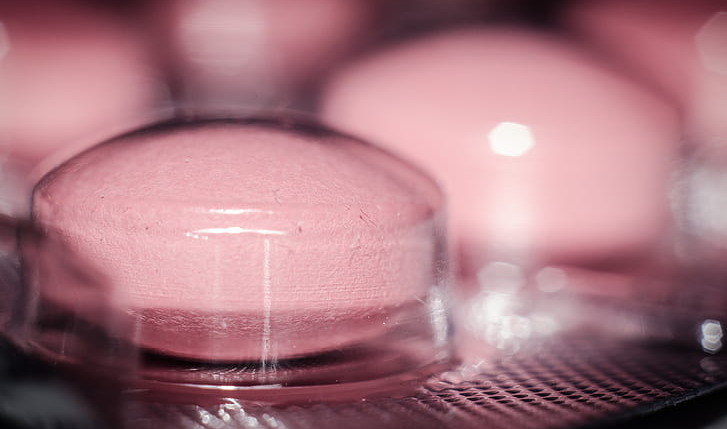
Editor’s Note: The opinions expressed here by the authors are their own, not those of Impakter.com — In the Featured Photo: Closeup of a pink medication pill. Featured Photo Credit: Pickpik.