Today’s ESG Updates
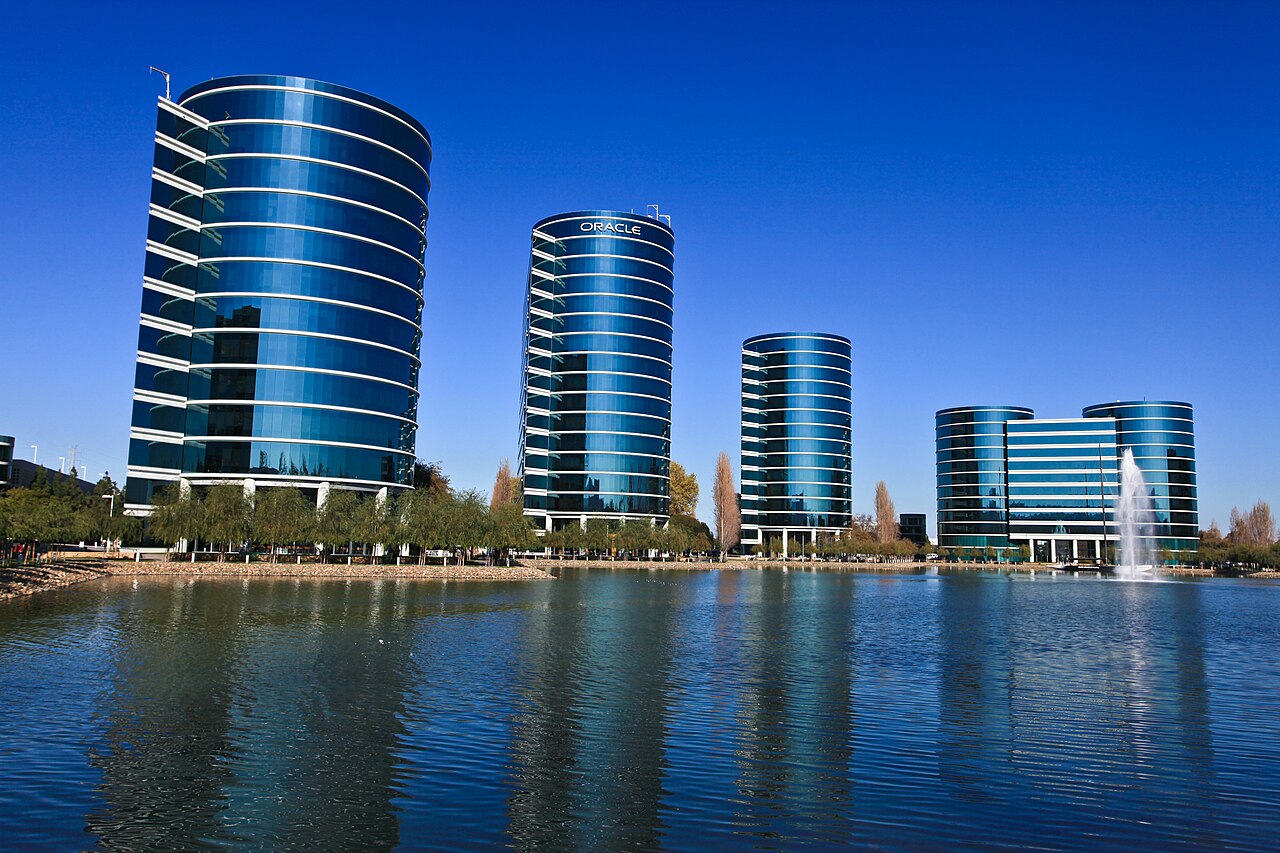
- Oracle Invokes ‘Force Majeure’ on Contested New Mexico Data Center: Oracle sent a force majeure notice to the developer of its massive AI data center in New Mexico, adding another setback to a project that’s already faced challenges.
- AI Coding Tools Add Nearly $1 Billion to Health Insurers’ Costs, Study Finds: Hospitals using AI to scan patient records for secondary conditions and draft clinical notes are driving up billing intensity, according to a Blue Cross Blue Shield Association study.
- Britain Commits £331 Million to Tackle Climate-Driven Security Risks: The UK will fund the Global Environment Facility to support food and water security and protect ecosystems like the Amazon and Congo Basin.
- Canada Moves to Build a Framework for International Carbon Removal Trade: Canada is developing a policy framework under the Paris Agreement to let its domestic carbon removal companies participate in international carbon markets.
Oracle invokes ‘force majeure’ on contested New Mexico data center
Oracle sent a “force majeure” notice to a unit of Blue Owl Capital, the developer of a large data center it is building in New Mexico, Bloomberg News reported. Reuters said it could not independently verify the report. Oracle’s shares fell around 3.3% after the news.
Rather than exiting as the project’s main tenant, Oracle appears to be using the notice to delay payments if the data center, known as Project Jupiter, fails to come online on schedule in 2028, citing potential delays in securing power for the site.
Companies typically invoke force majeure to free themselves from contractual obligations when problems arise beyond their control, a move that can unsettle lenders and investors. Oracle said “Project Jupiter remains on our planned schedule,” and that such notices “are commonplace in developments of this scale” and don’t indicate a delay themselves.
Blue Owl, which owns the data center developer Stack Infrastructure, said the notice doesn’t change its financial commitments. Blue Owl earns a 9% yield on its equity during development; once complete, that levered yield is expected to rise to around 11%. Invoking force majeure extends the period Oracle pays the lower, development-stage rent.
The 1,400-acre campus, backed by $18 billion in bank loans, is part of Oracle’s broader agreement with OpenAI to provide AI computing capacity. It’s reportedly faced other setbacks too, including a delayed natural gas pipeline and legal challenges over water and air quality permits.
Klimado – Navigating climate complexity just got easier. Klimado offers a user-friendly platform for tracking local and global environmental shifts, making it an essential tool for climate-aware individuals and organizations.
AI coding tools add nearly $1 billion to health insurers’ costs, study finds

AI tools used by hospitals are driving up health spending for insurers by nearly $1 billion over two years, according to a study released Thursday by the Blue Cross Blue Shield Association (BCBSA). Providers are increasingly using AI to scan patient records for secondary conditions or deploying “ambient scribes” that listen to doctor-patient conversations and automatically draft clinical notes. Visits documented as more medically complex can qualify for higher insurance payments.
Between 2024 and 2025, providers billed more often for these secondary conditions, adding $653 million in costs for BCBS insurers compared with 2023. More intensive care overall accounted for $942 million in additional costs over the same period.
BCBSA said the shift doesn’t necessarily mean AI is being misused. “If patients are truly sicker, we’d expect to see more treatment,” said Luke Chalker, the association’s senior vice president of product and data science.
The hospital industry sees it differently. The American Hospital Association argues insurers want it both ways, treating enrollees as sicker for risk-scoring purposes while pushing back on claims reflecting that same complexity. The AHA also points to a 2025 MedPAC finding that upcoding contributed to $40 billion in excess Medicare Advantage payments, and to a March 2026 settlement between a payer and the Justice Department over similar allegations.
Related Articles
Here is a list of articles selected by our Editorial Board that have gained significant interest from the public:
Britain commits £331 million to tackle climate-driven security risks
At New York Climate Week, Britain warned that environmental shocks are increasingly becoming a national security threat, and said Wednesday that it would provide £331 million to help tackle instability driven by climate change and biodiversity loss. The funding will go to the Global Environment Facility to support food and water security and protect ecosystems, including forests in the Amazon and Congo Basin.
The announcement came after UK Foreign Secretary Ed Miliband urged world leaders to consider climate change in their national security assessments. He argued that climate change and ecological collapse should be built into defense strategies, intelligence networks and military planning. “Countries need to pool information because a shock beginning in one country can rapidly travel through supply chains, financial markets and migration patterns to other regions,” he said.
Katie White, the UK’s minister for climate transition, told Reuters the UK is “leading the way” on turning countries’ focus to climate security ahead of COP31, the climate summit set to begin November 9 in Antalya, Turkey. “The military has been at the forefront of a lot of this climate risk planning for a long time because they’ve always seen that climate change is a threat multiplier,” she said. “The politics is a bit behind the security community on this.”

Canada moves to build a framework for international carbon removal trade

Canada is developing policies that would let its domestic carbon removal companies participate in international carbon markets, a move advocates say could spur investment and deepen the country’s economic ties with the EU and Asia. The government announced Thursday it will build a policy framework under Article 6 of the Paris Agreement, which allows countries to cooperate on climate targets through carbon markets and the trading of verified emissions credits.
Canada is already home to a growing carbon removal industry, including Deep Sky, the first North American company to deliver verified removal credits from direct air capture technology.
A report from Carbon Removal Canada estimates a scaled-up carbon removal industry could contribute billions to the country’s GDP and create hundreds of thousands of jobs by 2050. The framework builds on Canada’s Spring Economic Update, which pledged over $13 billion in international climate finance.
Any credit used under this framework must meet Article 6 requirements, including proof that the reduction is additional to what would have happened anyway, and safeguards against double counting.
Editor’s Note: The opinions expressed here by the authors are their own, not those of impakter.com — Cover Photo Credit: Wikimedia Commons.