Today’s ESG Updates
- New York Climate Superfund ‘Unconstitutional’: A law requiring fossil fuel companies to contribute $75 billion over the next 25 years has been blocked by a second judge.
- Europe’s Diesel Supply Under Threat: Trump is considering a 6-month ban on diesel exports, as American exports make up 50% of Europe and the UK’s total diesel imports.
- Democrats Fight Partisan GOP Approach to Data Centre Legislation: Democrats and Republicans fight in the Senate over a previously House-supported bill.
- California and Washington States Collaborate on Carbon Cap Plan: The two states announce plans to link their cap-and-invest programs in the face of administration rollbacks and “doubling down” on fossil fuels.
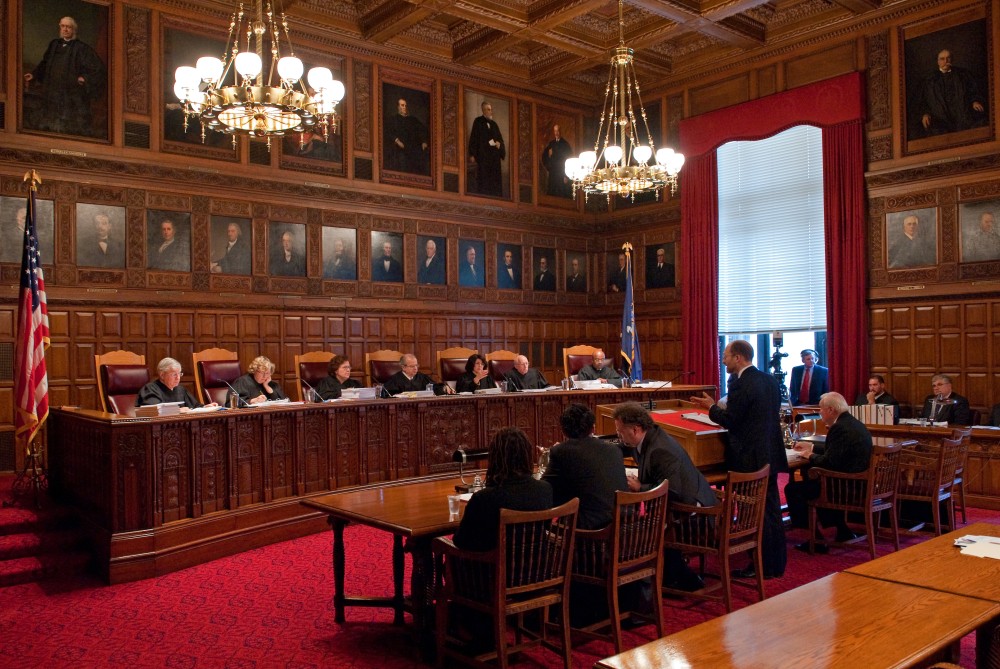
New York climate ‘superfund’ law unconstitutional
A New York judge has ruled the state’s “superfund” law is unconstitutional. Enacted in 2024, the law would require fossil fuel companies to pay $75 billion over the next 25 years into a fund for infrastructure projects to combat global warming. The measure would affect companies New York law identified as responsible for more than a billion metric tons of greenhouse gas emissions since the year 2000. Rather than aiming to tackle future greenhouse gas emissions, the law attempted to remedy the harm from past emissions.
Both Vermont and New York have passed climate superfund laws, but they have also been proposed in other states. The law in Vermont is similarly undergoing a legal challenge. Ken Lovett, the environmental spokesman for New York Governor Kathy Hochul, said the state would appeal, stating “Taxpayers shouldn’t have to foot the bill for damages caused by polluters.” The ruling appeals to a 2021 decision by the Second Circuit Court of Appeals that dismissed a lawsuit by New York City, which argued oil companies should pay for damage caused by climate change.
A judge in Michigan similarly struck down a lawsuit based on the same principle, with the Justice Department’s Adam Gustafson calling it an “aggressively anti-energy lawsuit” and stating, “We are committed to protecting American energy from this sort of state overreach.”
Gustafson is the Justice Department’s principal deputy assistant attorney general for the Justice Department’s Energy and Natural Resources Division.
The Supreme Court is set to hear arguments on October 5 brought by Boulder, Colorado, against Exxon Mobil and Suncor Energy. Allies of the energy industry are pushing to combat initiatives to make energy companies liable for their role in climate change.
Klimado – Navigating climate complexity just got easier. Klimado offers a user-friendly platform for tracking local and global environmental shifts, making it an essential tool for climate-aware individuals and organizations.
Trump’s potential diesel export ban threatens European energy supplies
Last month, U.S. diesel imports accounted for half of the imports to EU members and the UK. Trump is preparing a 90-day ban on exports of diesel, risking “very serious” consequences, according to European authorities.
However, European officials have downplayed the threat, with some denying it would happen and others saying it wouldn’t affect them. Czech trade minister Karel Havlíček stated he believed the ban “will not actually materialize, given the potential negative indirect impact on world markets.” He added that direct U.S. diesel exports to the Czech Republic were “insignificant.” Confidence against the possibility of a ban comes from statements made by U.S. Energy Secretary Wright, who said the “blunt tool of banning diesel exports doesn’t work.”
A German spokesperson declined to comment on the U.S. threat of a ban, stating Berlin was “doing everything it can to maintain security of supply.”
Last month, the U.S. supplied 420,000 barrels of diesel to EU member states and the UK. Germany imported 30,000 barrels, accounting for 18% of German imports. The UK is the biggest importer of American diesel in Europe at 108,000 barrels last month. A government spokesperson stated the UK had a “diverse and resilient supply.” But Labour MP and chair of the House of Commons Energy Security and Net Zero Committee, Bill Esterson, was more apprehensive. He expressed, “If the U.S. restricts our supply of diesel, it would be a big concern for drivers,” and commented on prices being “sky high because of the war in Iran.”
The European Commission declined to comment, while anonymous European officials downplayed the threat.
Related Articles
Here is a list of articles selected by our Editorial Board that have gained significant interest from the public:
Democrats skeptical of data center vote that could benefit GOP candidate

Republican Leaders in the Senate are expected to set up a vote next week on the Ratepayer Protection Act. The bill, previously passed in the House with 206 Democratic votes, aims to tackle energy price increases caused by data centers. But the bill could face more opposition in the Senate. Senate Majority Leader Chuck Schumer called the bill a “fraud.”
The Senate bill was written and advocated for by Ohio Senator Jon Husted, the replacement for Vice President JD Vance, and is facing tough odds against Democratic contender Senator Sherrod Brown. Senate Democrats see the bill as an attempt to boost the reputation of the Republican candidate ahead of a difficult election. “It’s an effort to rescue Husted’s campaign,” said Senator Dick Durban in an interview.
The Ratepayer Protection Act would require states to “consider,” but not mandate, a framework ensuring data centers pay for energy costs and grid upgrades. Democratic Party leaders have contended the bill does not go far enough. The bill is “voluntary,” said Schumer: “No company has to do it. The bill we have is mandatory. It is much stronger and is what is needed.”

California and Washington states work together on carbon market plans
California’s cap-and-invest program was introduced in 2013 to force polluters to buy ‘pollution credits’ to offset emissions. Now, California plans to link its program to a similar plan in Washington State. The changes are estimated to provide $10 billion to electricity consumers by way of bill credits and will generate an estimated $8 billion for the state’s climate fund, the Greenhouse Gas Reduction Fund, by 2030.
Governor Gavin Newsom announced at Climate Week in New York City: “By joining forces with our partner in Washington State, we will build a stronger, more durable carbon market that will drive investment, cut pollution, and power the clean economy of the future.” Last year, state lawmakers voted to extend the cap-and-invest program until 2045.
The action follows environmental rollbacks by the Trump administration, who have attempted to revoke the state’s authority to set stricter motor vehicle emission standards. Trump is “doubling down” on the use of fossil fuels, per Gavin Newsom. California’s greenhouse emissions data, released this week, show emissions fell 3.9% in 2024, compared to the prior year.
Editor’s Note: The opinions expressed here by the authors are their own, not those of impakter.com — Cover Photo Credit: Tracy Collins