On Tuesday, New Jersey filed a lawsuit against the US’s largest oil companies for deceiving the public and prolonging their role in climate change. Included in the lawsuit are ExxonMobil, Shell Oil, Chevron, BP, ConocoPhillips and even the industry’s top trade group, the American Petroleum Institute.
However, this isn’t the first lawsuit that has been brought up against major oil companies — since 2015 dozens of lawsuits have been circulating throughout the court system.
The lawsuit brought on by the state of New Jersey hopes to hold large oil companies liable for the damage their emissions have caused to the residents and communities.
“Failure to warn”
The lawsuit filed by New Jersey alleges that oil companies failed to warn the public about fossil fuels impact on climate change and instead “launched public-relations campaigns to sow doubts about the existence, causes, and effects of climate change.”
The suit will pursue civil penalties and damages to restore natural resources like wetlands, build necessary infrastructure to withstand sea level rise, safeguard communities from deadlier storms and the many other harmful effects.
Attorney General Matthew Platin, who is representing the state, claims oil companies have known of the consequences of fossil fuels for a long time.
“Based on their own research, these companies understood decades ago that their products were causing climate change and would have devastating environmental impacts down the road,” Platkin said in a statement. “They went to great lengths to hide the truth and mislead the people of New Jersey, and the world.”
The suit was filed shortly after the 10-year anniversary of Hurricane Sandy in 2012 which caused billions of dollars of damage to states like New York, New Jersey and Connecticut.
Over the past decades, damage done to the state has been severe from extreme superstorms — specifically from Hurricane Sandy.
According to a 2021 study by Nature, $8 billion of the total $62.7 billion damages caused by Hurricane Sandy across New York, New Jersey and Connecticut was attributed to sea level rise induced by climate change.
Emissions fuel sea level rise. The National Oceanic and Atmospheric Administration (NOAA) states about two feet of sea level rise along the US coastline is very likely between 2020 and 2100, that is if emissions remain where they are currently at.
If emissions were to increase, the NOAA predicts sea level rise could cause an additional rise of 1.5-5 feet for a total of 3.5-7 feet increase.
The idea that oil companies “failed to warn” residents of the repercussions of emissions may give the state the upper hand in the courtroom.
Similarly, “Big Tobacco” cases in the 1990s proved a similar theme to “failure to warn” which eventually led to cigarette companies paying hundreds of billions of dollars to compensate states for tobacco-related illnesses.
In defense to the New Jersey suit, The Shell Group said in a statement that its position on climate change “has been a matter of public record for decades” and that they are doing their role “by addressing [their] own emissions and helping customers to reduce theirs.”
States have been suing oil companies for decades
In April of 2018, Boulder Colorado was one of the first governments in the middle of the country to take action against major oil companies ExxonMobil and Suncor Energy.
Both companies were prominent in the Colorado region, with Suncor Energy’s US division run out of the capital, Denver. In 2018, the state produced 4% of the country’s crude oil and hosted the sixth largest natural gas reserves.
However, the region also suffers from continuous major disasters like floods, droughts, snowmelt, wildfires, etc.
When the lawsuit was filed, snowpack had been down by a third compared to the previous year — snowpack essential for hydropower, irrigation and drinking water.
Boulder County estimated climate change would cost them up $157 million by 2050 to build necessary infrastructure to resist the effects of climate change as well as repair from continuous natural disasters.
The county had initiated sustainability efforts to cut emissions 80% by 2050, yet if the federal government wouldn’t stop new oil and gas projects, and oil and gas companies wouldn’t lower emissions themselves, Boulder’s goals appeared more like a hopeless dream.
Similar to New Jersey, the lawsuit’s argument alleged that the companies knowingly produced harmful emissions and deceived the public about how lethal they were. They also claimed that annual temperatures would rise between 3.5 °F and 6.5 °F by 2050, which would harm the skiing and farming industry.
Oil companies pressed to have the lawsuit moved to federal court, concerned of the prospect of local jurors in state court, however in 2021 the case was finally deemed to proceed in state court — as of now no settlement has been decided, but this may be a good thing.
Oftentimes, many climate lawsuits are quickly thrown out the window.
In 2021, a federal appeals court rejected New York City’s appeal to hold five major oil companies accountable for the harm their emissions caused the city.
When rejecting the lawsuit, Circuit Judge Richard Sullivan wrote, “Global warming presents a uniquely international problem of national concern. It is therefore not well suited to the application of state law.”
To refrain, Sullivan argues the problem is both global and complex and therefore must be dealt with on a federal level.
However, this statement contradicts the 10th Amendment that states:
“The powers not delegated to the United States by the Constitution, nor prohibited by it to the State, are reserved to the State’s respectively, or to the people.”
If the argument is that states shouldn’t have control over their own states’ emissions, then should states also not be allowed to regulate other rights?
Alongside New York City, dozens of states have been rejected on similar grounds — and most likely, there are more to come.
Is it for money or justice?
When it comes to climate lawsuits like New Jersey’s, many oil and gas companies claim the lawsuits are just an exploitation of money.
During the Boulder court case, Gale Norton, a former Colorado attorney general who led Colorado’s litigation against “Big Tobacco” products, put the liability on consumers.
“About the only thing that ‘Big Tobacco’ and ‘Big Oil’ have in common… are the deep pockets of the defendants,” Norton said.
She goes on further to say:
“What is our own individual liability, since annual greenhouse gas emissions amount to almost 20 tons per person?”
The Denver Post editorial board expressed similar views, claiming citizens bear a greater responsibility.
“The companies didn’t create the demand for fossil fuels,” they claimed. “We did through our lifestyles and consumption, including every single member of the communities who now wish to target corporations for a legal shakedown.”
Similarly, other companies involved in the latest New Jersey lawsuit, like spokesperson Casey Norton from ExxonMobil, claimed the legal proceedings “waste millions of dollars of taxpayer money and do nothing to advance meaningful actions that reduce the risks of climate change.”
Alongside ExxonMobil, Chevron called the lawsuit “a distraction from the serious problem of global warming, not an attempt to find a real solution.” They went on to further say it was an attempt by New Jersey “to punish a select group of energy companies for a problem that is the result of worldwide conduct stretching back to the beginning of the Industrial Revolution.”
Perhaps the lawsuit is about money, but money justly owed from companies that profit from millions of dollars a year. Perhaps the lawsuit is about “punishing select companies,” but companies that continue to evade responsibility for their polluting industries and the effects they have on local communities.
Or perhaps much of this responsibility falls on the individual, but as years of climate activism have shown, only the collective voice can impact the choices and actions of tomorrow.
Despite the reasons, one thing is clear about the lawsuits — state governments are fed up with inaction on the federal government’s end, and will continue to pursue justice until given on a silver platter.
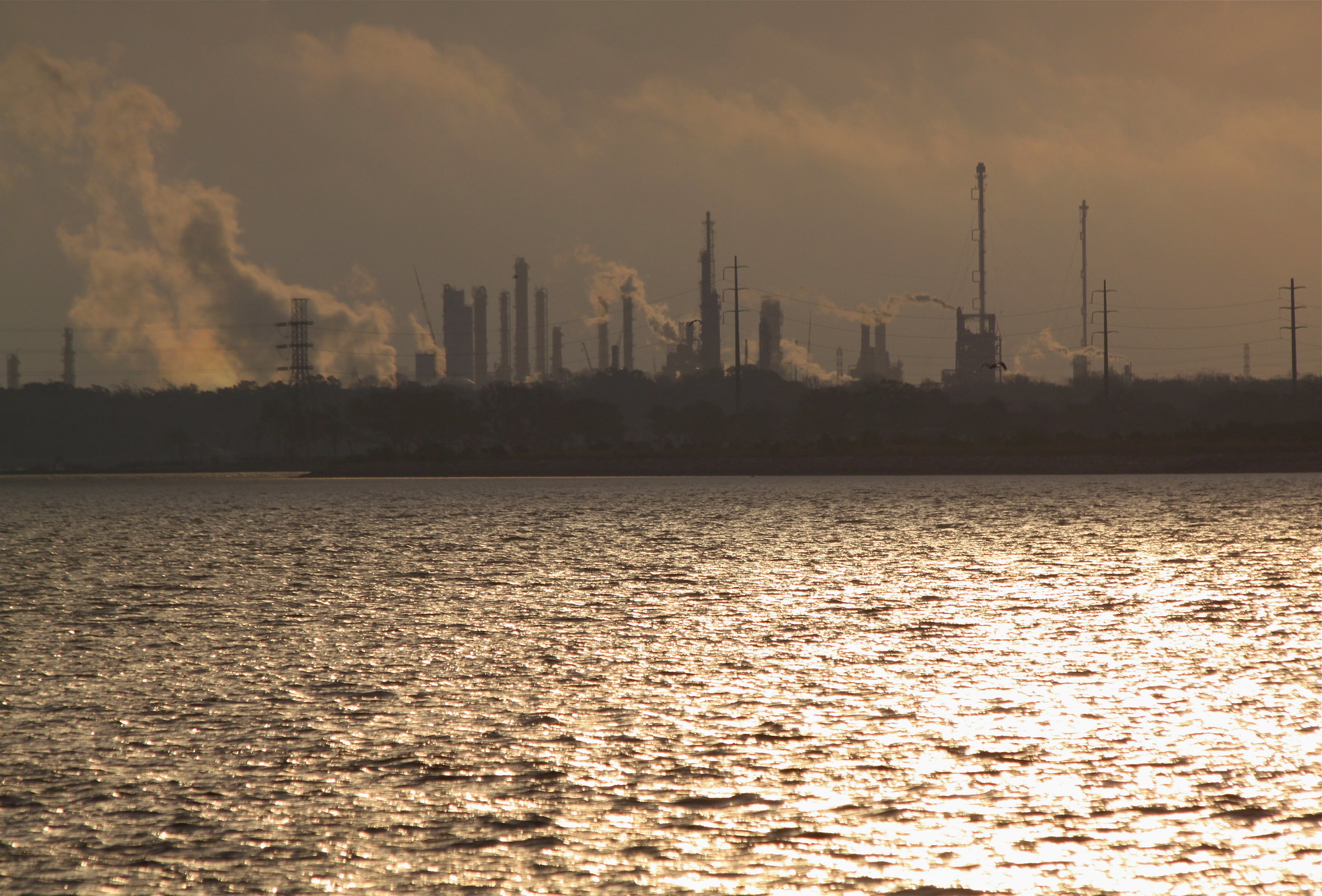
Editor’s Note: The opinions expressed here by Impakter.com columnists are their own, not those of Impakter.com –In the Featured Photo: ExxonMobil Refinery in Baytown, Texas on March 16, 2012. Source: Roy Luck, Flickr.