Impakter
  • Environment
    • Biodiversity
    • Climate Change
    • Circular Economy
    • Energy
  • FINANCE
    • ESG News
    • Sustainable Finance
    • Business
  • TECH
    • Start-up
    • AI & Machine Learning
    • Green Tech
  • Industry News
    • Entertainment
    • Food and Agriculture
    • Health
    • Politics & Foreign Affairs
    • Philanthropy
    • Science
    • Sport
  • Editorial Series
    • SDGs Series
    • Shape Your Future
    • Sustainable Cities
      • Copenhagen
      • San Francisco
      • Seattle
      • Sydney
  • About us
    • Company
    • Team
    • Global Leaders
    • Partners
    • Write for Impakter
    • Contact Us
    • Privacy Policy
No Result
View All Result
Impakter logo
No Result
View All Result
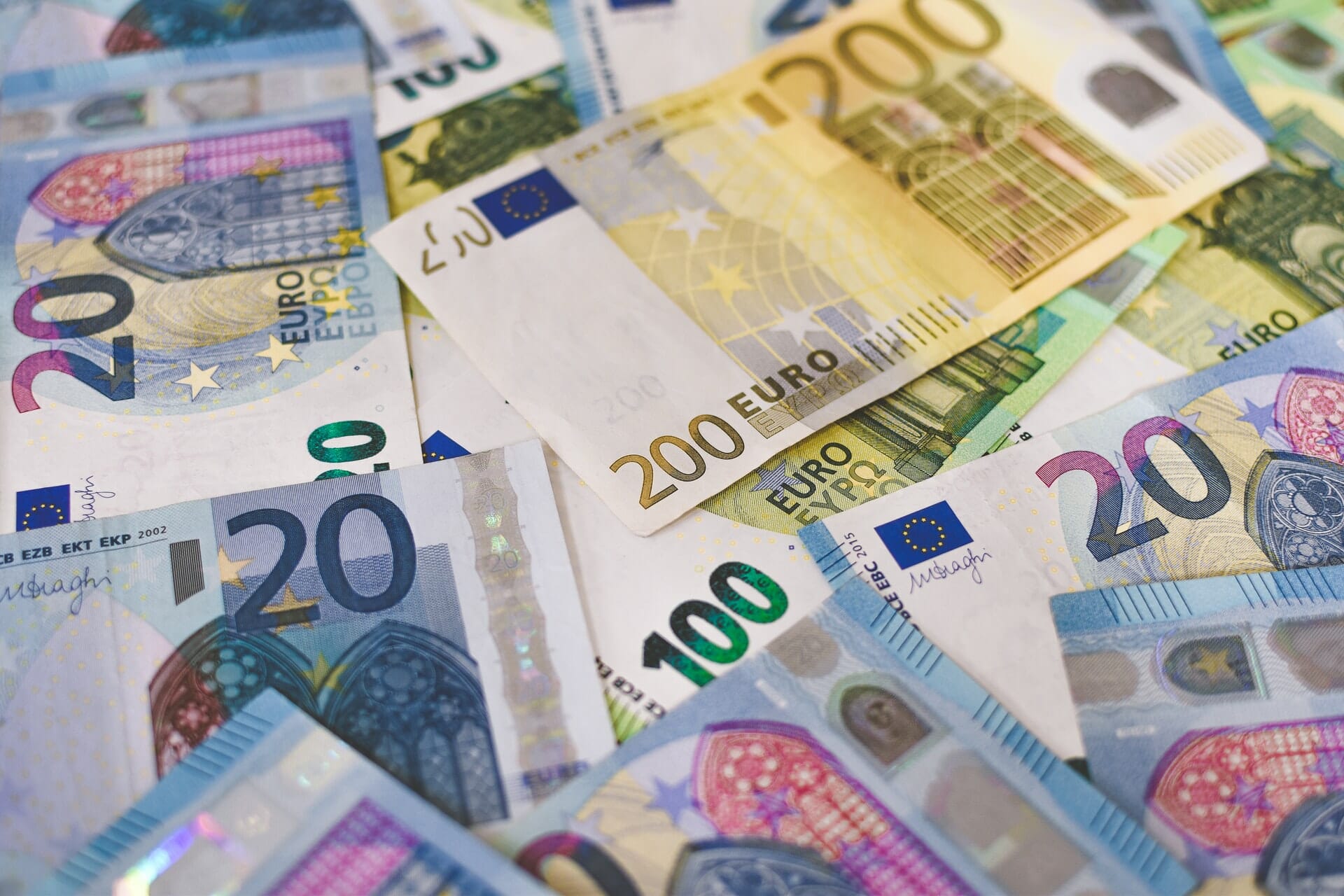
A pile of Euro banknotes that include 20, 100, and 200 notes.

The New European Social Climate Fund: How Will It Help the Average European Citizen?

Proposed by the EU Commission, the Fund is designed to compensate for costs of the “green transition” and protect vulnerable, low-income people

María Gálvez del Castillo LunabyMaría Gálvez del Castillo Luna
September 17, 2021
in Politics & Foreign Affairs, Society
0

On September 15, at the European Parliament, Ursula von der Leyen, the EU Commission Chief, began her speech on the State of the Union and began with this sentence by Robert  Schuman: Europe needs a soul, an ideal, and the political will to serve this ideal. Aware that 34 million Europeans are rising from energy poverty, von der Leyen proposes a new European Social Climate Fund. Some governments are already acting too: Spain moved to ease the cost of energy bills, Italy and France are considering it and Greece has announced a subsidy for all households. 

Such a proposal will impact directly European citizens across the continent, as the electric bill continues to rise and consumers look at winter with concern. The surge in European power prices is predominantly being driven by soaring fossil gas costs – not carbon prices. Reducing the external energy dependence of the European Union is essential for the future. 

The green transition is not cost-free, especially in the short term. Nevertheless, the EU has before itself the opportunity to be even greener, more social, more democratic, and more secure. It has a plan and a wide range of measures that would enjoy broader social support and more solidarity.

According to the Eurobarometer, European citizens believe that climate change is the most serious problem facing the world. The transition to a climate-neutral society is, therefore, an urgent challenge widely supported by Europeans, and as Richard Titmus said: “Knowing nothing about wind and currents, without some sense of purpose, men and societies do not stay afloat for long, morally, and economically, simply bailing water.” 

With the European Green Deal, a package of measures aimed at reducing greenhouse gas emissions to zero and ensuring a fair, healthy, and prosperous society, the European Commission is striving to make Europe the first climate-neutral region by 2050. While the European Climate Law provides in binding legislation to the European Union’s commitment to climate neutrality and the intermediate goal of reducing net greenhouse gas emissions by at least 55% by 2030, compared to the 1990 levels.

The proposals can be summarized as applying emissions trading to new sectors and strengthening the current EU emissions trading regime; greater use of renewable energies; greater energy efficiency; faster deployment of low-emission modes of transport and the infrastructure and fuels to sustain them; adjustment of fiscal policies to the objectives of the European Green Deal; measures to prevent carbon leakage; and instruments to preserve and enhance our natural carbon sinks.  

The aim is to ensure that people have a good standard of living, without unsustainably high levels of greenhouse gas emissions. This is feasible. In fact, in the last 30 years, the GDP of the European Union has increased by 60%, while CO2 emissions have decreased by 25%. 

The transformation towards a green society is possible, recommended, and affordable, although it comes with its costs, especially in the short term. An EU Commission impact assessment published last year mentions:

“While tax increases for fossil fuels in the transport or heating sector are powerful incentives towards behavioral change, in the short term, consumers may not be easily able to change their consumption patterns when an important share of their income is involved. This will be carefully assessed. The final impact depends on the way in which the redistributive effect is compensated via accompanying measures through social policy and welfare systems.” 

Policymakers must be honest and almost as pragmatic as Angela Merkel in her memorable response to a question about what feelings Germany awakes in her, and the Chancellor replied – “I think of well-sealed windows.” It must be ensured that the costs of the green transition, as well as the benefits, are shared fairly.

Reducing energy demand and boosting efficiency is a recommendable solution in the short term, but one that must be complemented by positive redistribution through taxes and carbon offsets. In such a way that the most vulnerable and low-income people are protected, who are also the least able to invest in new technologies, be it cars, solar panels, or heating devices.

Other necessary measures are to reduce Europe’s external energy dependence and accelerate the energy transition. It is also essential to manage European funds for the ecological transition with maximum transparency, coherence, and agility, having a clear climate-neutral objective for 2050.

The shadow of the “yellow vests” lurks and some opportunistic politicians will try to take advantage of it. Hopefully, we have learned from experience and understand that the ecological transition must be fair and requires ambition and action.

We may see this in the election results in Norway and the upcoming general election in Germany – a country that has recently suffered devastating floods. Along with the electoral programs of the candidates for the French presidential elections next spring, an appointment that will coincide with the French presidency of the Council of the EU and the Fit for 55 debates.

These events will provide an idea of the direction the European Union is taking in Climate Action and if we really want to be the first climate-neutral continent in the world.


Editor’s Note: The opinions expressed here by Impakter.com columnists are their own, not those of Impakter.com. — In the Featured Photo: A pile of Euro bank notes in 20, 100, and 200 notes. Featured Photo Credit: Ibrahim Boran.
Tags: Climate ChangeEuropean Parliament
Previous Post

Global Fight Against Covid: Vaccination Disparity on the Increase? 

Next Post

Russian Elections: Opposition Leader Navalny App Removed From Stores as Polls Open

Related Posts

ESG news regarding Deforestation Mandate Being Pushed; EUs Acceleration on Hydrogen and Net Zero Revolution; AT&T Will End All DEI; UK Watchdog Blocks Nike and Lacoste Ads Over Green Claims.
Business

U-Turn in Europe: Deforestation Mandate Pushed Back Again

Today’s ESG Updates EU Lawmakers Agree to Delay Deforestation Rules: The EU has delayed and simplified its Deforestation Regulation until...

byEge Can Alparslan
December 5, 2025
ESG News regarding Flooding in Indonesia; Glencore promises copper production boost; Trump proposes slashing fuel efficiency standards, and Vulcan Energy receives $2.57bn of funding for lithium project
Business

Indonesians Blame Deforestation for Recent Floodings

Today’s ESG Updates: More than 700 Lives Lost in Recent Indonesian Floods: A combination of mass deforestation and heavy rainfall...

byAriq Haidar
December 4, 2025
How a Framework Convention Could Address Climate and Socio-Economic Displacement
Politics & Foreign Affairs

How a Framework Convention Could Address Climate and Socio-Economic Displacement

The unprecedented shift in human (im)mobility has seen over 120 million forced to flee their homes due to war, violence,...

byDr. Shepherd Mutsvara - Research Fellow at the University of Münster, Germany
December 3, 2025
fossil fuel subsidies
Business

How G20 Nations Can Make Progress After the Group Stalls on Fossil Fuel Subsidy Reform

The 2025 G20 Leaders’ Summit in South Africa sent mixed signals on climate action. In this year’s Leaders’ Declaration, climate change...

byInternational Institute for Sustainable Development (IISD)
November 28, 2025
EU Redefines ESG Rules, Expanding Eligibility to Controversial Weapon Producers
Business

EU Redefines ESG Rules, Expanding Eligibility to Controversial Weapon Producers

This Week's Regulatory Updates EU Expands ESG Eligibility to Defence Firms: A rule change allows defence companies producing previously “controversial”...

byLuis Guillermo Valdivia Chavez
November 28, 2025
Animal Health
Biodiversity

Better Animal Health Is the Low-Risk, High-Reward Climate Investment We Need

Imagine if there was a way to reduce emissions from the meat, egg and dairy sector by nearly a quarter,...

byCarel du Marchie Sarvaas
November 26, 2025
ESG news covering the EU’s delay of deforestation rules, rising U.S. housing risks from climate impacts, IFC’s $100M clean-energy investment in emerging markets, and ABN AMRO’s appointment of a new Chief Sustainability Officer.
Business

EU Delays Deforestation Regulation Again

Today’s ESG Updates EU Delays Deforestation Law: Europe postpones the EUDR by one year and loosens compliance rules, raising concerns...

byEge Can Alparslan
November 21, 2025
COP30: Countries’ Climate Agrifood Ambitions Undermined by Funding Gaps, Report Finds
Biodiversity

COP30: Countries’ Climate Agrifood Ambitions Undermined by Funding Gaps, Report Finds

Developing countries recognize the urgent need to adapt agrifood systems to climate change, but most National Adaptation Plans (NAPs) are...

byThe Food and Agriculture Organization of the United Nations (FAO)
November 19, 2025
Next Post
Russian Elections: Opposition Leader Navalny App Removed From Stores as Polls Open

Russian Elections: Opposition Leader Navalny App Removed From Stores as Polls Open

Recent News

SaaS customer acquisition platform

Why Customer Acquisition Matters for SaaS

December 8, 2025
Plastic Can Now Help Spread Diseases

Plastic Can Now Help Spread Diseases

December 8, 2025
ESG news covering EFRAG's new ESRS Knowledge Hub, Bank of England's private equity climate stress test, Singapore's green-power data centre rules, and Amazon's climate dispute with rivals.

Europe Boosts ESG Transparency With New ESRS Knowledge Hub

December 8, 2025
  • ESG News
  • Sustainable Finance
  • Business

© 2025 Impakter.com owned by Klimado GmbH

No Result
View All Result
  • Environment
    • Biodiversity
    • Climate Change
    • Circular Economy
    • Energy
  • FINANCE
    • ESG News
    • Sustainable Finance
    • Business
  • TECH
    • Start-up
    • AI & Machine Learning
    • Green Tech
  • Industry News
    • Entertainment
    • Food and Agriculture
    • Health
    • Politics & Foreign Affairs
    • Philanthropy
    • Science
    • Sport
  • Editorial Series
    • SDGs Series
    • Shape Your Future
    • Sustainable Cities
      • Copenhagen
      • San Francisco
      • Seattle
      • Sydney
  • About us
    • Company
    • Team
    • Global Leaders
    • Partners
    • Write for Impakter
    • Contact Us
    • Privacy Policy

© 2025 Impakter.com owned by Klimado GmbH