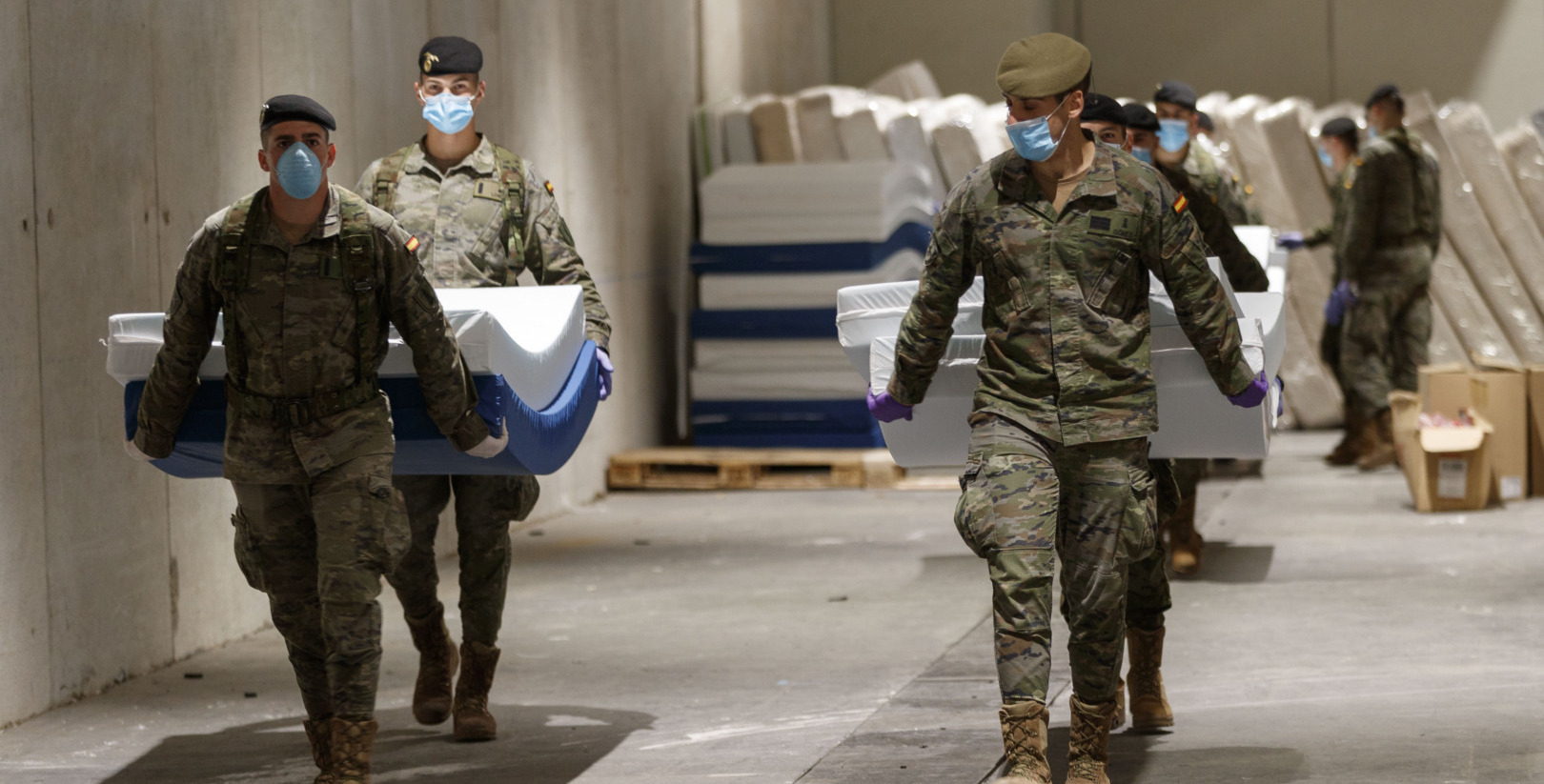
As the July 2024 meeting of the North Atlantic Treaty Organization (NATO) is currently taking place in Washington, a question arises: Since NATO has adopted its 2022 Strategic Concept with a human security mandate, shouldn’t it include pandemic prevention, preparedness, and response?
This particular meeting of NATO takes place at a time of multiple geopolitical challenges for the institution, and other worldwide challenges, such as the known or unknown threats of pandemics, one not on the minds of its founders. As underscored by COVID, viruses do not respect national boundaries.
Created in 1949, NATO was initially designed to deter Soviet expansionism, prevent the revival of nationalist militarism in Europe, and encourage European political integration. The Treaty is most well-known and referred to for Article 5:
“An armed attack against one or more of them…shall be considered an attack against them all.”
But much more is contained in the original Treaty. For example, Article 2 authorizes:
“The Parties will contribute toward the further development of peaceful and friendly international relations by strengthening their free institutions… and by promoting conditions of stability and well-being.” (bolding added)
Note the wording here: promoting “stability and well-being” — which refers of course to political conditions in NATO member countries but also to social conditions, including public health.
During these past 75 years, NATO has intervened in multiple conflicts inside and outside Europe. But in the last twenty-five years, much has changed, with NATO taking steps to adjust to new global paradigms. In 2022 it adopted a new Strategic Concept replacing its 2010 Strategic Concept, which now includes human security and some responsibility to protect civilians during conflict. Further, there is space for ways to address nontraditional sources of insecurity that directly influence core threats.
While not a NATO definition, for many, Human security is defined as follows:
“[It is] both a concept and an approach that assists national and international actors in identifying and addressing widespread and cross-cutting challenges to the survival, livelihood, and dignity of their people. Generally encompassing issues including economic, food, health, environmental, personal, community, and political security, the concept has long been the domain of national governments, humanitarian actors, and international human rights institutions, while largely considered strategic spoilers by militaries which operate amongst (and whose operations might sometimes exacerbate) human security issues.” (bolding added)
In the past decade, NATO’s work has focused on five cross-cutting topics: protection of civilians, children and armed conflict, conflict-related sexual violence, human trafficking, and cultural property protection.
While these are significant NATO new pathways, there is no doubt that a more far-reaching approach is needed to deal with core health security matters, namely infectious diseases which have the possibility of becoming pandemics.
If NATO chooses to build on its 2022 human security framework, it can draw on much that is already in place.
International efforts giving greater priority to global public health and pandemics on which NATO can draw or support
Here is a quick rundown:
1. World Health Organization International Health Regulations (IHR)
In 2024 the World Health Assembly adopted the most significant amendments to the IHR in twenty years. The amendments include:
-
- A new definition of a pandemic emergency to trigger more effective international collaboration in response to disease outbreaks that could become pandemic
- Improvements in making information more transparent and timelier
- Strengthening the global health security architecture to some degree
2. Global Health Security Agenda (GHSA)
In 2014 the GHSA was established to strengthen the world’s ability to prevent, detect, and respond to infectious disease threats.
More than 70 countries, international and non-government organizations and private sector companies have signed on to the GHSA framework. GHSA’s 2024 target is for countries to take greater ownership of global health security efforts, and for more than 100 countries to improve health-security-related technical areas within five years.
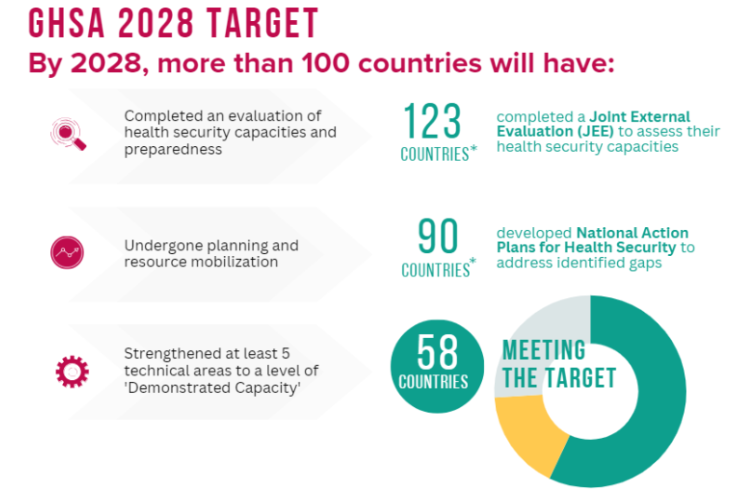
Nearly all NATO countries are members or supportive of the GHSA as is the World Bank and Private Sector Round Table (PSRT).
3. The Pandemic Fund
As I reported here on Impakter, the Pandemic Fund was established in 2022. It provides a dedicated stream of additional, long-term financing to strengthen critical pandemic prevention, preparedness, and response (PPR)capabilities in low and middle-income countries through investments and technical support at the national, regional, and global levels.
While many institutions support pandemic PPR efforts, none are solely focused on this. The program aims to incentivize countries to increase investments, enhance coordination among partners, and support advocacy.
Related Articles: NATO Summit: Alliance Unveils Plans to Bulk up Defences | NATO and Putin’s Nuclear Threats | Dealing With Future Pandemics: Do You Feel Safer Coping With Another Pandemic Today? | How Will The Pandemic Impact Positive Peace?
Why and what role for NATO?
The above-described mechanisms each have a potentially valuable function to perform in dealing with pandemic prevention, preparation, and response.
What is lacking in any of the above is the active engagement of the defense/military sector. The capability of competent military organizations, when multiple such organizations efficiently coordinate efforts, and are able to do so with speed, provides essential support in addressing an infectious disease outbreak where it begins. Such an engagement would be fully consistent with the fundamental principles and security objectives of the Treaty.
Additionally, the degree of polarization, discord, and competition in geopolitics adversely affects the capacity of international organizations, perhaps more so for the WHO than the other entities identified. Western countries may agree on the need and benefits of intervention, whilst others, such as Russia, China, Iran, may place obstacles in doing so, to the detriment of all.
NATO has shown it can act in crises and succeed.
To extend its reach to pandemic prevention, preparedness, and response, will require analysis and procedures to operationalize such an effort. But to contribute to our collective defense NATO needs to plan how it can contribute to containing an infectious disease that may morph into a pandemic.
NATO has much on its plate now, for sure, but if nothing is done, its members will pay much more later if it does not consider a way to complement and coordinate with others in addressing potential pandemics.