Impakter
  • Environment
    • Biodiversity
    • Climate Change
    • Circular Economy
    • Energy
  • FINANCE
    • ESG News
    • Sustainable Finance
    • Business
  • TECH
    • Start-up
    • AI & Machine Learning
    • Green Tech
  • Industry News
    • Entertainment
    • Food and Agriculture
    • Health
    • Politics & Foreign Affairs
    • Philanthropy
    • Science
    • Sport
  • Editorial Series
    • SDGs Series
    • Shape Your Future
    • Sustainable Cities
      • Copenhagen
      • San Francisco
      • Seattle
      • Sydney
  • About us
    • Company
    • Team
    • Partners
    • Write for Impakter
    • Contact Us
    • Privacy Policy
No Result
View All Result
Impakter logo
No Result
View All Result
Melting Sea Ice May Mean the End of Driftwood in Iceland

Melting Sea Ice May Mean the End of Driftwood in Iceland

Driftwood floats thousands of kilometers from Siberia to Iceland, but it may drift no longer by 2060 due to climate change

Richard J. SimabyRichard J. Sima
August 26, 2022
in Climate Change, Environment, Society
0

This story on air pollution originally appeared in science magazine EOS and is part of Covering Climate Now, a global journalism collaboration strengthening coverage of the climate story.


When the Vikings first arrived and colonized Iceland in the 9th century, much of the wood they used to build their houses and longboats did not come from trees growing on the island. Lands in the far north lack trees suitable for human settlement activities, the trees being too small and sparse to use in construction.

Instead, the early settlers of Iceland used wood that, like them, floated across the ocean.

A recent study published in Global and Planetary Change has reported that much of Iceland’s driftwood originates from far across the Arctic Ocean, from felled trees in Russia’s central Siberian region that make a multiyear journey thousands of kilometers long, made possible only by sea ice. Arctic driftwood was essential to Norse settlement and expansion and a vital part of Icelandic history.

“It’s a cultural thing,” said Ólafur Eggertsson, a research scientist for the Icelandic Forest Service and a coauthor of the study. “If it hadn’t been for the driftwood, people would have just not survived in Iceland.”
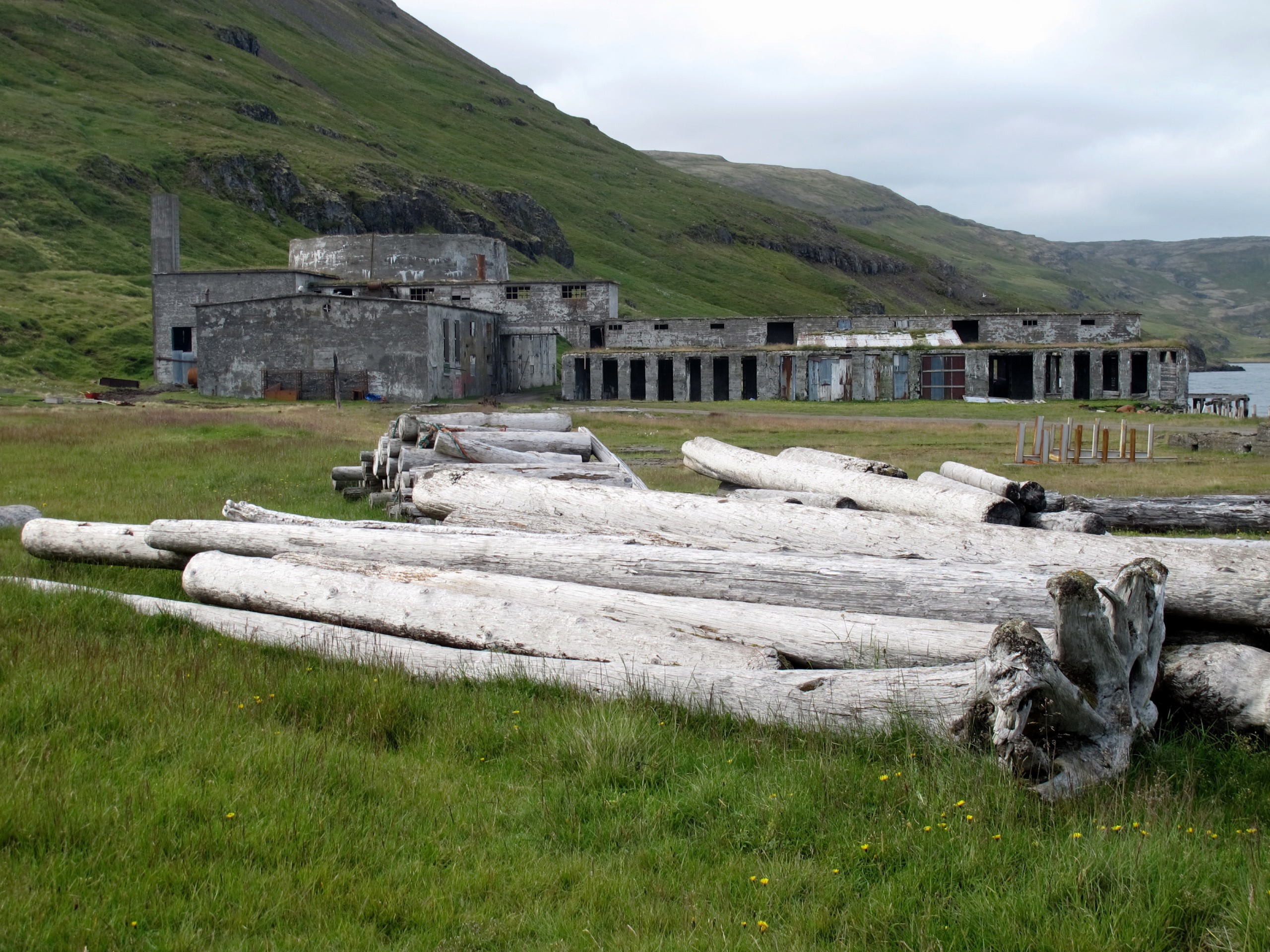
Driftwood Iceland
In the Photo: Driftwood in Iceland. Photo Credit: Freysteinn G. Jonsson.

However, the time of Icelandic driftwood may soon be coming to an end. The new research showed an abrupt decline in driftwood since the 1980s and predicts, based on sea ice loss simulations, that by 2060 driftwood will no longer arrive at Iceland—yet another casualty of climate change and warming oceans.

“The take-home message [of] the paper is expected and has a value of providing a very clear signpost of what sea ice melt means for this material to be transported in the Arctic,” said Marc Macias-Fauria, a University of Oxford ecologist who focuses on cold environments and was not involved in the study.

A Long, Strange Trip

Trekking along Iceland’s remote, nigh uninhabited northeastern coast, the researchers used a chainsaw to collect 289 samples of Arctic driftwood, an effort that first started during Eggertsson’s Ph.D. studies. They made their first trek in 1989 and returned 30 years later in 2019.

Under a microscope, the international team of researchers identified the species of trees the driftwood samples came from: Scots pine, larch, and spruce. By analyzing the tree rings of the samples, they also were able to determine their provenance by comparing them with Eurasian tree ring records, ultimately finding matches for 73% of the samples to trees from Siberia.


Related Articles: The Arctic Is Warming 4 Times Faster Than Rest of the World – and More Quickly Than Previously Thought | Iceland Introduces World’s Largest Carbon Capture Machine

They also were able to determine that 83% of the driftwood samples came from trees felled by logging, while the remaining 17% still had parts of their roots intact, indicating they fell naturally before being carried by river out into the Arctic Ocean.

Floating on open water, wood eventually gets waterlogged and sinks in approximately 10 months, according to previous research. But the Arctic Ocean goes through cycles of freezing and thawing, with ice forming around the fallen timber, allowing it to drift along in the ice without soaking up water.

The timber is finally released when the ice melts again, and can get washed up on a (fairly) nearby shore as driftwood.

“Sea ice is a conveyor belt that basically enables the Arctic to be quite connected, even though it’s basically an ocean,” said Macias-Fauria.

A Warming Sea, Loss of Ice, and Dearth of Driftwood

But this conveyor belt may soon be broken, and already it appears to be slowing down.

There has been a precipitous decline in the amount of driftwood arriving at Iceland from across the Arctic Ocean. In the samples, 80% had tree rings dating to between 1922 and 1976, while 14 trees stopped growing in the 1980s. Only three samples dated to afterward.

The contracting sea ice in the Arctic Ocean, driven by anthropogenic climate change, is likely to blame. With less ice, the driftwood is more likely to sink before it can make it to shore.

And the loss of sea ice is likely to continue given the predicted warming yet to occur, leading to a collapse of driftwood supply first in Iceland and then in other timber-poor northern regions such as Greenland and Svalbard. Simulations based on global climate models indicate that by 2060, no more driftwood will successfully complete the journey to Iceland.

Though driftwood is no longer as important a source of lumber, Icelandic people still use it for buildings and sculptures and as a source of income, Eggertsson said. They also use it to restore old churches originally made with driftwood.

Víðimýrarkirkja (Vidimyri Church) in Iceland is about as green a building as you can get. Built in 1834 with turf and driftwood, still in use. pic.twitter.com/jfSX9VSSOV

— Wrath Of Gnon (@wrathofgnon) February 19, 2018

Losing driftwood would mean losing an important part of Icelandic history and culture beneath the surf.

— —

This article was authored by Richard Sima, science writer based in Baltimore, Md. Sima covers the environmental and life sciences and has written for Eos, Scientific American, Discover, and elsewhere. He has a Ph.D. in neuroscience from Johns Hopkins University and an undergraduate degree in neurobiology from Harvard College.


Editor’s Note: The opinions expressed here by the authors are their own, not those of Impakter.com — In the Featured Photo: Driftwood on a seashore. Featured Photo Credit: Christina Keeler.

Tags: Arctic driftwoodClimate ChangeDriftwoodGlobal and Planetary ChangeGlobal warmingIcelandMelting Ice
Previous Post

How TikTok Threatens Our Quality of Life

Next Post

Biden to Cancel Student Loan Debts of 20 Million Americans

Related Posts

Protests arise against Wall street’s oil deals, Big tech accounts for half of global clean energy, EU proposes stricter standards for corporate vehicles, DHL introduces new portfolio offerings for reducing scope 3 impacts
Energy

Activists Protest Against Wall Street’s Oil Deals

Today’s ESG Updates Protests' Strategies Change Amidst Banks' Inaction: Wall Street fossil fuel deals push climate groups to shift tactics,...

byFedor Sukhoi
February 24, 2026
Trump Admin Weakens Coal Plant Mercury Regulations
Business

Trump Admin Weakens Coal Plant Mercury Regulations

Today’s ESG Updates: Coal Plants Get Reprieve on Mercury Limits: Trump's EPA is rolling back mercury emission limits to cut...

byEge Can Alparslan
February 20, 2026
How Climate Change Is Reshaping Arctic Geopolitics
Climate Change

How Climate Change Is Reshaping Arctic Geopolitics

Once a remote and largely inaccessible region, the Arctic has become the focus of far-reaching international developments. In recent years, competition among...

byPier Paolo Raimondi - Senior Researcher at the Energy, Climate and Resources (ECR) Program of the Istituto Affari Internazionali (IAI)
February 20, 2026
How an Intersectional Approach Can Help Us Address Vulnerability to Climate Change
Climate Change

How an Intersectional Approach Can Help Us Address Vulnerability to Climate Change

Different forms of discrimination and marginalization — such as racism, ableism, and discrimination on the basis of gender identity —...

byInternational Institute for Sustainable Development (IISD)
February 20, 2026
Underwater Wall to Protect the ‘Doomsday Glacier’: Necessary Intervention or Costly Distraction?
Climate Change

Underwater Wall to Protect the ‘Doomsday Glacier’: Necessary Intervention or Costly Distraction?

Thwaites Glacier in Antarctica earned its dramatic nickname, the “Doomsday Glacier,” because its collapse could trigger a catastrophic rise in...

byBenjamin Clabault
February 19, 2026
biodiversity loss
Biodiversity

The Economics of Biodiversity Loss

In the 1990s, India’s vulture population collapsed due to the unintended knock-on effect of a veterinary drug for cattle, with...

byStefano Giglio - Professor at Yale Universityand2 others
February 19, 2026
ESG news on TotalEnergies climate trial, Heathrow SAF incentives, Shein EU probe, EU climate resilience gap
Business

TotalEnergies Climate Trial Shock

Today’s ESG Updates TotalEnergies Climate Trial: French prosecutors intervene to defend TotalEnergies in a landmark climate lawsuit, challenging environmental groups’...

byEve Rogers
February 18, 2026
Can Human Behavior Explain the Recent Spike in Shark Attacks?
Environment

Can Human Behavior Explain the Recent Spike in Shark Attacks?

In January, headlines were dominated by the four shark bites occurring within 48 hours off Australia’s coast. This is not...

byLena McDonough
February 17, 2026
Next Post
Biden to Cancel Student Loan Debts of 20 Million Americans

Biden to Cancel Student Loan Debts of 20 Million Americans

Recent News

Scholars Argue for a Pan-European Coalition to Counteract U.S. Aggression

Scholars Argue for a Pan-European Coalition to Counteract U.S. Aggression

February 26, 2026
Who Owns the Ocean’s Genetic Wealth?

Who Owns the Ocean’s Genetic Wealth?

February 26, 2026
Heidelberg Materials plant in Georgia, USA

Cement Giant Posts Record Earnings and Cuts Carbon

February 26, 2026
  • ESG News
  • Sustainable Finance
  • Business

© 2025 Impakter.com owned by Klimado GmbH

No Result
View All Result
  • Environment
    • Biodiversity
    • Climate Change
    • Circular Economy
    • Energy
  • FINANCE
    • ESG News
    • Sustainable Finance
    • Business
  • TECH
    • Start-up
    • AI & Machine Learning
    • Green Tech
  • Industry News
    • Entertainment
    • Food and Agriculture
    • Health
    • Politics & Foreign Affairs
    • Philanthropy
    • Science
    • Sport
  • Editorial Series
    • SDGs Series
    • Shape Your Future
    • Sustainable Cities
      • Copenhagen
      • San Francisco
      • Seattle
      • Sydney
  • About us
    • Company
    • Team
    • Partners
    • Write for Impakter
    • Contact Us
    • Privacy Policy

© 2025 Impakter.com owned by Klimado GmbH