Though Pope Francis had speaking engagements and meetings in the United States commercial capital of New York City and its political capital, Washington, DC, in September, the pontiff chose to hold his only outdoor mass in the nation’s first capital, Philadelphia – the first World Heritage city in the U.S. Does the Pope know something we don’t? With his urgent environmental message expressed throughout his recent trip to the U.S., he showed that he knows much more than politicians seem to, particularly in the so-called lone superpower.
Sadly, too many American politicians insist on burying their heads in the sand, which, if located near any of numerous hydraulic fracturing sites in the country, could lead to their craniums being surrounded by toxic waste water. There are fewer and fewer places to hide. The far-reaching and cascading effects of industrial “civilization” are not just plaguing the Arctic, where President Obama months ago permitted Shell to drill for a fleeting chance at padding profits—with a much greater likelihood of wreaking irredeemable environmental devastation. No, we are seeing devastating impacts on the environment in Philadelphia’s home state of Pennsylvania.
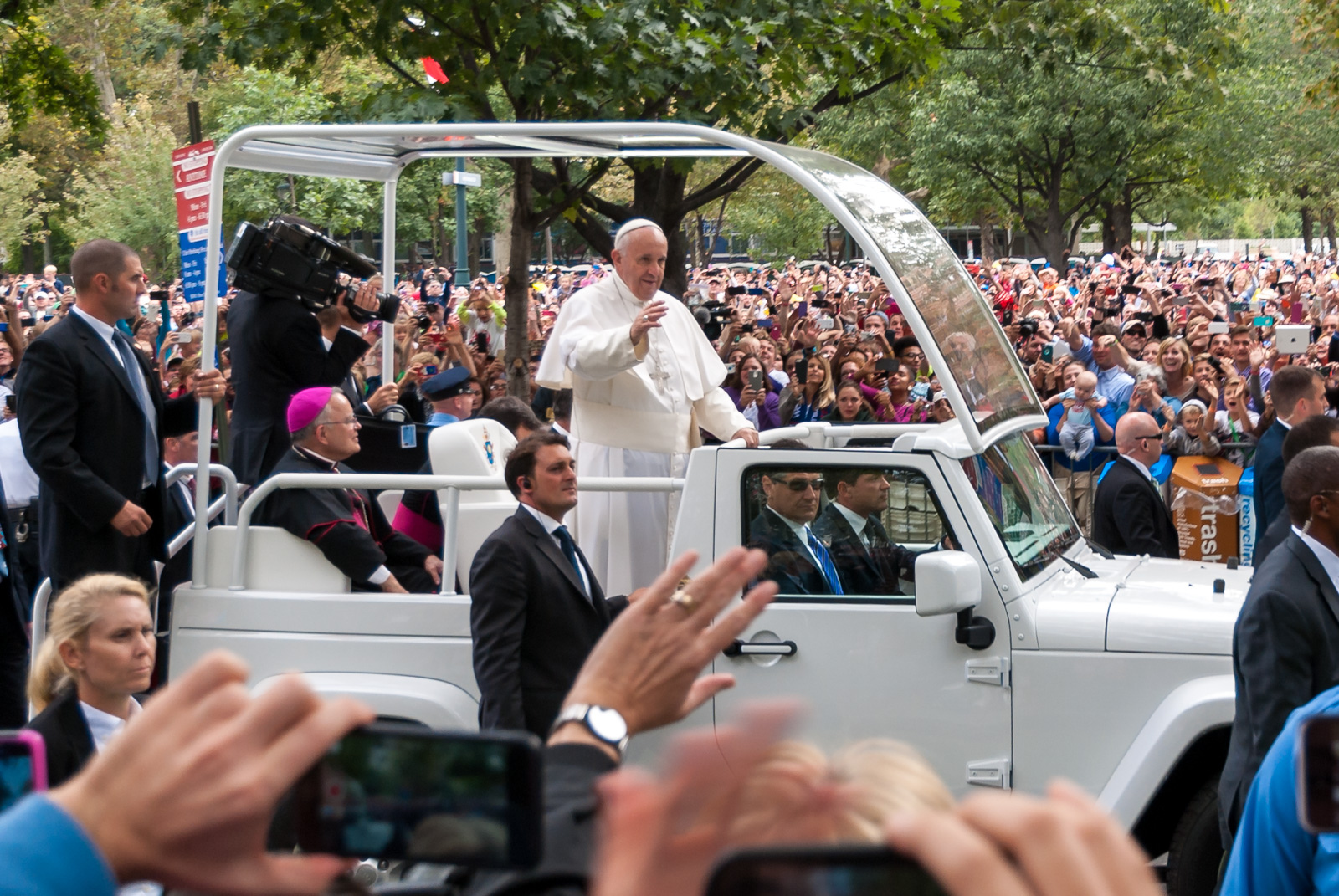 In the Photo: Pope Francis Visits Philadelphia. Photo Credit: pml2008/Flickr
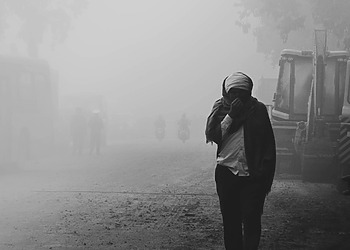
Just four short years ago, the Susquehanna River overflowed, leading to extensive flooding in large areas of the Keystone State, along with Maryland and Virginia, due to the remnants of Tropical Storm Lee. In multiple analyses of the last 65 years of rainfall, an increase of 51% in extreme downpours has been identified, with the Northeast and Midwest of the U.S. experiencing the greatest increase in heavy rains. Further, in the near future, Pennsylvania’s climate will resemble that of Alabama, with much less distinction in seasons and several 100 F+ (38 C+) days in summer. Air quality will only exacerbate how this feels, as Pennsylvania’s smog level, recently named one of the worst in the nation, will lead to spikes in asthma attacks and other respiratory problems, particularly among the elderly and children. In addition, according to a recent University of Pennsylvania study, hospitalizations for a wide range of issues, including heart conditions and neurological disorders, is higher among people who live near hydraulic fracturing (“fracking”) oil extraction in three northeastern counties in the Marcellus Shale region of Pennsylvania.
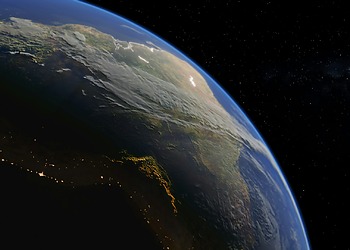
The world and its many ecosystems and inhabitants are interconnected and interdependent. And the climate crisis that we face is planetary and existential.
The Pope expresses an understanding, better than most politicians, that what happens in Vegas doesn’t stay in Vegas. What happens in the Marcellus Shale region or at the Fukushima Daiichi plant doesn’t stay there. The world and its many ecosystems and inhabitants are interconnected and interdependent. And the climate crisis that we face is planetary and existential. If we are to give ourselves a chance at a healthy future—or any future at all—we cannot rely on governments or corporations. While we should keep one eye fixed firmly to the goings-on at the Conference of Parties (COP 21) United Nations-sponsored climate change talks in Paris from 30 November to 11 December, we must remain focused on changing the way we live, and forcing the hands of governments and corporations.
Part of this formula for survival is ending our reliance on industries that yield greenhouse gas emissions, including power plants that release toxic carbon. Such behemoths belch out 48% of Pennsylvania’s carbon pollution. The U.S. Environmental Protection Agency’s (EPA’s) Clean Power Plan, which would cut this pollution by 32% in the next 15 years, is based on increased use of solar and wind power, rendering our buildings more energy efficient. While this effort should be supported in the U.S.—though it is much less than what is truly needed, it is a belated step in the right direction (which the retrograde U.S. Congress is, even now, planning on reversing through a Congressional Review Act that would roll back the legislation)—oil companies and other polluters bear watching.
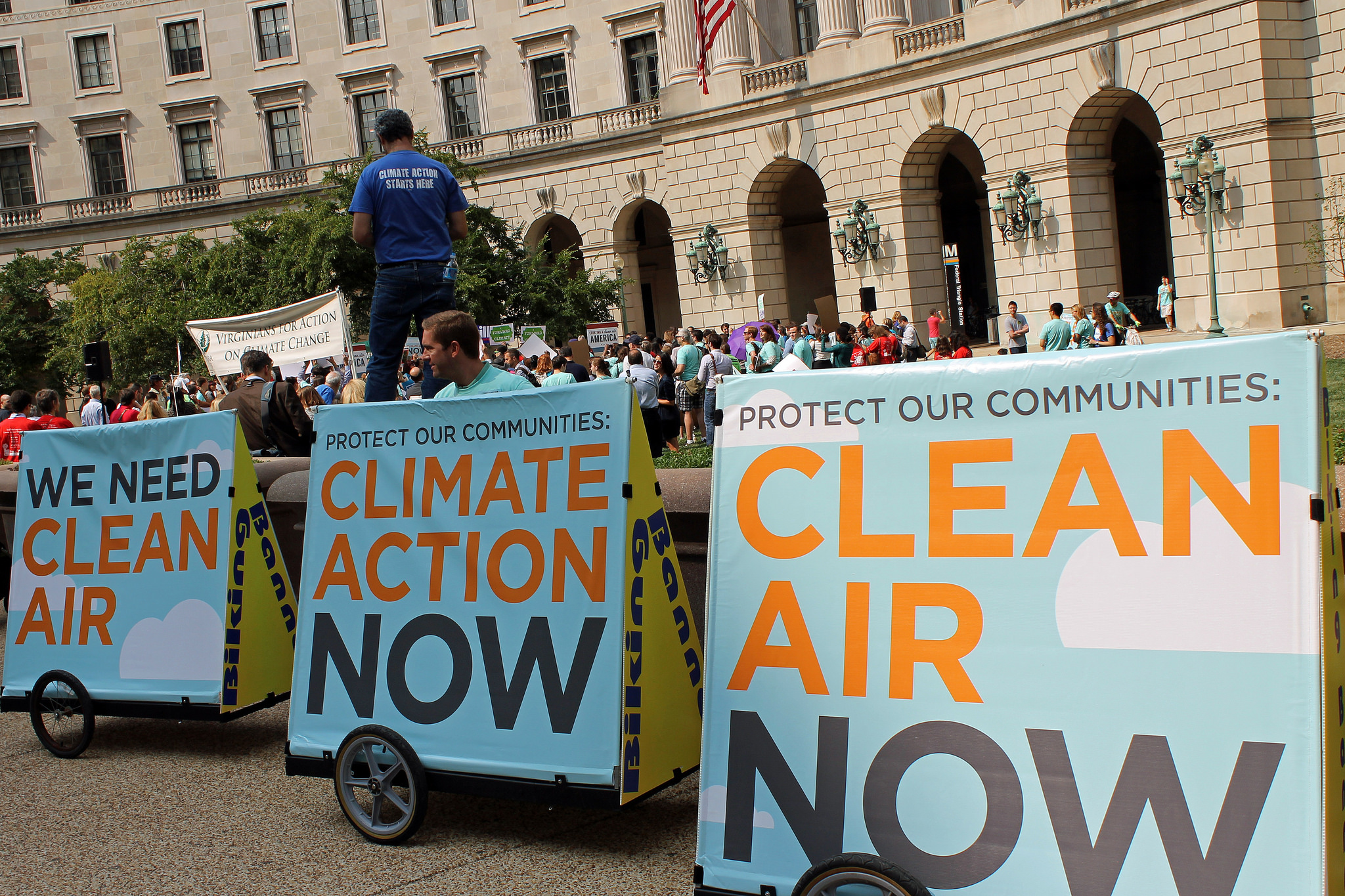 In the Photo: Climate Action Rally in Washington, D.C. Photo Credit: Karen Murphy/Flickr
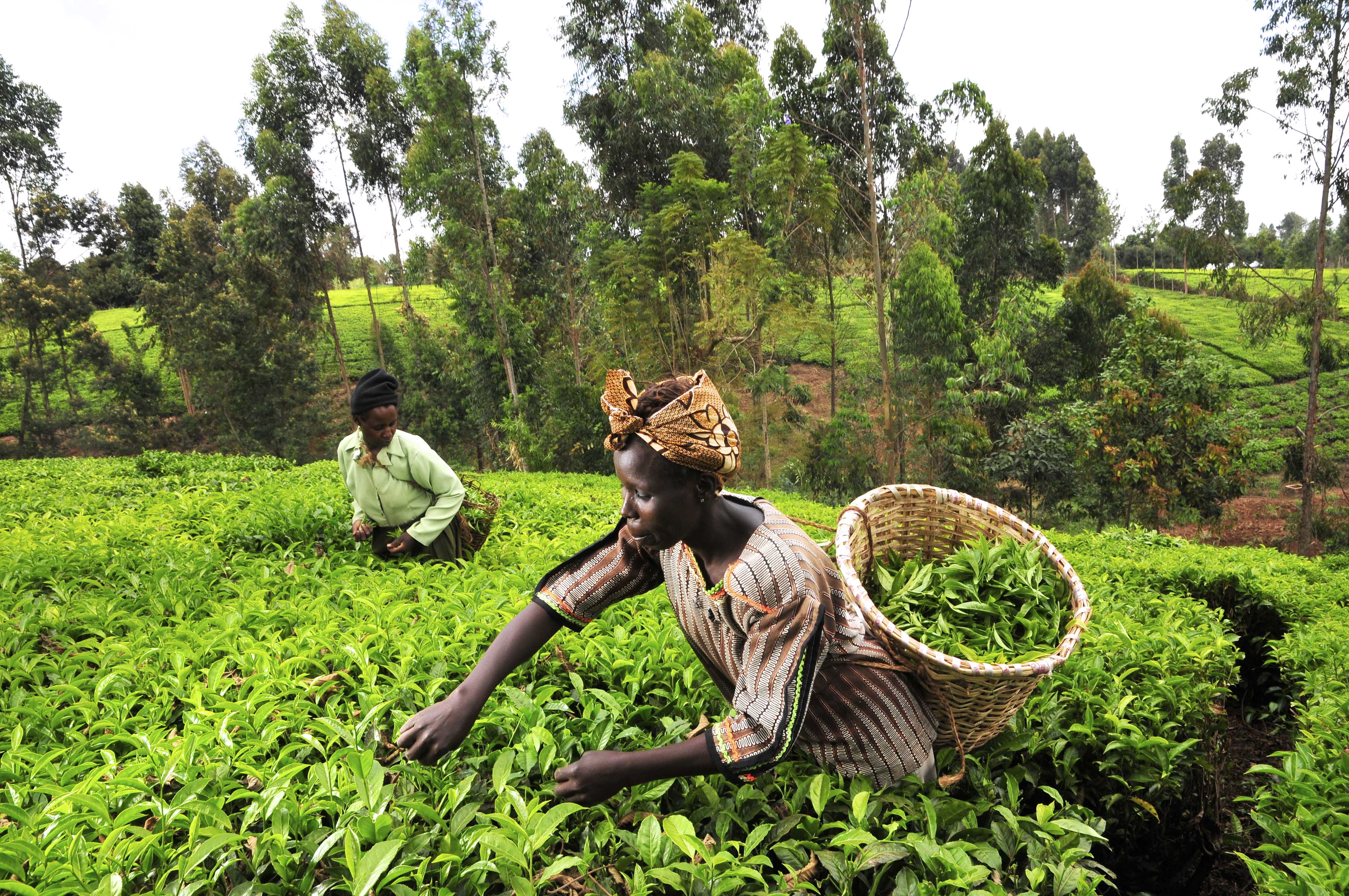
Saving the environment—our very lifeblood and that for the myriad diverse species not yet driven to extinction by anthropogenic climate change—requires action on a cooperative international level as well as on an individual level.
Just one day after the Pope left Philadelphia, Shell did not suddenly see the light, heeding the brilliance of the pontiff’s clarion call. Nor did it strike oil. Because the company failed to find appreciable deposits where it was drilling in the Chukchi Sea, all the while oil prices continued to plummet, Shell decided to cut its losses at $7 billion and halted its operation there. For now. The company has not developed an environmental, or moral, conscience. How could it—it isn’t human. For that matter, President Obama, who could, through executive action, put the kibosh on any future American involvement in drilling for oil in the world’s northern reaches, is hardly an environmental champion. His approval of drilling in the Arctic while promoting the Clean Power Plan ignored the physical reality that local environments are not closed systems. Large-scale, noxious intrusions on the natural order, such as the 2011 Fukushima nuclear disaster in Japan, have reverberating effects throughout the world in these inextricably linked ecosystems. Pope Francis made it clear at each of his U.S. stops that saving the environment—our very lifeblood and that for the myriad diverse species not yet driven to extinction by anthropogenic climate change—requires action on a cooperative international level as well as on an individual level.
It is worth noting that Pope Francis was not the first to urgently plead for responsible stewardship of the environment, of course—many clamorous voices in the environmental movement and in climatology/scientific circles have been increasingly vocal worldwide during the last few decades—but, theoretically, the pontiff has the largest audience. Maybe more people are listening to his and the voices of experts now. The governor of the Bank of England recently issued a clear warning on the financial risk of investing in fossil fuels. TransCanada just suffered a setback in its attempt to achieve eminent domain in Nebraska for its seven-year attempt to bisect the U.S. with the Keystone XL pipeline, and President Obama, facing deafening public pressure, finally nixed the pipeline, which would have transported tar sands oil from Alberta, Canada to the portion of the pipeline that Obama had previously endorsed for the U.S. Gulf Coast.
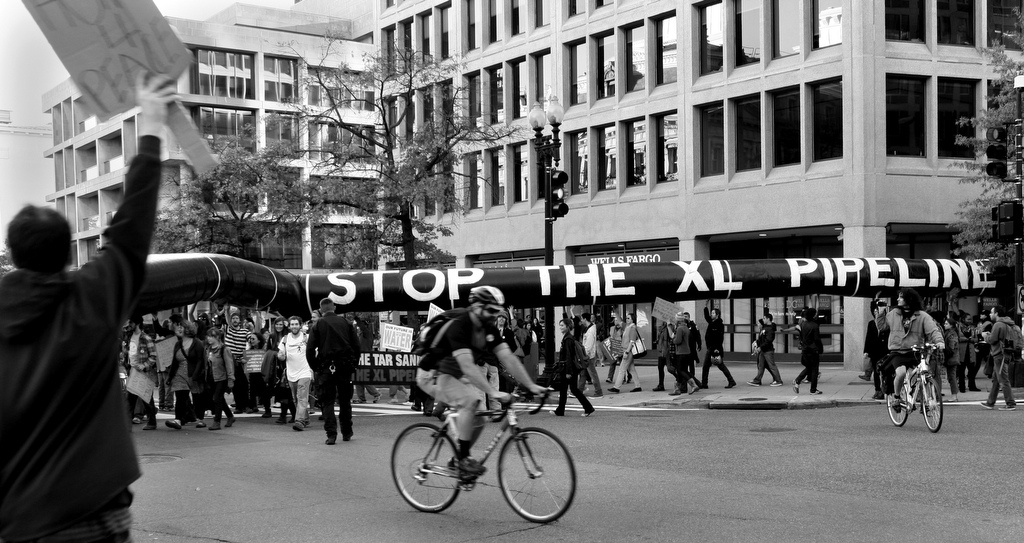
In the Photo: Keystone XL Pipeline Protest in Washington. D.C. Photo Credit: Tarsandaction/Flickr
It would not be surprising for the American contingent in Paris to tout this recent win for the environment as an example of the United States’ strong leadership advocacy for the environment. The truth, of course, is that the Obama administration’s environmental track record is spotty, at best. But whatever happens at COP 21 in Paris—here’s to hoping it’s not another COP-out, but I won’t hold my breath—it’s vital to remember that politicians and diplomats cannot legislate their way, our way, out of preventing more than a 2 Celsius increase in average global temperature, a threshold that climate scientists agree would be catastrophic. Further, it is unlikely that such authorities will take the steps necessary to dismantle entrenched parts of industrial society.
It is up to us, as global citizens, to continue to press governments and corporations to do the right thing, though. At a minimum, consider local activism. Everyone on the planet stands to benefit from truly clean, renewable energy sources. Those of us with so-called “first world” problems and the resources to fight must compensate for those struggling to survive, to give ourselves a chance at preventing the worst possible ravages of abrupt climate change on the one world that we share.
Whether or not you are religious, you likely have the ability to see what the Pope sees… that the laws of Nature, the laws of physics, or the laws of God or a higher power (if you’re inclined to believe) trump the laws of man.