Impakter
  • Environment
    • Biodiversity
    • Climate Change
    • Circular Economy
    • Energy
  • FINANCE
    • ESG News
    • Sustainable Finance
    • Business
  • TECH
    • Start-up
    • AI & Machine Learning
    • Green Tech
  • Industry News
    • Entertainment
    • Food and Agriculture
    • Health
    • Politics & Foreign Affairs
    • Philanthropy
    • Science
    • Sport
  • Editorial Series
    • SDGs Series
    • Shape Your Future
    • Sustainable Cities
      • Copenhagen
      • San Francisco
      • Seattle
      • Sydney
  • About us
    • Company
    • Team
    • Partners
    • Write for Impakter
    • Contact Us
    • Privacy Policy
No Result
View All Result
Impakter logo
No Result
View All Result
Latin America & Caribbean strengthen their cooperation for climate action

Latin America & Caribbean strengthen their cooperation for climate action

CGIARbyCGIAR
March 25, 2020
in Environment, Philanthropy
0

Through the Platform for Climate Action in Agriculture (PLACA), countries in the region seek solutions for the agricultural sector in the face of climate change.



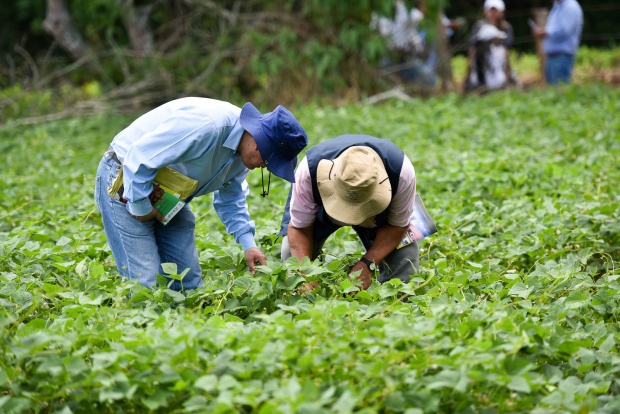
The agricultural sector in Latin America and the Caribbean is particularly vulnerable to the effects of climate change. The region faces big challenges on two fronts: achieving food security for its population, on one hand, and ensuring large-scale production of food for other regions of the world on the other.


Related topics: Agriculture, food security and climate change with a gender lens – Anticipation of futures – Trees in Latin American are a powerful mitigation resource

COP25 was an apt forum for Latin American and Caribbean countries to formally join together through the Platform for Climate Action in Agriculture (PLACA), which will support member countries to coordinate and strengthen joint solutions for the agricultural sector in the context of climate change.

According to Deissy Martínez Barón, Latin America Regional Coordinator for the CGIAR Research Program on Climate Change, Agriculture and Food Security (CCAFS), PLACA’s objectives include supporting decision-making, design, execution, and evaluation of relevant public policies and implementation in the region. The platform also aims to promote articulation and synergies between climate action, agricultural development, and food security.

Finally, the platform is a space for the exchange of practices and collaboration in agriculture to adapt to and mitigate the effects of climate change in the region. It promotes the joint formulation of more ambitious goals that will be reflected in the Nationally Determined Contributions.

Countries who joined PLACA:

Argentina, Bahamas, Brasil, Chile, Costa Rica, Dominican Republic, Ecuador, Guatemala,
Mexico, Peru, Uruguay

The birth of PLACA

The process of building the platform began in 2012 with the support of the Economic Commission for Latin America and the Caribbean (ECLAC) and the Food and Agriculture Organization of the United Nations (FAO) to climate change negotiations in the different countries in the forestry and agriculture sectors.

In 2015, CCAFS joined the initiative through the Latin American Dialogues on Agriculture and Climate Change within the United Nations Framework Convention on Climate Change (UNFCCC), in which countries discussed how they could strengthen their capacities with technical inputs from international organizations that were part of the initiative.

“Six dialogues were necessary to make PLACA a reality under the leadership of Chile, facilitating the accession of 11 countries at the time of its launch on December 5, 2019 at COP25,” explained Martínez Barón.

Launching now at #COP25: the Latin American and Caribbean Platform for Climate Action in Agriculture. CCAFS is proud to sign on to support #PLACA’s implementation through science for #ClimateAction, partnering with governments across #LatinAmerica to #TransformFoodSystems. pic.twitter.com/GBp8s9YJlY

— CGIAR Climate Action (@CGIARclimate) December 5, 2019

CCAFS science supports PLACA

As an associated technical organization, CCAFS makes available to the member countries of PLACA the science that it generates together with CGIAR research centers to promote climate action through the transformation of food systems.

CCAFS will continue to work jointly with the World Bank, ECLAC, FAO, and other technical organizations to contribute to PLACA. “We will continue to be facilitators of the Latin American Dialogues, to support the implementation of PLACA,” says Martínez Barón.

The next steps in the implementation of the platform include detailed socialization with all countries in the region, capacity building processes initiated with support from the technical organizations that are part of PLACA, and the development of monitoring and evaluation tools and mechanisms.


About the author: Lauren Sarruf Romero is the Communications Officer for CCAFS Latin America.


EDITOR’S NOTE: The opinions expressed here by Impakter.com columnists are their own, not those of Impakter.com.  Photo Credit: N. Palmer (CIAT)
Tags: AgricultureCarribeanClimate ChangeLatin America
Previous Post

UN report reveals gender inequality still a problem

Next Post

Learn to Listen: Employee Engagement at an Impact Company

Related Posts

biodiversity loss
Biodiversity

The Economics of Biodiversity Loss

In the 1990s, India’s vulture population collapsed due to the unintended knock-on effect of a veterinary drug for cattle, with...

byStefano Giglio - Professor at Yale Universityand2 others
February 18, 2026
ESG news on TotalEnergies climate trial, Heathrow SAF incentives, Shein EU probe, EU climate resilience gap
Business

TotalEnergies Climate Trial Shock

Today’s ESG Updates TotalEnergies Climate Trial: French prosecutors intervene to defend TotalEnergies in a landmark climate lawsuit, challenging environmental groups’...

byEve Rogers
February 18, 2026
How Climate Change Is Reshaping Arctic Geopolitics
Climate Change

How Climate Change Is Reshaping Arctic Geopolitics

Once a remote and largely inaccessible region, the Arctic has become the focus of far-reaching international developments. In recent years, competition among...

byPier Paolo Raimondi - Senior Researcher at the Energy, Climate and Resources (ECR) Program of the Istituto Affari Internazionali (IAI)
February 17, 2026
ESG News regarding Trump’s move to dismantle vehicle regulation; ESB acting against unsustainable banks; Solar and wind energy becoming expensive; Strikes in Kenya
Business

ECB Fines Crédit Agricole for Climate Risk Management Failure

Today’s ESG Updates: ECB Fining Crédit Agricole Over Sustainability Issues: Banks are expected to embed climate risks into credit risk...

byFedor Sukhoi
February 17, 2026
How an Intersectional Approach Can Help Us Address Vulnerability to Climate Change
Climate Change

How an Intersectional Approach Can Help Us Address Vulnerability to Climate Change

Different forms of discrimination and marginalization — such as racism, ableism, and discrimination on the basis of gender identity —...

byInternational Institute for Sustainable Development (IISD)
February 16, 2026
Can Human Behavior Explain the Recent Spike in Shark Attacks?
Environment

Can Human Behavior Explain the Recent Spike in Shark Attacks?

In January, headlines were dominated by the four shark bites occurring within 48 hours off Australia’s coast. This is not...

byLena McDonough
February 16, 2026
Meat tax
Environment

How Effective Would a Meat Tax Be — and What Would It Cost Consumers?

The global food system is one of the largest drivers of climate change, biodiversity loss and freshwater depletion. Yet despite...

byNmesoma Ezetu
February 13, 2026
News about grey-headed flying foxes dying due to heatwaves caused by climate change.
Climate Change

Climate Change Brings Another Species Closer to Extinction

In January 2026, a series of extreme heatwaves across South-Eastern Australia caused one of the worst mass mortality events for...

byAnastasiia Barmotina
February 11, 2026
Next Post
Learn to Listen: Employee Engagement at an Impact Company

Learn to Listen: Employee Engagement at an Impact Company

Recent News

Trump’s Board of Peace Can Provide a New Opportunity for the United Nations

Trump’s Board of Peace Can Provide a New Opportunity for the United Nations

February 18, 2026
Migration Policy in Europe: Greece and Spain Take Divergent Paths

Migration Policy in Europe: Greece and Spain Take Divergent Paths

February 18, 2026
Young developer looking at his LMS With a Mobile App.

How an LMS With a Mobile App Improves Training Completion Rates for Distributed Teams

February 18, 2026
  • ESG News
  • Sustainable Finance
  • Business

© 2025 Impakter.com owned by Klimado GmbH

No Result
View All Result
  • Environment
    • Biodiversity
    • Climate Change
    • Circular Economy
    • Energy
  • FINANCE
    • ESG News
    • Sustainable Finance
    • Business
  • TECH
    • Start-up
    • AI & Machine Learning
    • Green Tech
  • Industry News
    • Entertainment
    • Food and Agriculture
    • Health
    • Politics & Foreign Affairs
    • Philanthropy
    • Science
    • Sport
  • Editorial Series
    • SDGs Series
    • Shape Your Future
    • Sustainable Cities
      • Copenhagen
      • San Francisco
      • Seattle
      • Sydney
  • About us
    • Company
    • Team
    • Partners
    • Write for Impakter
    • Contact Us
    • Privacy Policy

© 2025 Impakter.com owned by Klimado GmbH