
Impakter
  • Environment
    • Biodiversity
    • Climate Change
    • Circular Economy
    • Energy
  • FINANCE
    • ESG News
    • Sustainable Finance
    • Business
  • TECH
    • Start-up
    • AI & Machine Learning
    • Green Tech
  • Industry News
    • Entertainment
    • Food and Agriculture
    • Health
    • Politics & Foreign Affairs
    • Philanthropy
    • Science
    • Sport
  • Editorial Series
    • SDGs Series
    • Shape Your Future
    • Sustainable Cities
      • Copenhagen
      • San Francisco
      • Seattle
      • Sydney
  • About us
    • Company
    • Team
    • Global Leaders
    • Partners
    • Write for Impakter
    • Contact Us
    • Privacy Policy
No Result
View All Result
Impakter logo
No Result
View All Result
Keeping Farmers Safe and Business Running: One Coop’s Pandemic Response

Keeping Farmers Safe and Business Running: One Coop’s Pandemic Response

Root CapitalbyRoot Capital
October 26, 2020
in Business, Industry news
0

Impakter

When Donald Delgado took the helm of UNICAFEC last November, the coffee cooperative was at a crossroads. Since its founding in 2001, the cooperative had been led by one man, Alfredo Alarcón, and his sudden death left a hole in the community’s heart—not to mention real fears for the businesses’ future. Donald himself worked under Alfredo’s leadership for more than twelve years. He knew he had to reassure the community, prepare for the upcoming harvest, and most importantly, continue Alfredo’s legacy of bringing higher prices and better incomes to the cooperative’s 385 members.

All seemed on track for the April harvest. Then, COVID-19 struck Peru.
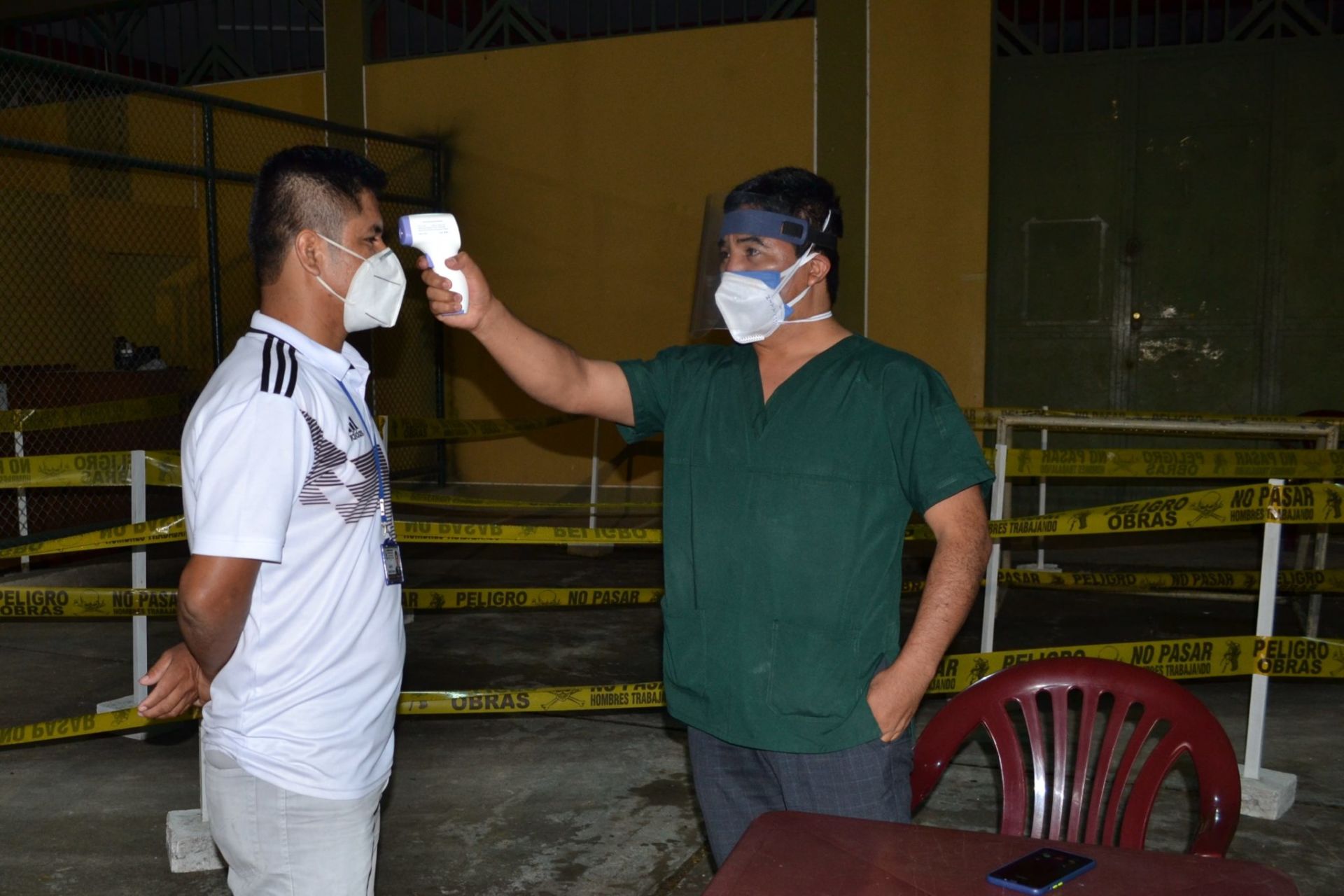
Temperature checks have become standard practice for farmers and employees in coffee growing regions of Peru to slow the spread of COVID-19.

Despite a swift government response, Peru quickly became one of the countries hardest hit by the pandemic. The virus spread from urban centers to rural communities like San Ignacio, far from essential services and medical care—arriving just in time for the harvest. Farmers, reliant on this harvest for most of their annual income, couldn’t just work from home.

“In other years, there are farmworkers who migrate from other regions to San Ignacio to help with the harvest,” Donald explains. But this year, for the first time in memory, they didn’t come. Without support, farmers would have to watch as their crop rotted on the trees—and their livelihoods along with it.

But UNICAFEC, under Donald’s leadership, refused to let that happen. To harvest safely, they drew on the long-time practice of community harvesting, where a farmer helps his neighbor collect her crop in return for the neighbor’s help on his own land. The highlands of Peru are well equipped for this practice as peak harvest time can vary by months for farms even within a few miles of each other, thanks to the differing temperatures caused by dramatic mountains. In the face of COVID-19, UNICAFEC’s farmers practiced community harvesting at levels never seen before—banding together in small, pandemic-friendly bubbles to complete a safe harvest.


Related Articles: Women In Agriculture Initiative | Equality in a Post-Pandemic Era | What COVID Means for Agriculture Investment

Knowing some loss would be inevitable, Donald’s team adjusted their production targets downward by 20%. But the amount of coffee they were receiving from their farmer-members was still well below what they predicted. Why? Cooperative staff started to reach out to farmers by phone and learned that many were wary of traveling into town, afraid they might contract the virus. Instead, these farmers were selling their coffee at lower prices to local traders who travel door-to-door in the countryside. Donald and his team realized that they needed to address these concerns—not only to maintain the health of their members, but to ensure survival of the business and better livelihoods for their farmers.
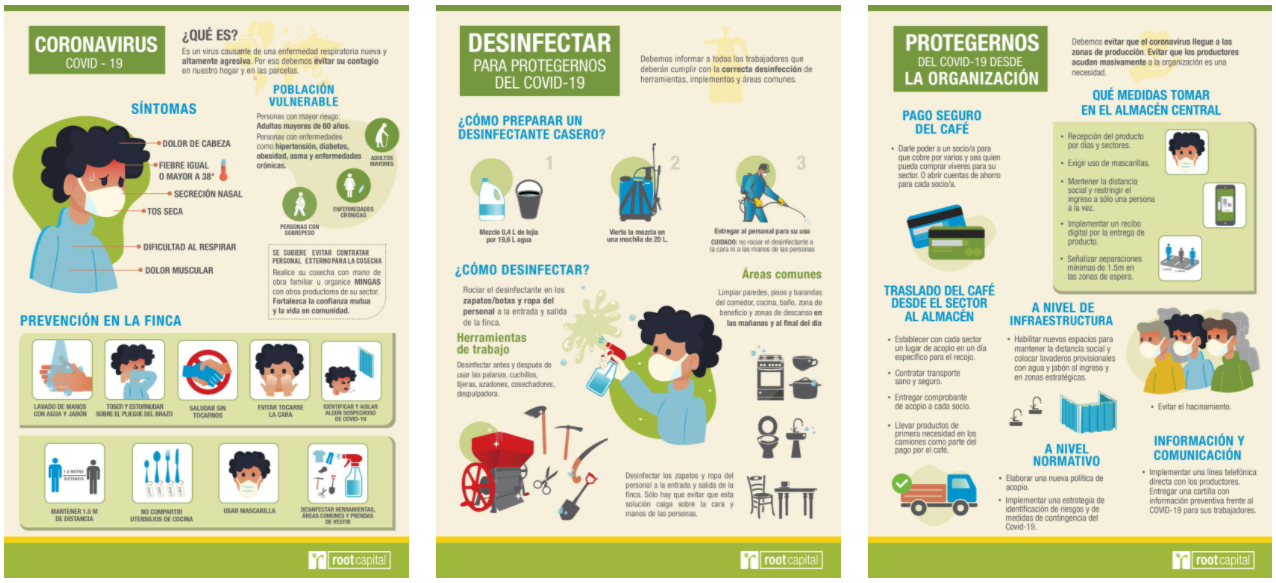
Coronavirus Infographics UNICAFEC
In the early days of the pandemic, the Peruvian government allowed agricultural businesses—which are essential services—to continue operations as long as they instituted biosafety protocols. But UNICAFEC wasn’t sure how to apply public health guidance to the farm or warehouse setting. In fact, many of Root Capital’s client agricultural businesses were facing the same challenge. That’s why our team in Lima developed an illustrated guide to safe harvesting and business operations during the COVID-19 pandemic. Among other advice, the guide illustrates which tools need to be sanitized regularly, how to incorporate digital payments into the harvest process, and how to share public health information with cooperative members. UNICAFEC worked with Root Capital advisor Ever Esquiza in remote training sessions to further tailor the information in the guide into their own pandemic safety plan. The only thing they were missing: funds to implement these new protocols.
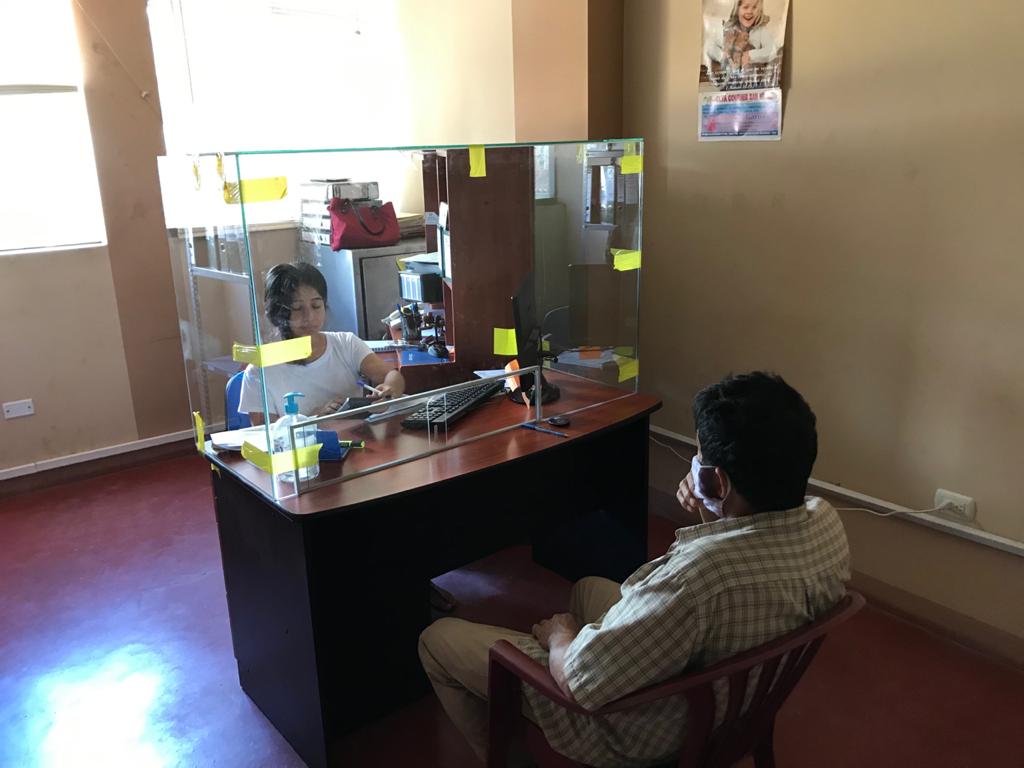
UNICAFEC established physical barriers like this one to help protect employees and farmers while exchanging payment for coffee.

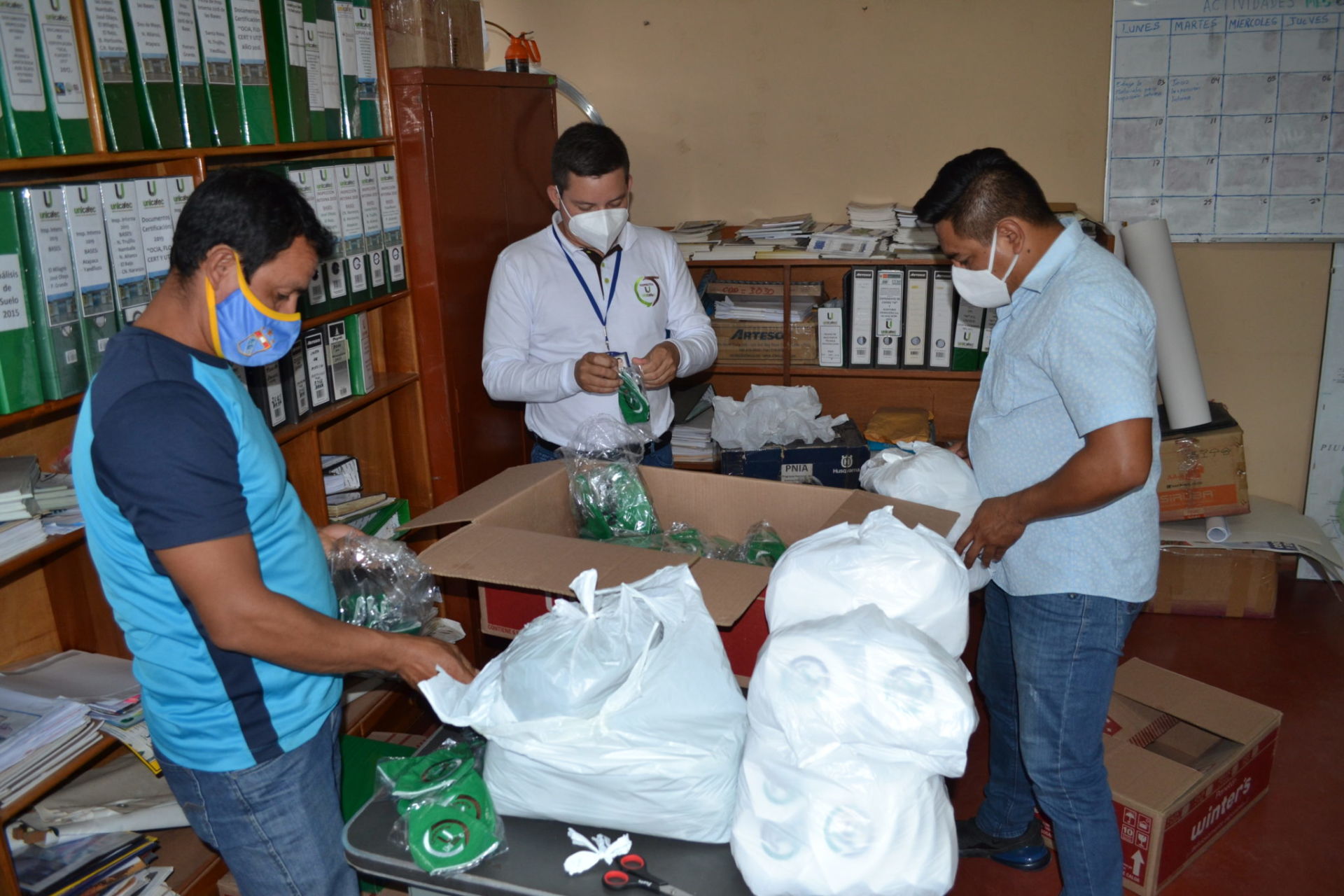
Under Root Capital’s COVID-19 resilience grant program—which has now reached 49 businesses in Peru, in addition to enterprises in Central America, Indonesia, and Africa—UNICAFEC received $5,000 to establish sanitizing stations around the cooperative. They were also able to hire a young man from the community to serve as a COVID-19 ambassador, educating members who visited the cooperative on the rules and monitoring for compliance. With the remainder of the funds, cooperative staff traveled into the mountains to distribute masks and explain the protocols to farmer-members. By prioritizing health, the cooperative was able to instill confidence in its members, increase the volume of coffee it received, and keep the community safe.

These quick adaptations on the part of Donald’s team represent the biggest challenge of the pandemic as he explains it:

“How we communicate, travel, it has all been such an abrupt change that it would be a challenge for anyone to adapt to these new ways of living.”

But UNICAFEC isn’t just withstanding this pandemic. Donald and his team are using it as an opportunity to build their resilience for the future. Facing a labor shortage on a scale unlike ever before, both farmers and the cooperative are planning contingencies for the future. To insure against a volatile international market, the cooperative is also working to solidify and diversify their relationships with international buyers for security against future shocks.

Under Donald’s leadership, the cooperative has survived its first harvest under the heel of COVID-19, maintaining livelihoods while positioning the business to continue driving impact well after the pandemic. As farmers continue to struggle with imperfect information and uncertainty, Donald sees UNICAFEC as the key to adapting to the future: “The cooperative will continue functioning so that we can make it easier to live through all of the changes we’re experiencing.”


Editor’s Note: The opinions expressed here by Impakter.com contributors are their own, not those of  Impakter.com. 

Tags: AgricultureCOVID-19pandemicPeruSDG 15
Previous Post

Why Antimicrobials Matter in the Fight Against Covid

Next Post

The Next Chapter in Sustainable Development Governance

Related Posts

soil
Biodiversity

To Prevent Ecological Collapse, We Must Start With the Soil

Soil is the single most biodiverse habitat on Earth, home to at least 59% of all species, including over 80%...

byMarcela Quintero - Associate Director General of Research Strategy and Innovation at the Alliance of Bioversity International and CIATand1 others
December 29, 2025
How Climate Change Could Help Foster Peace in Yemen
Climate Change

How Climate Change Could Help Foster Peace in Yemen

Yemen's tragedy is traditionally depicted through the limited perspective of humanitarian need and political divisiveness, but there is a greater...

byTareq Hassan - Executive Director of the Sustainable Development Network Canada (SDNC)
December 17, 2025
Animal Health
Biodiversity

Better Animal Health Is the Low-Risk, High-Reward Climate Investment We Need

Imagine if there was a way to reduce emissions from the meat, egg and dairy sector by nearly a quarter,...

byCarel du Marchie Sarvaas
November 26, 2025
COP30: Countries’ Climate Agrifood Ambitions Undermined by Funding Gaps, Report Finds
Biodiversity

COP30: Countries’ Climate Agrifood Ambitions Undermined by Funding Gaps, Report Finds

Developing countries recognize the urgent need to adapt agrifood systems to climate change, but most National Adaptation Plans (NAPs) are...

byThe Food and Agriculture Organization of the United Nations (FAO)
November 19, 2025
Australia’s Clean Energy Push Faces Setback for COP31
Business

Australia’s Clean Energy Push Faces Setback for COP31

Today’s ESG Updates Australia-Turkey Standoff Puts COP31 Hosting at Risk: Australia’s plan to host next year’s climate summit is delayed...

byJana Deghidy
November 13, 2025
Bill Gates memo
Climate Change

Climate, Gates and COP30

Bill Gates’ recent article on the “three tough truths” of the ongoing environmental changes makes an essential point: we must...

byJosé Graziano da Silva - Former Director-General at FAO, Founder and Director of the Instituto Fome Zero, and Professor Emeritus at the University of Campinas
November 12, 2025
climate change and food
Biodiversity

COP30: Climate Extremes Are Already Impacting Food Yields Today

The 30th United Nations Climate Change Conference (COP30), taking place in Belém, Brazil, brings together world leaders, scientists, non-governmental organizations, and...

byThe Food and Agriculture Organization of the United Nations (FAO)
November 7, 2025
One Health
Biodiversity

Why and How to Apply the One Health Concept

One Health can be a complex and sometimes jargon-filled concept. Put simply: "One Health is the collaborative efforts of multiple...

byOne Health Initiative
November 6, 2025
Next Post
Maritime shipping containers

The Next Chapter in Sustainable Development Governance

Recent News

President Donald Trump delivers remarks at a press conference at Mar-a-Lago in Palm Beach, Florida, following Operation Absolute Resolve in Venezuela

Regime Change in Venezuela and the Crisis of Global Order

January 12, 2026
ESG News regarding U.S. lifting more sanctions on Venezuela, Egypt securing $1.8 billion renewable energy deals, U.S. pushing G7 allies to reduce reliance on China for critical minerals, richest 1% exceeding annual carbon share in just 10 days.

U.S. Considers Lifting More Venezuela Sanctions

January 12, 2026
Full-Cycle Engineer at work

Why Full-Cycle Engineering Is Becoming Critical for Sustainable Innovation

January 11, 2026
  • ESG News
  • Sustainable Finance
  • Business

© 2025 Impakter.com owned by Klimado GmbH

No Result
View All Result
  • Environment
    • Biodiversity
    • Climate Change
    • Circular Economy
    • Energy
  • FINANCE
    • ESG News
    • Sustainable Finance
    • Business
  • TECH
    • Start-up
    • AI & Machine Learning
    • Green Tech
  • Industry News
    • Entertainment
    • Food and Agriculture
    • Health
    • Politics & Foreign Affairs
    • Philanthropy
    • Science
    • Sport
  • Editorial Series
    • SDGs Series
    • Shape Your Future
    • Sustainable Cities
      • Copenhagen
      • San Francisco
      • Seattle
      • Sydney
  • About us
    • Company
    • Team
    • Global Leaders
    • Partners
    • Write for Impakter
    • Contact Us
    • Privacy Policy

© 2025 Impakter.com owned by Klimado GmbH