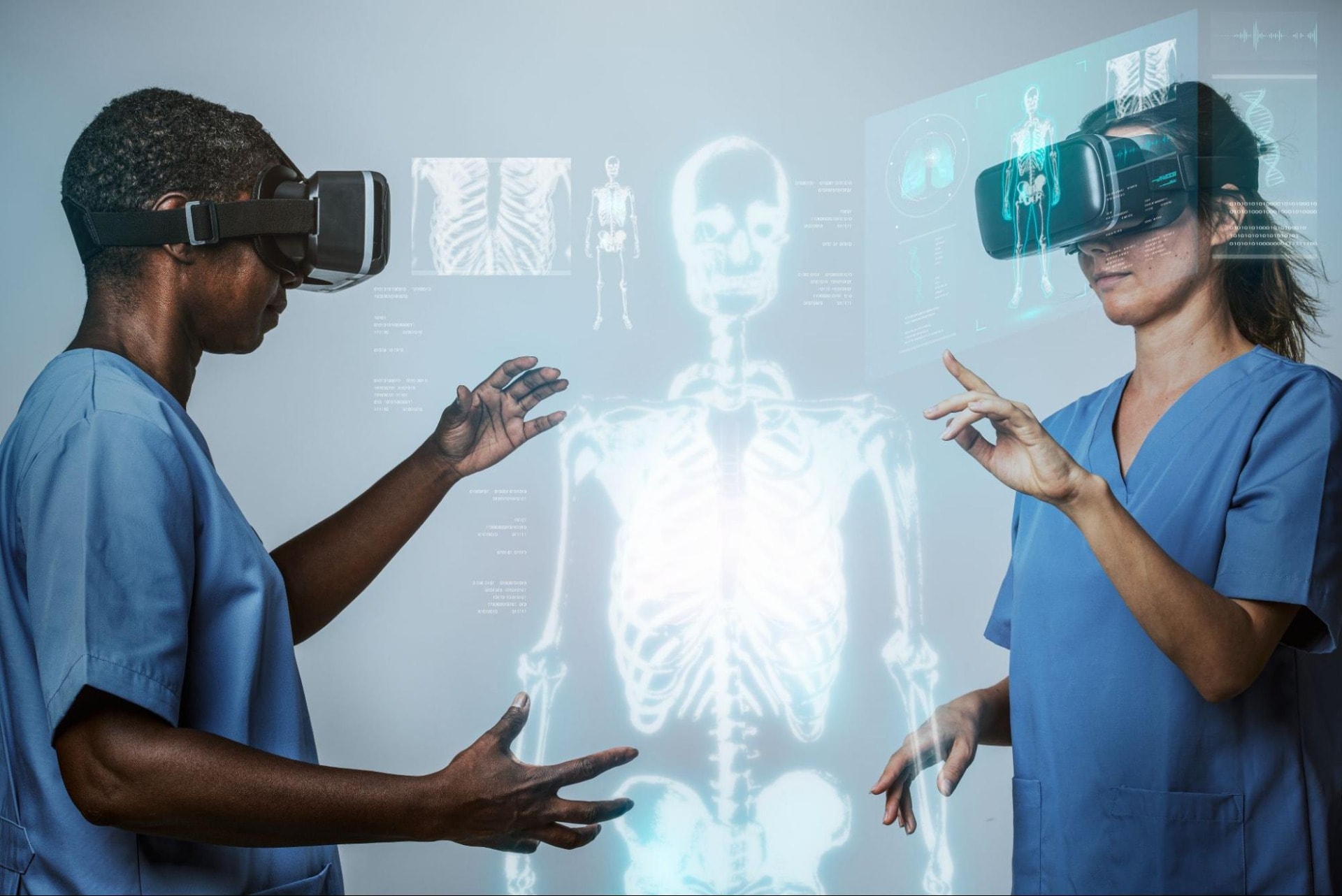

Population expansion, increased travel, more pollutants in the air, land, and water have heightened risks of the spread of known and unknown infectious diseases. Many are directly or indirectly linked to the interaction of animal, human, plant, and ecosystems (One Health). To better deal with such infectious diseases, we need new and innovative tools to identify, strain, and respond. Quantum computing is potentially a way to do so.
Quantum computing is an innovative frontier in technology that leverages the principles of quantum mechanics to process information.
David Deutsch, a British physicist, is widely considered the “father of quantum computing” based on his 1985 proposal for the concept of a universal quantum computer. Deutsch came to the subject wanting to test the “Many Universes Theory” of quantum physics which supposed the existence of parallel universes. Probably more significant and provided the basis for Deutsch was the pioneering work by Richard Feynman, an American physicist and a 1965 Nobel Prize recipient, in quantum field theory (QFT).
Unlike classical computers, which use bits as the smallest unit of data and represent them as either 0s or 1s, quantum computers use quantum bits, or qubits.
Qubits can exist in multiple states simultaneously due to the phenomenon called superposition, which allows quantum computers to solve complex problems significantly faster than classical computers. A classical processor performs calculations sequentially (or in parallel with multiple cores). A quantum processor can process multiple possibilities simultaneously, with advantages depending on the algorithm.
Grover’s algorithm, for example, speeds up when searching an unstated database. This means that if a classical search takes one million steps, Grover’s algorithm would take about 1,000 steps! For many everyday tasks, however, quantum computers do not yet show a clear advantage over classical computers.
According to a September 2024 report, “IBM’s Big Bet on the Quantum-Centric Supercomputer,” we can expect a new type of supercomputing in the next decade, one that could tackle important challenges at a significantly lower cost, time, and footprint and energy use.
Quantum Computing Today
Quantum computing is still in its early stages, but is advancing rapidly. Various companies and research institutions are working on developing scalable quantum computers, including IBM, Google, and Microsoft, as well as numerous startups and academic institutions. Quantum computing has gained prominence thanks to the progress in hardware, specifically the development of superconducting qubits, trapped ions, and topological qubits.

Practical applications are being explored across various sectors, including cryptography, optimization problems, and machine learning. However, the technology is still maturing; error rates in qubit operations remain high, and maintaining qubit stability requires extremely low temperatures. These challenges mean that while demonstration models exist, large-scale, fault-tolerant quantum computers are still a few years away from becoming a reality.
Quantum Computing in the Health Sector
The potential of quantum computing in the health sector is immense. Several key areas highlight how this technology could revolutionize healthcare. What follows is relevant to health at large, but clearly for the One Health challenges.
1. Drug Discovery and Development
One of the most promising applications of quantum computing in healthcare is in drug discovery. Traditional methods for discovering new drugs can be labor-intensive and time-consuming, often taking years or even decades to bring a drug to market. Quantum computing can simulate molecular interactions at an unprecedented scale and detail, allowing researchers to explore new compounds and predict their interactions with biological targets more efficiently. This could significantly shorten the timeline for drug discovery and reduce costs.
2. Personalized Medicine
Quantum computing can facilitate the advancement of personalized medicine by enabling the analysis of vast datasets related to genetic information, clinical data, and individual health metrics. By analyzing this information in real-time, healthcare providers can tailor treatments to the specific genetic makeup and health profiles of patients. This approach can help in predicting how individuals will respond to certain drugs, minimizing adverse reactions, and maximizing therapeutic efficacy.
3. Genomic Medicine
The field of genomics is rapidly expanding, and quantum computing could significantly enhance our ability to analyze genomic data. With the capacity to handle large datasets, quantum computers could process genomic sequences more quickly and accurately. This capability could accelerate research in understanding genetic diseases, identifying mutations, and developing gene therapies.
4. Population Health Management
Quantum computing can improve population health management by analyzing vast amounts of health data from various sources, including electronic health records, wearables, and social determinants of health. By identifying patterns and correlations in this data, healthcare networks can better allocate resources, predict disease outbreaks, and personalize preventive care strategies for populations.
Related Articles: How Quantum Computing Could Advance One Health | The Concept of One Health Turns Global in 2021: How it was Born | How Climate Change Affects Health and How Countries Can Respond | One Health: A Paradigm Whose Time Has Come? | Dealing With Future Pandemics: Do You Feel Safer Coping With Another Pandemic Today?
Future Possibilities
As quantum computing continues to evolve, its applications in healthcare are expected to expand. Here are several future possibilities:
1. Complex Diagnostics
Quantum computing could enable more sophisticated diagnostic tools, allowing for the analysis of complex diseases through various modalities (e.g., imaging, bioinformatics). By integrating and processing multidimensional health data, healthcare providers could achieve a more accurate understanding of patient conditions, leading to timely interventions.
2. Enhanced Medical Imaging
The algorithms powered by quantum computing could significantly enhance the resolution and accuracy of medical imaging techniques such as MRI and CT scans. This could lead to early detection of diseases, better monitoring of treatment responses, and improved surgical planning.
3. Predictive Analytics for Disease Prevention
Quantum computing’s ability to analyze complex datasets could lead to breakthroughs in predictive analytics, identifying at-risk populations and tailoring preventative strategies. This could transform public health approaches, focusing on early intervention and targeted treatments. Further, it could provide the wherewithal to tailor vaccine dosage to different cohorts, youngsters, elderly, those with specific health challenges.
4. Collaborative Research Platforms
The future could see the establishment of collaborative quantum research platforms where multiple institutions share computing resources and datasets. This could enhance collaborative research in drug discovery, genomics, and other critical fields, fostering innovation and accelerating therapeutic developments.
Quantum computing is positioned to reshape the health sector and address the vast One Health concerns. While still in its infancy, ongoing research and development efforts could unlock unprecedented capabilities in drug discovery, personalized medicine, and more. As quantum technology software and hardware matures, this could bering about a major revolution in healthcare, where precise, data-driven decisions can lead to better patient outcomes and more efficient healthcare systems. The next decade will be pivotal in realizing these possibilities, and the interaction between healthcare and quantum computing could define the future of medicine.
To take advantage of this emerging potential, needed sooner rather than too late are discussions, coordination, and conceivably collaboration among those engaged in both hardware and software for us collectively to benefit from this new science. Consumers, whether health professionals or other users, will much prefer compatible systems as a way to make the most of quantum computing. It will require both governments and the private sector to do so, but “yes we can!”
Editor’s Note: The opinions expressed here by the authors are their own, not those of Impakter.com — In the Featured Photo: IBM Q System One at the MIT Technology Review Innovation Leaders Summit, Palais Brongniard, Paris, France, November 30, 2018. Featured Photo Credit: Pierre Metivier.