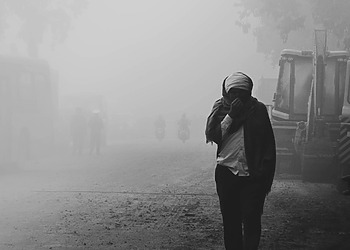
Climate displacement has become a defining feature of our present. Climate shocks now shape human (im)mobility, humanitarian crises, and political debates from the Sahel to South Asia, from Pacific islands to the Americas and European frontiers.
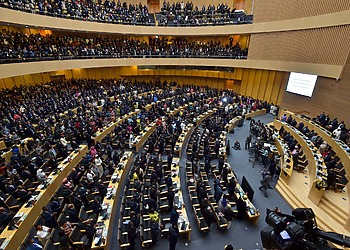
Even the International Court of Justice (ICJ) has described climate change as “an existential threat.” In its advisory opinion on climate change, issued in July, the ICJ has made it clear that climate obligations of States are no longer aspirational but legal, substantive, and enforceable. The implications of this pivotal legal moment extend far beyond emissions and adaptions, directly addressing the growing crisis of climate displacement.
Climate Displacement by 2025
The numbers are deeply concerning and portray a dire picture of both the scale and acceleration of climate displacement.
Extreme weather events displace around 20 million people within their countries each year and have caused roughly 250 million internal displacements over the past decade; that’s over 67,000 displacements per day and represents a 10% increase compared to the previous decade.
“Around the world, extreme weather is putting people’s safety at greater risk. It is disrupting access to essential services, destroying homes and livelihoods, and forcing families – many who have already fled violence – to flee once more,” said UN High Commissioner for Refugees Filippo Grandi.

Here is an overview of weather events that have driven displacement in the second half of 2025:
- South Korea floods and landslides: 16 inches of rain in 24 hours resulted in the evacuation of over 2,500 people across major South Korean provinces.
- France wildfires: Over 11,000 hectares of land were burnt (including vineyards) and thousands were evacuated in one of the largest fires in modern French history.
- India cloudbursts and flash floods: Homesteads were washed away with at least 60 people dead and hundreds missing.
- Vietnam floods: Prolonged flooding from late September into October 2025 due to multiple cyclones (Ragasa, Bualoi, Matmo) killed 241 people and resulted in an estimated economic damage of US$2.1 billion.
- Caribbean (Hurricane Melissa): Jamaica was the hardest hit with 626,000 people displaced and 45 fatalities. Economic damage ranged between US$8 billion and US$15 billion.
- Sri Lanka and Southern India (Cyclonic Storm Ditwah): Nearly 2 million people and 500,000 families were affected. With over 600 people dead and US$1.6 billion of damage, this is one of the most damaging disasters in Sri Lanka’s history.
- South East Asia (Cyclone Senyar): More than 1,100 people were killed in floods and landslides across parts of Thailand, Malaysia, and Indonesia.
- Indonesia (Sumatra floods and landslides): More than 158,000 houses were destroyed and approximately 900,000 people were displaced.
- Southern California floods: At the time of writing, a red alert for floods in Southern California including Los Angeles had been issued after scientists attributed the excessive rain in Southern California to extreme ‘hydroclimate whiplash.’
For people displaced by war, violence and persecution, climate change acts as a “threat multiplier” — “undermining chances of recovery” and “amplifying risks of repeated displacement,” as the UN Refugee Agency (UNHCR) explains. Worryingly, as many as 86 million of the 117 million people displaced around the world by war, violence and persecution by mid-2025 were “living in countries with high-to-extreme exposure to climate-related hazards.”
Looking ahead, projections of climate displacement are staggering. By 2040, the number of countries facing extreme climate hazards could rise from 3 to 65. Arguably, if this trend continues and climate displacement increases by at least another 10% over the next decade, there would be at least 275 million internally displaced by 2035.
The Drivers: Sudden Shocks and Slow Violence
The above examples show displacement caused by sudden-onset disasters such as hurricanes, cyclones, wildfires, floods and heatwaves. Sudden climatic shocks trigger annual displacement and overwhelm emergency response systems. By contrast, displacement also results from slow-onset processes, such as sea-level rise, desertification, prolonged drought and ecosystem degradation.
A good example of slow-onset processes is Australia’s ongoing effort to contain a constant flow of ‘climate migrants’ fleeing the effects of environmental change in Pacific Island countries (Papua New Guinea, Fiji, Samoa, and Vanuatu), while the comparatively moderate sea-level rise threatens the viability of Tuvalu and Kiribati.
While human movement caused by slow-onset processes may appear to be voluntary, it must be noted that such mobility or lack thereof is largely driven by severely constrained choices. In reality, climate displacement is indissolubly connected to other drivers such as conflict and persecution. This further amplifies inequality, governance failures, resource scarcity and conflict. In short, it calls for responsive policies and inclusive legal frameworks to cushion those in dire need of international protection.
Related Articles
Here is a list of articles selected by our Editorial Board that have gained significant interest from the public:
Policy Gaps: Protection Without Recognition
Despite the unprecedented impact of climate displacement, international protection frameworks remain profoundly inadequate.
As indicated earlier, climate displacement is indissolubly linked to conflict and persecution. The 1951 Refugee Convention does not recognize climate or environmental harm as legal grounds for refugee status. As a result, those displaced by climate shocks are excluded from asylum systems, even when facing severe and life-threatening risks.
Experts in international refugee law are of the view that people fleeing war, famine or environmental disaster are also possible candidates for refugee status. The common denominator (and the leveller) is that those fleeing climate-induced displacement, persecution, and random violence may each face death if they stay.
This calls for the urgency in replacing the neutral concept of the ‘climate migrant’ with the concept of ‘climate refugees’ to re-politicize the reality of forced migration under climate displacement. Reliance on humanitarian assistance and disaster relief is temporary. These measures provide safety without rights, relief without long-term security, and protection without mobility.
Responsibility-sharing mechanisms are also built on an asymmetrical political plane. It has been established that 80% of the world’s displaced people live in low- and middle-income countries, many of which are not responsible for historical emissions. Meanwhile, countries in the Global North have prioritised erecting an expansive range of institutional and legal barriers designed on stemming migratory flows rather managing them.
But the ICJ advisory opinion does add an elevating and encouraging dimension to the debate on climate displacement. The affirmation by the ICJ that climatic obligations are legally binding strengthens the argument that climate displacement engages not only humanitarian concerns but legal responsibility.
From Gaps to Solutions
By the end of 2025, climate displacement stands as one of the clearest indicators of global inequality and governance failure. I have argued earlier for an innovative Framework Convention as one of many ways to mitigate climate and socio-economic displacement. Tied to this are deliberate efforts mounted on that buzz word ‘solidarity’ towards the following solutions (the list is non-exhaustive):
- Recognize climate-related and socio-economic displacement as grounds for international protection.
- Widen the global mobility infrastructure by creating legal mobility pathways, including humanitarian visas and planned relocation schemes.
- Establish predictable responsibility-sharing mechanisms.
- Integrate climate adaptation, development, and displacement governance.
This approach moves beyond the rigid refugee–migrant binary and reflects the complex realities of mobility in an increasingly warming world. It is hoped that the developments such as the ICJ’s advisory opinion signal a shifting legal landscape.
Climate displacement is no longer an object of charity but a matter of (legal) obligation. In a world defined by climate shocks, it is time to recognize, protect, and share responsibility for climate-induced displacement.
Editor’s Note: The opinions expressed here by the authors are their own, not those of impakter.com — In The Cover Photo: People fleeing floods in Sri Lanka. Cover Photo Credit: Trokilinochchi.