Nowadays we often come across headlines about “water security”, “water scarcity” and the “global water crisis”. The oxymoron is that we live on a planet that is rich in water resources, so why has our ability to access sufficient quantities of quality water to ensure socio-economic development while sustaining the environment’s balance been compromised? The total human-usable fresh water supply amounts to a mere 1% of all freshwater resources and water use has been exponentially rising, at twice the rate of the population growth in the latter century. This triggers a domino of political, social, environmental and financial challenges that are interconnected to water and its centrality to human well-being, many of which lie outside the water realm per se.
In the interviews “H2O Stories”, I want to explore the complex questions that arise when tackling the resource that permeates all aspects of human and ecosystem existence; water. I am commencing these series with Bob Sandford who is active in the global sustainable development agenda, influencing public policy and decision-making in water issues around the world.
Robert. W. Sandford is a man of many accomplishments: he is the EPCOR Chair of the Canadian Partnership Initiative in support of United Nations “Water for Life” Decade; he is senior advisor on water issues for the Interaction Council, a global public policy forum composed of more than thirty former Heads of State including Canadian Prime Minister Jean Chretien and U.S. President Bill Clinton; and he covers a broad range of functions in his own country, Canada, ranging from Fellow of the Biogeoscience Institute at the University of Calgary to Water Governance Adviser and Senior Policy Author for Simon Fraser University’s Adaptation to Climate Change Team. In the context of the United Nations “Water for Life” Decade, he is tasked with informing the Canadian public on water issues and translate scientific research outcomes into language decision-makers can use to craft timely and meaningful public policy.
Q. What do you wish to accomplish with your work and what is its ultimate impact on society?
B.S: I want to dispel the myth of limitless abundance of water in Canada; build a better bridge between science and public understanding of water and water-related climate issues; and bring international example to bear on Canadian water issues in ways that will help redefine sustainability that reflect and complement the UN global sustainable development objectives.
Q. What made you choose this profession?
B.S: I had an accident on a glacier when I was twenty. I slipped and was carried by a surface stream into a crevasse which cascaded down a series of waterfalls into complete darkness beneath the glacier. Miraculously I lived long enough to see the blue glow of light above me which meant I was near the terminus of the glacier and was washed out into the headwaters of one of Canada’s most important rivers. I have spent the rest of my life trying to prevent the society in which I live from carrying me downstream and away from the luminous glory of that subglacial light.
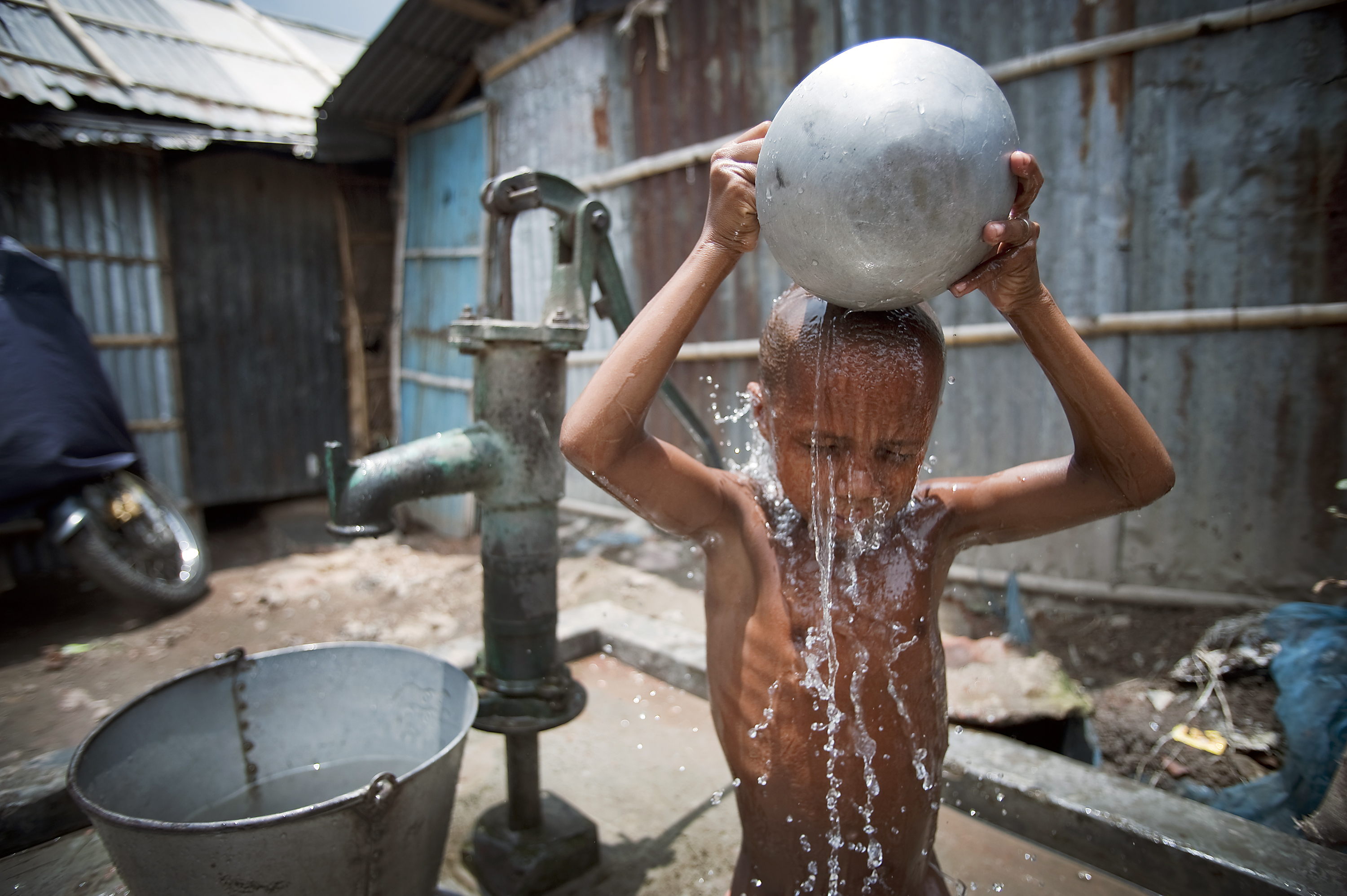 In the photo: 12 June 2010 – Dhaka, Bangladesh – Kallayanpur slum, one of the urban slums in Dhaka: 1.1 billion people in developing countries have inadequate access to water, and 2.6 billion lack basic sanitation. 1.8 million children die each year as a result of diarrhea caused by poor water (2006 United Nations Human Development Report) Photo Credit:Kibae Park/Sipa Press
Q. What parts of your job do you find most challenging and why?
B.S: The most challenging parts of my job are the ones I like doing least but happen to be the most important. While I very much thrive on contact with researchers in all fields related to water and climate, it is my duty to present these research outcomes in manner that will permit political leaders and corporate executives to craft timely and durable public policy with respect to thoughtful, forward-thinking management of water resources in a country that largely ignores its own increasingly water issues. Though it is often painful to do so it is critically necessary to be relentless and courageous in speaking truth to power.
Q. What is the first concept that comes to mind when thinking about water and why?
B.S: The first concept that comes to mind when I think about water is the all-pervasive way it permeates every aspect of human existence. Even the best hydro-climatic models available to us today can only reveal a glimpse of all the ways water reacts with all aspects of life and with nearly every element in the physical world. Change a few parameters that pertain to water and the world you see outside your window becomes different.
Some parameters, however, have more influence than others over the nature and function of any given hydro-climatic circumstance. A change in temperature, for example, changes all of the other biogeochemical parameters. If our global temperature changes, an entire new geometry is created around that change. The most frightening discovery of this young century is that this is exactly what is happening right before our eyes – everywhere.
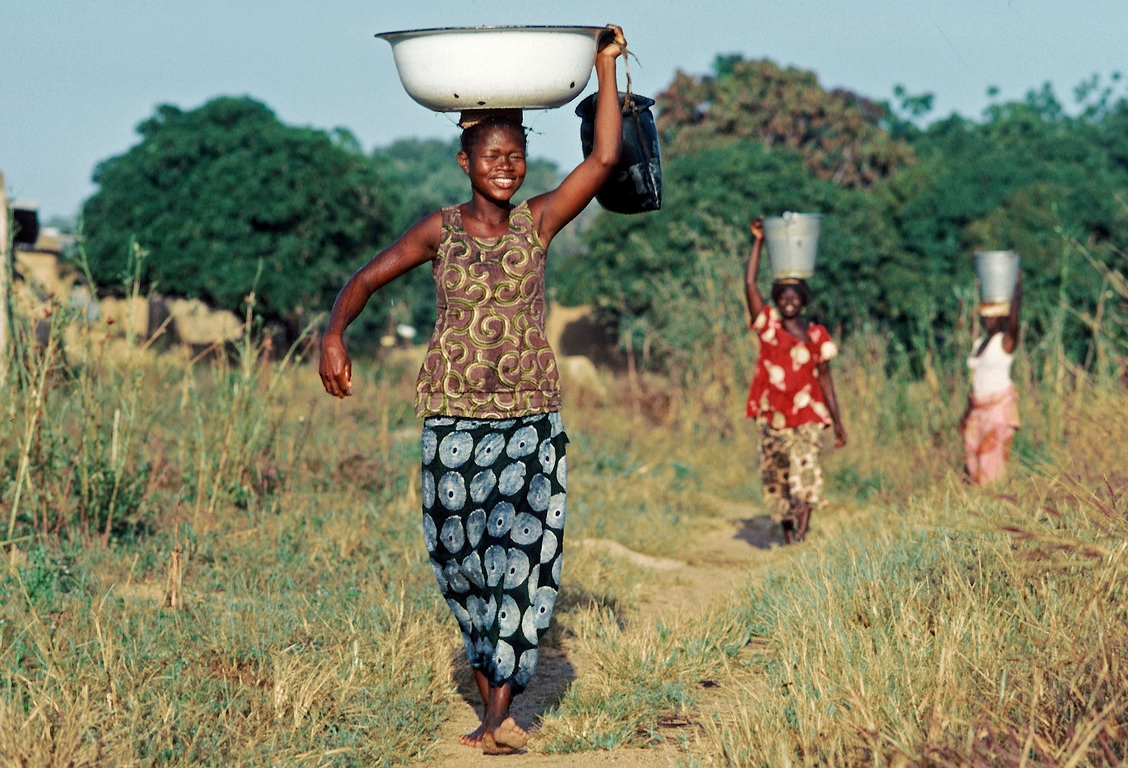 In the photo: Water is Vital for Life – Smiling village women of Po returning home from a community well with containers full of water. 01 January 1976 – Photo Credit: UN Photo/Ray Witlin
Q. How does water inspire you?
B.S: Water inspires me aesthetically certainly, and I constantly seek out this inspiration everywhere I travel. But water also inspires me as an agent for diplomacy. Talking about water can get you past other deep entrenchments in which you may never be able to reach full agreement. I have observed that people will agree on water when they don’t agree on anything else – such as climate change. I am of the view that in order to restore our global hydro-climatic circumstances to tolerable stability we have to break the socially constructed silent related to climate disruption. I believe that one of the best ways to start such a conversation is to talk about things we all agree none of us can with without: water.
Q. If water was a person, what do you think it would say to us?
B.S: Let the water within you listen to the water without, and then act accordingly. Remember the otherworldly qualities of this most remarkable of substances. Though water tends to repel organic compounds, it is strangely attracted to most inorganic substances, including itself. Water likes to be around other water. Its molecules, in fact, cling to one another more tenaciously than those of many metals.
Go and observe water’s remarkable qualities of self-adhesion. Go sit by a river. Water sticks together. Water draws water with it. Sit on a riverbank long enough and you might observe that water likes to sing. The faster it moves the louder it sings. Still water barely whispers, falling water roars.
There is a reason you feel different when you are in the presence of large volumes of water. Water reacts to almost everything and almost everything reacts to water. The feeling you get standing on the edge of river or a lake or beneath a thundering waterfall may be aesthetic but it is physical, too. Your body is aligning itself with the molecular attraction of the water and the water is aligning itself to you.
The effect can be even more pronounced when you stand by the sea. Ankle deep in surf, the water in our inner cellular seas yearns for the salty sea without. The water within us feels the tug of the tide. You know water, but water also knows you.
Go to the kitchen. Turn on your tap. Let the water run. Feel the cool moisture of wind and the wetness of cloud and rain. Feel the cold of snow and the hardness of glacier ice. Hear thunder. Feel the river flow through your hands. Feel the water within you yearn for the water without. Fill a glass. Bring it to your lips. Search with your tongue for water’s memory of far-away seas. Taste distant mountains. Feel the fissures in deep limestone tingle on your tongue.
Hold the glass up to sunlight. See our star burn through the sparkling lens made of the most amazing of all liquids.
Behold through the glass the sky and the ceaseless winds. Experience the aesthetic arrest that accompanies the realization that what you breathe is not just inert air – but the suspended residue of every geological event and ecological process that has ever taken place in and near water on the surface of the Earth and in its oceans since the beginning of the world. Breathe in the moist breath of everyone and everything that has ever lived.
Hold up your glass and drink. Repeat daily until you regain your sense of wonder come back to your senses with respect to how you manage water.
Q. What is your number one fear/concern when thinking about water?
B.S: My principle concern is rapid hydro-climatic change. My greatest fear relates to the fact that our most cited projections for planetary warming are derived solely from careful analysis of the effect of rising greenhouse emissions on atmospheric physics. We still have very little understanding of the ecological responses to rising temperatures. Two huge threats remain incompletely characterized: the effect of warming on the potential release of billions of tons of methane presently sequestered beneath thawing permafrost in the circumpolar Arctic; and the potential release of billions of tons of carbon from the Earth’s already damaged soils as temperatures increase. What keeps me awake at night is that continuing to contaminate our water and overdraft aquifers, our constant alteration of land use and cover and our addiction to fossil fuels will unexpectedly create runaway warming that could alter the conditions of life on Earth to such an extent that even we may not be able to adapt them. Compared to the end of the world as we know it, the rest of my problems appear rather insignificant.
Q. Compared to other social problems of your concern, how strongly do you believe water waste and water scarcity deserves attention and resources?
B.S: I have had the great honor of working with political leaders and heads of state and government all over the world. Many of these people are exception human beings to say the least. What I find interesting about political leadership, however, is how fully attracted leaders are to dramatic, immediate, life-threatening issues. Perhaps because there are so many of them, they thrive on urgency, emergency and conflict. I, of course, believe that water security issues deserve far great attention and more resources, and that attention and those resources will come as water and climate security are recognized for being the economic, social and political threats they really pose to our current stability and relative prosperity. Unfortunately, because we have allowed other more immediate matters to distract us, the rate, extent and economic impacts of hydro-climate change may be so rapid and costly that we may not as a society be able to deal with the consequences in an orderly manner. I suspect the time will come soon when we will all wish we didn’t take water security for granted anywhere in the world. I believe though that there is still a little room to move before that day arrives – and we should get moving while that room still exists.
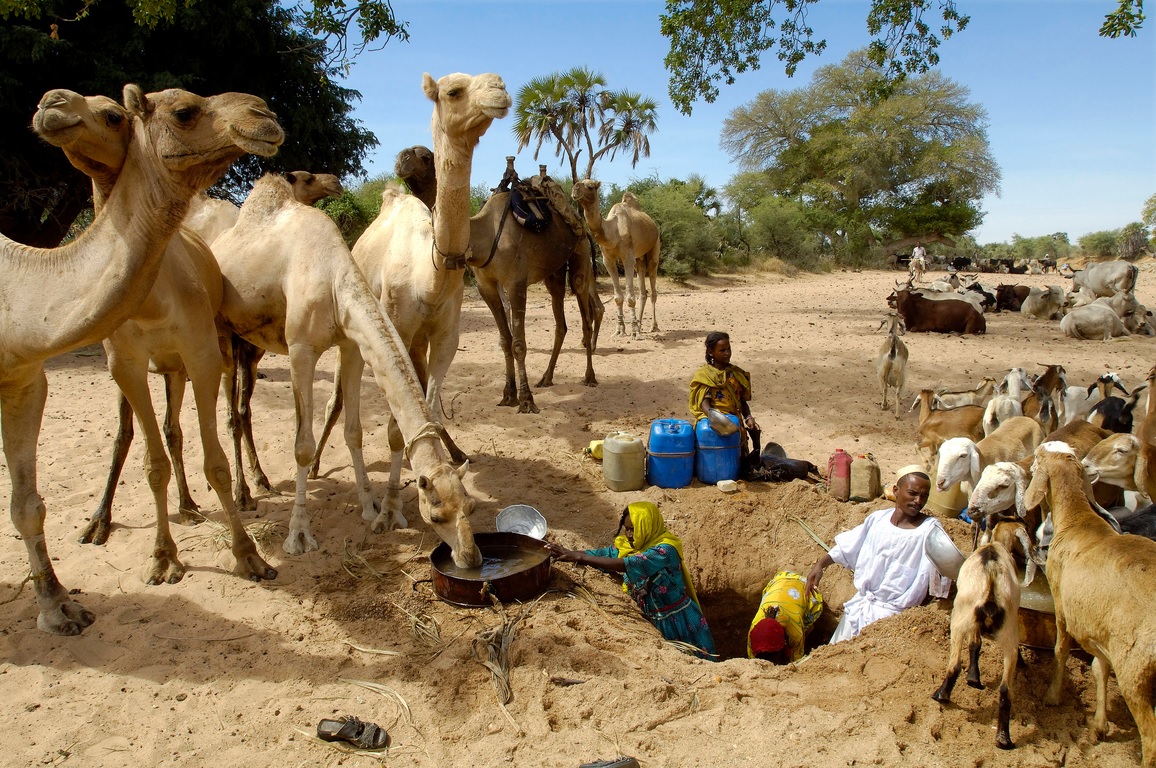
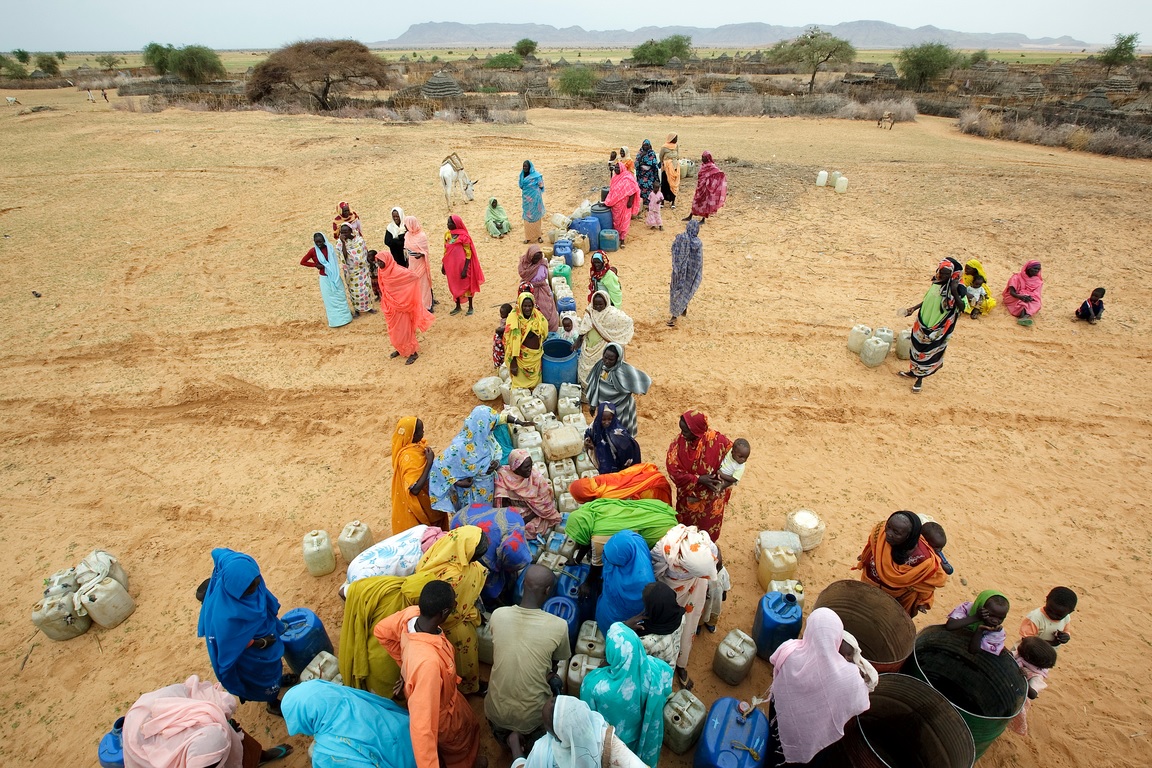 In the photo: Water Distribution by UNAMID in Tora Northern Darfur -Water is being distributed by an African Union-United Nations Hybrid operation in Darfur (UNAMID) contingent from Rwanda in Tora, Northern Darfur. The closest water source is 1.5 hours away and donkeys are regularly used to transport water to the village. Photo credit: UN Photo/Olivier Chassot
Q. “Our economic system and our planetary system are now at war. What the climate needs to avoid collapse is a contraction in humanity’s resources, what are economic model needs to avoid collapse is unfettered expansion. Only one of these sets of rules needs to be changed and it is not the laws of nature.” Naomi Klein, This Changes Everything.Do you agree? Why?
B.S: These are complicated questions. I read Naomi Klein’s book and there is much in it to recommend it. I agree in general terms that our economic system and Earth system function are completely at odds and that societal could very well be the outcome of our failure to align the anthroposphere and the ecosphere, so to speak. I did, however, had a problem with Naomi Klein’s unconditional dismissal of the capitalist system. In my estimate she confused corporatism with capitalism. Broadly speaking corporatism can be view as the undue influence of the private sector on government which undermines the checks and balances that are the foundation of properly functioning capitalism. In my view the current level of global corporatism is not just destroying capitalism; it is threatening the very function and perhaps even the existence of democracy. When did we agree that corporations should run the world? Well, it appears that is what is happening now. Until corporatism is seen for what it is and the damage it is doing, we will not have any hope of slowing our societies slide in the direction of the decline of Earth system function and the potential collapse of society as we presently know it.
The economic model we need to employ to get out of this jam must include a renewed recognition of the role and fiduciary responsibility of government in democratic societies; great civic participation and accountability; the full evaluation of environmental and other forms of externalities in the production of all goods and services; the abolition of the terms and conditions within international trade organizations that rob governments of the capacity to create resilience and sustainability within society; and the creation of a new common global ethic that redefines sustainability in a meaningful enough way to take us out of the fatal trajectory we as a civilization appear intent on following until we can no longer stand living in the conditions we have created for ourselves. J The next economy should be founded on the importance of water to our survival, our quality of life, to our economy and our future
Q. Can you imagine a world where water is a private good, held in the hands of the few and powerful? How does this resonate with you? Dystopian scenario or near reality?
B.S: While I realize there are international corporations, individual entrepreneurs and some irrigation districts with an interest in water becoming a privately owned commodity that is traded and sold; the very idea of a world coming into existence where democratic access to water is no longer recognized as an inalienable right and water isn’t treated a common pool resource for people and nature is so morally and ethically repugnant to me that I don’t want to give this question any degree of legitimacy by bothering to answer it.
Q. War for water: in your opinion could this be the reason for a next global war?
B.S: The conventional wisdom established through the work of Aaron Wolf, Peter Gleick and others is that water has historically brought us together in ways that have more often prevented conflict than caused it. We can find a lot of others things to fight over, but not water. In my estimation current changes in the manner and intensity with which water moves through the hydrological cycle will test a great deal of what we now consider conventional wisdom.
What we haven’t understood until now is the extent to which the fundamental stability of our political structures and global economy are in significant part predicated on relative hydrologic predictability. As a result of the loss of relative hydrologic stability, political stability and the stability of our global economy in a number of regions in the world are now at risk. We are only now beginning to understand how complex this issue has become. As precipitation patterns continue to change and extreme weather events become ever more frequent we can expect more food crises; water crises; large-scale involuntary migration; and further man-made environmental catastrophes which in turn will lead to biodiversity loss and Earth system collapse. These problems will lead to the failure of national governance, internal and inter-state conflict; and on –going state crises. With these projections before us it is difficult to believe that water security issues won’t play a greater role in raising tensions between nations. A global war over war, however, is highly unlikely. A whole series of regional conflicts is more likely.
http://www.thingser.com/