
Impakter
  • Environment
    • Biodiversity
    • Climate Change
    • Circular Economy
    • Energy
  • FINANCE
    • ESG News
    • Sustainable Finance
    • Business
  • TECH
    • Start-up
    • AI & Machine Learning
    • Green Tech
  • Industry News
    • Entertainment
    • Food and Agriculture
    • Health
    • Politics & Foreign Affairs
    • Philanthropy
    • Science
    • Sport
  • Editorial Series
    • SDGs Series
    • Shape Your Future
    • Sustainable Cities
      • Copenhagen
      • San Francisco
      • Seattle
      • Sydney
  • About us
    • Company
    • Team
    • Global Leaders
    • Partners
    • Write for Impakter
    • Contact Us
    • Privacy Policy
No Result
View All Result
Impakter logo
No Result
View All Result
India Wants to Double Farmers’ Incomes – and Tackle Climate Change. Is Technology the Answer to This Double Bind?

India Wants to Double Farmers’ Incomes – and Tackle Climate Change. Is Technology the Answer to This Double Bind?

Farah Ahmed - Communications and Knowledge Manager for the International Water Management Institute (IWMI)byFarah Ahmed - Communications and Knowledge Manager for the International Water Management Institute (IWMI)
March 6, 2019
in GFAR Series, Impact, SDG Series
0


Forty years since India gained independence, what has really changed for the farmers of today? Farmers incomes are still too low, India needs to at least double farmers’ income. During this crucial post-independence period, agriculture contributed 45% of the country’s GDP, employing the majority of Indian workers. After an impressive increase in agricultural production in the first two Five Year Plans, a period of stagnancy set in from the 1960s, preceding the ‘Green Revolution’.

As the economy opened up post-liberalization (1992), globalization promoted other sectors into generating more employment and economic growth. But, despite the reduction to 18 % in agriculture’s contribution to the GDP, agriculture and allied activities still employ the vast majority of the population. While leaving incomes stagnant.

India’s agrarian sector has undergone various reforms to: increase productivity to meet the demands of a rising population, make farming inclusive, reform land tenures, ensure more benefits to farmers, end exploitation, encourage better water management practices and so on. The National Commission for Farmers, established in 2004 made comprehensive recommendations covering land reforms, soil testing, augmenting water availability, agriculture productivity, credit and insurance, food security and farmers competitiveness.
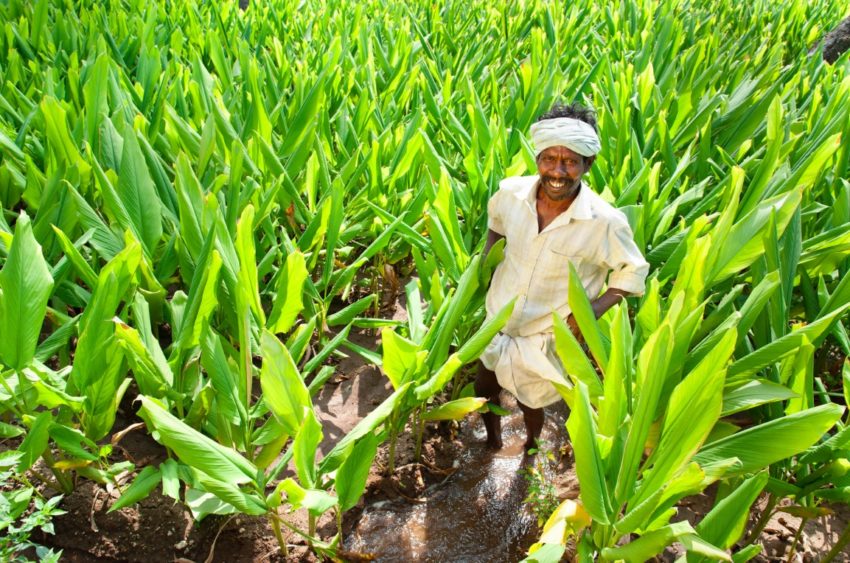
In the Photo: India – Banana Irrigation. A farmer with his young banana crops in Tamil Nadu, India. Photo Credit: Hamish John Appleby for IWMI.

But through all these broad sectoral strategies and policy initiatives, we need to ask, have farmers actually substantially increased their incomes? The answer to this is no. The now constituted Doubling Farmers’ Income (DFI) Committee wants to do more. It places farmers’ income at the core of India’s mandate.

So what will it really take to double farmers’ incomes in the country?

Science, technology and new knowledge can play crucial roles in supporting livelihoods for the vulnerable. Identifying the right kind of tech support is crucial to development progress, even more so in the context of agriculture.

Augmenting water availability and efficiency, agriculture productivity, risk mitigation strategies and innovations on new models may be the ways to step up progress further.
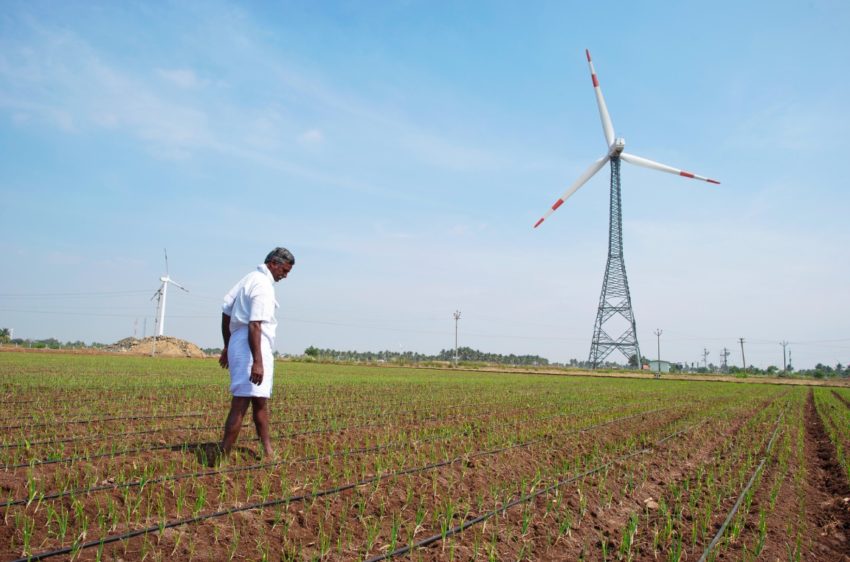
In The Photo: India – Rice Drip Irrigation. A farmer checks the drip irrigation system system at his rice field in Govindapuram,Tamil Nadu, India. Photo Credit: Hamish John Appleby for IWMI.

Meanwhile rising climate risks are making farmer livelihoods more precarious. Climate has always played havoc with the lives of farmers, and it has increasingly become more unpredictable. The country faces increasingly extreme weather conditions such as severe droughts and floods. This is hampering farmer’s production capacity, and impacting their livelihoods.

Can science and innovation help here too? All while increasing farmers’ incomes?

A vivid example of technology disrupting and improving old methods is found in the crop insurance sector. To ensure they can endure extreme weather events, hundreds of Indian farmers have been provided insurance services through an index-based flood insurance (IBFI) system initiated by the International Water Management (IWMI, through WLE and CCAFS research programs).

This tool combines satellite images with hydrological modelling to predetermine flood thresholds, which has led to quicker compensation payouts to farmers in times of crop failure. This is especially helpful to low-income, flood-prone communities in the struggle against climate impacts.
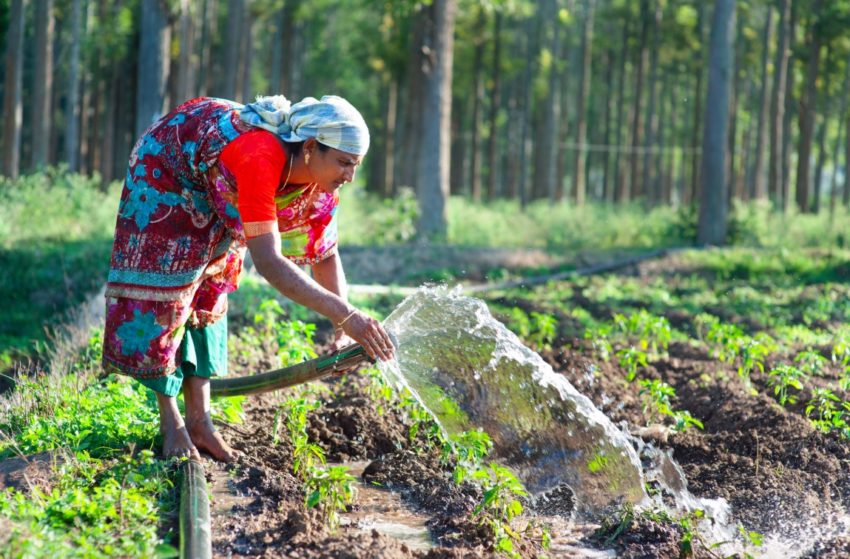
In The Photo: A farmer uses a hosepipe to irrigate crops at her farm in Vazhaithottam village, in the Nilgiris mountains, Tamil Nadu, India. Photo Credit: Hamish John Appleby for IWMI.
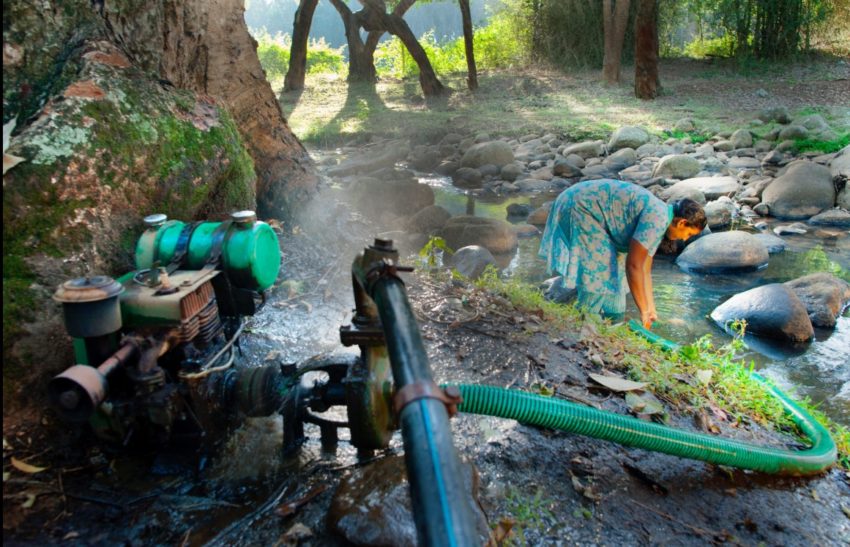
In The Photo: A diesel-powered pump as part of an irrigation system at a farm in Vazhaithottam village, in the Nilgiris Mountains, Tamil Nadu, India. Photo Credit: Hamish John Appleby for IMWI.

This innovation was built on data generated from satellites, which mapped out vulnerable states within the country – places most likely to be impacted by floods or droughts. In making information available to farmers at the right time, farmers can plan better cropping cycles and prepare for too much or too little water, or even to plan for other income sources during risky periods. At the same time, this data is also used by the insurance companies to plan crop insurance packages for farmers, making payouts faster and fairer.

In 2018, IWMI and partners rolled out the two-year IBFI pilot in six villages in Muzaffarpur district, Bihar, covering 408 farms. Of those, 170 farmers faced climate shocks and received pay-outs up to Rs 20,000 per hectare of insured paddy crop. IBFI is set to roll out more widely across India, as it proves itself as a protection against weather crises that push farmers back into a poverty trap.
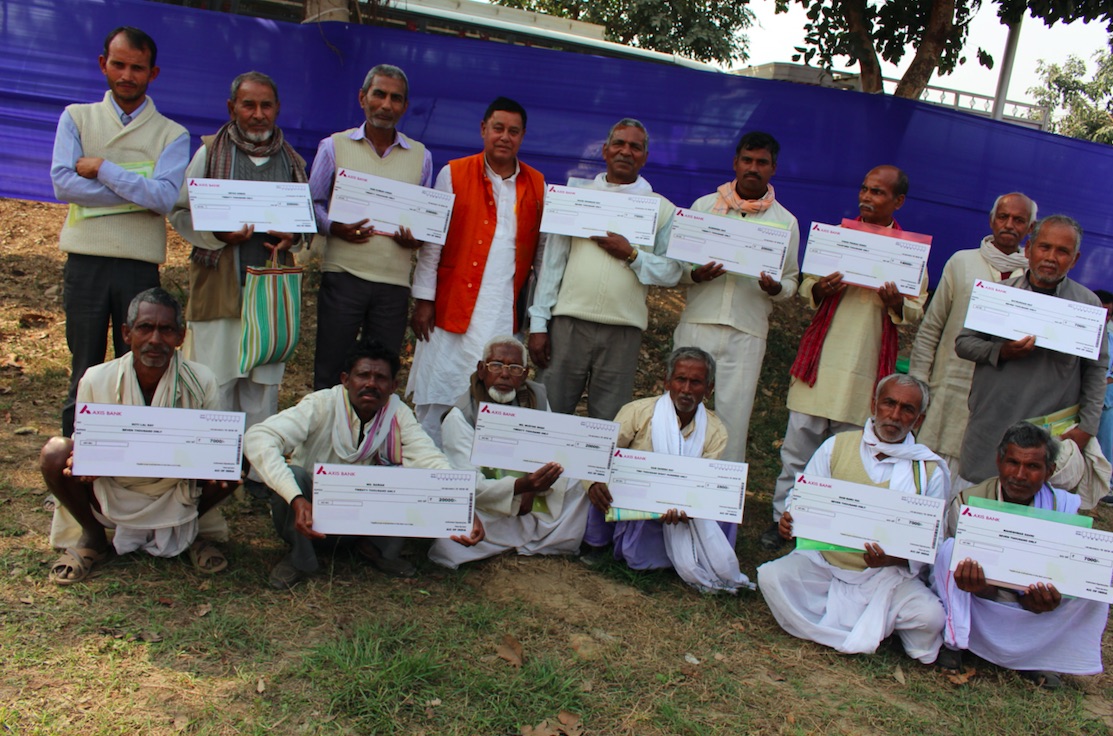
In The Photo: Insurance case study, farmers holding cheques. Photo Credit: Farah Ahmed, IWMI.

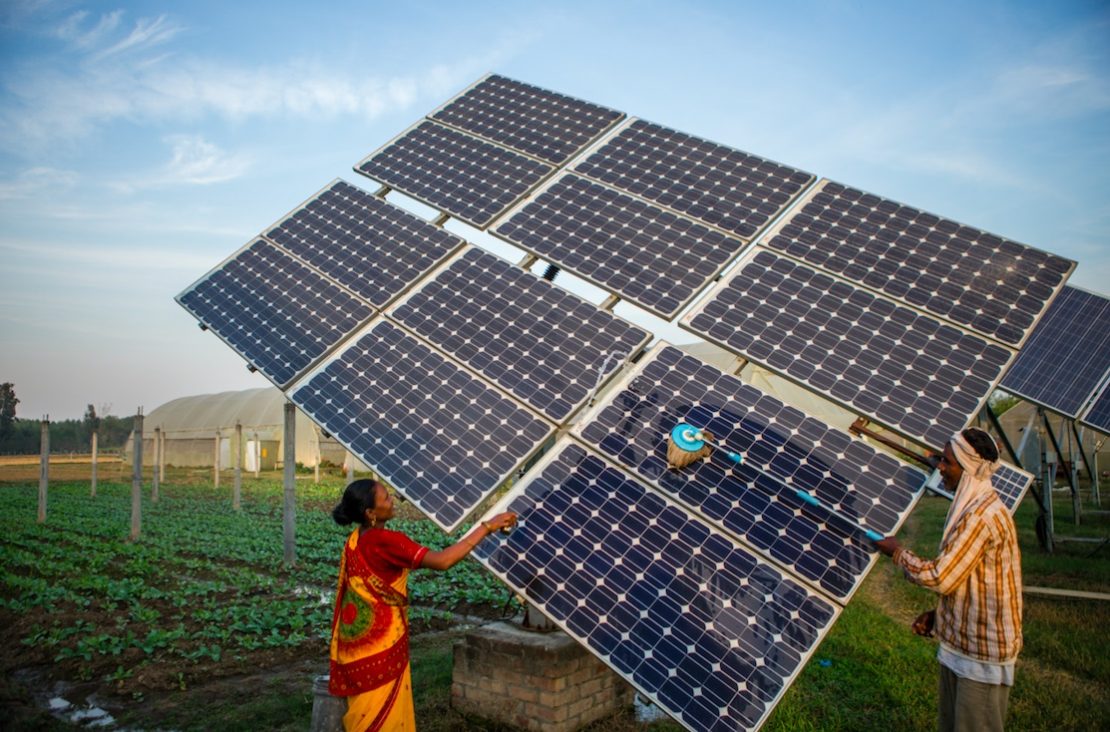
Another promising tech fix has been solar powered irrigation. Many see it as a panacea to India’s water access and availability problems, offering farmers cheaper, more accessible technology that cuts carbon emissions.

Solar powered pumps are now deployed to bring groundwater to millions of farmer fields. And to ensure farmers don’t deplete groundwater resources through over-pumping, the IWMI-Tata Programme supports farmer cooperatives, allowing users to pool their surplus solar-generated electricity and sell it back to the grid.

What was once just an irrigation solution has become a way to harvest the sun as a ‘cash crop,’ giving communities another source of income, and generating clean power.
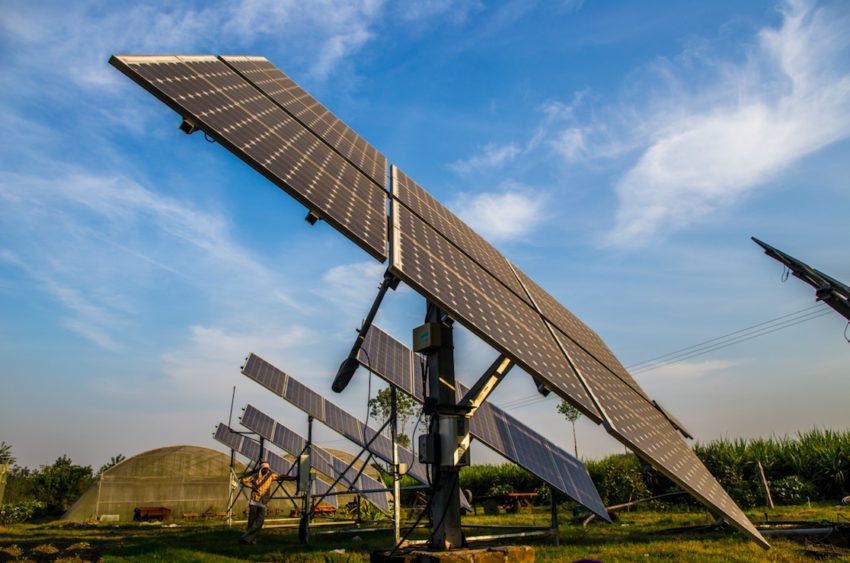
In The Photo: Solar Panels, India. Photo Credit: Prashanth Vishwanathan, IWMI.

These cases provide classic examples of how science, innovation and technology can help support farmers to secure and grow income levels, while helping them navigate worsening climate related risks. Of course, the right investments in technology only work when paired with infrastructure development, enabling policies, and the best protections for communities and the environment. But if India can come together on these key challenges, knowledge and tech have a chance to lead India to the future.

It’s time to double down on smart technology, so we can finally double the incomes of farmers – and be doubly ready for climate challenges.
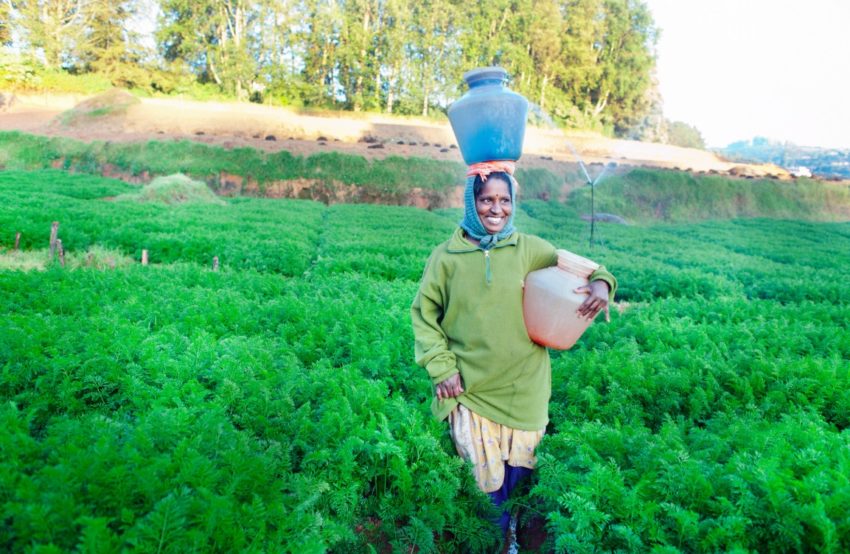
In The Photo: Crop Irrigation: A farmer in the Nilgiris mountains, Tamil Nadu, India. Photo Credit: Hamish John Appleby for IWMI.

Below more photos are included of IWMI’s work towards better Agroecsystems and water management through technology.


In The Photo: James Clarke demonstrates the new IWMI apps using a specially designed display to a member of IWMI’s Tashkent office and other delegates at World Water Week in Stockholm. Photo Credit: IWMI.
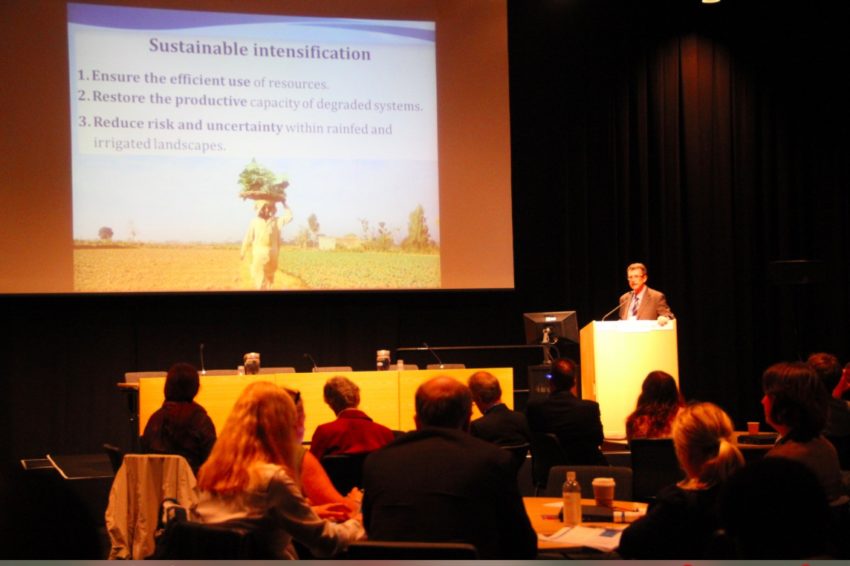
In The Photo: WLE Seminar. IWMI and the CGIAR Water, Land and Ecosystems Project (WLE) at Stockholm World Water Week 2013. Photo Credit: IWMI.
In The Photo: WLE Seminar. Photo Credit: IWMI.
In The Photo: Launch: Managing Water and Agroecosystems for Food Security. Photo Credit: IWMI.
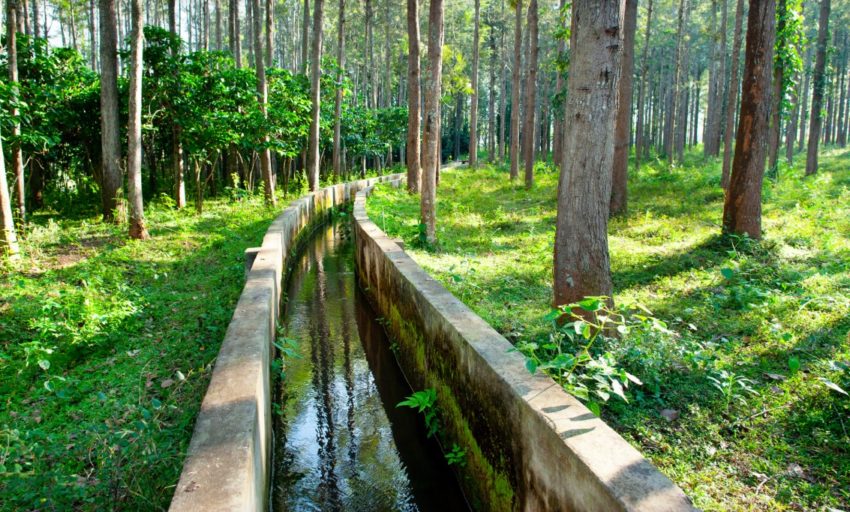
In The Photo: India – irrigation channel. Photo Credit: Hamish John Appleby for IMWI.

Editors Note: The opinions expressed here by Impakter.com columnists are their own, not those of Impakter.com — Featured Photo: Solar Panels, India. Photo Credit: Prashanth Vishwanathan, IWMI.
Tags: Climate Changecrop insuranceFarah Ahmedfarmers'incomeFarmingGFARGFARimpaktersIndiaMegan GrovesSDGssolar-powered irrigationTechnology
Previous Post

BL!XT: Innovating Circuit Breakers for Greater Sustainability. Interview with Chairman and Co-founder, Charlotta Holmquist

Next Post

CLIMATE . CHANGE – Episode 3 – With Alzbeta Klein, Director Climate Business, IFC/World Bank

Related Posts

ESG News regarding Flooding in Indonesia; Glencore promises copper production boost; Trump proposes slashing fuel efficiency standards, and Vulcan Energy receives $2.57bn of funding for lithium project
Business

Indonesians Blame Deforestation for Recent Floodings

Today’s ESG Updates: More than 700 Lives Lost in Recent Indonesian Floods: A combination of mass deforestation and heavy rainfall...

byAriq Haidar
December 4, 2025
How a Framework Convention Could Address Climate and Socio-Economic Displacement
Politics & Foreign Affairs

How a Framework Convention Could Address Climate and Socio-Economic Displacement

The unprecedented shift in human (im)mobility has seen over 120 million forced to flee their homes due to war, violence,...

byDr. Shepherd Mutsvara - Research Fellow at the University of Münster, Germany
December 3, 2025
fossil fuel subsidies
Business

How G20 Nations Can Make Progress After the Group Stalls on Fossil Fuel Subsidy Reform

The 2025 G20 Leaders’ Summit in South Africa sent mixed signals on climate action. In this year’s Leaders’ Declaration, climate change...

byInternational Institute for Sustainable Development (IISD)
November 28, 2025
ESG News regarding climate-driven agricultural disruption, extreme weather impacts on commodities, and supply chain risks. Visuals include flooded rubber plantations, farmers navigating waterlogged fields, and maps highlighting affected southern Thailand regions.
Energy

Severe Floods Threaten $140M of Thailand’s Rubber Production

Today’s ESG Updates Serentica Plans $8B Clean Energy Expansion in India: KKR-backed Serentica aims to more than double its renewable...

byJana Deghidy
November 27, 2025
Animal Health
Biodiversity

Better Animal Health Is the Low-Risk, High-Reward Climate Investment We Need

Imagine if there was a way to reduce emissions from the meat, egg and dairy sector by nearly a quarter,...

byCarel du Marchie Sarvaas
November 26, 2025
ESG News regarding Cop30’s disappointing end, the G20 summit without the US, China’s Unipec fuel deal with Lufthansa, and Singapore’s Sembcorp IPO in India
Business

‘COP of Truth’ Highlights Glaring Differences in Global Climate Perspective

Today’s ESG Updates COP30 Delivers Weak Climate Deal: Global talks in Brazil ended without a plan to phase out fossil...

bySarah Perras
November 24, 2025
ESG news covering the EU’s delay of deforestation rules, rising U.S. housing risks from climate impacts, IFC’s $100M clean-energy investment in emerging markets, and ABN AMRO’s appointment of a new Chief Sustainability Officer.
Business

EU Delays Deforestation Regulation Again

Today’s ESG Updates EU Delays Deforestation Law: Europe postpones the EUDR by one year and loosens compliance rules, raising concerns...

byEge Can Alparslan
November 21, 2025
China Launches First Coal-to-Chemicals Plant Powered by Green Hydrogen
Business

China Launches First Coal-to-Chemicals Plant Powered by Green Hydrogen

Today’s ESG Updates China Green Hydrogen: Analysts warn overcapacity and tech shifts may force consolidation in India’s solar module industry....

byJana Deghidy
November 20, 2025
Next Post
CLIMATE . CHANGE – Episode 3 – With Alzbeta Klein, Director Climate Business, IFC/World Bank

CLIMATE . CHANGE - Episode 3 - With Alzbeta Klein, Director Climate Business, IFC/World Bank

Recent News

ESG News covering Great British Energy’s 2030 clean-power strategy, UK government investment, nationwide renewable expansion, community energy projects, offshore wind development, and job creation in the energy transition.

Great British Energy Unveils 2030 Clean Power Strategy

December 4, 2025
Crypto Portfolio Margin Access defined

What Is Crypto Portfolio Margin Access?

December 4, 2025
Governments Are Hiding Data, Threatening Democracy. Here’s How It Affects You

Governments Are Hiding Data, Threatening Democracy. Here’s How It Affects You

December 4, 2025
  • ESG News
  • Sustainable Finance
  • Business

© 2025 Impakter.com owned by Klimado GmbH

No Result
View All Result
  • Environment
    • Biodiversity
    • Climate Change
    • Circular Economy
    • Energy
  • FINANCE
    • ESG News
    • Sustainable Finance
    • Business
  • TECH
    • Start-up
    • AI & Machine Learning
    • Green Tech
  • Industry News
    • Entertainment
    • Food and Agriculture
    • Health
    • Politics & Foreign Affairs
    • Philanthropy
    • Science
    • Sport
  • Editorial Series
    • SDGs Series
    • Shape Your Future
    • Sustainable Cities
      • Copenhagen
      • San Francisco
      • Seattle
      • Sydney
  • About us
    • Company
    • Team
    • Global Leaders
    • Partners
    • Write for Impakter
    • Contact Us
    • Privacy Policy

© 2025 Impakter.com owned by Klimado GmbH