
Impakter
  • Environment
    • Biodiversity
    • Climate Change
    • Circular Economy
    • Energy
  • FINANCE
    • ESG News
    • Sustainable Finance
    • Business
  • TECH
    • Start-up
    • AI & Machine Learning
    • Green Tech
  • Industry News
    • Entertainment
    • Food and Agriculture
    • Health
    • Politics & Foreign Affairs
    • Philanthropy
    • Science
    • Sport
  • Editorial Series
    • SDGs Series
    • Shape Your Future
    • Sustainable Cities
      • Copenhagen
      • San Francisco
      • Seattle
      • Sydney
  • About us
    • Company
    • Team
    • Global Leaders
    • Partners
    • Write for Impakter
    • Contact Us
    • Privacy Policy
No Result
View All Result
Impakter logo
No Result
View All Result
How Impact Investing Can Boost Rural Economies During and After the COVID-19 Pandemic

How Impact Investing Can Boost Rural Economies During and After the COVID-19 Pandemic

Terry Wyer - Senior Vice President of Investment Programs at Heifer InternationalbyTerry Wyer - Senior Vice President of Investment Programs at Heifer International
February 23, 2021
in Climate Change, Environment, Food and Agriculture, Green Tech, Impact, SDG Series, Society
0

About two-thirds of the 600 million people living in extreme poverty around the world live in rural areas, and the COVID-19 crisis is exacerbating every challenge they face. Rural communities often lack access to proper infrastructure, health care, markets, education and finance. As the world goes digital in the face of the pandemic, people without internet access and electricity are further left behind.

With a global recession and increasing food insecurity, rural development needs to focus on more than just improving agricultural productivity. Innovative financing is critical to strengthening rural economies in developing countries. In particular, impact investments are particularly suited to address rural inequities in a post-COVID world.

Impact investments are investments in assets like private debt, publicly traded debt and private equity that generate social and environmental impact as well as financial returns. In a Center for Strategic and International Studies report I coauthored, we demonstrate how impact investments can help create a more sustainable model for rural economies going forward.

“How Impact Investing Works,” an excerpt from the CSIS report, How Impact Investments Can Strengthen Rural Economies in the Age of COVID-19.

For example, when investors provide financing for roads, electricity and internet access in rural areas, a number of doors are opened for farmers. Electrification enables cold storage and labor-saving machinery, while roads and internet access connect farmers to a wide range of customers and producer organizations. The effect is that farmers can work more efficiently while raising their incomes and exerting more control over the market. In the long run, the infrastructure allows farmers to move from subsistence farming to entrepreneurship.

Investments in the financial sector provide a similar example. Globally, about 1.7 billion people do not have a bank account or mobile money provider, and many small-scale farmers are unable to access the financial tools they need to be successful or respond to emergencies. Instead, they turn to predatory high-interest loans or informal lending networks. Through rural-focused programs from traditional banks or alternatives like microcredit and financial technology, families gain a reliable safety net in case of emergencies and can further invest in their small businesses and long-term economic prosperity.

At Heifer, we are building on our traditional development projects by using impact investing to provide affordable financing to farmers and cooperatives. Through Heifer Impact Capital, our private investments have supported the growth of enterprises and helped connect them to global supply chains.

In the Photo: Many cardamom drying facilities in Guatemala, like this one, are inefficient. Heifer Impact Capital is making sure the new cardamom company they are supporting can purchase the equipment they need to thrive. Photo Credit: Dave Anderson.

In Alta Verapaz, Guatemala, Heifer Impact Capital is investing in a Heifer International program called the Green Business Belt. The program supports 6,250 small-scale producers to sustainably grow and market spices, including cardamom, cinnamon and black pepper, for export. Although the commodities showed high potential for growth, spice farmers in the region were reliant on middlemen to get their products to market. Unable to afford the infrastructure to access markets directly, they were receiving below-market prices and unable to make a livable income.

Heifer Impact Capital is investing in a new spice processing and distribution company based in Alta Verapaz called Nueva Kerala. The company will process and distribute locally grown cardamom, cinnamon and black pepper, selling directly to spice importers such as McCormick & Company in the United States and others around the world. Funds are being invested to provide working capital to farmers at significantly lower rates than local money lenders, and other investments will allow the company to purchase equipment, such as more efficient driers to increase productivity.


Related Articles: The Role Of Impact Investing In Combating Climate Change | Farmers in Ecuador Innovate a Whole New Food System

Once Nueva Kerala is financially independent, Heifer Impact Capital plans to transition its 49% equity stake to farmers, with the company serving as a model for development in areas where agricultural commodities are readily available but access to markets is limited. Heifer Impact Capital is currently looking to significantly increase the scale and scope of efforts like this by partnering with impact investors, financial institutions, donors and other nongovernmental organizations, with the goal of reaching many more families in the future.

The COVID-19 crisis presents opportunities now and in the future for increased investments in rural economies that could create jobs, propel economic development, attract youth to careers and entrepreneurship in agriculture, and contribute to greater food security globally.

Rural development must promote agricultural transformation that modernizes and commercializes agriculture, encourages investments in rural areas, and bolsters private enterprise and investment. Developing farmers as entrepreneurs and strengthening institutions are important steps in addressing some of the inefficiencies of the agriculture industry, which will ultimately support farmers in making a living income from their businesses. Beyond increasing productivity, rural development must focus on enabling small-scale famers to lead a transformation in their communities by earning a living income and thriving, not just surviving.


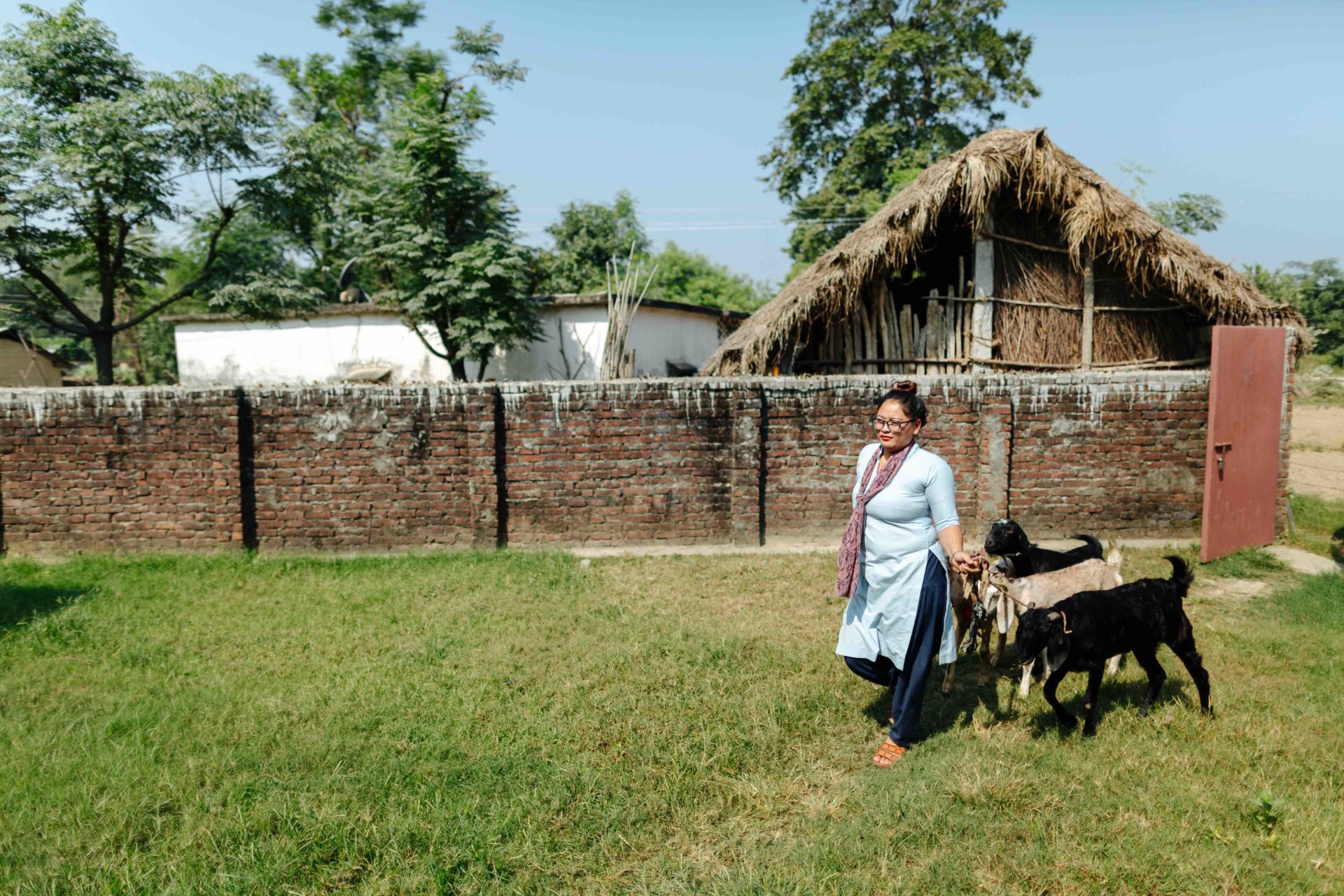
Editor’s Note: The opinions expressed here by Impakter.com columnists are their own, not those of Impakter.com. — In the Featured Photo: Divya Gurung leads goats to a scale at the Naya Sriganshil Cooperative in Dhakeri, Nepal. Featured Photo Credit: Joe Tobiason.


 

Previous Post

Granular Politics: The Nitty-Gritty of Participatory Democracy

Next Post

Battle of the Brands: Two Juggernauts of Luxury, BMW vs. Mercedes – How Sustainable?

Related Posts

Key Metrics to Compare Across Fuel Card Providers
Business

Key Metrics to Compare Across Fuel Card Providers

The type of fleet fuel cards you choose can make a difference to costs and efficiencies for any business with...

byHannah Fischer-Lauder
December 9, 2025
Home Heating and Cooling performance
Architecture

Energy-Saving Tips for Better Heating and Cooling Performance

It creates comfort inside while also helping to lower the utility bills due to efficient temperature control. Most homes want...

byHannah Fischer-Lauder
December 9, 2025
How Personal Loans Support Sustainability While Covering Urgent Expenses
Business

How Personal Loans Support Sustainability While Covering Urgent Expenses

Life’s great at throwing curveballs. One day, you're cruising along, saving for the future and bragging about mindful budgeting. The...

byHannah Fischer-Lauder
December 9, 2025
ESG News regarding grid tech stocks surging, Indonesia fining palm oil mining companies, Europe to delay carbon border tariff and auto industry laws, and China invests $80 billion in green tech
Business

Grid Tech Stocks Rise 30% This Year

Today’s ESG Updates Grid Tech Stocks Climb: Grid technology shares are up 30% this year, as grids are updated and...

bySarah Perras
December 9, 2025
SaaS customer acquisition platform
Business

Why Customer Acquisition Matters for SaaS

For any Software as a Service (SaaS) business, growth hinges on attracting the right customers. While creating a high-quality product...

byHannah Fischer-Lauder
December 8, 2025
plastic diseases
Biodiversity

Plastic Can Now Help Spread Diseases

There has been growing attention to the “Great Pacific Garbage Patch” by those who correctly recognize it as an environmental disaster....

byRichard Seifman - Former World Bank Senior Health Advisor and U.S. Senior Foreign Service Officer
December 8, 2025
ESG news covering EFRAG's new ESRS Knowledge Hub, Bank of England's private equity climate stress test, Singapore's green-power data centre rules, and Amazon's climate dispute with rivals.
Business

Europe Boosts ESG Transparency With New ESRS Knowledge Hub

Today’s ESG Updates EFRAG Unveils ESRS Knowledge Hub: Centralized EU platform to support CSRD-aligned sustainability reporting. Bank of England Tests...

byMuhammad Umer Aslam
December 8, 2025
The Best Virtual Office Address In London For Your Startup
Business

How To Choose The Best Virtual Office Address In London For Your Startup

Launching a venture in a competitive city like London can be exhilarating as well as challenging. Every startup must select...

byHannah Fischer-Lauder
December 5, 2025
Next Post
Battle of the Brands: Two Juggernauts of Luxury, BMW vs. Mercedes – How Sustainable?

Battle of the Brands: Two Juggernauts of Luxury, BMW vs. Mercedes - How Sustainable?

Recent News

Key Metrics to Compare Across Fuel Card Providers

Key Metrics to Compare Across Fuel Card Providers

December 9, 2025
Home Heating and Cooling performance

Energy-Saving Tips for Better Heating and Cooling Performance

December 9, 2025
How Personal Loans Support Sustainability While Covering Urgent Expenses

How Personal Loans Support Sustainability While Covering Urgent Expenses

December 9, 2025
  • ESG News
  • Sustainable Finance
  • Business

© 2025 Impakter.com owned by Klimado GmbH

No Result
View All Result
  • Environment
    • Biodiversity
    • Climate Change
    • Circular Economy
    • Energy
  • FINANCE
    • ESG News
    • Sustainable Finance
    • Business
  • TECH
    • Start-up
    • AI & Machine Learning
    • Green Tech
  • Industry News
    • Entertainment
    • Food and Agriculture
    • Health
    • Politics & Foreign Affairs
    • Philanthropy
    • Science
    • Sport
  • Editorial Series
    • SDGs Series
    • Shape Your Future
    • Sustainable Cities
      • Copenhagen
      • San Francisco
      • Seattle
      • Sydney
  • About us
    • Company
    • Team
    • Global Leaders
    • Partners
    • Write for Impakter
    • Contact Us
    • Privacy Policy

© 2025 Impakter.com owned by Klimado GmbH