
Agrifood systems generate a whopping USD 10 trillion in hidden costs to our health, the environment, and society — this is according to new estimates from the Food and Agriculture Organization of the United Nations.
It’s time we start recognizing these costs in the prices we pay for food and goods.
Over the past two years, we have taken a deep dive into sustainable market trends and price dynamics for eight key agricultural commodities, from cotton to coffee. We found that many smallholder farmers in developing countries are paying more than their fair share of the costs of production.
And yet, they receive a meagre share of the value their products capture through the value chain.
What role can voluntary sustainability standards (VSSs) play in helping farmers secure a fair and stable income? Can they help to identify and quantify the hidden costs of production so farmers are adequately rewarded for using more sustainable practices?
The answer is yes — but we’re not there yet.
What are the main issues affecting farmers’ livelihoods in developing countries?
Price volatility is putting farmers under increasing financial pressure.
As the world grapples with conflict, extreme weather events, and the lingering effects of the pandemic, agricultural commodity markets are getting more volatile.
More than four out of five people reliant on food and agriculture for their livelihoods live in Africa and Asia. This means that high volatility in crop prices is having a disproportionate impact on developing countries that rely on agriculture for economic growth and food security.
Unsurprisingly, smallholder farmers are getting hit hardest. Not only do they receive low and unstable prices for their products, but they are also battling with other financial challenges — from unpredictable yields due to increasingly erratic weather patterns to rising production costs and a lack of access to financial help.
They are living on a knife’s edge. Investing in more sustainable practices could give them greater stability, but doing so often comes with a price tag they can’t afford.
Farmers are at the “wrong end” of the value chain.
Part of the issue for farmers is that the economic value of agricultural products is much greater downstream in the value chain once a product hits the processing, manufacturing, and retail stages. Farmers tend to receive the lowest share of all and have little power to negotiate when up against large multinational companies and retailers.
For example, a recent study estimated that just over half the value of palm oil gets captured in the retail and fast-moving consumer goods sectors, while oil palm farmers get just 6%.
In addition, farmers shoulder an unfair share of the environmental, social, and financial risks of producing our food and goods. For instance, it is estimated that price volatility is three to five times lower when a product reaches the consumer compared to when it is imported.
Producers in developing countries also face greater risks from climate change — and more barriers to adapting to them.
Something must be wrong for smallholder farmers to be paying the price for risks beyond their control when they are the least equipped to deal with them.
What role do VSSs play in supporting farmers’ livelihoods?
Voluntary sustainability standards (VSSs) set requirements for producers and other actors to meet to help make value chains more sustainable. They have grown over the past three decades to cover a wide range of metrics — from respect for human rights to environmental impacts.
Some VSSs in the agricultural sector seek better financial outcomes for farmers. They may offer direct monetary benefits aiming to increase farmers’ incomes and protect them from receiving low prices. For example, Fairtrade International has fixed minimum prices and premiums for most certified products.
Rainforest Alliance, on the other hand, offers sustainability differential payments to reward farmers for using more sustainable practices and distribute the costs of such action more evenly across value chains.
Even where VSSs do not offer direct financial support, helping farmers to get better prices and incomes can be a consequence of other parts of VSSs’ work. For example, VSSs can train farmers to improve their agricultural practices or provide them with higher quality inputs, with the aim of increasing farmers’ production capacity and yields — and, in turn, their profits.
Are VSSs reaching their potential?
Farmers associated with VSSs tend to be more protected and receive higher prices.
According to our analysis, in most commodity sectors, farmers associated with one or more VSS are usually more protected from price volatility than farmers selling conventional products. While not always the case, VSS-compliant farmers also tend to receive higher prices, provided they can sell their products as compliant. This price ranges from 15% to 50% above the conventional market price.
However, VSS-compliant prices are often reported at the point of export, so knowing how much of this price is actually received by the farmer can be difficult.
There are a number of reasons that could explain why VSS-compliant farmers can fetch higher prices. In some cases, it could be a direct result of the minimum prices and premiums some VSSs have in place. In other cases, it could be because farmers using more sustainable practices may produce greater quality goods that fetch better prices.
Related Articles: Food Systems: The Missing Piece of the Climate Puzzle at COP28 | COP28: Say Climate Crisis, Think Health Crisis | Can We Fix Our ‘Broken’ Food Systems?
VSS-compliant farmers also tend to have more solid relationships with buyers, so they may be able to better secure their markets. Complying with VSSs can also lower production costs — for example, by reducing the need for fertilizers and other expensive inputs.
However, there is huge variability across VSSs, commodities, and countries. For example, our research suggests that a VSS-compliant cotton farmer is more likely to obtain higher prices than a VSS-compliant sugarcane farmer.
Similarly, a farmer who complies with a VSS that has defined minimum prices and premiums is more likely to get higher prices than one without. And finally, a farmer living in a country with institutional or financial support also stands a better chance of earning a decent income.
VSSs’ impact is limited by a lack of demand, certification costs, and market dynamics.
One of the main challenges VSSs face is a lack of demand for VSS-compliant products, particularly outside of Europe and North America. Only when we are willing to recognize and pay for the social and environmental costs associated with the food and goods we consume can those costs be distributed more fairly throughout value chains.
The same can be said about the costs of certification. Currently, the price a farmer pays for certification can sometimes counteract the potential profits or benefits of being certified. These costs should be more evenly spread between farmers and retail and manufacturing companies, especially given that the latter receive the highest share of profits.
Buyers need to start recognizing the value of sustainability so the burden to pay doesn’t fall on the farmer — or the consumer. Only then will we see real change.
Perhaps the most complex challenge that VSSs need to overcome when it comes to farmers’ livelihoods is the fact that international market prices for conventional products are still being used as the benchmark to inform the prices of VSS-compliant counterparts. VSSs have zero control over the market economy, so unless they design a new model for calculating prices, their ability to substantially increase farmers’ prices and incomes is limited.
What do VSSs need to do to stop missing the mark for smallholder farmers?
VSSs should rethink the design and implementation of price models and other supporting measures.
To make minimum prices and premiums for VSS-compliant products more competitive, they need to more accurately reflect the social and environmental cost savings of adopting more sustainable agricultural practices.
For this to happen, a strong emphasis on data is needed to measure the results achieved by VSS-compliant farmers, as well as the costs accrued along a given value chain when sustainable practices are used versus when they are not.
Until this is possible, VSSs and other actors should work toward increasing monetary incentives for sustainable growing practices, such as payment for ecosystem services or loans linked to sustainability outcomes. Farmers should be rewarded based on their results and their commitment to continuous improvement.
It is not just a question of how, but how much. Most VSSs have not even established formalized minimum prices and premiums yet, so most traders or buyers take the international market price as a reference to set premiums for certified products. We need collective commitment to scale up these types of pricing models across the board.
All VSS-setting bodies should implement measures to ensure the price that farmers receive is transparent.
We need stronger efforts to obtain and share data on prices from the export level back to the farm gate to ensure that premiums received for adopting more sustainable practices and investing in VSSs are reaching farmers. This could also give them an opportunity to negotiate prices.
Data and access to information are crucial for empowering smallholder farmers to make informed decisions about their business and farm practices. VSSs and other actors, such as buyers, traders, and processors, can also help by committing to price transparency and publishing formal sourcing reports.
Furthermore, promoting direct trade mechanisms can help farmers negotiate prices directly with buyers and have greater access to market information.
VSSs have work to do, but they cannot do it alone. We need action from all actors throughout value chains, from governments to retailers, to stop farmers from shouldering the burden of hidden production costs—and ultimately improve their livelihoods.
— —
This article was originally published by the International Institute for Sustainable Development (IISD) and is republished here as part of an editorial collaboration with the IISD.
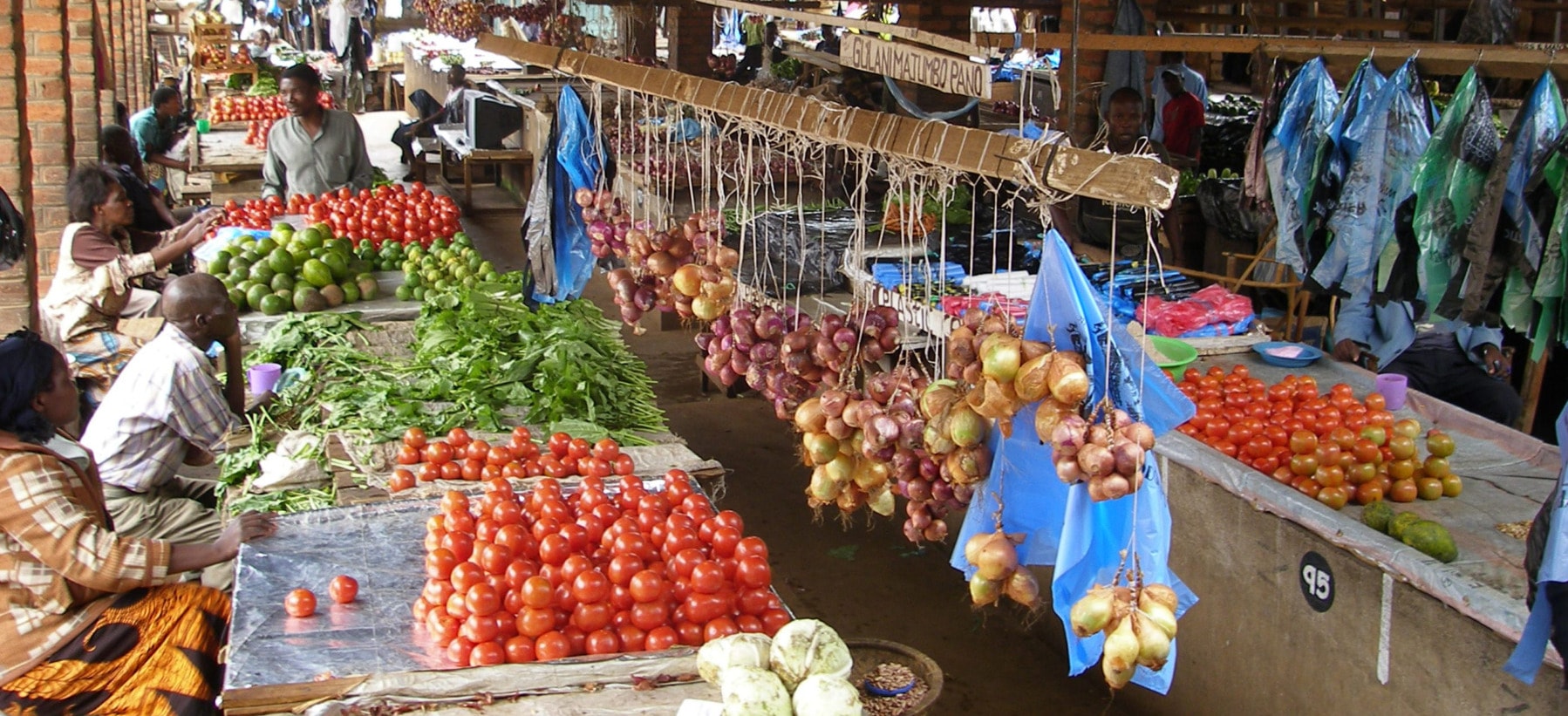
Editor’s Note: The opinions expressed here by the authors are their own, not those of Impakter.com — In the Featured Photo: Produce sale at a local market in Malawi. Featured Photo Credit: IFPRI.