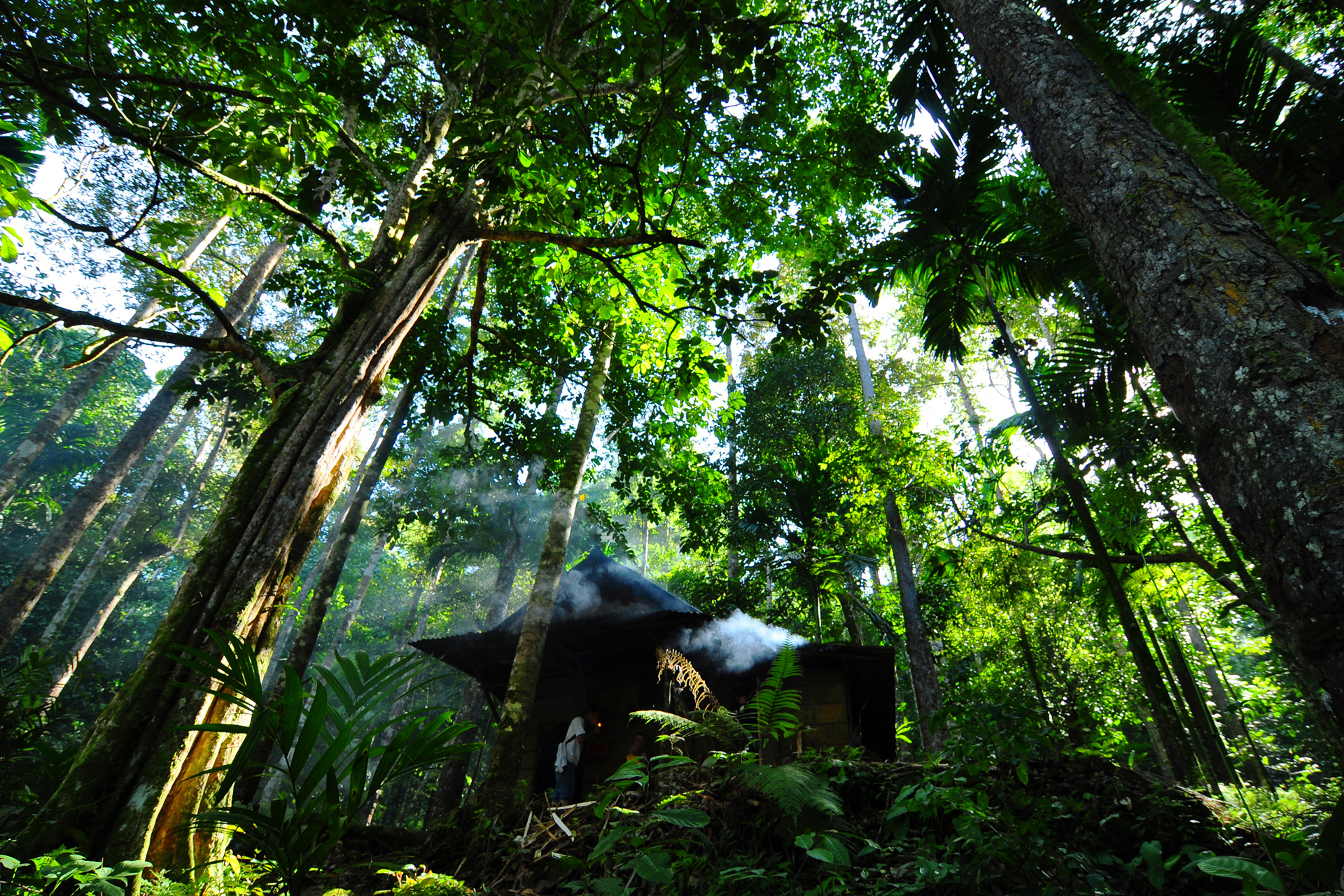
“… most people believe that trees die when they are felled, and woods disappear because they are cut down. The reality is more complex…”
– Oliver Rackham, founding father of landscape ecology
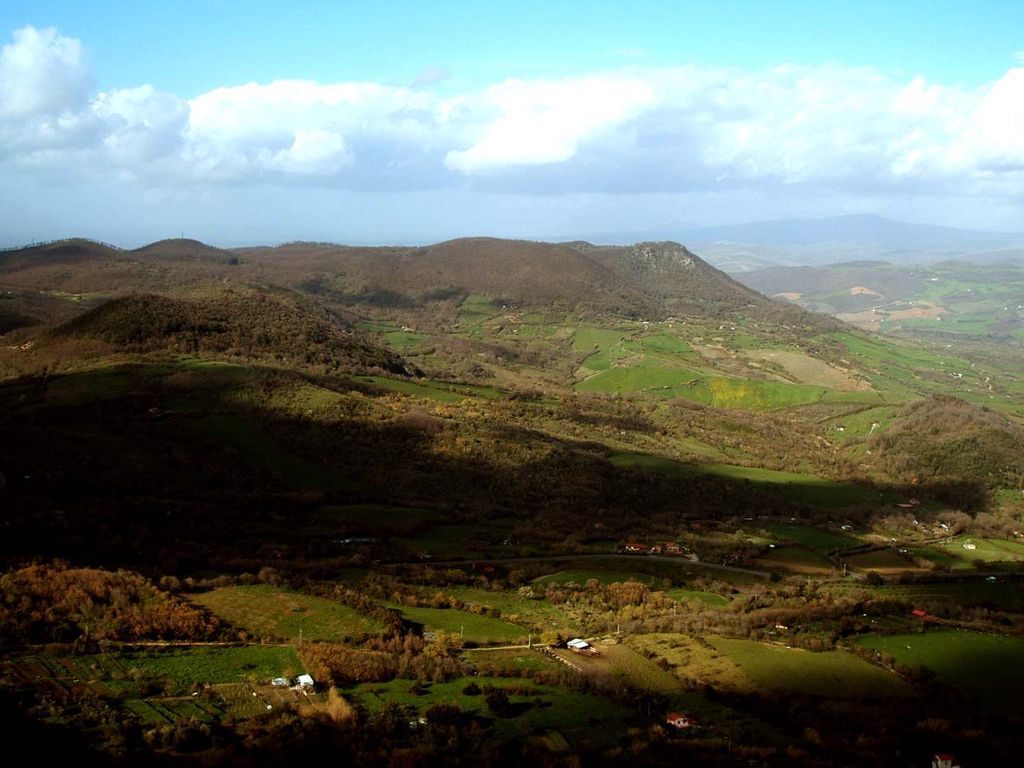
A prime example of this is a beautiful forest area an hour’s drive north of Rome called the Tolfa Mountains. This is currently a national forest reserve that contains several areas specially protected under EU laws for their exceptional natural features, including the lowest altitude beech forest in Europe, a remnant of the last glaciations. What is ironic is that for almost 300 years this area was synonymous with polluting natural resource based industry, and considered an environmental wasteland.
In 1462 Giovanni Di Castro discovered the presence of alunite in the area, the source mineral for making alum (hydrated aluminum potassium sulphate), a precious salt indispensable for leather tanning and cloth dying until modern substitutes were developed in the mid 1700’s. Held as a monopoly by the Papal State, these mines provided approximately 70% of the wealth of the popes between the 1500s and 1700. The Christian fleet that defeated the Ottomans at Lepanto in 1570 was built on the profits of the Tolfa alum, and the two families that managed the early mine concessions, the Medici and the Chigi, became immensely rich through it.
At peak production 1465-1650 the mines were the largest industrial enterprise in Europe, producing up to 1,500 tons of alum per year. What is often overlooked is that to achieve this required up to 30,000 cubic meters of wood per year as fuel for the kilns where the raw mineral was turned into “Roman alum.” This is the equivalent of completely cutting 75 hectares (three quarters of a square km) of mature forest every year. Studies show that approximately 6.2 million cubic meters of fuelwood were used to produce 473,000 metric tons of alum over the 361 years of major production between 1462 and 1823.
there is a big difference between having trees and having a forest.
Alum manufacture was a labor and energy intensive process that could not have been sustainable for a long period without the abundance of fuelwood in the Tolfa Mountains. At the time of the discovery of alum the Tolfa Mountains were almost certainly heavily forested: the Great Famine of 1315 and the Black Death in 1347 killed approximately 80% of the population in the region, and 13 of the 14 towns in the area were abandoned. After 130 years of undisturbed growth, forests were close to peak wood carrying capacity, which for this area is of around 400 cubic meters per hectare (m3/Ha). As Rackham would point out however, there is a big difference between having trees and having a forest. Just developing a complex multi-story ecosystem can take up to 300 years, and the restored version will be quite different from the original in terms of diversity and species prevalence. What was present in 1462 was most likely a lot of trees with limited diversity: the dominant tree species of Holm Oak at lower altitude and Turkey Oak and Chestnut at higher altitude.
Throughout this period the ownership and primary responsibility for forest management was retained by the Papal State, while the mines and alum works were assigned to commercial operators on the basis of 12-year contracts. Management documentation shows that both contractors and owners were well aware of the critical role of nearby fuelwood resources to the commercial viability of alum production.
Some of the earliest forest management documents in the world come from this area, as alum production periodically slowed due to fuelwood shortages. The primitive transport logistics of the time implied that bringing large volumes of wood from outside a 15-20 km radius would ruin the profitability of the mines, and mine managers progressively degraded the nearby forests by shortening cutting cycles without allowing time for re-generation.
Just developing a complex multi-story ecosystem can take up to 300 years, and the restored version will be quite different from the original in terms of diversity and species prevalence.
Measures were put in place as early as the 1500s to ensure the sustainability of forest cover, and therefore fuelwood supply. The overall management approach however failed to recognize that the short duration of the mine management contracts (12 years) created a permanent bias towards short term profit maximization through unsustainable forest resource exploitation by the contractors. Mine managers were generally changed after their 12 year tenure, while forest coppicing regeneration cycles are normally in the 25-30 year range. Managers therefore had a perverse incentive to cut as much as possible in order to increase alum production, and spend as little as possible on reforestation and conservation.

A system gradually developed over the years where the Papal State put in place stricter regulations, enforced by full time guardiani, to safeguard their long term economic interests against the short term interests of the mine managers. Already in the 1500s there were regulations issued prescribing which areas might be cut in a given year and which needed to be protected on a 30 year cycle. These appear to have frequently been ignored, given the number of fines and warnings issued, but they show the first traces of conservation management.

With deforestation reaching crisis proportions (and affecting alum production), a high level mission was dispatched by the Pope in 1608 to examine the state of the Tolfa Forests, led by two influential Papal clerks: Mons. Biscia and Mons. Serra, both to later become Cardinals. The very detailed report on the inspection visit by the two Papal representatives provides both detailed information on the current state of forest operations, and a template for the future management, with provisions which would remain in place for over two centuries.
The report contains a very specific set of recommendations, including the implementation of rotational block cuts, imposition of a universal 24 year cutting cycle, bans on livestock pasturing in recently cut areas, and introduction of a regular three year forest management audit.
While the implementation was patchy, these regulations laid the basis for the future health of the forests of the area. Once peak production had passed, and the process for manufacturing alum from shale was discovered in the mid 1700s, gradual recovery began, with the forests adapting to the mixed agricultural and pastoral economy practiced in the area until very recently. What emerged from the process is something very different from both the original “wildwood” (which was probably already greatly changed in the Etruscan and Roman periods), and the dense but fairly homogeneous re-growth that followed the depopulation of the early 1300s.
Related articles: “FORESTS: INNOVATION FROM MULTIPLE TO SEASONAL CROPPING”
“SDG 15: PLANTING NEW ROOTS FOR A FERTILE PLANET”
Despite millennia of intensive use, the forests of the area still show a clear differentiation between Mediterranean forest in the lower altitudes, especially on the seaward (western) face, and higher altitude mixed oak forest. In the former the dominant tree species are mainly Holm oak, surrounded by low brush of Phyllirea, Mastic, Myrtle, Strawberry tree and Tree Heath, with some important presence of Cork Oak on the north-western slopes. In the higher altitude oak forests the dominant species remains Turkey oak, despite its long history of intensive use as an economic resource. While Turkey oak is present on most of this area, there is a clear differentiation in accompanying species prevalence between relatively dry hilltops and upper slopes on one hand, with a marked presence of Eastern hornbeam and more humid valley bottoms where European hornbeam and European hop-hornbeam are common.
The higher altitudes also have extensive groves of sweet chestnut, formerly managed for chestnut flour production, but now largely coppiced on short cycle for the production of fence posts (still by far the most common form of fencing in the region). An interesting phenomenon is the large presence of Downy oak, which appears to thrive largely in degraded Holm oak forest and at the margin between the Mediterranean and higher altitude oak forest.
What now appears to be “wild,” and is carefully (and rightly) protected by environmental safeguards, is in fact a result of constant human intervention and interaction with nature over three thousand years. It deserves preservation for its biodiversity, the environmental services it provides, and above all for its outstanding beauty. It must be recognized however that human intervention has been a critical factor in its evolution, and will continue to be so.