The unprecedented shift in human (im)mobility has seen over 120 million forced to flee their homes due to war, violence, human rights abuses, natural disasters, and climate change. But here’s the catch: only 43 million of them are recognized as refugees.
This mismatch between the realities of emerging forms of displacement and the limited legal recognition available calls for the adoption of a Framework Convention to broaden the refugee definition and establish fair, coordinated mechanisms for responsibility-sharing across states.
Why a Framework Convention?
Under international law, a Framework Convention is defined as a “legally binding treaty which establishes broader commitments for its parties and leaves the setting of specific targets either to subsequent more detailed agreements (usually called protocols) or to national legislation.”
Framework Conventions/Protocols have been largely adopted and ratified to regulate (not only) concerns in the field of environmental law, but also manage complex, evolving, and politically sensitive global problems such as climate change, public health crises, and biodiversity loss. Examples include the United Nations Framework Convention on Climate Change (UNFCCC) and the World Health Organization’s Framework Convention on Tobacco Control (FCTC).
Crucially, the adoption of Framework Conventions has succeeded where political consensus is limited, scientific understanding is still unfolding, and states need flexibility to adapt over time.
Global migration seems to meet all three conditions.
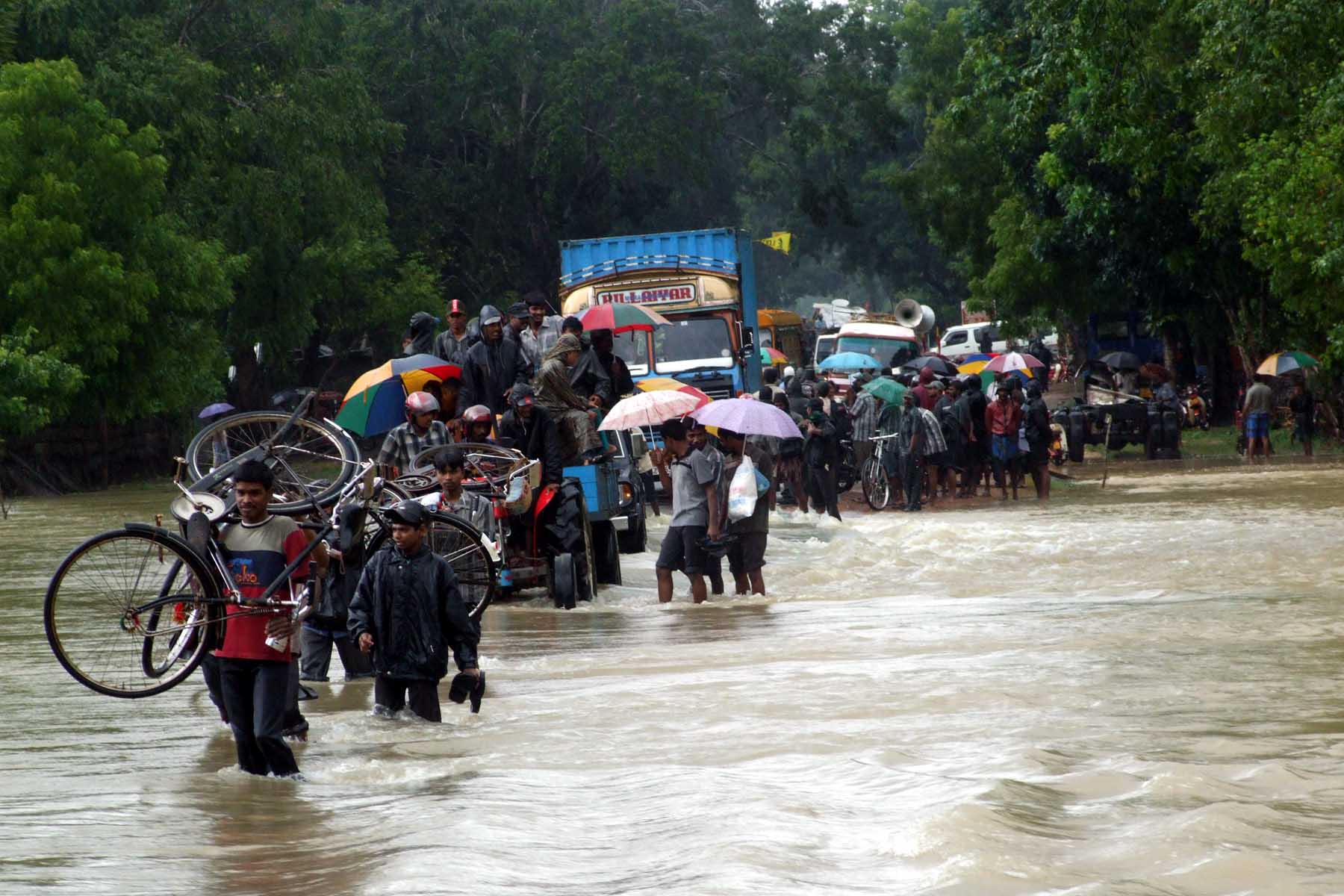
While wars and persecution are key drivers of displacement, it can be argued that economic collapse, environmental shocks, and non-state violence are also decisive. As a result, displaced individuals are sorted into categories of the “deserving” and “undeserving” refugees. And with this comes a social and legal hierarchy that entrenches marginalization.
To that end, calls to use the Framework Convention only in refugee burden-sharing situations miss the mark in that excluded refugee categories should first be identified before operationalizing refugee burden-sharing mechanisms.
How should this be done?
Migration has evolved into a global policy conundrum for governments and international organizations dealing with human mobility. At the core of the “how” and the “what” in international refugee law is the intersection of cognitive and normative consensus.
“People do not risk their lives unless the conditions forcing them to move are greater than the risks of the journey itself.”
The former refers to states’ agreement on the relevant facts of the global problem (refugee definition), while the latter concerns their agreement on what constitutes the appropriate legal response to that problem. It is at this point that one realizes that the very definition of one’s expertise lies in acknowledging that the problem cannot be fully resolved.
However, during this existential moment, the realization that the global problem cannot be resolved is not in itself an end. Arguably, it is an opportune moment to confront the question: what does it require to believe that new rules or policies are the right ones?
So, the first practical step in broadening the scope of international protection is to identify the “excluded refugee” by looking at the following non-exhaustive list:
- People fleeing climate-induced disasters
- People fleeing slow-onset environmental degradation
- People escaping state mismanagement, economic breakdown, and governance failures
- People uprooted by intra-state conflict, non-state violence, and complex social tensions
- People whose livelihoods collapse under resource scarcity, food insecurity, and environmental stress.
The above groups constitute millions worldwide, and yet they are not recognized as refugees under the 1951 Refugee Convention or its 1967 Protocol. The United Nations High Commissioner for Refugees’ (UNHCR) core mandate is to offer international protection to individuals who are outside their country of origin and are unable or unwilling to return to it due to fear of persecution for reasons of their race, religion, nationality, membership of a particular social group or political opinion.
As a result, those falling outside this definitional scope navigate fragmented systems offering inconsistent recognition and limited rights. Expanding the convention refugee definition would not simply widen access to asylum, but also acknowledge the real reasons people move and prevent states from dismissing legitimate claims as merely “economic” or “voluntary.”
Building a Fairer Global System
Having identified the “excluded refugee,” the second practical step is to establish coordinated, incremental responsibility-sharing mechanisms. Today, more than 80% of the world’s displaced persons live in countries with developing economies. This imbalance places enormous strain on states like Uganda, Kenya and Turkey while wealthier countries invest in deterrence, fences, “big beautiful walls,” and pushbacks.
Uganda alone hosts close to two million refugees under its progressive open-door policy, while Kenya manages long-standing camps such as Dadaab and Kakuma that have grown into semi-permanent settlements. Turkey, now the world’s largest refugee-hosting country, shoulders the responsibility of integrating millions of Syrians under temporary protection while balancing domestic political pressures and regional instability. A global Framework Convention could thus institutionalize burden-sharing through the following mechanisms:
- Predictable financial contributions from wealthier states
- Pre-agreed resettlement quotas
- Coordinated use of humanitarian visas and safe mobility pathways
- Regionally tailored implementation protocols
Crucially, these mechanisms would evolve over time, allowing states to adjust to emerging patterns of displacement without renegotiating the entire treaty.
A Global Shift in Imagination
Europe is currently grappling with new asylum pacts, border externalization policies, and extreme public sentiment on migration. These sentiments and (some) policies view migrants as threats rather than human beings seeking dignity. Similar dynamics unfold across Canada, the United States, Australia, and some Asian states, even as climate impacts intensify and displacement accelerates.
Yet the solution is not to shrink protection but to reimagine it.
The focus should not be on the concern that expanding the refugee definition beyond its current form will lead to increased influxes and strain the resources of refugee-hosting countries. Instead, the emphasis should be on how a broadened refugee definition can empower asylum seekers by providing them with the mobility and voice necessary to pursue economic, educational, and social opportunities.
This approach ensures that displaced persons have an active role in shaping both international and domestic responses to their displacement. A Framework Convention offers such a pragmatic, politically realistic pathway. It does not demand that states rewrite the 1951 Convention overnight. Instead, it invites them to recognize that displacement is now driven by intertwined crises: economic, environmental, and political. And it is imperative that international law( evolves accordingly and innovatively.
Related Articles
Here is a list of articles selected by our Editorial Board that have gained significant interest from the public:
Toward a More Just Future
In conclusion, if adopted, a Framework Convention could become the most significant development in refugee protection since 1951. It would place emerging displaced groups on equal footing with Convention refugees, encourage global solidarity, and reduce dangerous irregular journeys by creating lawful pathways for protection.
It would reflect a simple truth: People do not risk their lives unless the conditions forcing them to move are greater than the risks of the journey itself.
Recognizing these new realities is not a threat to the international legal system; rather it is an opportunity to transform it, to make it more humane, more inclusive, and better suited to the 21st century.
Editor’s Note: The opinions expressed here by the authors are their own, not those of Impakter.com — Cover Photo Credit: Aamir Dukanwala