Editor’s Note: This is the second of a two-part interview. The first part was published on the 26th of April and can be found here.
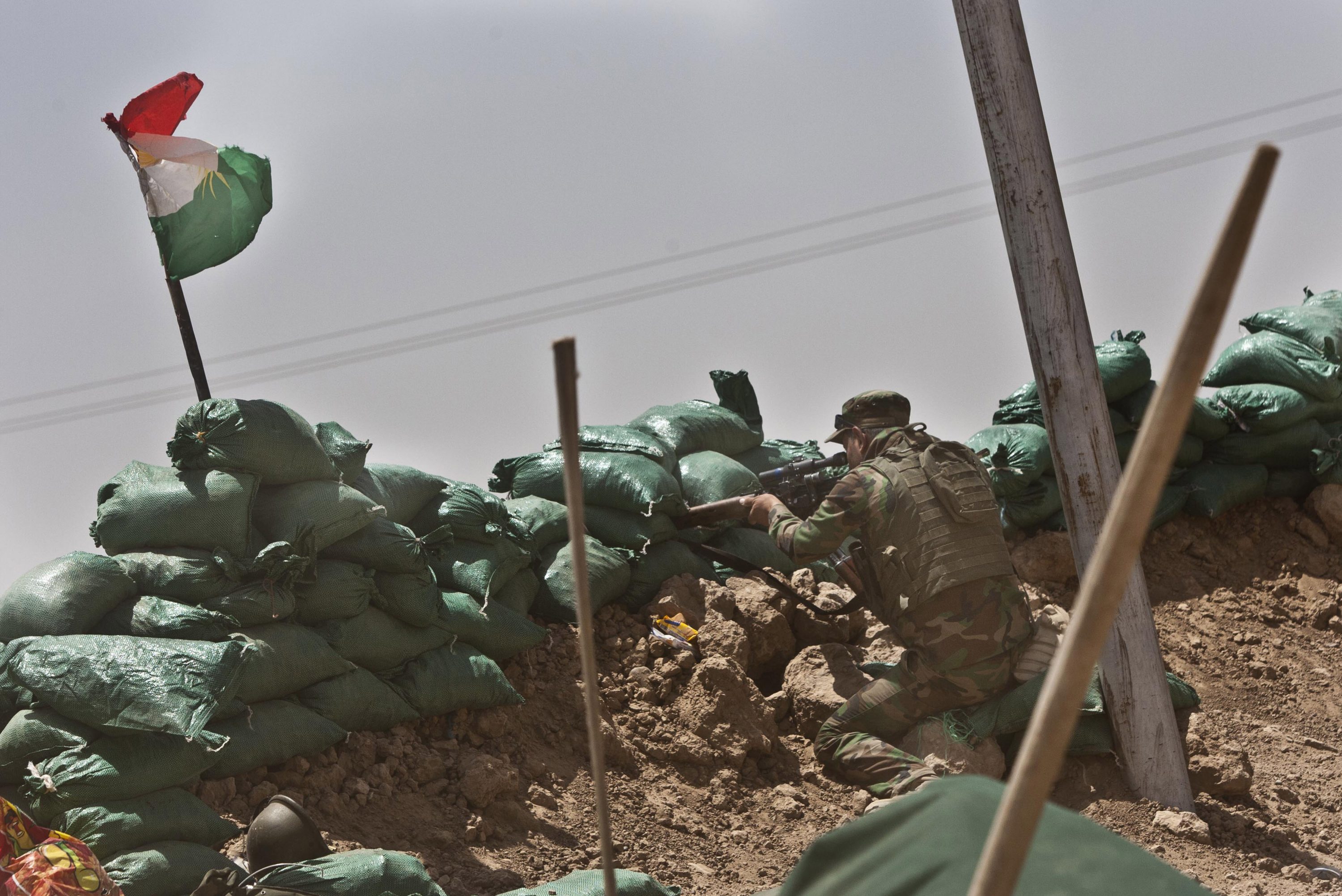
In the Photo: A sniper belonging to the Kurdish special forces takes aim during a small fire fight between Kurdish forces and ISIS militants in Basheer, southern Kirkuk. Photo Credit: Rick Findler
How do you think that photojournalism can counter the politicized media’s misrepresentation of war-torn countries such as Syria and Burundi? What do you think gets lost when we see your visually gripping photograph on the front page of a newspaper on a newsstand and the accompanying text is completely different?
R.F.: The best example of that was when my photo (pictured above) of a Kurdish sniper was used in Dabiq, the ISIS magazine for the IS. My photo was completely spun. We were with the Kurds, the good ones fighting to stop the establishment of the IS Caliphate. It was propaganda to help support ISIS and Dabiq used my photo saying, look at this Kurdish sniper, he’s killing our people. The people reading would take it in. That’s probably one of the most extreme examples of my photos being flipped.
Whether newspapers’ political alignments lie with the left, right or central, I believe that with regards to conflict, they are all very good at showing what’s happening without too much affiliation. Of course with any war involving ISIS, they’re only going to take one side because of course, they’re not siding with ISIS.
In Burundi, the conflict was underreported, but that’s an example of a conflict where you can look at the protesters’ side and see that they have a point but you can also look at the president’s side and say well he’s got a point too.
In the Photo: Bujumbura, Burundi: A demonstrator celebrates as a road blockade burns behind him. Photo Credit: Rick Findler
What have you learned from past photojournalists and how does that relate to your experience, especially being in a completely different technological environment? Your images are not always bound to newspapers. So how do you think that will change for you and the future generations of photojournalists?
R.F.: I think it’s hard to have as much impact now as a sole photographer because there’s a complete oversaturation of photos that are too similar. It’s easier to get your work out, but more difficult to have an impact. Whereas before we see Tim Page’s work from Vietnam, Eddie Adams, there weren’t that many people doing it so the impact of those photos was greater.
Now newspapers receive about 20,000 photos a daily basis. At the time, when Don McCullin would send four rolls of film, that would be it. They were the only photos the newspapers would see so they made a stronger impression. It is very hard now to have an impact because of that.
The positive side is the ability to influence public opinion and show the world what’s happening on a larger scale, even though it’s harder to get noticed for it. Some people don’t mind that anonymity though, which is also a good thing.
Related article: “THE BURUNDI CRISIS“
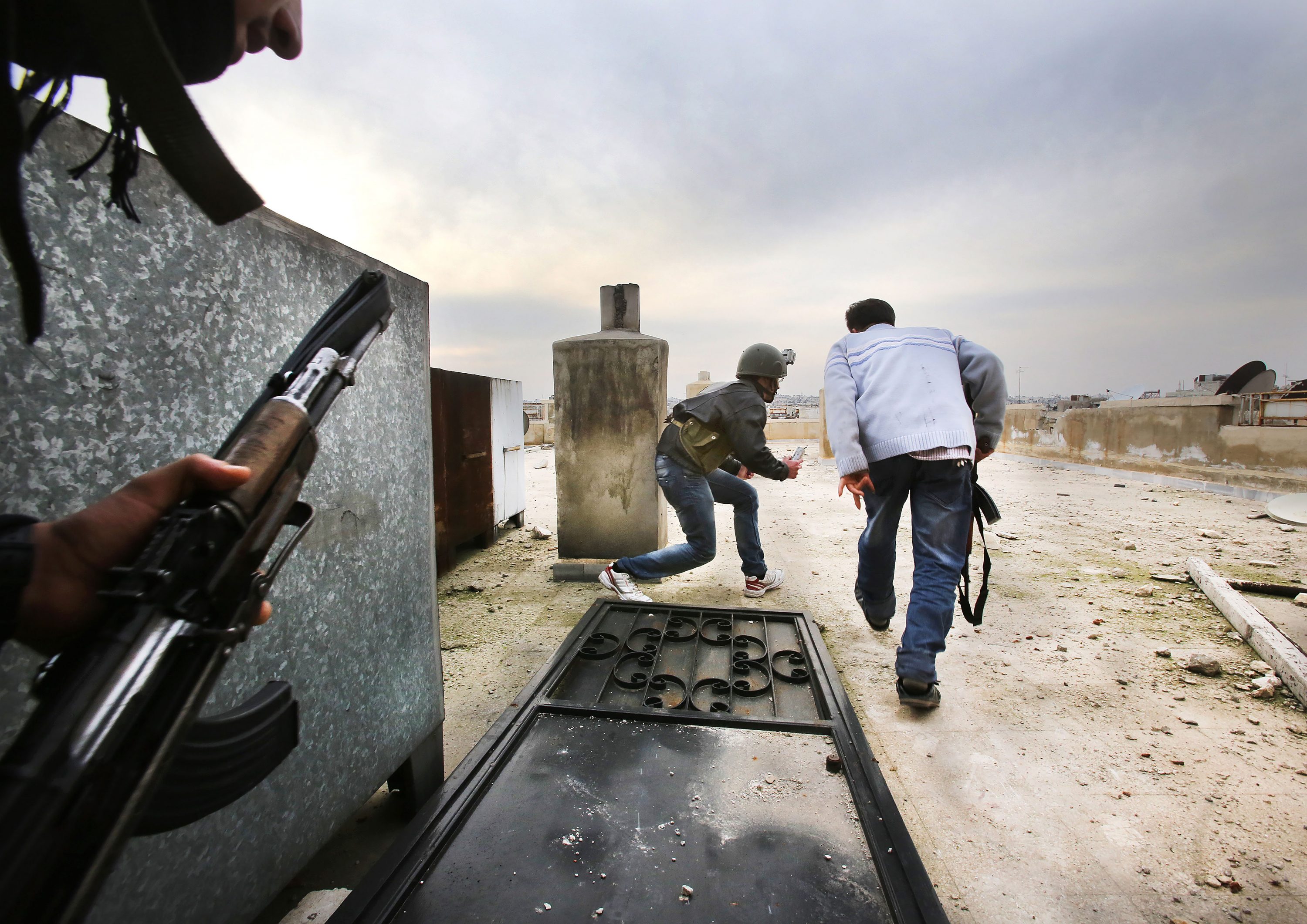
In the Photo: Members of the Free Syrian Army get onto a rooftop to attack a group of President Assad’s forces with gunfire and a home-made explosive device in the heart of Aleppo, Northern Syria. Photo Credit: Rick Findler/Borderline News
In an interview, Lynsey Adario says, “My job as a photographer and as a photojournalist is to try to bring the brutality of war back home to the reader in a way that they can enter” How do you respond to something like this?
R.F.: It is a correct summary of what we do. If you are in conflict, your job is to open people’s eyes to what is happening in the most truthful way that is possible. There are two problems to this, the oversaturation and people becoming desensitized. Newspapers, for example, are reluctant to showing the gruesomeness of war because they know the readers don’t want to see it while they are eating cornflakes on a Sunday morning.
But, is that not censorship then?
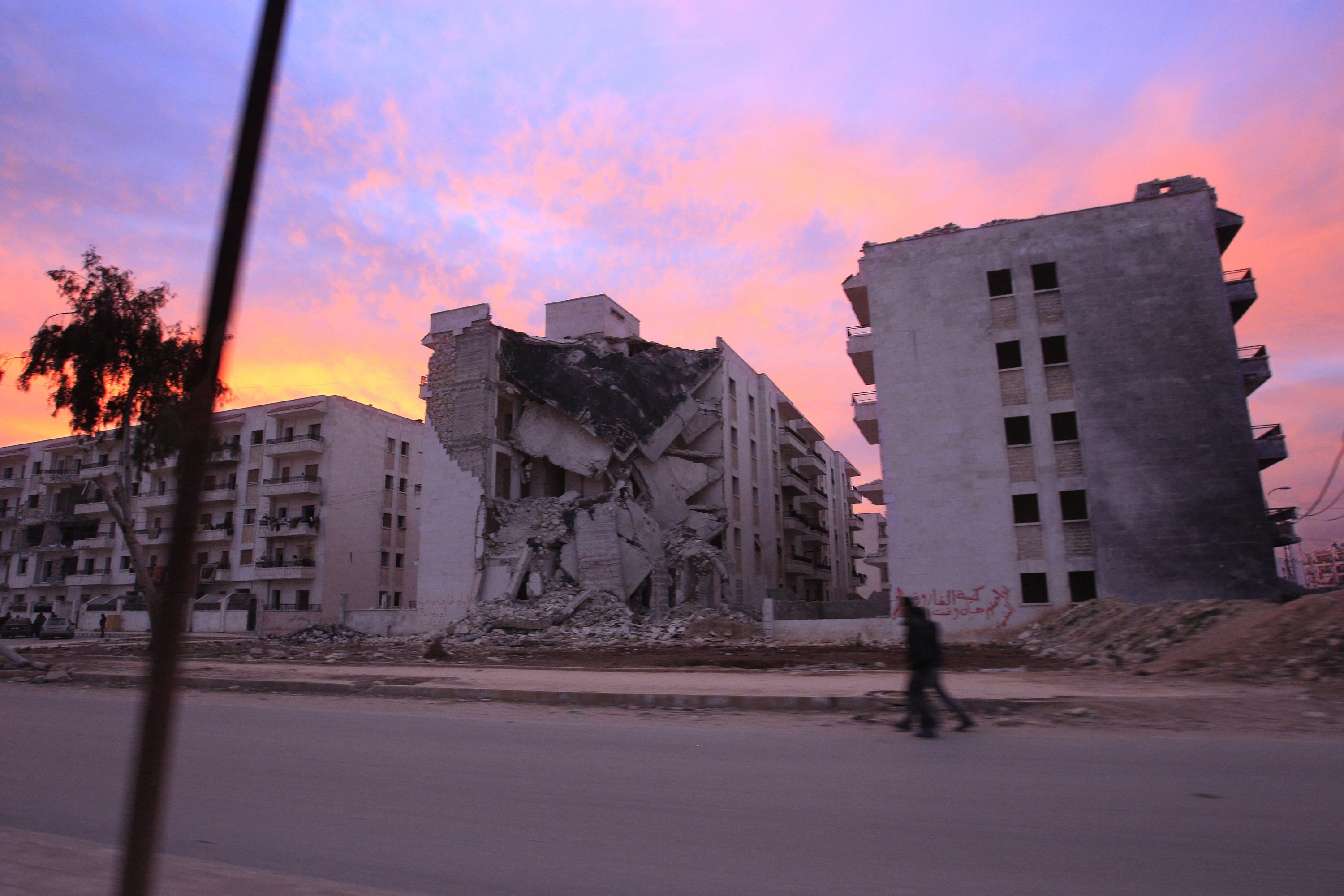
In the Photo: Buildings, destroyed by heavy artillery from President Assad’s forces line the streets in the city of Aleppo, Northern Syria during sunset. Photo Credit: Rick Findler/Borderline News.
That’s what’s happening whether you like it or not. The British market and newspapers are very sensitive and paranoid of publishing photos on this “brutality of war”.
But then that’s up to the photographer, so like you say it’s a whole different experience for the photographers, they are there three feet away from a guy that has just been shot and the reader is thousands of miles away. That’s our job, is to pull you in, and engage that emotion: you’re here, look what’s happening and alter your perception of the world to what’s really important.
Your photo Members of the Free Syrian Army use a makeshift catapult to fire homemade explosives into an area believed to be housing Assad’s soldiers in Aleppo (pictured below) is an iconic piece in your series. Can you tell me about the men in this photo?
R.F.: That was one of our first days in Aleppo. We got out of the car and the guy came over and said come with us. If you don’t know them, it can be dangerous. You don’t know if they’re going to take you and kill you or take you and show you something interesting. We were a bit dubious. Our fixer kept saying “catapult! catapult!” but we didn’t really understand what that was. So we ended up walking two streets down and literally just here, there were these men using the catapult. They were using homemade grenades launching them over the wall over to Assad’s soldiers. A lot of the time the bomb wouldn’t explode or the catapult would just fire into the wall and we would all have to run away before the bomb exploded.
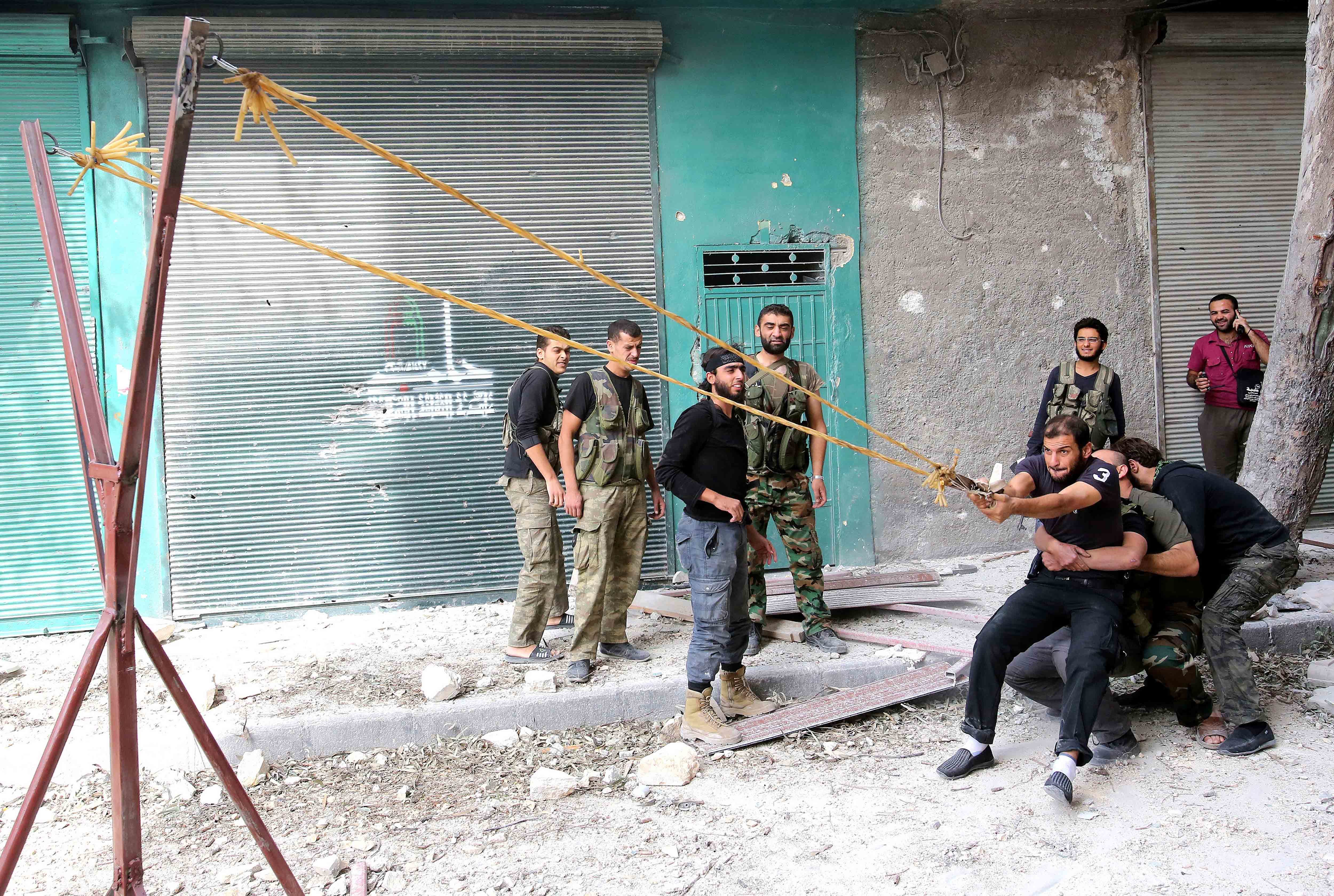
In the Photo: Members of the Free Syrian Army use a makeshift catapult to fire homemade explosives into an area believed to be housing Assad’s soldiers in Aleppo. Photo Credit: Rick Findler
When we first got there, everyone was fine with us. They’re called katibas, like small platoons and we were asking who they were with. They were with the Northern Star Brigade and were borderline Islam extremists. A couple of them didn’t want us there, and evidently didn’t like us being Western, a couple of them were fine, happy. We were speaking with this Canadian foreign fighter who was with them when the General came over, told us to leave and made me delete the photos.
So has it happened often that people approach you and force you to delete your photos?
R.F.: Not too much actually. It’s more that people asked beforehand not to take photos. For example, on one base, there were soldiers sleeping, and they didn’t want photos to be taken. Apart from the instance with the Canadian guy and the catapult, I said no I’m not deleting them, and then they put a gun to my head and ordered me so of course, I did it.
You don’t know if they’re going to take you and kill you or take you and showing you something interesting.
What about the other people you met in your field. What were they pursuing?
R.F.: There’s a lot of people for many different reasons. In Libya, it was probably the most interesting variety of people. We were all staying in a bombed out gymnasium. There was Benji and I, just freelance reporters and photographers. You had the Daily Mail, Jamie Weisman the photographer, then you had associates of the press and other people like bloggers who just wanted to see what was going on. I wouldn’t go as far to call them war tourists, I don’t know how many followers they had. Then you had the really far-fetched people – one guy we met had walked and traveled by bus from South Africa all the way up to Libya. He got to Benghazi when the heavy fighting was happening and when he found out it was all happening in Misrata, he went there just to see what was going on. It was absolutely wild.
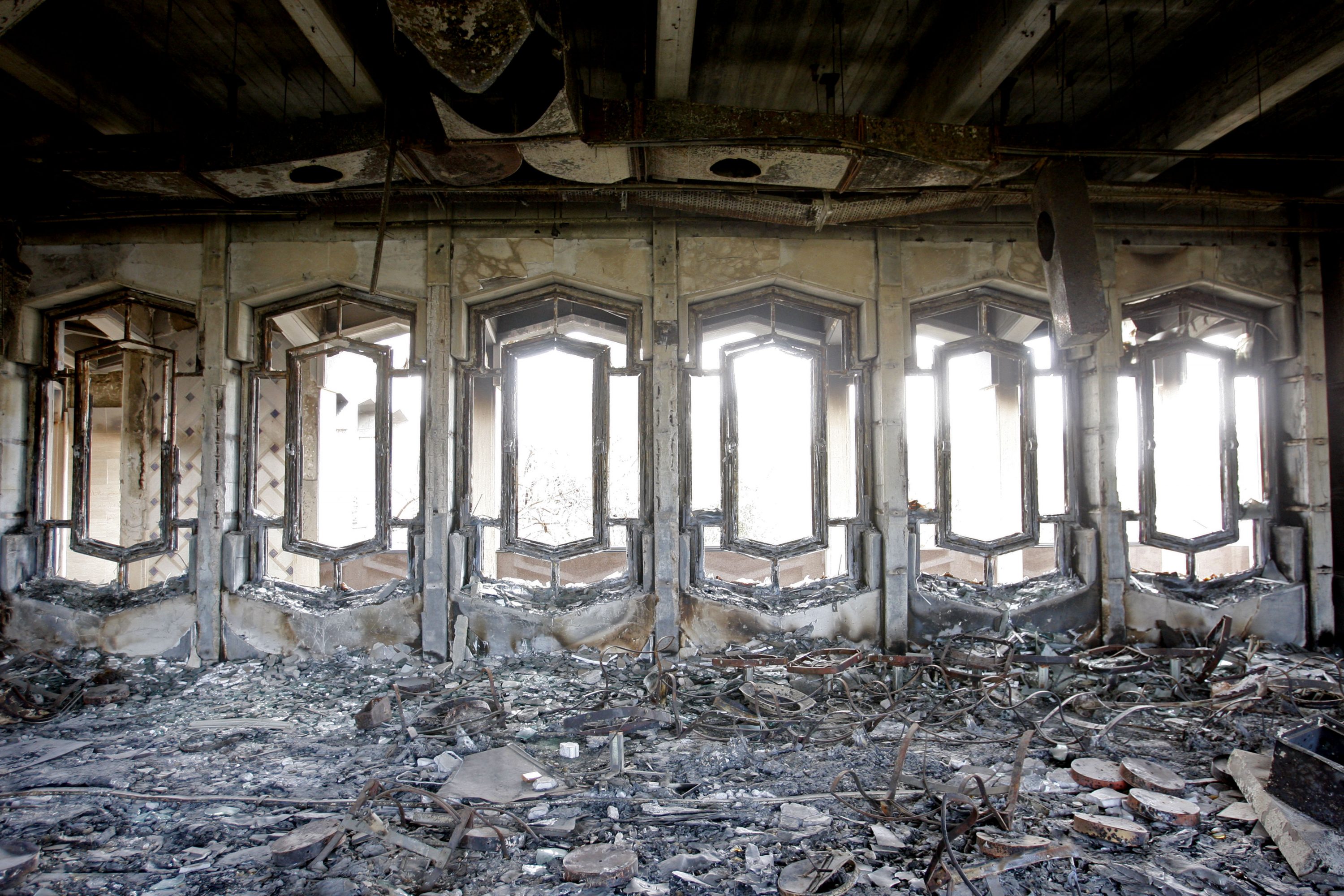
In the Photo: The inside of Colonel Gaddafi’s Palace lies in burnt out ruins in Benghazi, Libya after rebels took control as the revolution started on the 17th of Feb. Photo Credit: Rick Findler
Different people have different reasons. Mine were pretty simple. I wanted to document war, I want to show people what’s happening and I like the adrenaline of it.
That’s our job, is to pull you in, and engage that emotion: you’re here, look what’s happening and alter your perception of the world to what’s really important.
Another guy I remember was Andrea. He is an Italian video journalist who has traveled extensively in Libya and Syria. We message each other every now and then to see how we are doing. He is so cool, one of the only people that looked good in a helmet. He always has his own agenda, always knew what he was doing – I always had Benji my wingman, a bit of confidence, safety. Andrea was totally on his own. Gaddafi was targeting ambulances and so Andrea would just leave in the morning, jump in the ambulance and film what was going on.
Do you also like to experiment with video?
R.F.: No, I don’t, it’s such a different skill set, mind frame. The people on the desks think that a photographer, just because he is there, can just switch and film videos too. It’s insulting to us as photographers and to the filmmakers too. Why not use all the extremely talented filmmakers that are out there? But it is becoming more and more asked, it’s hard to say no, especially when you need to earn the money. And now that newspapers are more online, more short films are more sought after. Unfortunately, that’s what is going on now.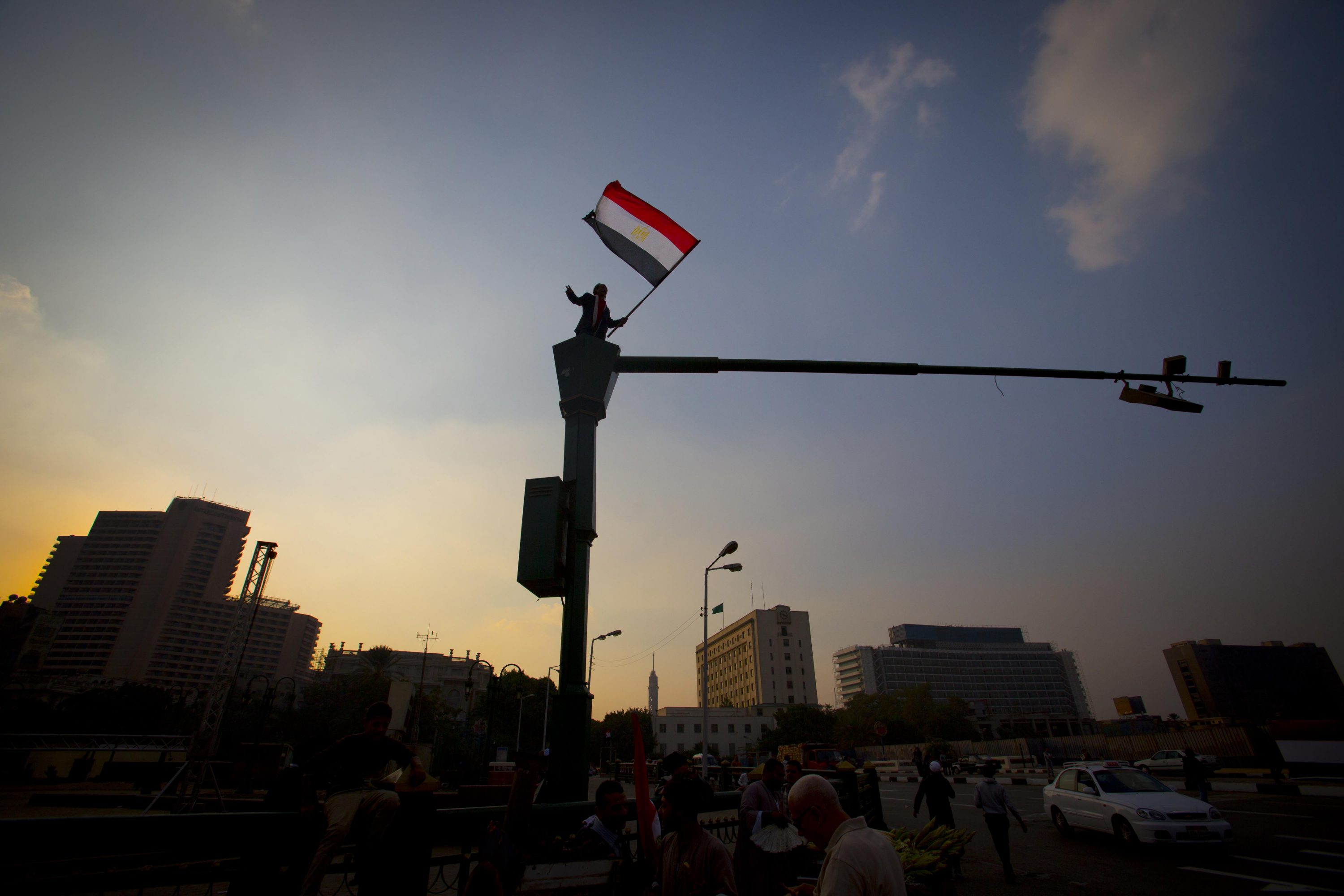
In the Photo: Clashes in Cairo marking the second anniversary of the death of 42 people during protests against the military council ruling in Egpyt. Clashes occurred between supporters of ousted President Mohamed Morsi and supporters of General Sisi. Photo Credit: Rick Findler
Now we often see slideshows of images interspersed with videos and text as a new form of reportage. What do you think about that?
R.F.: It’s nice to see your body of work in the slideshow. This goes back to what we were saying in the beginning which is that it is nice to see your work as an entity, a narrative and not just one picture in a newspaper. You have a broader spectrum of what is happening.
What are your plans for this year?
R.F.: All I want to do is take photos. A lot of people in Mosul are asking me where I am. I want to go there and be there for the final push into Mosul but when you’re in conflict it doesn’t pay well. I work here and save up and instead of going on holiday I go out to the field. The papers don’t touch you anymore, they don’t pay for you to go out there because they don’t want that responsibility. It’s now up to me to go where I want to go. So all I want to do is take pictures, and I have my priorities set on going to Mosul.
Recommended reading: “FREE PRESS – A GLOBAL SUCCESS?“