Impakter
  • Environment
    • Biodiversity
    • Climate Change
    • Circular Economy
    • Energy
  • FINANCE
    • ESG News
    • Sustainable Finance
    • Business
  • TECH
    • Start-up
    • AI & Machine Learning
    • Green Tech
  • Industry News
    • Entertainment
    • Food and Agriculture
    • Health
    • Politics & Foreign Affairs
    • Philanthropy
    • Science
    • Sport
  • Editorial Series
    • SDGs Series
    • Shape Your Future
    • Sustainable Cities
      • Copenhagen
      • San Francisco
      • Seattle
      • Sydney
  • About us
    • Company
    • Team
    • Partners
    • Write for Impakter
    • Contact Us
    • Privacy Policy
No Result
View All Result
Impakter logo
No Result
View All Result
EU textile waste

EU’s New Proposal to Tackle Textile Waste: Make Producers Pay for It

With waste in the textile industry spiralling, the EU seeks to make producers accountable

David BassbyDavid Bass
July 7, 2023
in Future of Europe Series
0

The European Commission has proposed a bold new set of rules to help tackle the issue of the huge and harmful effects of textile waste and to challenge the problematic rise of so-called “fast fashion.”

The move is set to act on some shocking statistics. The European Union (EU) generates 12.6 million tonnes of textile waste per year. Clothing and footwear alone account for 5.2 million tonnes of waste, equivalent to 12 kg of waste per person every year. Currently, only 22% of post-consumer textile waste is collected separately for reuse or recycling, while the remainder is often incinerated or landfilled. 

Speaking on the issue, Frans Timmermans, Executive Vice-President for the European Green Deal, commented:

“The wasteful relationship we have developed with textiles pollutes our world. It uses excessive amounts of water and energy, harms nature, and drives greenhouse gas emissions across the globe. That’s why we will require producers to take stronger responsibility for the textile waste created. The collected fees will be used to boost reuse and repair sectors so that we build a more sustainable relationship with the clothes we wear.”

The proposals aim to put in place the key EU principle of working towards a circular economy – a model of consumption based on designing products to be reusable to promote recycling and eliminate waste.

By making textile producers responsible for the entire lifecycle of their products, the wasteful model of “take, make and throw away” is being directly addressed. The textile industry is particularly notorious for this, creating issues such as growing and uncontrolled landfill, excessive water usage and harmful greenhouse gas emissions.

To do this, the Commission proposes introducing “mandatory and harmonised Extended Producer Responsibility (EPR) schemes for textiles in all EU Member States.” These will require producers to cover textile waste management costs, which as the EU writes “will also give them incentives to reduce waste and increase the circularity of textile products – designing better products from the start.”

The money will go towards positive initiatives to help with the collection, sorting, re-use and recycling capacities.

The EU expects that the new rules will also “create local jobs and save money for consumers in the EU and beyond, while alleviating the impacts of textile production on natural resources,” and that they’ll “promote research and development into innovative technologies for the circularity of the textiles sector” as well as address illegal textile waste exports. 


Related Articles: Fast Fashion’s Detrimental Effect on the Environment | No More Burning Clothes: Destruction of Unsold Textiles To Be Banned in Europe | ‘Ground Zero of the Fast Fashion World:’ How Kenya Became the Fashion Industry’s Illegal Junkyard

This move by the EU can be seen as a positive and clear challenge to the issues created by a troubled but vital industry. It can also be seen in the greater context of a vital part of the EU’s larger “Waste Framework Directive” – which sets out a legal framework for tackling waste management in the EU, something vital to creating a more sustainable world.  

The next stage for these new proposals is for them to be considered by the European Parliament and Council for implementation, before they can be put into practice. 

Clarifying further exactly what these proposals seek to achieve, Virginijus Sinkevičius, Commissioner for Environment, Oceans and Fisheries, stated:

“This legislative proposal is a significant step towards a more sustainable and circular textile sector, delivering on our landmark Textiles Strategy. Harmonised extended producer responsibility rules across the EU will create a level playing field on the single market and ensure the application of the polluter pays principle. This initiative will drive investments in the reuse and recycling infrastructure for textiles, create local jobs and boost innovation in all phases of the textiles’ lifecycle. It will also create cost-saving opportunities for citizens who choose vintage, timeless fashion over fast fashion.”


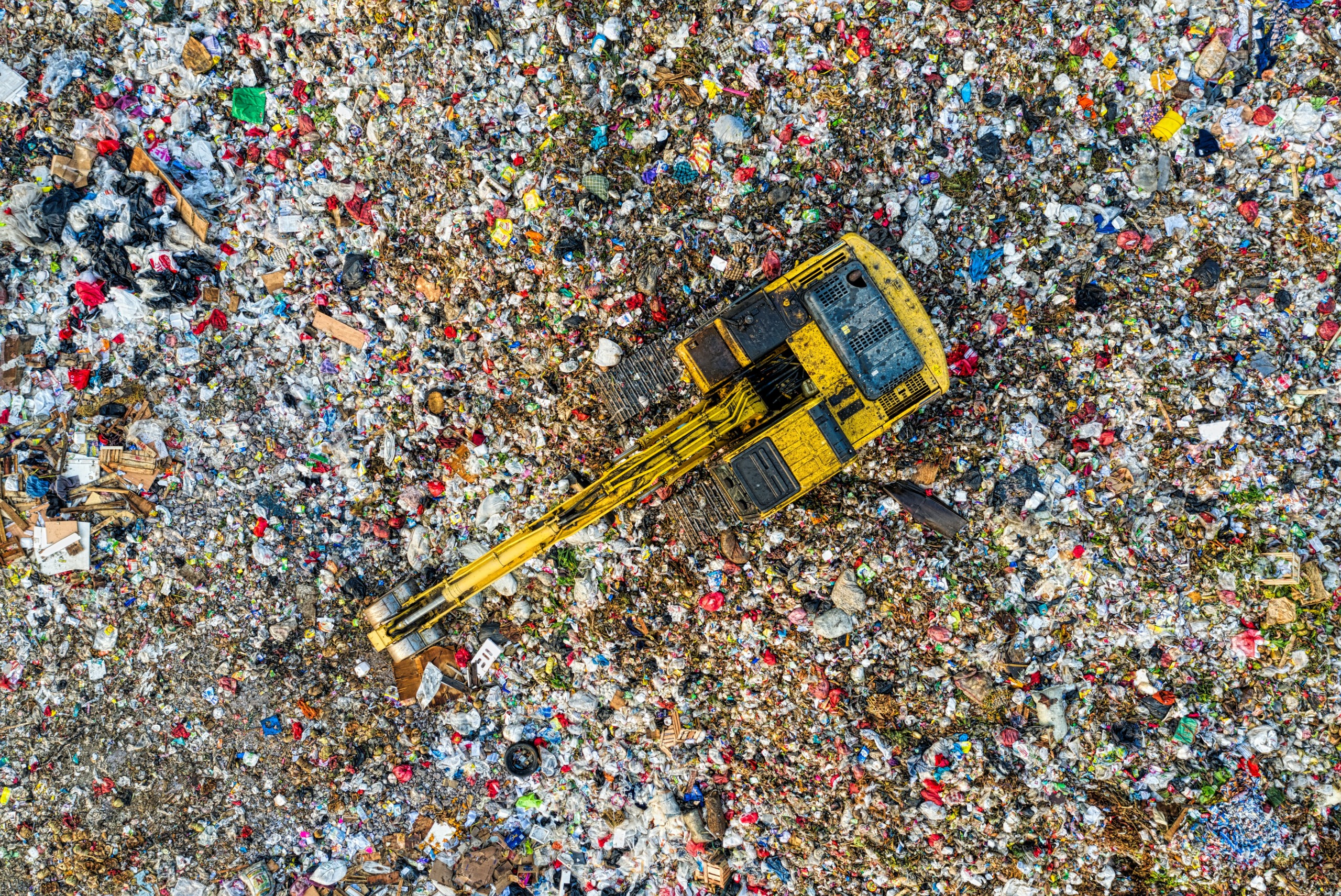
Editor’s Note: The opinions expressed here by the authors are their own, not those of Impakter.com — In the Featured Photo: Bird’s eye view of a landfill in South Tangerang, Banten, Indonesia. Featured Photo Credit: Tom Fisk.
Tags: circular economyEUEuropean CommissionEuropean Unionfast fashionTextileTextile producersTextile waste
Previous Post

FDA Approves First Drug Shown to Slow Down Alzheimer’s Progression

Next Post

Global Solar Council’s Ad Interim CEO Gianni Chianetta to Conclude His Mandate in 2023

Related Posts

Coal plants get reprieve on mercury limits, Striking unions fail to halt Milei's sweeping labor bill, Sweden's regulator reviews Swedbank's compliance controls, France backs INEOS decarbonization with €300M
Business

Trump Admin Weakens Coal Plant Mercury Regulations

Today’s ESG Updates: Coal Plants Get Reprieve on Mercury Limits: Trump's EPA is rolling back mercury emission limits to cut...

byEge Can Alparslan
February 20, 2026
Migration Policy in Europe: Greece and Spain Take Divergent Paths
Politics & Foreign Affairs

Migration Policy in Europe: Greece and Spain Take Divergent Paths

In the summer of 2025, I traveled to Greece for a research trip and, during a break from the “migration...

byDr. Shepherd Mutsvara - Research Fellow at the University of Münster, Germany
February 20, 2026
ESG News regarding Trump criticizing Newsom over UK green energy agreement, new analysis questioning the climate benefits of AI, EU greenlighting €1.04 billion Danish programme to reduce farm emissions and restore wetlands, and Santos winning court case over alleged misleading net-zero claims.
Business

Trump Slams Newsom Over UK Green Energy Deal

Today’s ESG Updates: Trump Slams Newsom’s UK Green Deal: Criticizes California governor for signing a clean energy agreement with the...

byAnastasiia Barmotina
February 17, 2026
ESG news regarding the new right in the EU, Volkswagen's passion for green power, the new crypto act and Air India.
Business

Merz, Meloni, and the Remaking of the European Right

Today’s ESG Updates Berlin-Rome Axis Rises: A new pragmatic partnership between Germany and Italy shifts European focus from federalist idealism...

byEge Can Alparslan
February 13, 2026
ESG News regarding EU’s competitiveness summit, Trump’s endangerment finding repeal, Trump’s coal push, and Deutsche Bank’s first European Green Bond
Business

EU Leaders Meet to Discuss Competitiveness

Today’s ESG Updates EU Leaders Meet on Competitiveness: European Union leaders gathered at an informal summit in Belgium to strengthen...

bySarah Perras
February 13, 2026
ESG News regarding the EPA’s plans to repeal the endangerment finding, high energy costs in the EU, Liberty Mutual’s partnership with Ara Partners, and Eurazeo’s €175 million maritime investment
Business

United States EPA To Repeal Climate Change Determination

Today’s ESG Updates EPA to Repeal Climate Endangerment Finding: Lee Zeldin's EPA plans to revoke the 2009 determination requiring greenhouse...

bySarah Perras
February 11, 2026
ESG News regarding EU ban on destruction of unsold clothes and shoes, UK securing record solar capacity, EDF’s ‘fish disco’ system potentially saving 90% of fish, and LNG demand in China setting to climb.
Business

EU Moves to End Textile Waste

Today’s ESG Updates EU Bans Unsold Clothes Destruction: New rules aim to cut CO₂ by stopping companies from discarding apparel...

byAnastasiia Barmotina
February 10, 2026
India–EU Trade Is Set to Grow. Its Environmental Costs May Grow Faster
Business

India–EU Trade Is Set to Grow. Its Environmental Costs May Grow Faster

The recent conclusion of negotiations for a Free Trade Agreement between India and the European Union, after nearly two decades of talks,...

byMandar Oak - Associate Professor at the University of Adelaideand1 others
February 10, 2026
Next Post
Global Solar Council’s Ad Interim CEO Gianni Chianetta to Conclude His Mandate in 2023

Global Solar Council’s Ad Interim CEO Gianni Chianetta to Conclude His Mandate in 2023

Recent News

A woman going through the checking account guide

How Checking Accounts Work: Simple Steps to Get Started Fast

February 20, 2026
Coal plants get reprieve on mercury limits, Striking unions fail to halt Milei's sweeping labor bill, Sweden's regulator reviews Swedbank's compliance controls, France backs INEOS decarbonization with €300M

Trump Admin Weakens Coal Plant Mercury Regulations

February 20, 2026
Crowds and filmmakers on the red carpet at the 76th Berlin International Film Festival in 2026

At Berlinale 2026, Artists Refuse the Comfort of Neutrality

February 20, 2026
  • ESG News
  • Sustainable Finance
  • Business

© 2025 Impakter.com owned by Klimado GmbH

No Result
View All Result
  • Environment
    • Biodiversity
    • Climate Change
    • Circular Economy
    • Energy
  • FINANCE
    • ESG News
    • Sustainable Finance
    • Business
  • TECH
    • Start-up
    • AI & Machine Learning
    • Green Tech
  • Industry News
    • Entertainment
    • Food and Agriculture
    • Health
    • Politics & Foreign Affairs
    • Philanthropy
    • Science
    • Sport
  • Editorial Series
    • SDGs Series
    • Shape Your Future
    • Sustainable Cities
      • Copenhagen
      • San Francisco
      • Seattle
      • Sydney
  • About us
    • Company
    • Team
    • Partners
    • Write for Impakter
    • Contact Us
    • Privacy Policy

© 2025 Impakter.com owned by Klimado GmbH