Between 1991-2021, temperatures in Europe have increased at an average rate of about 0.5+ C per decade, a new report from the World Meteorological Organization (WMO) shows.
According to these findings, Europe has warmed at twice the rate of the global average in the past 30 years.
As science keeps proving over and over again, human activity has induced temperature increases that have led to ice melt and made extreme weather events like floods, droughts, wildfires, and heatwaves more severe, more likely, or both.
“Europe presents a live picture of a warming world and reminds us that even well prepared societies are not safe from impacts of extreme weather events,” WMO Secretary-General Prof. Petteri Taalas said. “This year, like 2021, large parts of Europe have been affected by extensive heatwaves and drought, fuelling wildfires. In 2021, exceptional floods caused death and devastation.”
Another burst of extreme anomalous heat incoming for western Europe to end August. 40C likely again in France, mid 30s for the low countries and Germany, low 30s for southern England. The final heatwave of the summer? pic.twitter.com/1iaN480s0E
— XR Cambridge (@xr_cambridge) August 18, 2022
Rising temperatures, more extreme weather cases
As temperatures in Europe increased, significant changes have occurred in the continent’s geographical landscape and weather patterns.
According to the WMO study, Alpine glaciers lost 30 meters in ice thickness from the years 1997-2021. One glacier in particular, the Greenland ice sheet, is melting and contributing to global sea level rise — something that has already impacted many coastal communities by making them more vulnerable to extreme weather events such as hurricanes or floods.
In 2021, the increase in extreme weather events, exacerbated by global warming, have affected millions, killed hundreds, and caused economic damages exceeding US $50 billion. Around 84% of these extreme weather events were reported to be either floods or storms.
The report states that Europe is extremely, and most often, susceptible to deadly heatwaves, particularly in the West and South. More frequent heatwaves are the result of a combination of many things — climate change, urbanization, and increases in population — and are only set to intensify further as Europe continues to grow and climate change accelerates.
This year, in particular, Europe faced its hottest summer on record. According to recent data from Copernicus Climate Change Services, the summer of 2022 was the second historic summer for Europe in a row with average temperatures of 0.4+ C (0.72 F) higher than the previous record set last summer.
Of the summer months, August saw the highest temperature increase of an astonishing 0.8 C (1.44 F).
When it comes to damage to ecosystems, wildfires are the leading culprit in Europe. Coinciding with extreme temperatures, the August heatwave resulted in increased wildfire activity.
Between June 4 and September 3, Wildfires in Europe burned roughly 508, 260 hectares — compared to a 2006-2021 average of 215,548 hectares.
According to the Guardian, there are a number of reasons Europe is heating faster than the rest of the world. For one, Europe has a high percentage of land mass, which as a result warms faster than the sea. Alongside Europe, the Arctic and high northern latitudes are the fastest-warming regions in the world (parts of Europe also being in the northern latitudes.)
Leadership in reducing emissions: Can this save Europe?
The latest report released by independent climate and energy think tanks EG3 and EMBER revealed a clean energy surge in Europe since the start of the Ukraine-Russia War in February.
With Russian gas supply cuts forcing the old continent to find alternative suppliers, Europe now has 24% of their electricity coming from clean energy sources such as wind and solar energy — an increase of 13% from the year before.
As far as cutting emissions goes, the European Union has decreased their greenhouse gas emissions by 31% between 1990 – 2020 — which is most likely higher now with the acceleration of the clean energy transition.
Europe is also a leader in cross-border cooperation in climate change adaptation, with effective, early warning systems being accessible to 75% of people in the EU.
However, Prof. Taalas states carbon emissions need to decrease more rapidly in order to meet the Paris Agreements’ deadline of carbon neutrality in Europe by 2050.
“On the mitigation side, the good pace in reducing greenhouse gases emissions in the region should continue and ambition should be further increased,” Prof. Taalas said. “Europe can play a key role towards achieving a carbon neutral society by the middle of the century to meet the Paris Agreement.”
Dr. Carlo Buontempo, director at the Copernicus Climate Change Service European Centre of Medium-range Weather Forecasts (ECMWF), also vouches for Europe’s climate efforts and believes that, despite the increase in extreme heat, Europeans will adapt.
“European society is vulnerable to climate variability and change, but Europe is also at the forefront of the international effort to mitigate climate change and to develop innovative solutions to adapt to the new climate Europeans will have to live with,” Dr. Buontempo said.
The best thing for Europe is clearly to continue transitioning to clean energy sources and decreasing emissions — something which has been done well so far (at least compared to the rest of the world). However, the acceleration of climate change-induced extreme weather events in the continent — specifically extreme heat — has already devastated the region, which begs the question:
Will Europe’s efforts be enough? Or will climate change swallow the continent before the necessary change can occur?
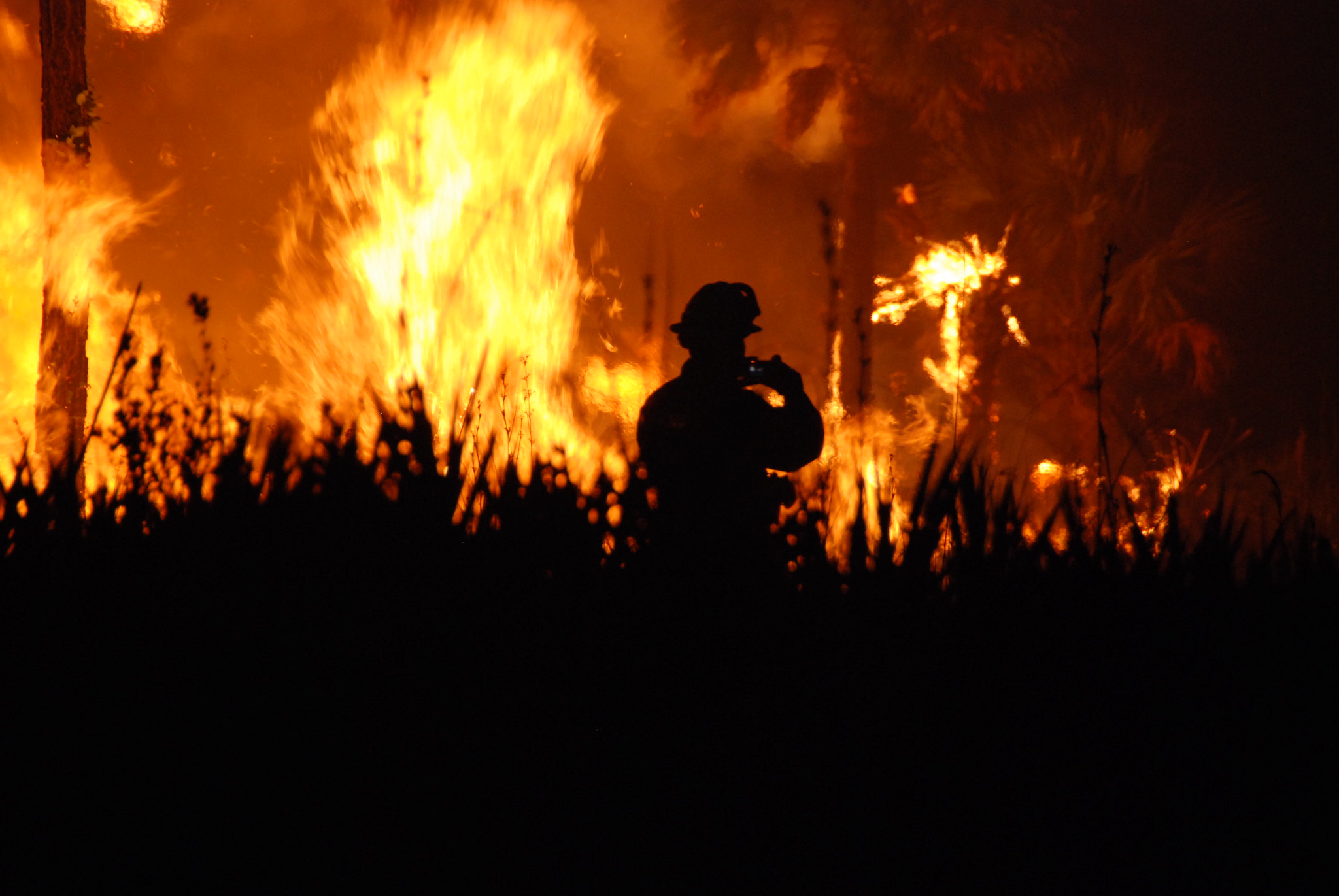
Editor’s Note: The opinions expressed here by the authors are their own, not those of Impakter.com — In the Featured Photo: Wildfire at Florida Panther on April 24, 2009. Source: U.S. Fish and Wildlife Services, Flickr.