The challenges Europe will face in 2022 all start with the same question: What about Omicron? Are we in for a repeat of the COVID-19 lockdown? The last two years, Covid has dominated year-end debates – but each year it played out differently.
In contrast to 2020, Europe’s annus horribilis when Covid first ravaged the continent bringing it to a standstill, 2021 had started with a glimmer of optimism: The anti-Covid vaccination campaign – delayed at first – had finally launched across the continent on December 27, 2020.
But the respite was brief. By the end of 2021, Europe was once again in full pandemic alert, caused by the proliferation of the Omicron variant and fears of even newer variants, like IHU or B.1.649 2 sometimes even called Cameron:
So the start of 2022 looked dire. But as I explained in a recent article, the return to full lockdowns recalling the darkest months of the health emergency are fortunately not in the cards.
The situation today is in fact very different from 12 months ago. That’s because of what happened in 2021. Therefore what we can expect from 2022 is likely to be very different too.
It helps to remember what happened in 2021: The EU had started its vaccination campaign slowly, as the EU Commission led by Ursula von der Leyen had faltered several times. But as we approached summer, the scenario was reversed, bringing the EU vaccination rates to a level higher than those achieved in the US and the UK. Next Generation Eu, the maxi-plan to relaunch the European economy, came onboard, unlocking the first funds of a “bazooka” worth 750 billion euros.
Von der Leyen’s Europe had now three avowed aims launching the continent in a new direction: Green, equitable and digital – along with multiple new funding and policies, including the latest, the Digital Services Act, challenging Big Tech.
How much the EU Commission’s Recovery Fund had to do with the continent’s rebound is something for future historians to decide, but one thing is certain, Europe’s economy started moving upward again in the second half of 2021. Even Italy, Europe’s traditional laggard, experienced a strong rebound of 6.2% as against the “only” 5 % achieved by the Eurozone as a whole. Then, at year-end, the EU Commission launched its Global Gateway, a $ 300 billion infrastructure project that aims to meet head-on the challenge posed by the Chinese “silk road” a.k.a. Belt and Road Initiative (BRI).
2022: A rough start and a bumpy year?
Not everything, of course, went in the hoped-for direction. Several obstacles inherited from 2021 will become challenges for the EU in 2022.
To begin with, even with “softer” lockdown measures against the Omicron variant, mobility in the Schengen space is threatened as the 27 EU member countries adopt widely divergent Covid policies, particularly in regard to digital certificates, the famous “Green pass” promoted by the EU Commission that was intended to restore freedom of movement in the EU. For now, what we are seeing is a legislative free-for-all with varying degrees of restrictions.
At first, the EU Commission was dismayed and even irritated when Italy’s Prime Minister Draghi was the first to turn on the screws but it had to bow down to the fait accompli. With a raging Omicron, free movement across the continent is simply not feasible.
The economic recovery itself is threatened as people stop working, causing breakdowns in supply chains – and possible spikes in costs and prices (read: inflation). The most optimistic observers are shaken and revising downward their growth estimates. A recent Financial Times article reported that there was debate inside the European Central Bank (ECB) over Omicron’s impact on inflation, raising doubts over ECB’s future commitments to further support economic stimulus policies.
But the problems don’t stop there. There are other major EU policies that are open to rifts among the 27 EU leaders, in particular:
- The revision of the Stability Pact: This is a hot issue, as Germany and several northern European countries continue to demand conservative fiscal policies and balanced budgets, thus putting a lid on attempts to adopt expansive Keynesian-style policies, for example, enabling public investment in infrastructure;
- The Fit-for-55 environmental package: It was always going to be an uphill battle, and it won’t get any easier in 2022; some measures introduced at the end of 2021 such as the revised Renewable Energy Directive (RED), are promising as they introduce incentives for low-carbon energy in transportation;
- The energy future of the EU during and after the current crisis, in particular, whether nuclear energy and gas can be considered on a par with renewables in the energy transition – a position the EU Commission is slowly adopting, as a statement released on January 1, 2022, indicated, with the launch of “consultations” for “a draft text of a Taxonomy Complementary Delegated Act covering certain gas and nuclear activities”;
- The rule of law and principle of EU law supremacy, an ongoing dispute between the Commission and the Visegrad group led by Poland and Hungary that is not showing any signs of resolution; 2022 may well be the year in which to consider whether countries like Poland and Hungary that flout EU law have any place in the Union and should not be suspended;
- EU diplomacy, i.e. the positioning of the EU on the international scene between the historic “big powers” – US, China, Russia – but also other players including Africa, of major importance to Europe which has a planned summit between the EU and the African Union scheduled to take place in Brussels in February; Africa sits literally in Europe’s backyard and yet is open to Chinese BRI excursions, something Europe cannot ignore; this said, the immediate issue is Ukraine and the Russian troop build-up along its eastern border:
What is remarkable about this call last week is that Biden threatened sanctions, yet the sanctions that will hurt are not going to be imposed by the US but by the EU. The question is: Where is the EU? Is Europe still condemned to be an observer on the margins of History as the power play unfolds between the US and Russia?
The first half of the year will be in the hands of Emmanuel Macron’s France, who is aiming to turn Europe into a global power, a noble aim.
To achieve this, it will be important for Macron to consolidate his leadership in Europe. He will need to build on the already existing special relations France has always maintained with Germany through the Merkel years, but this time he will need to renew it with the new chancellor Olaf Scholz. And it would be smart move to build a similarly close relationship with Italy’s Prime Minister Draghi.
However all his European plans could be upended by the presidential elections in France, scheduled in April (two rounds, April 10 and 24). No doubt, it will be a moment of truth for his reconfirmation as he faces the neo-Gaullist competitor Valérie Pécresse – just as his historic arch-enemy on the right, Marine LePen faces Zemmour on the extreme, conservative right.
The most recent poll shows that Macron would win in April’s run-off vote, estimating a margin of 51-49% if he faces Pécresse, 55-45% against Le Pen, and 61-39% against Zemmour. As might be expected, both Macron and Le Pen argue that there are fundamental differences with these new contenders. But how these differences will play out is, for now, too soon to foresee – polls have lately shown to be wrong too often to give them much credence.
In short, 2022 promises to be a difficult year (as usual) but possibly an interesting one, with some breakthroughs in key areas like the fight against climate change. And, seeing that Biden’s attempts to introduce effective climate policies in the United States are faltering, it would seem particularly important for Europe to remain ahead in the one existential issue that threatens everyone on this planet: climate change.
Stay tuned for developments.
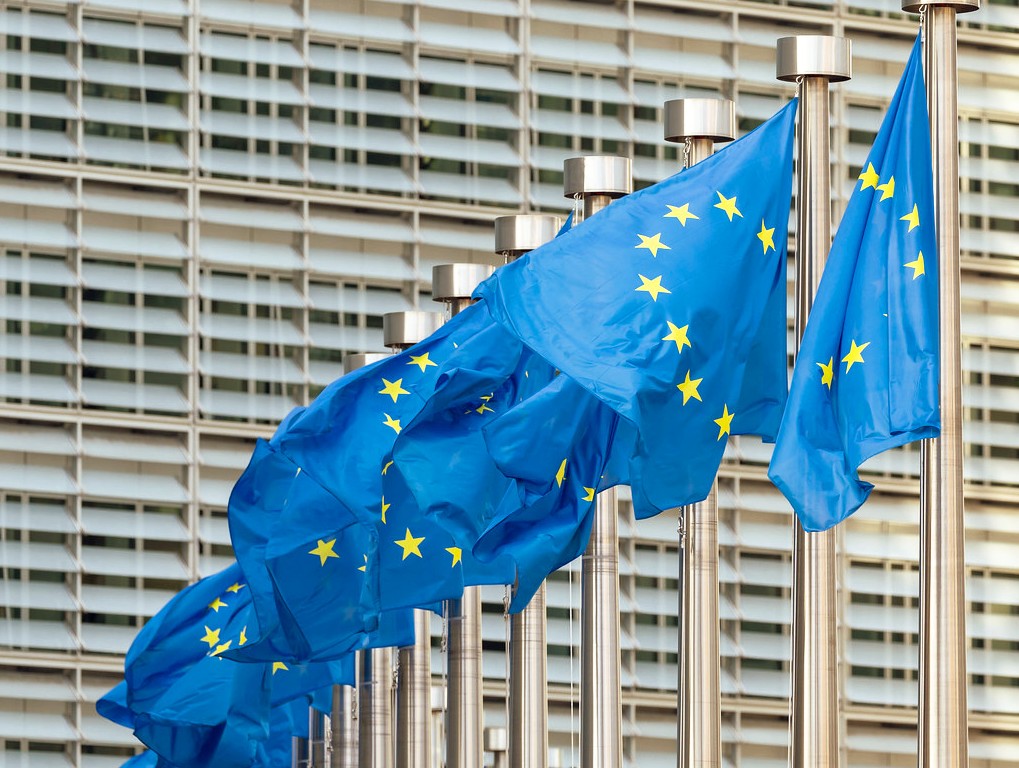
Editor’s Note: The opinions expressed here by Impakter.com columnists are their own, not those of Impakter.com. — In the Featured Photo. EU Commission HQ in Brussels (detail) Source: Flickr