The European Commission has proposed a blanket ban on goods produced using forced labour throughout the bloc, a move expected to cause tensions with China amid reports of forced labour in the Xinjiang province.
“Our aim is to eliminate all products made with forced labour from the EU market, irrespective of where they have been made.”
The legislation will most likely become law in a year and a half at the earliest and will apply to products where “forced labour has been used at any stage of production, harvest or extraction and to all products of any type.”
Some products that will most likely be affected by the ban include shoes, clothes, cotton and commodities (like fish and cacao), among other products.
The primary source of solar power panels will also be impacted since polysilicon, a key component of the panels, originates in Xinjiang.
We are delivering on our promise to fight #ForcedLabour✅
Today, @EU_Commission proposes a new initiative to ban all products made, extracted or harvested with forced labour from the EU market.
Find out more 👉 https://t.co/lJcJu0TDnJ pic.twitter.com/KPNT0Jm0Ty
— Valdis Dombrovskis (@VDombrovskis) September 14, 2022
So how serious is the problem of forced labour? And what exactly is forced labour? A key source of information is the UN agency for labour issues, the International Labour Organization (ILO).
ILO defines forced labour as “all work or service which is exacted from any person under the threat of a penalty and for which the person has not offered himself or herself voluntarily.”
There are an estimated 50 million people in modern slavery, including 28 million who are in forced labour and 22 million in forced marriage, according to 2021 Global Estimates.
Every fourth victim of modern slavery is a child.
Earlier this month, the UN released its long-awaited assessment of China’s violations in the Xinjiang province. The 48-page report, released 13 minutes before UN High Commissioner for Human Rights Michele Bachelet stepped down (she was succeeded by Volker Turk who is expected to maintain the same position against China), provided detailed evidence of incarceration, sex offences, and family separation in the western part of Xinjiang, where Muslim Uyghurs predominate.
China’s actions “may constitute international crimes, in particular crimes against humanity,” the report concludes.
China has since continued to deny violating human rights in Xinjiang, and this new legislation is said to be driven by concerns over these abuses (European Commission President Ursula von der Leyen also mentioned the ban on forced labour in the same part of her last annual policy statement as her remarks on the Indo-Pacific and competitiveness with China).
How will the forced labour law be implemented and regulated?
The 27 EU member states will be responsible for detection and enforcement and must respond to complaints by non-government organisations, companies and others.
In other words, it is the responsibility of national authorities to substantiate any claims that the products were produced or processed using forced labour, and initial inquiries must be completed within 30 working days.
The products can then be removed from the market or blocked from circulation by customs authorities.
The Commission will also create a network known as the Union Forced Labour Product in an effort to coordinate the various agencies and offer some political cover, while the public will be given access to a database that tracks the danger of forced labour in particular geographic regions or with regard to particular goods produced through forced labour, which has been mandated by the government.
What response has the forced labour law received so far?
The proposed ban is likely to undergo modification before it is finally approved and adopted.
For now, not everyone is happy with the proposal. Members of the European Parliament would prefer a ban on imports and exports of items created under torture at the EU border than letting the products access the market freely before examining them and potentially taking them off the shelves.
Following worries that small businesses have “fewer resources to undertake in-depth due diligence” on those companies and less power to exert pressure on suppliers, enforcement will focus on large businesses, including manufacturers, producers, and suppliers of goods.
Related articles: UN Says China’s Abuses in Xinjiang May Constitute ‘Crimes Against Humanity’ | American Companies Under Fire for Complicity in Uyghur Genocide | The SDG That Is Slipping Away From Us
Regulators also seek to increase cooperation with nations outside the EU to ensure that no goods made using forced labour enter the bloc.
The process for adopting the new law is long and will likely take a couple of years. It will be discussed and reviewed by the European Parliament and the European Council, representing all 27 EU members, before the Commission has to agree on the final terms.
Within a year and a half following the publication of the final text, the Commission is expected to provide a set of “guidelines” for the national administrations and businesses.
The EU is announcing a forced labour ban. The USA is strengthening trade links with Taiwan.
Critics of Lithuania's initiatives against China should now be hiding in shame for their cynical defence of exploitation. The global trend is towards zero tolerance for totalitarianism.— Matas Maldeikis MP 🇱🇹 (@MatasMaldeikis) September 13, 2022
What about other countries and private corporations?
The EU proposal is broader than the American one: The United States has enacted the Uyghur Forced Labour Prevention Act (UFLPA) to protect its market from goods possibly compromised by human rights abuses in Xinjiang. In contrast, the EU Commission will “focus on all products made from forced labour, including those made within the bloc.”
“Our aim is to eliminate all products made with forced labour from the EU market, irrespective of where they have been made,” explains EU trade commissioner Valdis Dombrovskis.
#UPDATE The European Union says it will impose a ban on products made from forced labour as China faces rising criticism that the Uyghur people in the Xinjiang region are being forced into slave labour. pic.twitter.com/LgBy9qK19P
— AFP News Agency (@AFP) September 14, 2022
The UK hasn’t come out with any law plans to back up new Prime Minister Liz Truss’ claims against forced labour products entering the UK; so far, all we have are her views on the UN Human Rights report on Uyghur discrimination and abuses by China.
The corporate response was also noticeably lacking. This issue is becoming more strategically significant as worries increase that Europe’s reliance on Chinese supply networks may result in even more serious strategic problems than its reliance on Russian gas.
Dependence is a significant problem, especially for Germany. Politico approached the leading German business association, the Bundesverband der Deutschen Industrie (BDI), for comment, but a spokesman said the group would not comment on the matter.
Coincidentally, Herbert Diess, who had remained committed to the company’s operations in Xinjiang, resigned from his position as CEO of Volkswagen at the same time the UN research was published. He recently said that the auto industry titan would not shut down a tiny factory, which has been operating for 10 years, and emphasised that no forced labour was employed in that particular enterprise.
Politico contacted Volkswagen for comment on the EU findings, but the German automaker declined. Diess also thought that Volkswagen’s presence in Xinjiang had “a beneficial influence.”
Is there an obvious flaw in the legislation?
The forced labour product ban omits services performed under duress, meaning that forced prostitution, begging, domestic work and hospitality unfortunately are not covered by the law.
The bill didn’t include additional details to cover other violations of the human rights legislation since it was likely passed in an already late response to the current Uyghur situation in Xinjiang.
We can only hope that the proposed legislation will be strengthened over the next two years as it is debated and reviewed in the EU Parliament and that it will be effective in stopping further exploitation and abuse of human rights.
In the meanwhile, expect China to maintain that this law “slanders” the country’s human rights record and continue to deny (or refuse to comment on) the allegations of abuses in Xinjiang.
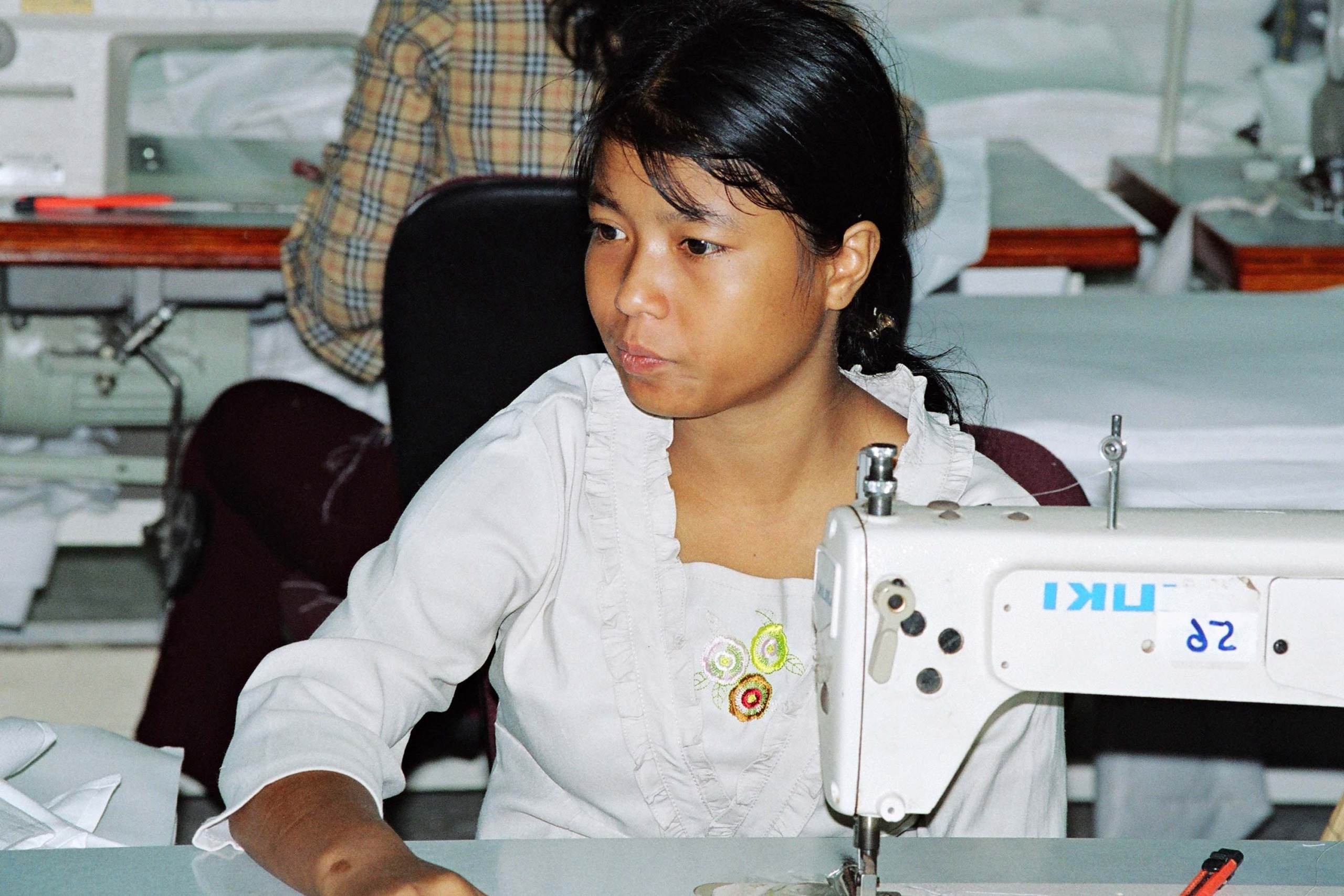
Editor’s Note: The opinions expressed here by Impakter.com columnists are their own, not those of Impakter.com — In the Featured Photo: Child worker in a textile factory in Cambodia. Featured Photo Credit: International Labour Organization.