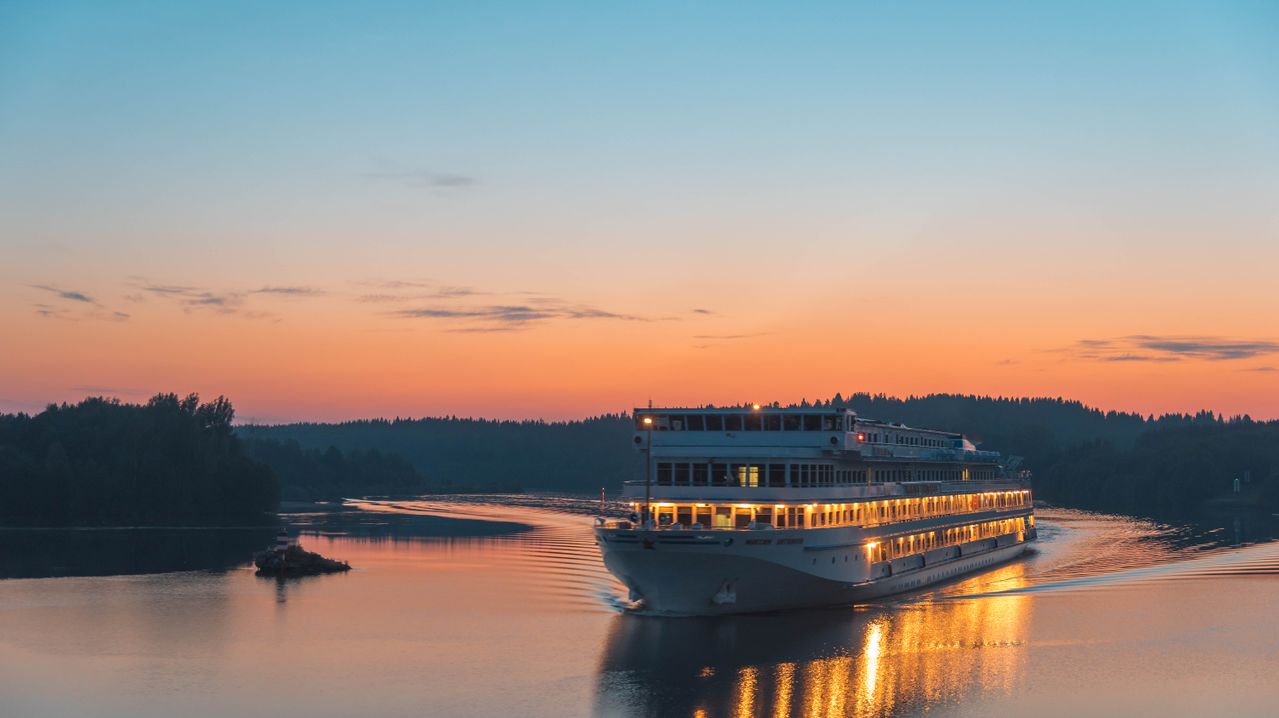
The European Union stands at the threshold of a critical transport transition. Road freight keeps growing and the emissions budget does not. The EU’s answer is to push cargo and passengers onto water, using a network that already exists and is barely half used.
The EU has more than 41,000 km of navigable waterway across 25 member states. Much of it threads through the continent’s industrial core, and almost none of it is at capacity.
Yet today, canals and rivers carry just 6% of EU freight, a figure that policymakers now see as both a failure and an opportunity.
Barges are one of the answers on the table. Per tonne carried, a river vessel burns far less fuel than a truck. The trade-off is speed, and the fact that something still has to move the cargo at each end. NAIADES III is the plan meant to deliver it, including a shift to zero-emission barges by mid-century.
Moreover, unlike the European road network, there is sufficient waterway capacity to cope with an increase in traffic.
Connecting Brussels to a Continental Network
Leave Brussels by water and Antwerp is where you arrive. Downstream lies the Scheldt and then the sea. Inland cargo turns before it gets there.
Turn inland at Antwerp and the Scheldt-Rhine Canal opens onto the Rhine delta. Barges reach Rotterdam that way. They reach the German river corridor too, and never touch open sea.
South of Brussels the network heads for Charleroi. After that, France.
Passenger operators sell the northern route. Boats marketed from Brussels go through Antwerp and Amsterdam into the Dutch waterways. Spring sailings take in Keukenhof and the Kinderdijk windmills.
Freight is the bigger story. The Brussels-Scheldt Maritime Canal and the Albert Canal let cargo move between the big seaports and inland industry without touching a motorway. Belgium is wired into the trans-European transport network on the strength of that.
Scale is worth keeping in view though. Germany and the Netherlands carry almost 72 percent of it between them.
Modernizing River Information Systems and Infrastructure
Hitting the target means fixing the plumbing. Two things are being upgraded: the way traffic is managed, and the waterways themselves.
June 2025 brought agreement between Parliament and Council. New traffic management rules for the waterways. It took effect in January 2026. Member states have until 2029 to write it into national law. The directive it replaces dates from 2005. The iPhone was still two years away.
River information services are the tools a skipper uses on the water. Talking to ports and authorities. Planning a voyage. Knowing what is ahead. Bringing that up to date is what lets a barge slot into a supply chain that runs on live data.
Money is going into the physical side too. Connecting Europe Facility money goes into this. So does Horizon Europe, InvestEU and Cohesion policy. The work is unglamorous. Locks rebuilt. Ports expanded. Channels dredged so bigger vessels can pass.
Some of this work is designed to cross borders. The Rhine-Alpine Corridor holds formal status under the trans-European transport network, so it gets a coordinator and a published work plan. The Danube Strategy is a different animal. Regional, broad, with navigation as one item on a list that also covers energy and the environment.
None of it shows up in the freight figures. 2023 came in at 469 million tonnes, down 3.7 percent, and 116 billion tonne-kilometres, down 4.6 percent. Ten years of strategy papers had asked for the opposite.
Pull back and the shape is plainer. These waterways carried around 145 billion a decade ago. A fifth of the traffic has gone.
The case for the shift holds regardless. Moving freight off the roads and onto the water cuts particulate emissions and cuts road deaths.
What Is Actually Holding It Back
Nobody in Brussels is arguing against this. The problems sit further down.
Start with the crews. There are not enough of them, and the ones working are ageing out. The fleet has the same issue. Then there is fuel: if the destination is zero-emission vessels, someone has to build the hydrogen bunkering, and almost nobody has. Money is thin in exactly the countries whose waterways were left to rot. As for NAIADES III, the programme running now, the common complaint is that it does a little of everything and not much of anything.
Containers took 10 percent of waterway tonne-kilometres in 2014. Three years on, they were up to 11. Then it started sliding. 2024 came in at 9.3 percent.
Which tells you what the policy cannot do. A barge operator does not take cargo because a strategy document asked. The rate has to beat the truck, and often it does not.
So this could go either way. Either Europe’s rivers end up carrying real freight volumes, or they carry tourists and stay pretty, running quietly alongside the motorway that does the actual work.
Editor’s Note: The opinions expressed here by the authors are their own, not those of impakter.com — In the Cover: The EU aims to increase inland waterway transport as part of its strategy to reduce road freight emissions and strengthen multimodal logistics.Cover Photo Credit: Иван Кузнецов