Today’s ESG Updates
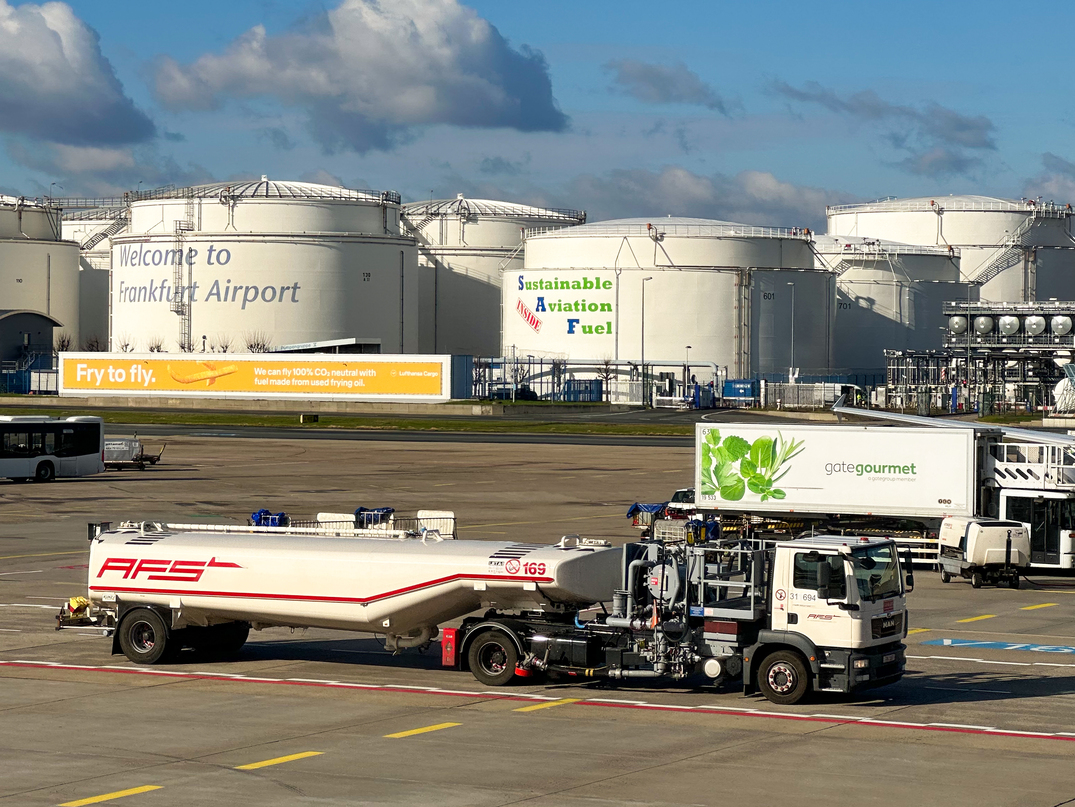
- SAF Becomes an EU Strategic Energy-Security Asset: Geopolitical instability is turning SAF into a strategic energy-security asset.
- China Turns Copper Merger Review into Supply-Security Leverage: China is leveraging its buyer power to demand guaranteed copper-concentrate supplies as a condition for approving Anglo American’s $54 billion Teck merger.
- Big Oil Challenges Climate Liability Cases as US Supreme Court Opens New Term: The U.S. Supreme Court will decide whether federal law blocks Boulder’s climate-liability suit against ExxonMobil and Suncor.
- Algebris Expands Renewable Energy Portfolio With Vector Renewables Acquisition: The acquisition boosts Algebris’s energy-transition footprint and gives Vector more independence to scale globally into storage and hybrid projects.
SAF becomes an EU strategic energy-security asset
Geopolitical instability is repositioning sustainable aviation fuel (SAF) from a decarbonisation product into a strategic energy-security asset. However, Europe’s fragmented traceability rules and pipeline regulations could prevent supply chains from scaling efficiently. Furthermore, Senior Vice President for Business Development in the Netherlands Nikki Schutte argues that harmonised EU rules are needed to reduce logistics costs and unlock investment as SAF demand is projected to rise from 62,000 barrels per day in 2026 to 80,000 barrels per day in 2027, while ReFuelEU targets increase from 2% of EU aviation fuel in 2025 to 70% by 2050.
The immediate effect is likely to be stronger political and commercial support for SAF as a hedge against disruptions to conventional jet-fuel supply, although the main constraints on market growth remain. Moreover, major ports like Rotterdam and other import hubs could become large-scale blending and certification centres. At the same time, airports and airlines increasingly compete for verified environmental attributes rather than physically delivered SAF molecules. This may lower system costs and improve resilience, but it also increases dependence on credible registries, auditing, and anti-double-counting controls.
Strategically, SAF policy is becoming industrial policy as jurisdictions offering stable mandates, flexible logistics, and reliable certification will attract producers, storage capacity, and capital.
The Netherlands’ voluntary blending experience suggests incentives can accelerate adoption, but long-term volume growth will remain mandate-led rather than purely market-led.
Klimado – Navigating climate complexity just got easier. Klimado offers a user-friendly platform for tracking local and global environmental shifts, making it an essential tool for climate-aware individuals and organizations.
China turns copper merger review into supply-security leverage

China reportedly demands guaranteed copper-concentrate supplies to approve Anglo American’s $54 billion merger with Teck Resources. Its antitrust regulator is negotiating remedies after smelters raised concerns amid China’s worst feedstock shortage in decades.
Although the combined group would hold only about 5% of global copper supply, China’s role as a major buyer gives it effective veto power.
The case shows resource-hungry countries increasingly using merger reviews to secure critical-mineral supply for the energy transition.
Related Articles
Here is a list of articles selected by our Editorial Board that have gained significant interest from the public:
Big oil challenges climate liability cases as U.S. Supreme Court opens new term

The U.S. Supreme Court will open its new term by hearing ExxonMobil and Suncor Energy’s attempt to dismiss Boulder, Colorado’s climate-liability lawsuit. Boulder alleges the companies contributed to climate change and misled the public, seeking damages for infrastructure repairs, environmental harm, emergency management, and public-health costs.
The companies argue that federal laws like the Clean Air Act prevent state-based claims from proceeding. The case could determine the future of nearly 60 similar lawsuits brought by U.S. states and local governments seeking billions from fossil-fuel producers. A ruling for the companies could eliminate many cases, while a ruling for Boulder would expand climate-liability risks.

Algebris expands renewable energy portfolio with Vector Renewables acquisition

Algebris Investments has acquired Spanish renewable energy advisory and asset-management firm Vector Renewables from Nadara through its Green Transition Fund, marking the fund’s first international acquisition.
The deal strengthens Algebris’s energy-transition portfolio and international presence while giving Vector greater independence to expand globally and develop technologies such as battery-energy-storage systems and hybrid projects.
However, the deal did not disclose financial terms.
Editor’s Note: The opinions expressed here by the authors are their own, not those of impakter.com — Cover Photo Credit: Wikimedia Commons