Today’s ESG Updates
- US EPA Prepares to Rescind Landmark Power Plant Climate Rules: The Trump administration is set to repeal carbon standards for coal and gas power plants, alongside the legal finding underpinning federal climate regulation.
- Saudi Oil Exports at Risk as Pipeline Stays Offline: A drone strike has knocked out Saudi Arabia’s main export pipeline, threatening up to 4% of global oil supply as stocks at Yanbu run down to just days’ worth.
- German Researchers Turn Farm Waste CO2 into Renewable Methanol: A new decentralised plant in Germany is converting captured biogas CO2 into green methanol, a storable, on-site renewable fuel for farms.
- Himalayas Nearing Tipping Point, With Millions of Livelihoods and Billions in Economic Activity at Stake: Accelerating glacier melt threatens to push the region toward “peak water” by 2050, risking both livelihoods and a fifth of India’s GDP.
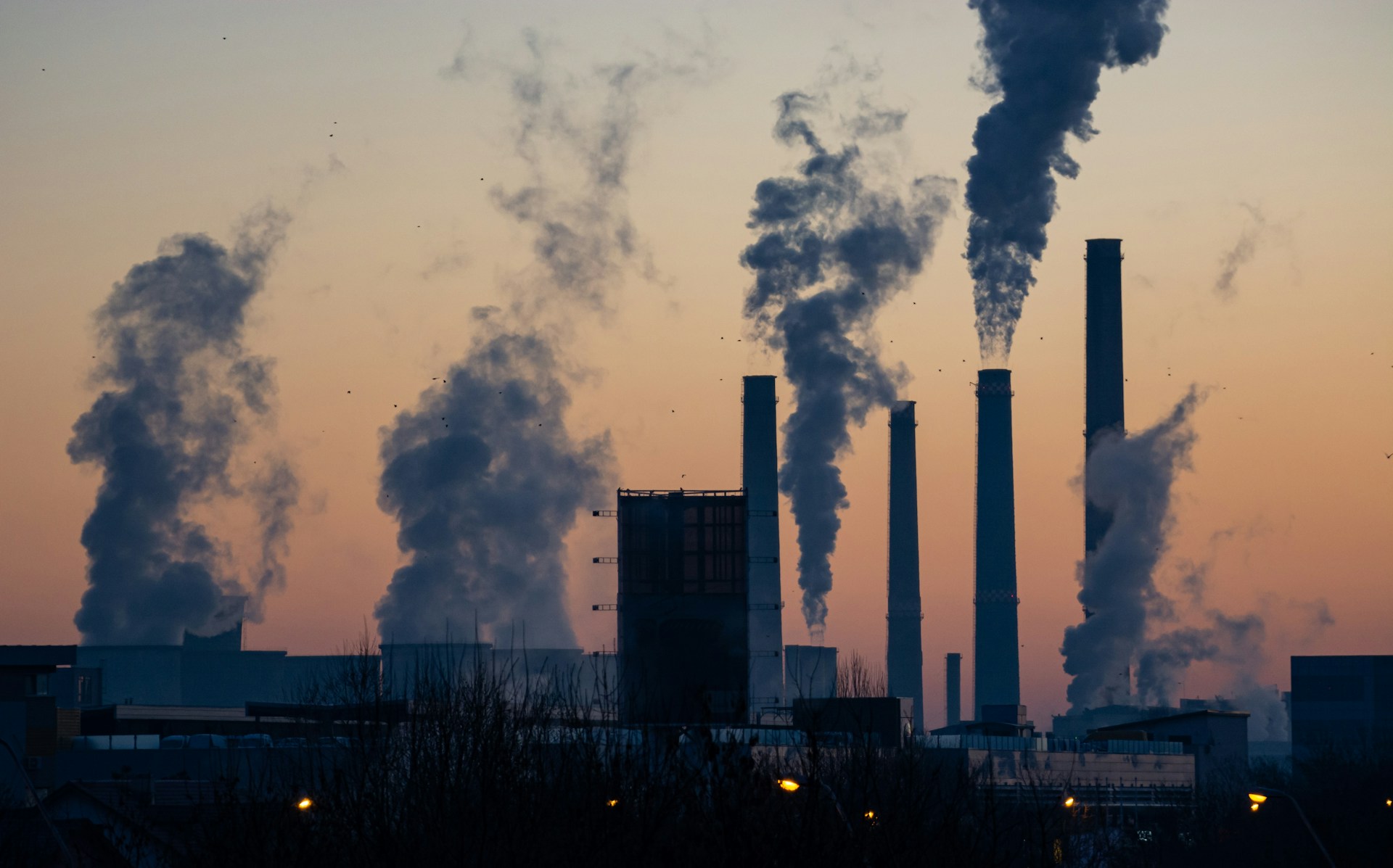
US EPA prepares to rescind landmark power plant climate rules
The U.S. Environmental Protection Agency (EPA) is set to formally repeal carbon pollution standards for coal and gas-fired power plants, Bloomberg News reported. The rollback is expected as soon as Monday on the sidelines of the G20 energy ministers’ meeting in Houston. This builds on a proposal from last year to scrap rules from the Biden presidency that limited carbon dioxide, mercury and other pollutants from power plants.
More significantly, EPA officials are also expected to propose repealing the federal “endangerment finding” for power plants, which is the legal determination that greenhouse gases pose a threat to public health. This determination has underpinned the government’s authority to regulate carbon emissions for over a decade; therefore, repealing it would strip away one of the foundations future administrations would need to rebuild before reinstating strict climate rules. The rollback fits into the Trump administration’s wider push against regulations it views as barriers to industrial and economic growth, at a time when the electricity sector already accounts for nearly a quarter of U.S. greenhouse gas emissions.
Klimado – Navigating climate complexity just got easier. Klimado offers a user-friendly platform for tracking local and global environmental shifts, making it an essential tool for climate-aware individuals and organizations.
Saudi oil exports at risk as pipeline stays offline
Saudi Arabia risks running out of oil export stocks within days unless it can restart its major east-west pipeline, threatening a further loss of up to 4% of global oil supply. On Friday, drone attacks forced the pipeline offline, cutting off the route Riyadh has relied on for six months to reroute around 4 million barrels a day to the Red Sea port of Yanbu, bypassing the wartime shutdown of the Strait of Hormuz.
Yanbu now has enough stock to maintain exports for only five to seven days, with repair estimates varying widely, from a matter of days to several weeks. Adding to the pressure, Houthi fighters in Yemen seized an island at the mouth of the Red Sea on Friday, raising the risk to Saudi shipping on a second front. This disruption mounts on an already worsening global oil shortage, with the International Energy Agency forecasting a 6% drop in world oil supply this year, pushing fuel prices, inflation and U.S. bond yields to their highest levels since the 2008 financial crisis.
Related Articles
Here is a list of articles selected by our Editorial Board that have gained significant interest from the public:
German researchers turn farm waste CO2 into renewable methanol
A new container-based facility at Stralsund University of Applied Sciences is converting CO2 captured from biogas plants into green methanol, a renewable fuel that can be stored easily and used directly as farm machinery fuel. The plant, inaugurated on September 10, is the result of a three-year collaboration between five research and industrial partners in the German state of Mecklenburg-Western Pomerania.
The process combines captured CO2 with hydrogen produced through electrolysis powered by renewable electricity, converting the two into methanol via catalysis. It’s designed for decentralised use, meaning it can operate directly at typical on-farm biogas sites rather than requiring large, centralised infrastructure. A follow-up project has now launched to scale up the technology and refine the wider process chain, including onsite hydrogen. The demonstration plant is expected to produce up to 36 litres of methanol daily.

Millions of livelihoods and billions in economic activity at stake in the Himalayas
The Himalayas are approaching a tipping point, with glaciers now melting much faster than they were a decade ago and the region on track to hit “peak water” by 2050. The shift threatens not just millions of livelihoods but a critical piece of India’s economic infrastructure. The Himalayan region underpins more than 20% of India’s GDP, yet already accounts for roughly 35% of the country’s natural disasters, exposing hydropower, agriculture and downstream industry to compounding risk.
The warning follows a Himalayan glacier collapse on the Nepal-Tibet border that triggered flash floods and landslides, killing over 1,300 people, with more than 5,300 still missing. Produced by sustainability advisory firm Systemiq and regional mountain research bodies, the report also presents a monitoring gap with just 21 of an estimated 40,000 glaciers across the Hindu Kush-Himalaya being tracked on the ground. This leaves investors and insurers with limited visibility into fast-changing physical risk.
_________________________________________________________________________________
Editor’s Note: The opinions expressed here by the authors are their own, not those of impakter.com — Cover Photo Credit: Ella Invanescu.