Impakter
  • Environment
    • Biodiversity
    • Climate Change
    • Circular Economy
    • Energy
  • FINANCE
    • ESG News
    • Sustainable Finance
    • Business
  • TECH
    • Start-up
    • AI & Machine Learning
    • Green Tech
  • Industry News
    • Entertainment
    • Food and Agriculture
    • Health
    • Politics & Foreign Affairs
    • Philanthropy
    • Science
    • Sport
  • Editorial Series
    • SDGs Series
    • Shape Your Future
    • Sustainable Cities
      • Copenhagen
      • San Francisco
      • Seattle
      • Sydney
  • About us
    • Company
    • Team
    • Global Leaders
    • Partners
    • Write for Impakter
    • Contact Us
    • Privacy Policy
No Result
View All Result
Impakter logo
No Result
View All Result
Droughts in East Africa: Stronger and ‘100 Times More Likely’ Due to Climate Change

Droughts in East Africa: Stronger and ‘100 Times More Likely’ Due to Climate Change

A new study shows that rain levels in the Eastern Horn of Africa are dangerously low due to the damage caused by fossil fuel emissions

Jessica MasonbyJessica Mason
May 2, 2023
in Climate Change, Environment, Politics & Foreign Affairs
0

On the 27th April, the World Weather Attribution (WWA) released a study which emphasised that human-induced climate change is the main cause of the harrowing droughts that East Africa is currently experiencing. East Africa has now had five consecutive failed rainy seasons, and this has caused an extreme drought that has had a disastrous impact on the people living there. 

For example, Somalia is experiencing a devastating famine, with a total of 6.5 million people currently battling acute food insecurity, including 223,000 people who are facing catastrophic levels of hunger, according to the World Food Programme.

The main outcome of the WWA study was the finding that climate change – induced by human actions such as the burning of fossil fuels – is not only increasing the likelihood of lower rain levels, but is also increasing the levels of evapotranspiration in plants and soil, and has therefore made droughts such as the current one in East Africa stronger and “about 100 times more likely” because in a 1.2°C cooler world, the combination of low rainfall and high evapotranspiration would not have resulted in a drought. The 2022 climate change report by IPCC revealed that today’s climate has been warmed by about 1.5°C by human-induced greenhouse gas emissions, and will exceed 2°C within the 21st century unless greenhouse gas emissions are reduced considerably in the next few decades.


Related Articles: Europe Prepares for Dry Summer as Continent Experiences a Winter Drought | Worst Drought in Forty Years Pushes East Africa to the Brink of Famine

Drought has been an especially concerning issue for the Eastern Horn of Africa in the past few years. A report by the London School of Hygiene & Tropical Medicine, released in March, revealed that an estimated 43,000 excess deaths occurred in Somalia in 2022 due to drought, and half of these deaths were children under five years old.

In addition, many have been displaced from their homes and forced to find new places to live. Climate migration is now a key issue that is reshaping countries and borders. In February, the UN Refugee Agency revealed that over 180,000 refugees have left Somalia and South Sudan due to the horrific living conditions, and have crossed into Kenya and Ethiopia which have both also been sorely impacted by the drought. 

In an article published in January calling for urgent action to address climate migration, the International Organization for Migration highlighted that 20 million people are displaced every year due to the effects of climate change. 

In order for East Africa to flourish, it is imperative that there is plenty of rain during the two wet seasons, March-April-May (MAM) and October-November-December (OND). Studies by the Climate Hazards Centre have identified “an exceptional sequence of poor rainy seasons” since OND 2020. The data emphasises that rain levels in areas within the Eastern Horn such as central and eastern Ethiopia and Kenya, as well as southern and central Somalia, have been consistently low over the past few years; not usually surpassing 60% of the long-term average rain levels. 

Moreover, the intense solar radiation and very low relative humidity rates in East Africa, caused by global warming, mean that plants need more rain than ever to survive. A 2017 study by Sharon Nicholson, a meteorology professor at Florida State University (FSU) in the Department of Earth, Ocean and Atmospheric Science, revealed that over most of the region, mean annual rainfall was between 800 and 1200 mm, which would mean around 400-600mm each wet season.

However, if we compare this to the average rain levels of OND 2022 in Kenya, Somalia, and Ethiopia – which, according to the Climate Hazards Centre, are estimated to be ~127 mm – it is clear that the current amount of rain is not enough to sustain healthy crop and rangeland production. 

Multiple multi-agency alerts have been issued since it was realised that the rainfall levels in East Africa would reach their lowest point in at least 70 years in MAM 2022, including in December 2021, May 2022, November 2022, and February 2023.

In November 2022 for example, the multi-agency warning was issued by a group of organisations including Unicef, the World Health Organisation, the Food and Agriculture Organisation of the United Nations and the World Food Programme, amongst others. This alert demanded immediate global action in order to prevent the famine that the Horn of Africa is currently experiencing.

The rain levels for MAM 2023 are predicted to remain at below-normal levels, signifying that the drought in the Eastern Horn of Africa is only worsening. 

The latest report from the International Rescue Committee has noted that East African countries, particularly Ethiopia and Somalia, “pay the highest price for climate change, as the longest period of failed rains ever recorded has pushed millions to the brink of starvation in East Africa.”

We can only hope that this important analysis and the awareness of the horrific conditions that humans are causing will result in a more urgent address to polluter nations, demanding them to pay for the economic damage attributable to their emissions. 


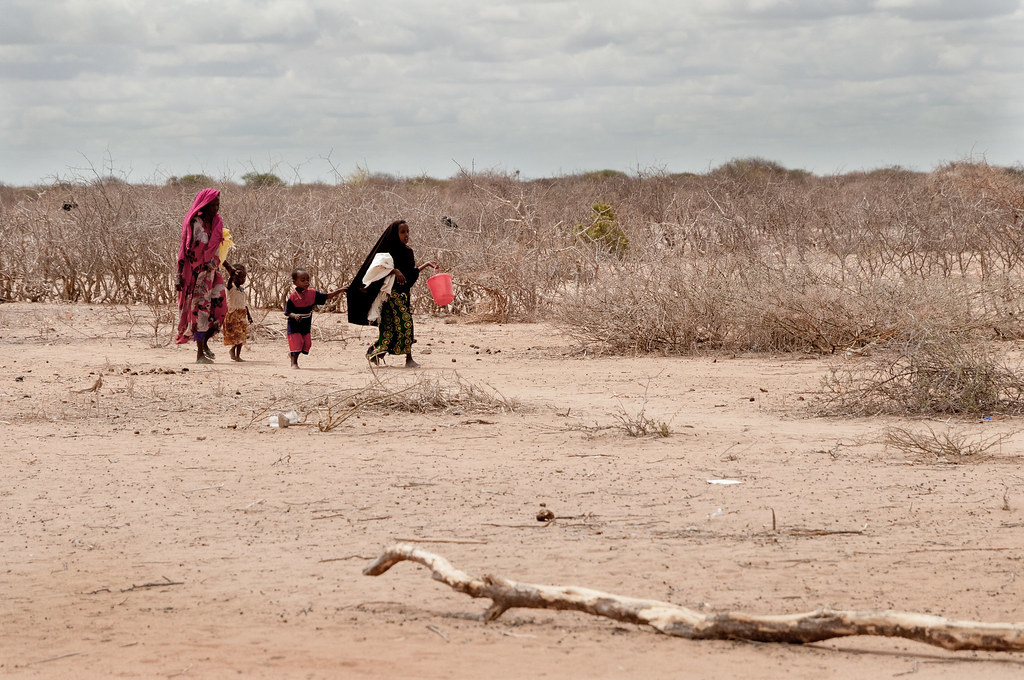
Editor’s Note: The opinions expressed here by the authors are their own, not those of Impakter.com — In the Featured Photo: Two adults and two children walking across a dry field. Featured Photo Credit: Flickr
Tags: Climate ChangeDroughtEast Africafaminerainfall
Previous Post

Climate Migrants Are Not the Problem, They Can Be the Solution

Next Post

What Is the Dutch Disease and How Could It Help End the War in Ukraine?

Related Posts

The Era of ‘Global Water Bankruptcy’ Has Begun
Climate Change

The Era of ‘Global Water Bankruptcy’ Has Begun

Humanity’s long-term water usage and damage have exceeded nature's renewal and safe limits, a situation scientists and the media have...

byNmesoma Ezetu
January 30, 2026
Food Waste in India
Climate Change

India’s Food Waste Is Turning Into an Environmental Time Bomb

India, a key player in this fight, is currently battling a confluence of climate-driven disasters. Last year’s punishing extreme heatwave,...

byPranjali Chowdhary - Research and Policy Associate at the Institute for Governance and Sustainable Development, Indiaand1 others
January 30, 2026
One Health Education Is Essential for Pandemic Preparedness and Global Security
Education

One Health Education Is Essential for Pandemic Preparedness and Global Security

The One Health concept/approach offers a powerful tool for public health and biomedical research globally. The combined integration of human medicine,...

byDr. Bruce Kaplan - Epidemiologist formerly at the CDC/EIS and USDA-FSIS Office of Public Health and Science & Co-Founder of the One Health Initiativeand2 others
January 29, 2026
Three sponsors for the 2026 Winter Olympics in Italy could generate 1.3 million tons of CO2
Climate Change

Winter Olympics Sponsorship Emissions: Who Are the Main Offenders?

The 2026 Winter Olympic Games are set to begin in Italy next month. Scattered across towns in northern Italy, from...

bySarah Perras
January 28, 2026
WEF Report Ranks Environmental Challenges as Greatest Long-Term Threat to Global Stability
Business

WEF Report Ranks Environmental Challenges as Greatest Long-Term Threat to Global Stability

The World Economic Forum’s Global Risks Report 2025 found that environmental risks are deteriorating faster than other threats and challenges.  ...

byBenjamin Clabault
January 28, 2026
ESG News regarding Clean energy is Europe's only path to prosperity; 2150 raises €210 million to back sustainable cities; EcoCeres’ new Malaysian plant is operating at 95% capacity; New study suggests the world is not ready for rise in extreme heat.
Business

Clean Energy Is Europe’s Only Route to Prosperity

Today’s ESG Updates: Clean Energy is Vital for Europe's Autonomy: UK Energy Secretary Ed Miliband and EU Energy Commissioner Dan...

byFedor Sukhoi
January 27, 2026
ESG news regarding: a push for wind power in Europe, possible massive metal fraud, wind power in Western Australia, and Citi layoffs.
Business

Europe’s Answer to Trump: More Wind Power

Today’s ESG Updates New Draft Reveals Europe’s Massive Wind Power Push: Nine European nations are defying U.S. criticism by signing...

byEge Can Alparslan
January 23, 2026
Climate Change Charities
Business

Beyond Carbon Offsets: 7 Climate Change Charities Tackling Root Causes in 2026

Philanthropy is surging again. U.S. charitable giving reached a record $592.50 billion in 2024, and, for the first time since...

byHannah Fischer-Lauder
January 23, 2026
Next Post
Dutch Disease

What Is the Dutch Disease and How Could It Help End the War in Ukraine?

Recent News

The Era of ‘Global Water Bankruptcy’ Has Begun

The Era of ‘Global Water Bankruptcy’ Has Begun

January 30, 2026
ESG news regarding: New Report Urges Urgent Action to Halt PFAS Contamination Across EU, US Proposes New Rule to Force Greater Transparency in Pharmacy Benefit Manager Fees, EU and Brazil Seal Landmark Deal Creating World’s Largest Free Data Flow Zone, Beijing Suspends Import and Use of Sun Pharma Alzheimer’s Treatment

Without Regulation, ‘Forever Chemicals’ Will Cost Europe €440 billion by Mid Century

January 30, 2026
Food Waste in India

India’s Food Waste Is Turning Into an Environmental Time Bomb

January 30, 2026
  • ESG News
  • Sustainable Finance
  • Business

© 2025 Impakter.com owned by Klimado GmbH

No Result
View All Result
  • Environment
    • Biodiversity
    • Climate Change
    • Circular Economy
    • Energy
  • FINANCE
    • ESG News
    • Sustainable Finance
    • Business
  • TECH
    • Start-up
    • AI & Machine Learning
    • Green Tech
  • Industry News
    • Entertainment
    • Food and Agriculture
    • Health
    • Politics & Foreign Affairs
    • Philanthropy
    • Science
    • Sport
  • Editorial Series
    • SDGs Series
    • Shape Your Future
    • Sustainable Cities
      • Copenhagen
      • San Francisco
      • Seattle
      • Sydney
  • About us
    • Company
    • Team
    • Global Leaders
    • Partners
    • Write for Impakter
    • Contact Us
    • Privacy Policy

© 2025 Impakter.com owned by Klimado GmbH