Member states attending the International Seabed Authority (ISA) meeting in Kingston, Jamaica, this week have rejected a call by the body’s Secretary-General to adopt regulations for commercial-scale deep-sea mining by 2023. Made up of 167 Member States, and the European Union, the International Seabed Authority is mandated under the UN Convention on the Law of the Sea to organise, regulate and control all mineral-related activities in the international seabed area for the benefit of mankind as a whole.
Areas far down into the ocean have been of great interest recently to private companies as well as governments, for its abundance in polymetallic nodules – nuggets of minerals. As we shift away from fossil fuels towards a battery-powered world, greater attention has been turned towards this type of rock which can be used to supply large quantities of batteries for electric vehicles and other low-carbon technologies.
Yet, the deep sea lies beyond national jurisdiction and this is where ISA comes in, as the international body mandated under the UN Convention on the Law of the Sea to regulate and control mining activities. And any commercial-scale mining activity in this seabed area beyond the 200-mile exclusive economic zones (EEZ) under national control requires ISA authorisation.
Ocean mining is presented by its proponents as essential for a ‘green’ energy transition, and supposedly the best way to halt terrestrial mining which has been connected to human rights violations, poor working conditions, and child labour. On the face of it, the argument sounds convincing.

Ocean mining, perhaps surprisingly, has found a champion – not in large, powerful countries – but in the tiny South Pacific Island, Nauru that has become one of the greatest proponents of ocean mining. The reason? Nauru was acting on behalf of Nauru Ocean resources Incorporated (NORI), a wholly-owned subsidiary of The Metals Company, a Canadian-registered corporation. When Nauru called for a two-year deadline – an ultimatum to the ISA to complete the regulations by July 2023 – The Metals Company, formerly called DeepGreen, was in the process of listing its shares on a United States stock market and had already told investors it expected to begin mining in 2024.
Yesterday, Germany, Belgium, Costa Rica, Chile, Russia, and Ghana – representing the African Group of nations that are members of the ISA – questioned the legal need to meet the two-year deadline set by Nauru. China stated the deadline was ‘unrealistic’ amid the Covid-19 pandemic.
This comes as a relief to all scientists, and experts who have expressed their worry. They believed speeding up the process will come at the expense of biodiversity and ocean health.
Currently, the knowledge gap on the topic of ocean mining and its potential environmental impact on biodiversity, ecosystems, fisheries, and economies is immense. Several marine experts and scientists suggested ocean mining could also disrupt the ocean’s natural capacity to store and capture carbon. The practice, in ten years’ time, could most definitely trigger a series of unintended consequences, causing a deepening in the climate crisis.
Pradeep A. Singh, a researcher at the University of Bremen, Germany, said “We don’t have the baseline information and we do not have any sort of real knowledge about the potential impacts of it [ocean mining], the knowledge that we have, tells us that it is going to be destructive”
A new study shows the impact of ocean mining on global fisheries
A new study sounded the alarm about these understudied impacts, finding that large swaths of the ocean licensed for mining overlap with fisheries across the Pacific, in the US, Mexico, and more. It makes clear the point that ocean mining is a threat to the food security and economies of countries and communities reliant on fisheries for survival.
They found that ocean mining may threaten global fisheries as:
- Wastewater plumes ejected by mining motherships could directly intoxicate fish that come in contact with the plumes.
- These harmful toxins work their way into the oceans’ food chains, smothering, and choking out food for fish which could significantly reduce the overall fish population.
- Noise, vibrations, and light pollution from the mining equipment could stress marine life.
The study found that risks to the $40 billion tuna industry could be particularly significant, with global ramifications, especially for small-island and low-income countries that depend on the fish trade for their prosperity.
“A growing body of research has already shown that ocean mining would inflict potentially irreversible damage on extremely sensitive ocean habitats and disrupt the ocean’s natural capacity to store and capture carbon,” said Douglas McCauley, an ocean expert at the University of California Santa Barbara. “This is the first study to reveal just how damaging ocean mining can be for fisheries. Until now, no one has talked about these impacts of deep-sea mining on fishing hauls.”
The world is not prepared for the aftermath of ocean mining
The world is most definitely not prepared for ocean mining just yet. Although the environmental impact should be the prime worry when discussing the authorisation of deep-sea exploitation, the real underlying goal of some member states, including Nauru, was financial.
“It is very concerning that you have this mandate to ensure the effective protection of the marine environment from the harmful effects of mining, but you don’t have an environmental or scientific committee to collate and discern all of this sort of information and synthesize that into knowledge that the ISA can actually use to set appropriate standards, guidelines, and thresholds,” declares Pradeep A. Singh.
Ocean mining threatens far more than just global fisheries. Pradeep A. Singh says, “Scientists are telling us, in terms of ecological connectivity, what we do that far out in the ocean will come back and affect us on the coast.”
Related Articles: PJP Eye, An Innovative Startup Producing A New Generation Of Organic Cambrian Batteries | Why Coral Reefs Need All Our Attention
But what compensation mechanism do we have in place to ensure the benefits are equitably distributed to offset the potential environmental damage?
The ISA has announced the equitable redistribution of contractor rates received. Yet, as mentioned by Pradeep A. Singh, the bulk of the financial resources provided will have to be used to compensate countries whose economies are reliant on terrestrial mining, and little to no money will be left to compensate those who may be the most affected by ocean mining.
“We just don’t know enough about the deep ocean to even begin to think that we can properly compensate these losses” – Pradeep A. Singh
In a recent statement, more than 600 academics from six continents called on countries and governments to press pause on these plans to open up the deep sea to mining, calling for a moratorium. They joined a global chorus of more than 90 NGOs, environmental leaders, such as Sir David Attenborough, Fiji Prime Minister Vorege Bainimarama, and businesses including car manufacturers, computing giants, and electronic manufacturers.
Do we need ocean mining? Proponents of the exploitative activity will answer with yes. They argue we need the injection of these metals in huge quantities if we want to meet energy transition demands for this new battery-powered world.
Pradeep A. Singh asks: “Are you absolutely sure that we would fail to meet our climate targets if we don’t have seabed mining?” to which none of them have responded with an adequate convincing answer.
Proponents are ignoring the second side of climate change and environmental degradation which is to prevent and stop biodiversity loss. Ocean mining will most certainly contribute to this. So how can we justify the practice in the name of climate change?
Yesterday was a short-term success, but it does not mean the issue of ocean mining will not come back to bite us again and again.
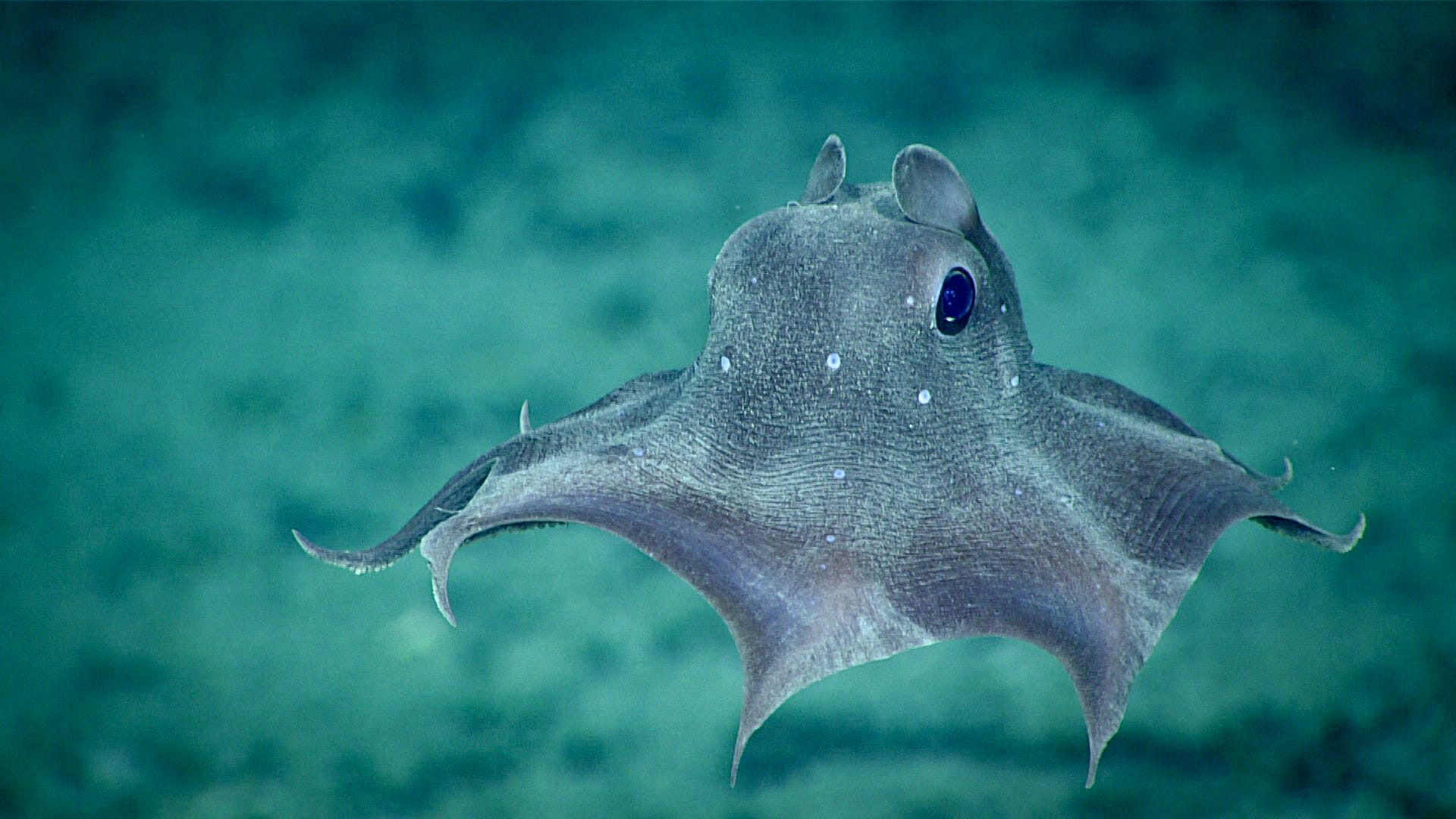
Editor’s Note: The opinions expressed here by Impakter.com columnists are their own, not those of Impakter.com. — In the Featured Photo: an Opisthoteuthis agassizii (dumbo octopus), during a Dive 12 of the 2019 Southeastern U.S. Deep-sea Exploration. The dots are clear windows in the skin. We are uncertain of their purpose, but suspect they may gather additional light. Featured Photo Credit: Wikimedia Commons.