Impakter
  • Environment
    • Biodiversity
    • Climate Change
    • Circular Economy
    • Energy
  • FINANCE
    • ESG News
    • Sustainable Finance
    • Business
  • TECH
    • Start-up
    • AI & Machine Learning
    • Green Tech
  • Industry News
    • Entertainment
    • Food and Agriculture
    • Health
    • Politics & Foreign Affairs
    • Philanthropy
    • Science
    • Sport
  • Editorial Series
    • SDGs Series
    • Shape Your Future
    • Sustainable Cities
      • Copenhagen
      • San Francisco
      • Seattle
      • Sydney
  • About us
    • Company
    • Team
    • Global Leaders
    • Partners
    • Write for Impakter
    • Contact Us
    • Privacy Policy
No Result
View All Result
Impakter logo
No Result
View All Result
Young designers presenting sustainable prototypes at Creathon 2025 in Almaty’s Botanical Garden.

Modular Topchan.

Creathon 2025: How Central Asia Turned Ideas into Urban Practice

A three-day creative sprint in Almaty where art, design, and ecology fused into a living experiment in sustainable thinking.

Ada OmarbyAda Omar
October 18, 2025
in Art, Culture, Eco Life, Society
0

For three August days, one campus in Almaty, Kazakhstan, turned into a living laboratory — a space where young architects, designers, and artists tested how art and ecology could reshape city life in real time. 

The creative marathon, called Creathon and organized by Urban Forum Kazakhstan and Tabiğat Labs at KazGASA, merged urbanism, design, and social impact into one dense experiment.

It wasn’t an exhibition or a hackathon, but a cultural accelerator where results mattered more than likes.

“Creathon is a prototype for how creative people can turn local challenges into sustainable solutions,” says curator Assel Yeszhanova.

What Made It Different
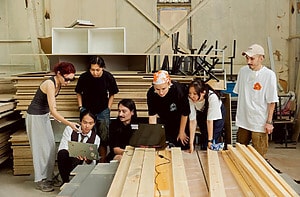
Team work on Modular Topchan. Photo made by Oleg Zuev

What made Creathon truly different was its structure. The teams brought together architects, engineers, artists, ecologists, and sociologists — all between eighteen and thirty-five — speaking different professional languages yet united by a shared purpose. The participants had only seventy-two hours to move from concept to prototype, finishing with a public showcase at InEco Fest in Almaty’s Botanical Garden, where their creations met both people and the landscape itself.

Sustainability and inclusion weren’t decorative slogans but the very framework of the process: from the choice of materials and methods to the social value of each idea. 

Out of more than a hundred applications, 21 best of the best participants were selected and divided into small teams, each led by a mentor.
Day 1 — ideas and sketches; Day 2 — materials and prototypes; Day 3 — assembly and presentation.


Parallel lectures and feedback sessions kept the energy high and the focus sharp.

What Came Out of It
Young designers presenting sustainable prototypes at Creathon 2025 in Almaty’s Botanical Garden. Photo made by Oleg Zuev

At Creathon, sustainability wasn’t an add-on — it was the skeleton

More than twenty prototypes were created, most built from recycled or locally sourced materials, with minimal waste and reused structures.

  • “Tamyr Riza”: a felt cocoon seeded with oats, where visitors could step inside and feel the quiet rhythm of growth (team led by Alina Aitzhanova).
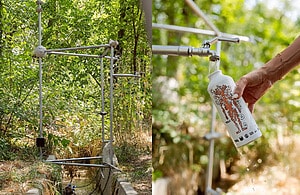
  • “H2O-001”: a project by Zhanna Ee that filters water from traditional irrigation canals, turning it into a drinking fountain for people, birds, and stray animals — hydrology as social design.
  • Modular Topchan: a transformable, multi-level bench made of textiles and natural pigments, developed under Chingiz Batyrbekov, designed for movement and adaptability.
  • “The Observer’s Chair”: an installation by Nargiz Magayeva, assembled from discarded furniture as a meditation on memory, use, and renewal.

Some of these works now remain in the Botanical Garden; others are being replicated in public parks. It’s a shift from “projects for show” to objects of daily life.

“The Observer’s Chair”: an installation by Nargiz Magayeva. Photo made by Oleg Zuev

“We wanted to show that sustainability is not a limitation — it’s a driver of creativity,” says Yeszhanova.

The Human Effect
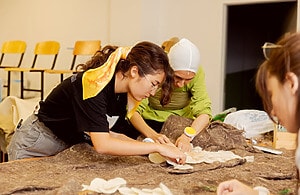
Designers working on “Tamar Riza”. Photo made by Oleg Zuev

Creathon became a school of empathy as much as of design. Participants learned to listen, negotiate, present, and respond. On the final day, the garden filled with people — children planting seeds, families testing installations, artists explaining how ideas become useful objects.

“Creativity here is collective,” notes Batyrbekov. “It’s not about I made it, but we heard and changed together.”

The event built soft skills as effectively as physical structures, teaching collaboration, curiosity, and shared authorship.

Partnerships and Governance

Behind the creative rush stood a precise framework: Urban Forum Kazakhstan, Tabiğat Labs, KazGASA, Chevron, the Main Botanical Garden, and supporting institutions and media. Corporate partners backed production and education, aligning KPIs with public visibility and community value.

Transparent goals, measurable outcomes, and open presentation made the project a model of cultural governance.

Almaty, through Creathon, is practicing soft power through prototypes, showing that policy, business, and creativity can coexist not in theory but in form.

Why It Matters
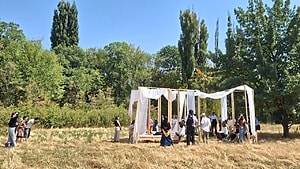
Presentation with EcoFest in Botanical Garden. Photo made by editor

An experimental platform: a space where ideas meet both the city and nature in real conditions.

Normalization of sustainable practice: ESG is becoming a working standard, not a presentation slide.

Network and economy: prototypes evolve into collaborations, design products, or social businesses — from modular furniture to urban installations.

A new urban image: Almaty emerges as a city where design, ecology, and civic life share the same language.

Organizers plan to make Creathon annual, expand it geographically. The vision: a Central Asian Creathon Network, a shared platform for sustainable design and cross-regional collaboration.

“Creathon is not a one-time event,” says Yeszhanova. “It’s a seed for a sustainable creative ecosystem.”

The Takeaway
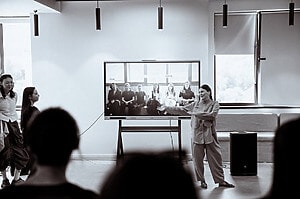
Beginning of Creathon. Photo made by Oleg Zuev

Creathon 2025 is a sign of a new phase in Kazakhstan’s cultural and creative economy. It shows that with the right structure and support, ideas can turn into tangible, ethical, and socially conscious design in just days.

For European institutions and businesses focused on sustainability and cultural innovation, Creathon signals a new hub on the global creative map. Collaboration, knowledge exchange, and scaling are the logical next steps.

Just as Copenhagen uses architecture festivals to test green innovation, Almaty uses Creathon to prototype sustainable creativity.

ESG in one paragraph:
E — Recycled materials and circular design.
S — Youth inclusion, community learning, and public dialogue.
G — Transparent partnerships between public, private, and civic sectors.

The Silk Road once carried goods; now it carries ideas — and Creathon is the new route where creativity becomes currency.


Cover photo made by Oleg Zuev

Tags: Central AsiaESGKazakhstanurban design
Previous Post

How to Reduce Anti-Activist Crime in Latin America

Next Post

How Trump–Kennedy Policies Undermine Public Health — and How to Fix Them

Related Posts

Orsted challenges U.S. suspension of offshore wind projects; global mandatory ESG reporting accelerates; ESG ratings for Saudi firm Maharah; EU legal certainty on sustainability reporting.
Business

Orsted’s US Wind Project Challenge Highlights Regulatory Risk in Clean Energy Investment

Today’s ESG Updates Orsted Challenges U.S. Suspension of Wind Project: Denmark-based renewable developer files court action to overturn the U.S....

byMuhammad Umer Aslam
January 5, 2026
First Year of CSRD Reporting Exposes Data Gaps
Business

First Year of CSRD Reporting Exposes Data Gaps

Today’s ESG Updates CSRD Reporting Proves Difficult: Deloitte finds that many European companies failed to quantify ESG-related capital and operating...

byMuhammad Umer Aslam
December 22, 2025
Trump media merges with fusion power startup
Business

Trump Media Merges With Nuclear Fusion Company

Today’s ESG Updates Trump Media Merges With Fusion Power Company: Trump Media & Technology Group announced an all-stock merger with...

byPuja Doshi
December 19, 2025
Discovery of a carbon sponge under the ocean; HSBC survey shines positive acceptance of climate transition; New catalyst for clean hydrogen production; Google signs deal with Ebb for carbon removal.
Business

Scientists Find CO2 Buildup Under the Sea

Today’s ESG Updates Eroded Lava Under the Ocean Stores CO2: Work led by the University of Southampton demonstrates that these...

byPuja Doshi
December 12, 2025
ESG news covering EFRAG's new ESRS Knowledge Hub, Bank of England's private equity climate stress test, Singapore's green-power data centre rules, and Amazon's climate dispute with rivals.
Business

Europe Boosts ESG Transparency With New ESRS Knowledge Hub

Today’s ESG Updates EFRAG Unveils ESRS Knowledge Hub: Centralized EU platform to support CSRD-aligned sustainability reporting. Bank of England Tests...

byMuhammad Umer Aslam
December 8, 2025
Regulatory update on the EFRAG ESRS
Business

European Financial Reporting Advisory Group Releases Simplified Reporting Standards Draft

This Week’s Regulatory Updates: EFRAG releases simplified European sustainability reporting standards: EFRAG claims it will increase competitiveness and reduce the...

byAriq Haidar
December 5, 2025
ESG MIcrosoft funds Pantheon for projects aimed at providing climate solutions; Number of Nurses and Health Care workers in a decline in U.K. amid rising racism and regulation changes; Scientists capture human cells being invaded by Influenza; Red Squirrels thriving after re-introduction.
Business

Microsoft Makes an Investment in Startup Pantheon

Today’s ESG Updates Microsoft Funds Startup Pantheon: As part of its carbon removal strategy funds Pantheon which is a startup...

byPuja Doshi
December 5, 2025
Shock After Shock After Shock, Warns ECB
Business

Shock After Shock After Shock, Warns ECB

Today’s ESG Updates Higher Threat of Shocks to the Economy: The ECB warns of the high level of threats to...

byPuja Doshi
November 28, 2025
Next Post
How Trump–Kennedy Policies Undermine Public Health — and How to Fix Them

How Trump–Kennedy Policies Undermine Public Health — and How to Fix Them

Recent News

ESG News regarding China restricting industrial renewable exports, UN warning that US climate treaty exit harms economy, UK firms lowering wage forecasts despite inflation, Meta partnering with TerraPower for new nuclear reactors.

To Save the Grid, China Forces Industries to Go Off-Network

January 9, 2026
Cleaner Air in Hospitals

How Cleaner Air in Hospitals Can Cut Infections and Climate Impact at the Same Time

January 9, 2026
Search cleanup, key activity to protect your data and tech devices.

A Simple “Search Cleanup” Plan for Busy People

January 9, 2026
  • ESG News
  • Sustainable Finance
  • Business

© 2025 Impakter.com owned by Klimado GmbH

No Result
View All Result
  • Environment
    • Biodiversity
    • Climate Change
    • Circular Economy
    • Energy
  • FINANCE
    • ESG News
    • Sustainable Finance
    • Business
  • TECH
    • Start-up
    • AI & Machine Learning
    • Green Tech
  • Industry News
    • Entertainment
    • Food and Agriculture
    • Health
    • Politics & Foreign Affairs
    • Philanthropy
    • Science
    • Sport
  • Editorial Series
    • SDGs Series
    • Shape Your Future
    • Sustainable Cities
      • Copenhagen
      • San Francisco
      • Seattle
      • Sydney
  • About us
    • Company
    • Team
    • Global Leaders
    • Partners
    • Write for Impakter
    • Contact Us
    • Privacy Policy

© 2025 Impakter.com owned by Klimado GmbH