According to the 2020 Global Report on Food Crises, the number of people experiencing acute food insecurity reached a record high of 135 million in 2019, up from 108 million in 2016. And this trend is expected to increase dramatically in both magnitude and in severity due to the COVID-19 pandemic. As highlighted by Antonio Guterres, the UN Secretary-General, the health and socio-economic consequences of the pandemic threaten the food security and nutrition of millions of people around the world and urgent action is needed to avoid a global food emergency.
“We need to act now to avoid the worst impacts of our efforts to control the pandemic. The COVID-19 pandemic is a health and human crisis threatening the food security and nutrition of millions of people around the world. Hundreds of millions of people were already suffering from hunger and malnutrition before the virus hit and, unless immediate action is taken, we could see a global food emergency.”
— Antonio Guterres, Secretary-General of the United Nations (Policy Brief: The Impact of COVID-19 on Food Security and Nutrition, June 2020)
The majority of people suffering from acute food insecurity live in situations of protracted crisis, which is often prolonged or recurrent, such as in Afghanistan, Democratic Republic of Congo, Haiti, Somalia, South Sudan, and Yemen. Eliminating hunger and malnutrition in a protracted crisis requires special attention and action that differs from that in short-term crises or non-crisis development contexts. This includes the need to bridge the divide between humanitarian, development and conflict-preventing action in accordance with the humanitarian-development-peace nexus, which has emerged as a major focus of policy debate since the 2015 World Humanitarian Summit.
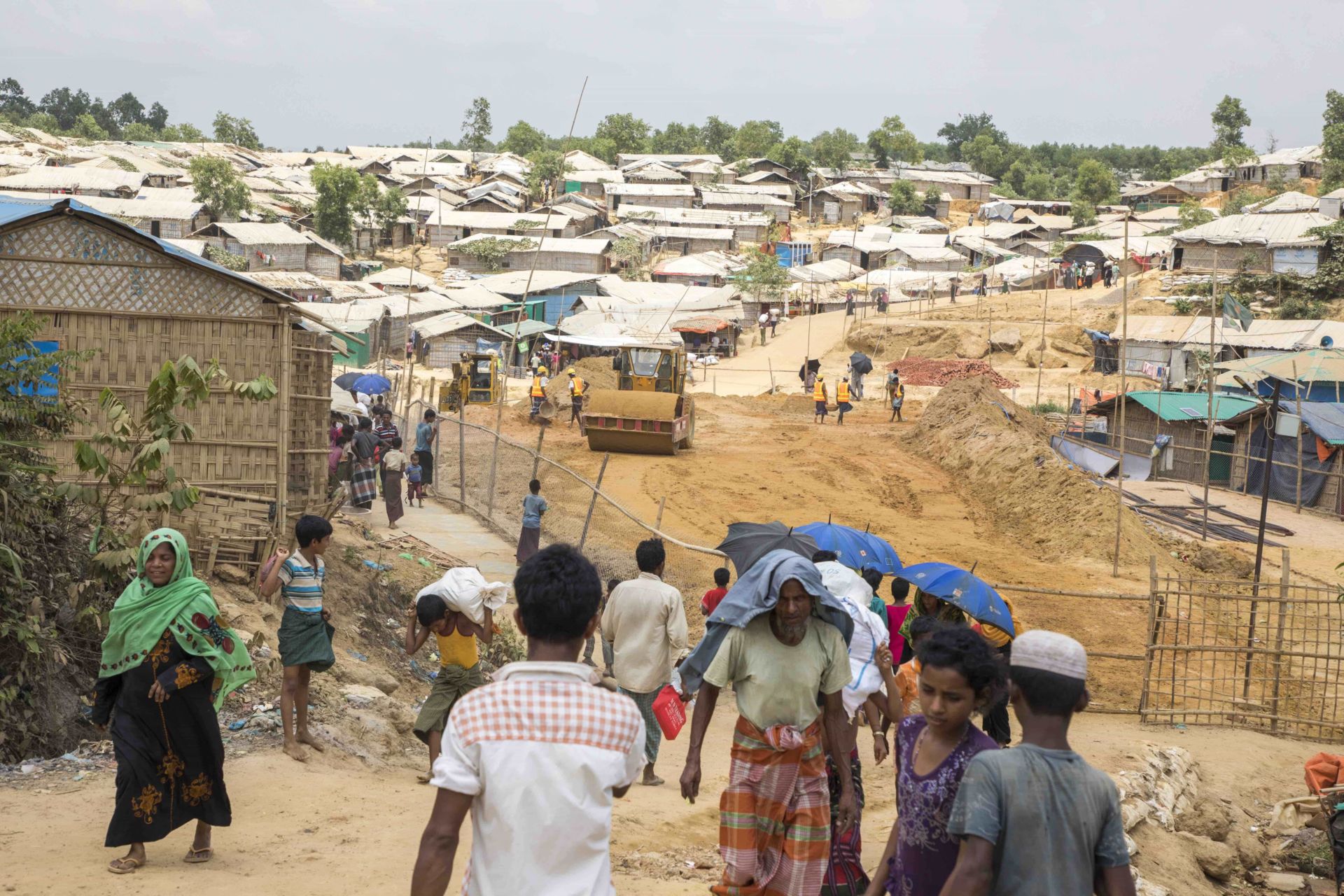
While no internationally agreed definition exists, manifestations of a protracted crisis include, inter alia, acute food insecurity and undernutrition, disruption of livelihoods and food systems, increasing rates of morbidity and mortality, and increased displacements. Protracted crises affect the four dimensions of food security — availability, access, stability, and utilization — often overwhelming local, national, and international capacities and resources.
The Committee on World Food Security (CFS) adopted the Framework for Action for Food Security and Nutrition in Protracted Crisis (CFS-FFA) in 2015 to guide the efforts of the international community to address food insecurity and malnutrition in situations of protracted crises or at risk of evolving into protracted crises. The CFS-FFA is also relevant to countries and communities hosting refugees and displaced populations. The Framework strives to strengthen policy coherence in line with the progressive realization of the right to adequate food in the context of national food security, by fostering the coordination of policies and actions in the fields of humanitarian assistance, development and human rights, fully consistent with the humanitarian-development-peace nexus.

A renewed call to apply the CFS-FFA was made in April 2020 by Miguel Vargas Maldonado, Dominican Republic Foreign Minister and President of the UN Security Council, on the second anniversary of the unanimous adoption of UN Security Council Resolution 2417 (2018) which drew attention to the link between armed conflict and conflict-induced food insecurity and the threat of famine.
“The Resolution was a historic step. In recognizing the explicit relationship between armed conflict and food insecurity, it gave the international community guidance for preventing conflicts from becoming food catastrophes for civilian populations. It is appropriate, in this context, to apply the Framework for Action in Protracted Crises of the Committee on World Food Security.”
— Miguel Vargas Maldonado, Dominican Republic Foreign Minister and President of the UN Security Council
A recent review of experiences and good practices in using the CFS-FFA confirmed its relevance and usefulness to impact food security and nutrition in protracted crises. The review also revealed that the CFS-FFA, where applied, has ensured the coherence and coordination of ongoing initiatives and allowed to measure progress in implementing the 2030 Agenda and the Right to Adequate Food.
The review also shows that the CFS-FFA principles have been used in many different ways across the world: such as in Ecuador to facilitate direct local purchases from family farming organizations during the confinement due to COVID-19 pandemic; in India to address malnutrition among children, adolescents and women in tribal areas through promoting indigenous knowledge and practices; in Palestine to meet immediate humanitarian needs and build resilient livelihoods of vulnerable women entrepreneurs; and in Uganda to guide interventions in refugee and internally displaced people’s camps, advocating gender responsiveness in food distributions and resolving conflicts between the host communities and the refugees over natural resources.
Related Articles: COVID-19: flattening the food insecurity curve | How multistakeholder partnerships contribute to food security and nutrition
The review yielded several good practices that contributed to success in using the CFS-FFA. Among the good practices was the participation of all actors at all levels including affected and vulnerable populations in the design, implementation and monitoring of the activities, contextualizing the CFS-FFA principles and adapting them to people’s needs. This required an open, transparent and continuous dialogue to coordinate all actors including young people at all levels and across sectors, with well-defined respective responsibilities and accountability for achieving agreed common objectives. CFS stakeholders stressed the importance of adopting a gender lens for sustainable social impact.
Stakeholders recommended making the CFS-FFA more known at all levels, in particular at the country level, with technical and financial support provided to tailor this global policy product to specific needs and circumstances of the target populations, with the translation of the CFS-FFA in local languages and the provision of training for its use. They also recommend that transparent and open mechanisms be established to coordinate the application of all eleven Principles of the CFS-FFA in accordance with the humanitarian-development-peace nexus, which requires the involvement of actors and organizations with different mandates, competencies and operational modes. The participation of affected populations in coordination mechanisms is an essential condition to ensure the relevance and coherence of planned activities. Finally, stakeholders recommended that the use of CFS-FFA be routinely monitored to measure progress in achieving the CFS vision of eliminating hunger and ensuring food security and nutrition for all.
Editor’s Note: The views expressed in this information product are those of the author and do not necessarily reflect the views of the Committee on World Food Security (CFS) or Impakter.com. — Featured Photo Credit: WFP/Rein Skulleru