


Today’s ESG Updates
- Copper’s AI Supercycle May Be More Hype Than Boom: Copper demand is still growing, but the AI-driven “supercycle” narrative may be overestimating the metal’s upside while ignoring price-driven substitution and China’s weakening consumption.
- Mexico’s Clean-Energy Push Trails Latin America as Natural Gas Fills the Gap: Mexico’s plan to expand CFE renewables is a step forward, but weak progress toward its 2030 clean-power target risks leaving it behind regional peers while deepening reliance on natural gas.
- Europe Faces Tight Window to Supply MENA’s Winter Wheat Needs: MENA importers may struggle to secure enough wheat this winter as Europe, Russia and Ukraine face constrained export capacity, with Egypt’s buying plans likely to determine how tight the market becomes.
- Indonesia Cuts Pipeline Gas Exports to Singapore by 9%: Indonesia’s temporary export cut is a small but telling signal of rising pressure to keep energy at home amid growing regional electricity demand.
Copper’s AI supercycle may be more hype than boom
At LME Week, industry experts pushed back against the increasingly bullish copper narrative, arguing that AI data centers, India’s growth story, and green-energy demand may not deliver the copper boom many expect.
LSE’s Bruce Alway said a calculation error appears to have overstated data-center copper needs, while technologies such as fiber optics reduce copper intensity inside facilities; similarly, India may be “the next China” in scale but not in copper intensity, because modern infrastructure is less metal-heavy and circularity is higher.
China is the bigger drag, where construction and home-appliance demand are weakening. Although electronics, AI, and battery manufacturing hit a record PMI (Purchasing Managers’ Index) of 59.7 in August, China’s copper consumption growth is expected to slow to 1%–1.5% toward 2030.
Meanwhile, record-high prices above $14,000/mt (megatonnes) are not simply evidence of robust demand; they are squeezing buyers, delaying price-sensitive grid projects, and accelerating substitution. Aurubis’ Tanja Winter said customers stopped fulfilling orders after the price spike, while long 60–120-day payment cycles strain working capital.
Aluminum substitution is intensifying at a copper-to-aluminum ratio of 4.8:1, especially in air conditioning. However, Winter cautioned that panic-driven switching can be technically and functionally poor for high-precision components.
The “perfect storm” of supply disruptions from May 2025 to August 2026 is easing, but copper concentrate markets remain tight, with smelters reportedly paying miners $1,500 per tonnes of refined copper. China’s overseas mining stakes and strong relationships with Chile and Peru give it an advantage. At the same time, Europe’s recycling push faces contradictions: OEMs demand higher recycled content but often export their own factory scrap to China.
Overall, copper’s structural bull case is real but narrower and more price-elastic than headline narratives suggest: demand growth may still be positive, but if China slows, buyers defer purchases, and aluminum substitution accelerates, high prices could partly destroy the very demand they are meant to signal.
The more investable question, therefore, is not whether copper is scarce, but whether supply discipline and smelter economics can sustain prices without triggering demand destruction and faster material substitution.
Klimado – Navigating climate complexity just got easier. Klimado offers a user-friendly platform for tracking local and global environmental shifts, making it an essential tool for climate-aware individuals and organizations.
Mexico’s clean-energy push trails Latin America as natural gas fills the gap
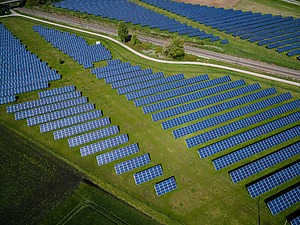
Mexico plans to nearly double its state-owned utilities’ solar and wind capacity to about 7.1GW by 2030, but clean generation is projected to rise only 9%, while gas-fired output surges 72%.
Fiscal constraints and reliance on US$16.7 billion in mixed public-private contracts are slowing deployment, leaving Mexico’s 36% clean-power target well behind Brazil, Colombia, and Chile.
The plan signals meaningful renewable expansion, yet without faster delivery and a clearer gas-transition pathway, Mexico risks locking in fossil-fuel dependence just as regional competitors position themselves for green investment.
Caption: Solar panel array. Photo Credit: Andreas Gücklhorn on Unsplash
Related Articles
Here is a list of articles selected by our Editorial Board that have gained significant interest from the public:
Europe faces tight window to supply MENA’s winter wheat needs

Middle East and North African buyers may need 5.56–7.06 million tonnes of wheat for November–December loading, but EU, Russian and Ukrainian export capacity looks tight, with disrupted Black Sea logistics, seasonal slowdowns and weather risks limiting supply.
Egypt’s potential purchases of up to 3.5 million tonnes are the key swing factor, while southern-hemisphere new crop is unlikely to arrive in bulk before late December.
This suggests a market vulnerable to price and freight volatility, as even a modest extra demand or a shipping disruption could quickly tighten availability and lift costs for import-dependent MENA states.
Caption: Boundless fields of wheat in eastern Ukraine. The display shows how many kWh have already been charged. Photo Credit: Polina Rytova on Unsplash

Indonesia cuts pipeline gas exports to Singapore by 9%

Indonesia has cut pipeline gas exports to Singapore by 31 mmscfd (Million Standard Cubic Feet per Day), diverting gas from Natuna and Sumatra to power Batam, Bintan and Sumatra after recent blackouts.
Singapore says the 18-day reduction is under 2% of its daily gas demand and can import more LNG if needed, though importers may pursue contractual remedies.
The move underscores Indonesia’s growing emphasis on domestic energy security, while highlighting Singapore’s acute reliance on imported gas for electricity.
Caption: Underground gas pipe. Photo Credit: Photo by Rose Galloway Green on Unsplash
Editor’s Note: The opinions expressed here by the authors are their own, not those of impakter.com — Cover Photo Credit: ERIK SETH on Unsplash