
On a summer day in San Francisco, I found myself wandering China Town with my roommate. Vibrant colors lined the street, and the wafting aroma of delicious food from seemingly endless restaurants filled the air. One shop, however, caught our eye, a tea shop. Inside, the walls were lined with glass containers of tea decorated with Chinese calligraphy. We were met by the friendly shop owner and invited to have a seat at the large dark wooden bar. He carefully placed two ceramic navy blue teacups in front of us, and asked “What kind of tea are you looking for?” Far from being tea connoisseurs, we deferred to his expert advice. The next three hours were an education in the art of tea: proper sipping methods, how to waft the aroma, the importance of rinsing tea to “wake it up”, and the health benefits for each type of tea. The process was by no means trivial, and in fact, there was an allure to the ritual of tea drinking. Tea is a combination of artistry and science that has persisted for centuries, ascending to a level of cultural sacredness across the globe.
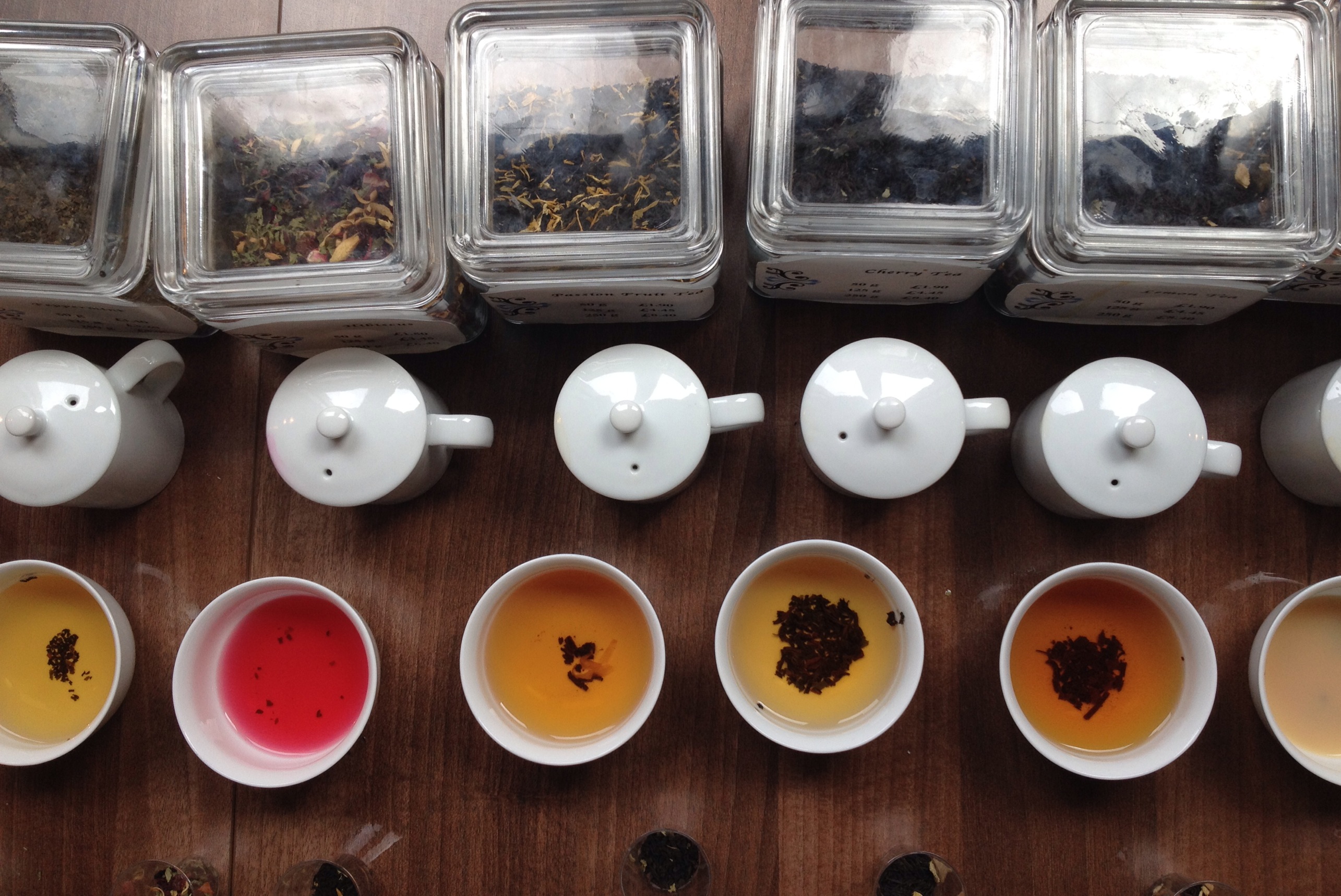 In the photo: Carefully placed and steeped, tea tasting remains just one of the many examples of tea as a beautiful ritual– photo credit to Terry Madeley
Tea is as an art form that entices the senses and a revered elixir with innumerable health benefits. Excluding water, tea is the most widely consumed beverage in the world, with a global market of $20 billion. According to legend, the concept of tea was invented by Chinese Emperor Shen Nong in 2737 BCE, as leaves from a tea plant fell into his pot of boiling water. As time went on, there is evidence of tea being a sacred drink reserved for religious tradition and the upper class and not becoming a common drink, pu-erh tea, until the Tang Dynasty (618-907 CE). Tea has played a role in human progression, development, and culture for over a millennium and traces of its sacred beginnings can still be observed today. In San Francisco, an ocean away from its origins, the mystique of tea culture was evident, strong, and captivating. Today, tea remains a beloved drink, providing an intersection of the ancient with the modern. How would society respond if tea as we know it disappeared: health benefits degraded, taste inconsistent or bitter, and unaffordable. Unfortunately, this is a rapidly developing reality in most of the world’s largest tea producing regions.
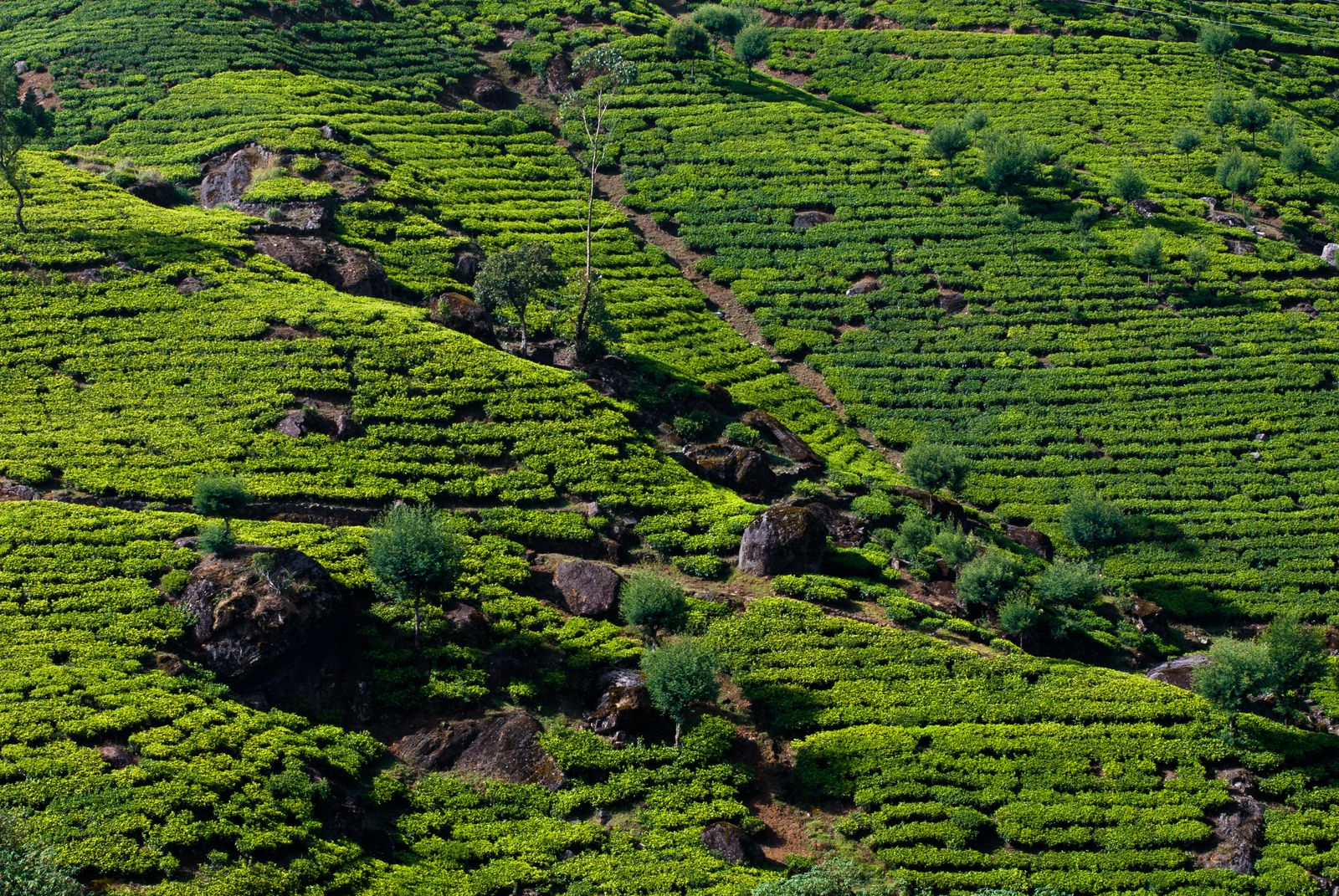 In the photo: Tea farm in Sri Lanka, home of Ceylon Tea, may be at serious risk of the effects of climate change– photo credit to Pavel Dobrovsky
Climate and global change are rapidly altering the environment around us, with far-reaching implications. According to Intergovernmental Panel on Climate Change’s Fifth Assessment Report, rainfall variability has increased with an observed surge in extreme precipitation, especially related to the summer monsoon. This may have a tremendous impact on tea. For example, Sri Lanka is the world’s third leading exporter of black tea. Sri Lankan Ceylon Tea boasts being some of the cleanest and most ethically grown tea in the world, with high quality standards and less pesticide usage. However, research suggests that the Sri Lankan wet and dry seasons may increase by 10% in length as a result of climate change. Consequent increases in the erosion of top soil in addition to drought damage could be devastating to the Sri Lankan tea industry. Another example is China, the world’s leading tea producer with the largest population of tea growers at 80 million. However, China has 7% of the global arable land, with 22% of the world’s population, a large deficit and a difficult challenge for farmers. Additionally, most tea farms are located in high-risk areas for climate change, and in recent years there has been an increase in land area for tea farms, but a decrease in yield. Although this disparity cannot be directly attributed to climate change, the numbers remain troubling. Climate change poses two existential threats to tea (1) degraded flavor and health benefits, in short, making tea a shell of its former self and (2) economic ruin for tea growers, as prices increase from reduced quantity and/or quality.
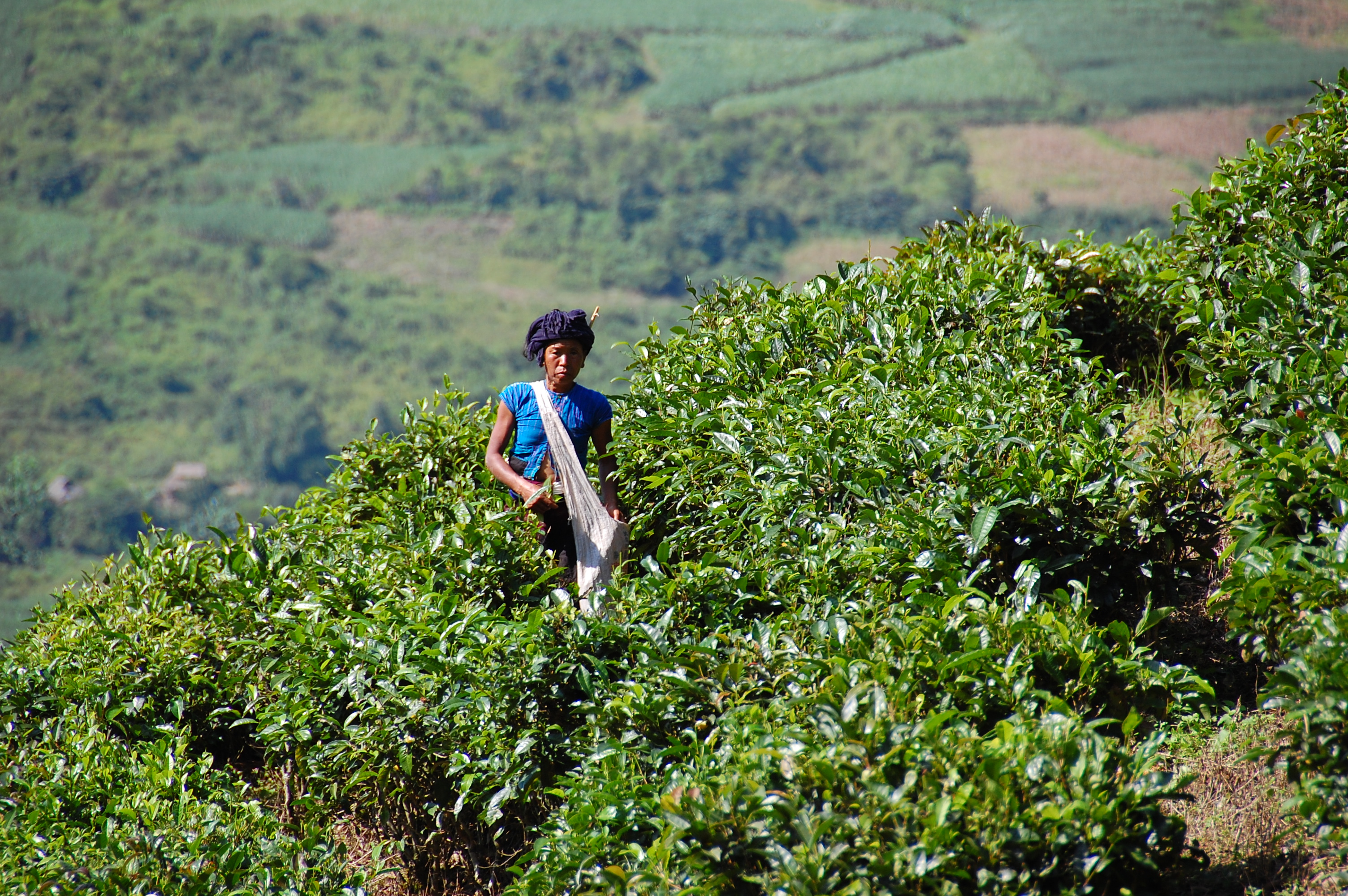 In the photo: Tea worker in Yunnan Province China collecting tea in terraced fields, a practice at high risk for the effects of climate change — photo credit to Morgann.
An increase in rainfall will dilute the flavor of tea and its valued health properties. Conversely, drought will enhance flavor and health properties. Both functional traits of tea come from secondary metabolite compounds. In regards to flavor, these properties include bitterness, sweetness, and astringency. In regards to health, these properties include stimulants, antioxidants, anti-inflammatories, and cardio-protective compounds. Recent studies suggest that the summer monsoon can result in a decrease in the compounds responsible for health benefits by 50%. Generally, bitterness can be directly related to health properties; and in fact, human adaptation has hardwired us to associate bitterness with properties that are either therapeutic or toxic. However, it is not so black and white, as secondary metabolite levels are also influenced by geographic location, cultivar, herbivory, season, shade, soil, slope, water availability, management, and pest pressure. Therefore, understanding the entirety of the relationship between tea and climate change is a challenge.
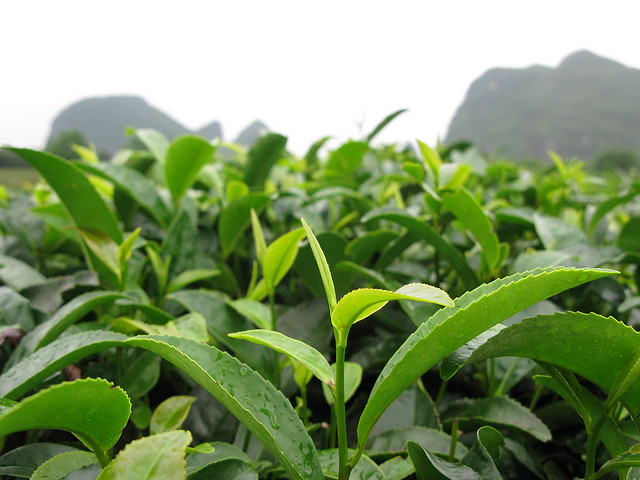
In the photo: Tea plant (Camellia sinensis)– photo credit to Alan
Global and climate change prompt an emerging threat to the tea industry and all stakeholders involved; however, the utter silence involving the threat is striking. Research by the FAO suggests that international prices of tea will increase as a result of decreased yields due to the effects of climate change by as much as 26%. Fortunately, the United Nations Food & Agriculture Organization (FAO)/Intergovernmental Group on Tea aims to research issues to develop policy and form standards for member nations to help safeguard the tea industry with respect to climate change and other issues. Therefore, a dialogue exists but the problem remains.
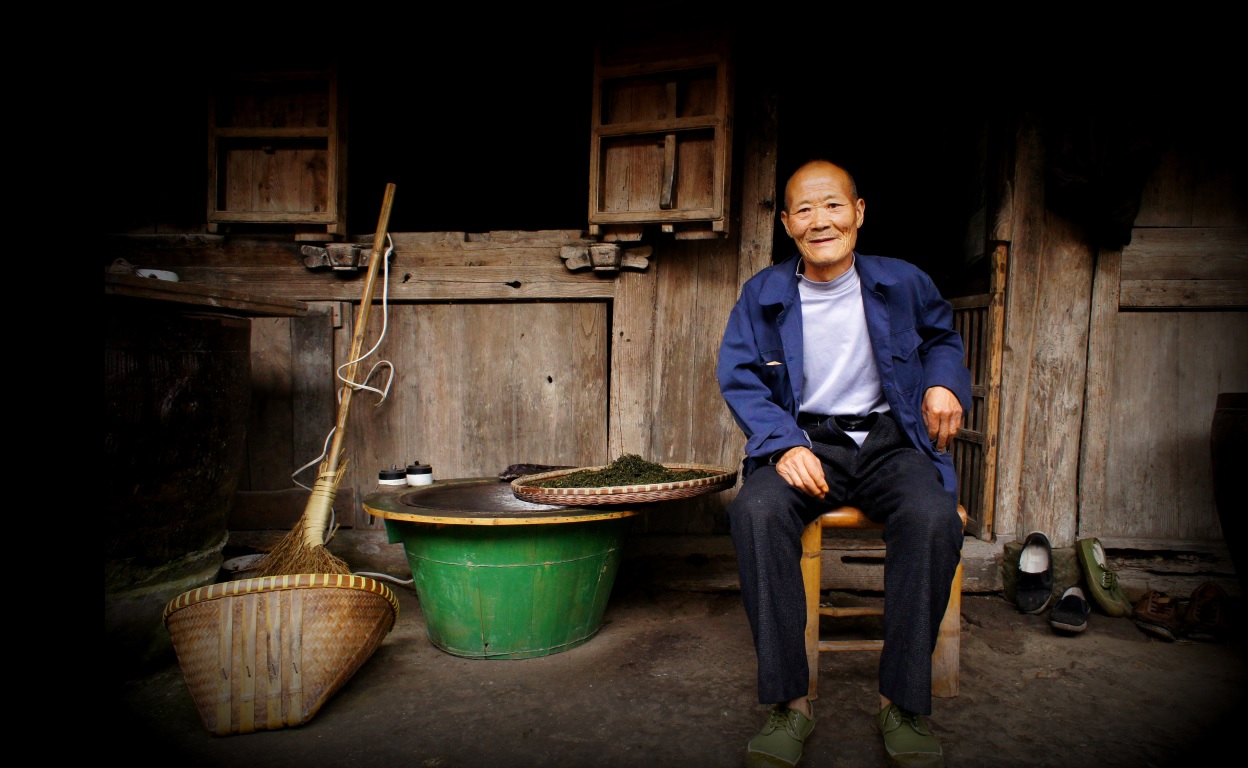 In the photo: Smallholder tea farmer in Zhejiang, China– photo credit to Mark Heath
Experts, scientists, and intergovernmental initiatives are aware of the growing issue, but apart from the smallholders and communities directly affected, the public does not seem to be aware of the relationship between tea and climate change. The livelihoods of small shareholders are at most risk of degradation as a result of the effects of climate change. Tea smallholders represent more than 60% of world tea production and 70% of world tea area; however, smallholder tea farmers remain in the lowest economic condition of the tea value chain. Difficult to quantify, and seemingly impossible at times to communicate, international communities must develop robust adaptation strategies to help safeguard the tea economy and protect smallholders whose work remains the backbone of the tea industry and has defined regional cultural identities for centuries.
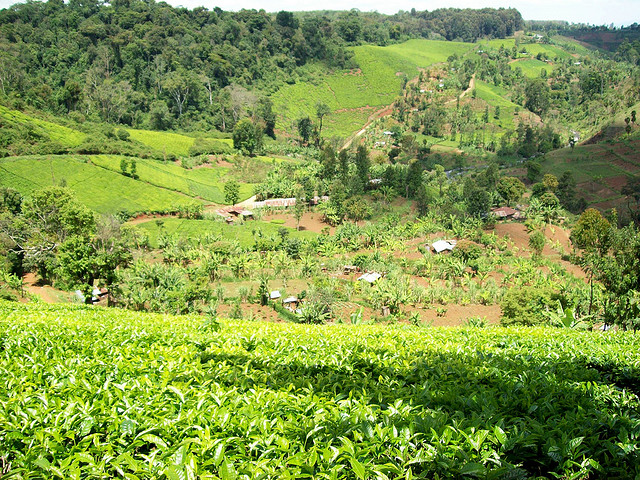
In the photo: Agroforestry techniques being used in Kenya are more resilient to the effects of climate change– photo credit to Trees ForTheFuture
Beginning to solve these issues requires interdisciplinary muti-lateral efforts to help bridge knowledge gaps in the science as well as socio-cultural divides. In regards to sustainable development and conservation initiatives, the scale of adaptive management may be crucial. Specifically, regional directives with a bottom-up approach may be the most effective, as these will be more likely to take into account invaluable traditional ecological knowledge of tea farmers whose families may have been working the land for generations and, therefore, may have already perceived a change in their tea. Top-down initiatives may be more likely to overlook this information and introduce projects not tailored for specific regions and tea farms. Furthermore, bottom-up approaches may help incorporate agro-forestry techniques which exist in select smallholder farms into broader regional planning directives, a new standard breaking away from modern terraced methods that are ill-suited to cope with climate change.
San Francisco, Mumbai, Beijing, London, Colombo- tea has become deeply embedded into global communities, developing strong cultural resonance. As consumers, we must be critical of our perception of the ubiquitous. Within this perception, lies the danger of inaction that may threaten livelihoods of those directly impacted by climate and global change. In order to develop regional holistic solutions for adaptive management, this issue requires further research, awareness, and sustained productive dialogue. If we are able to successfully carry out such plans with tea, we may be able to facilitate a nuanced dynamic bringing modernity to the ancient through conservation.
Footnote: The FAO Intergovernmental Group (IGG) on Tea represents a forum for intergovernmental consultation and exchange on trends in production, consumption, trade and prices of tea, including regular appraisal of the global market situation and short term outlook. The Group, under FAO auspices, considers changes in national policies and examines their international effects as pertaining to the current and prospective market situation.