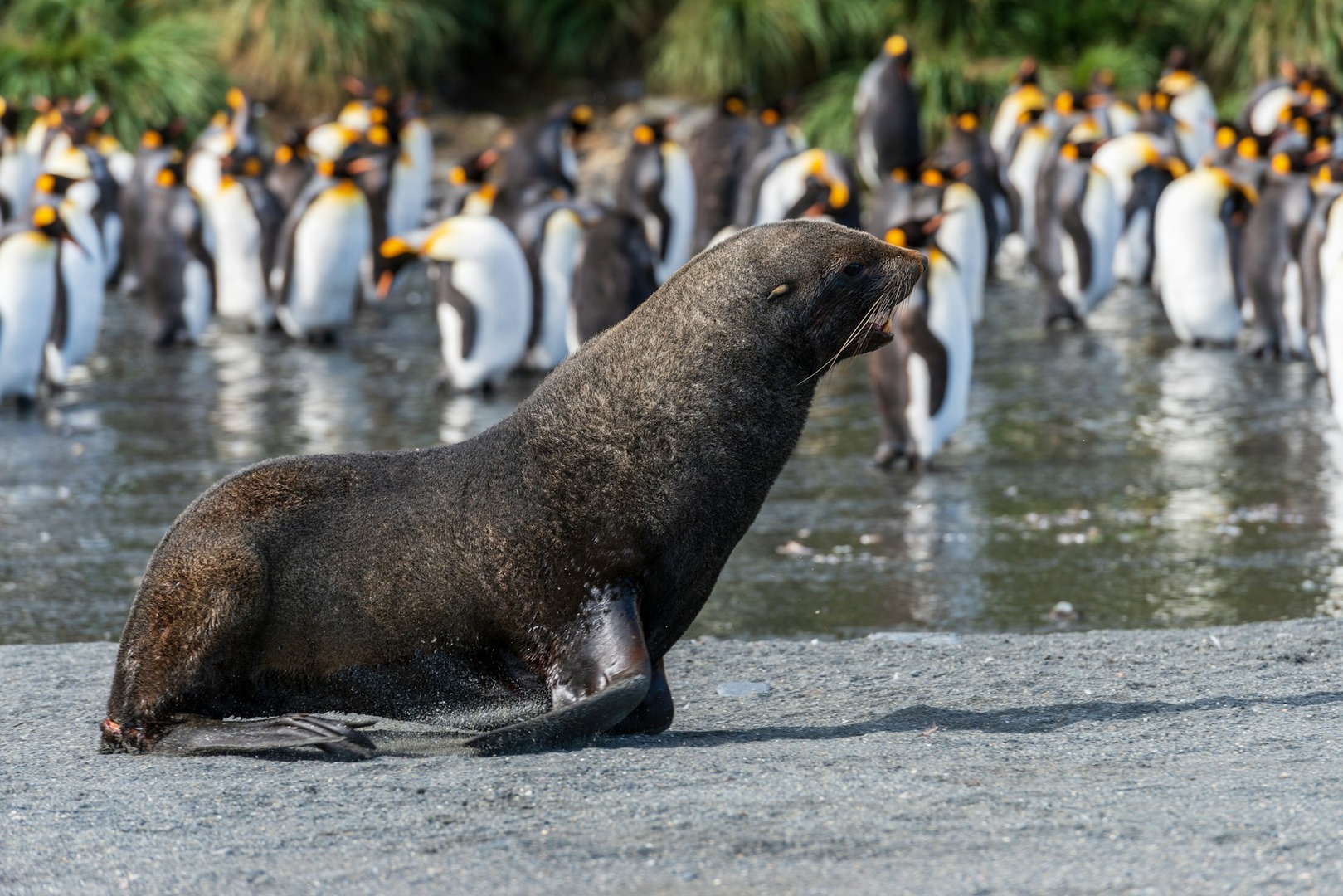
The emperor penguin and Antarctic fur seal are now on the IUCN Red List of Threatened Species. As the IUCN explains, climate change is to blame for the declines in both species.
Warming temperatures are altering sea-ice conditions in ways projected to halve emperor penguin populations by the 2080s. For Antarctic fur seals, climate change is disrupting marine ecosystems and reducing food availability, contributing to a roughly 50% population decline since 2000.
Dr Grethel Aguilar, IUCN Director General, says that, “[t]hese important findings should spur us into action across all sectors and levels of society to decisively address climate change. The declines of the emperor penguin and Antarctic fur seal on the IUCN Red List are a wake-up call on the realities of climate change.”
Emperor Penguins at Risk
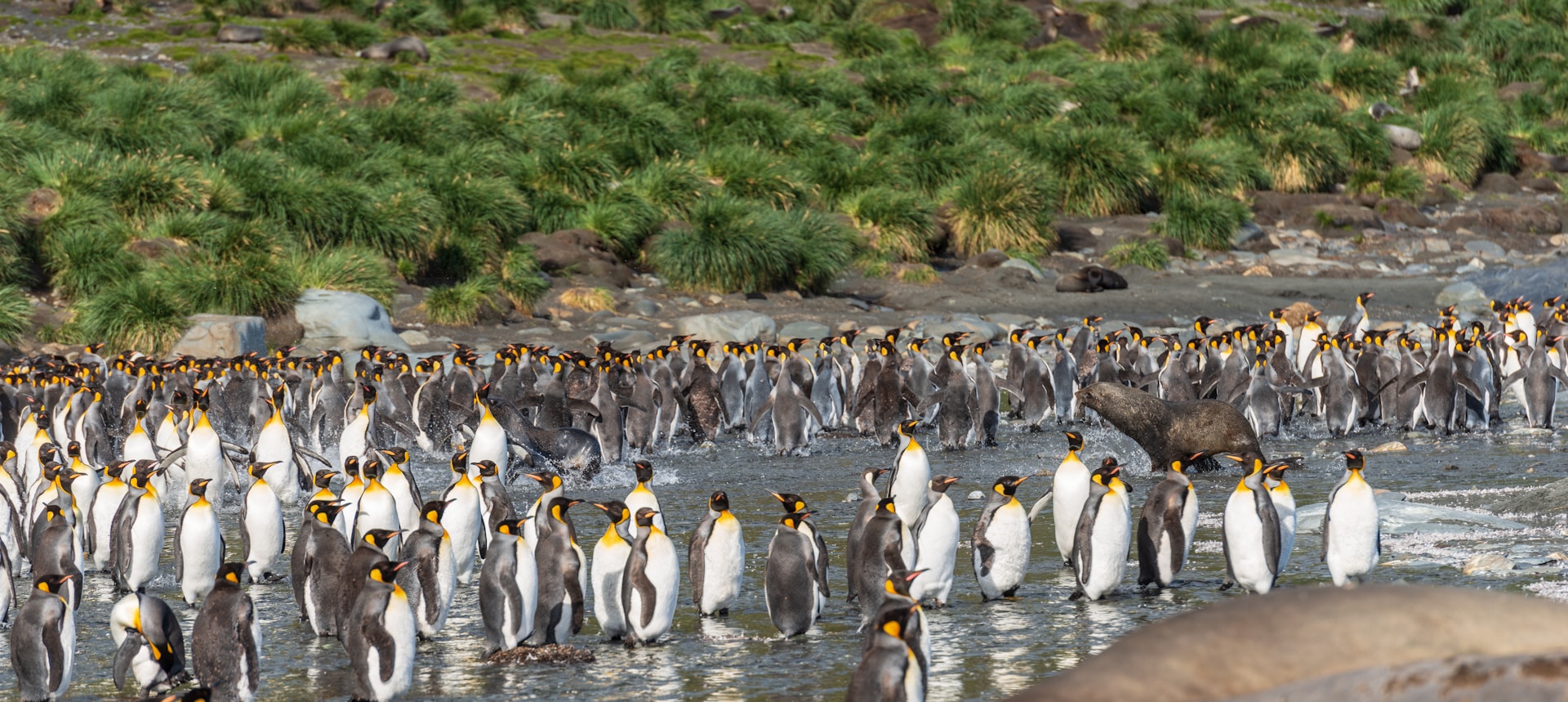
The emperor penguin (Aptenodytes forsteri) has moved from Near Threatened to Endangered on the IUCN Red List as a result of projections that its population will be halved by 2080. Satellite images indicate an estimated loss of approximately 10% of the population between 2009 and 2018 alone, equating to more than 20,000 adult penguins.
The early break-up and loss of sea-ice is primarily responsible for this decrease, and numbers have hit record lows since 2016. Emperor penguins require fast ice, which refers to “sea-ice that is ‘fastened’ to the coastline, ocean floor or grounded icebergs – as habitat for their chicks and during their moulting season, when they are not waterproof.”
If this ice breaks up too early, there may be deadly results. Population modelling considering various future climate scenarios indicates that emperor penguin populations are at risk of rapid decline in this century if there are no abrupt or dramatic reductions in greenhouse gas emissions.
Martin Harper, the CEO of BirdLife International, was responsible for coordinating the emperor penguin assessment as the authority for birds on the IUCN Red List. He urgently warns that “[p]enguins are already among the most threatened birds on Earth. The emperor penguin’s move to Endangered is a stark warning: climate change is accelerating the extinction crisis before our eyes.”
Echoing these sentiments, Dr Phillip Trathan, member of the IUCN SSC Penguin Specialist Group, who also worked on the assessment, shares that:
“After careful consideration of different possible threats, we concluded that human-induced climate change poses the most significant threat to emperor penguins. Early sea-ice break-up in spring is already affecting colonies around the Antarctic, and further changes in sea-ice will continue to affect their breeding, feeding and moulting habitat. Emperor penguins are a sentinel species that tell us about our changing world and how well we are controlling greenhouse gas emissions that lead to climate change.”
Antarctic fur seals decline amid fierce competition
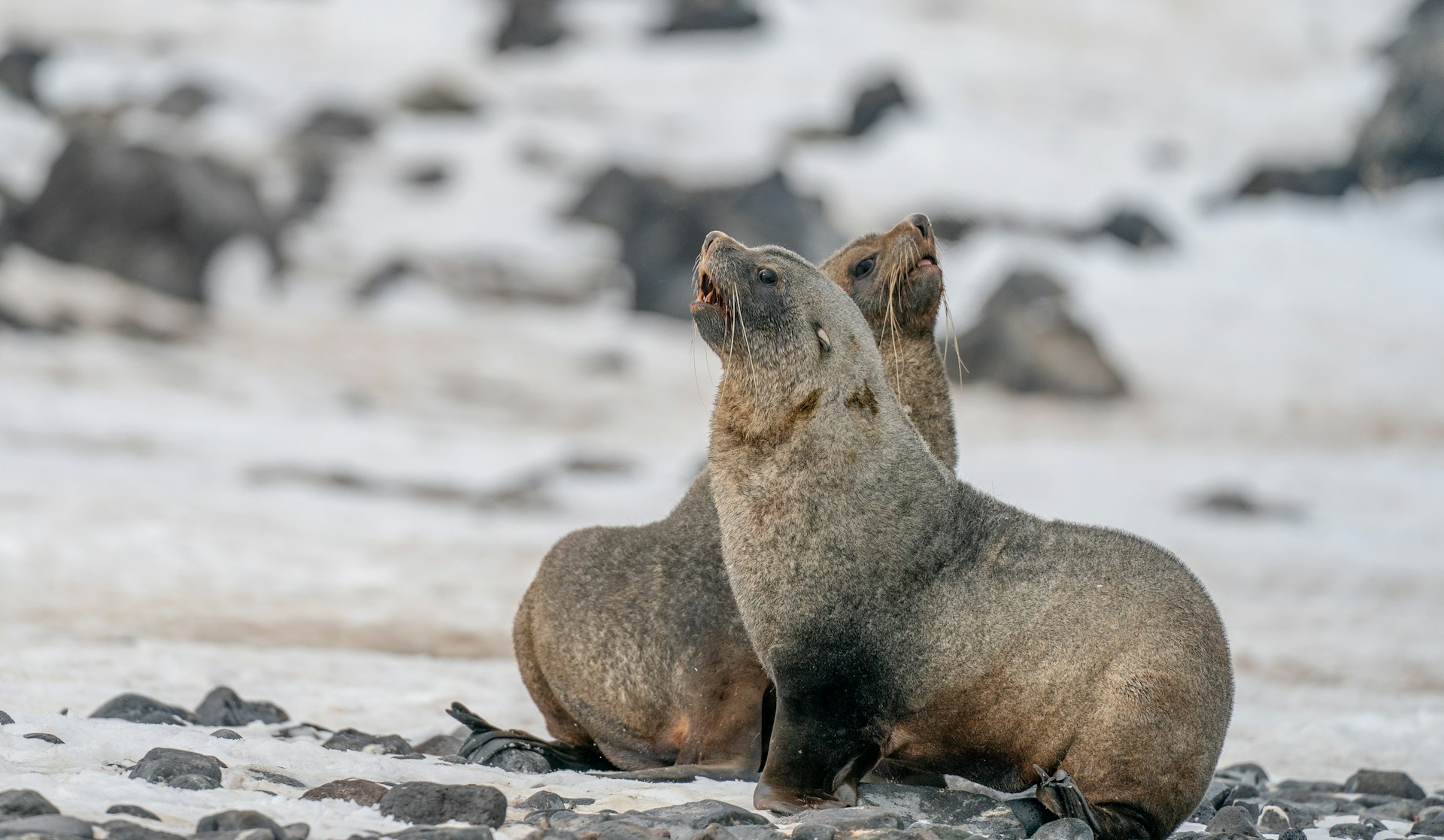
Now endangered, the Antarctic fur seal (Arctocephalus gazella) was previously listed under Least Concern on the IUCN Red List. Its population has decreased by more than 50% from an estimated 2,187,000 mature seals in 1999 to 944,000 in 2025. Climate change is responsible for this decline as well.
Rising ocean temperatures and shrinking sea-ice lead to krill being pushed to greater ocean depths in search of colder water, resulting in food scarcity for seals. Krill shortages at South Georgia have significantly reduced the survival rates of pups in their first year, leading to an ageing breeding population.
The shrinking population of this species is also threatened by predation by killer whales and leopard seals, alongside competition with recovering baleen whale populations that target the same krill.
Related Articles
Here is a list of articles selected by our Editorial Board that have gained significant interest from the public:
Avian flu threatens mammals
Additionally, the southern elephant seal (Mirounga leonina) has moved from Least Concern to Vulnerable on the IUCN Red List. This shift follows a decline caused by Highly Pathogenic Avian Influenza (HPAI). From 2020, there has been a significant increase in the global prevalence of avian flu, and it has since spread to mammals.
The disease has “affected four of the five major subpopulations, killing more than 90% of newborn pups in some colonies and seriously impacting adult females, which spend more time on the beaches than males,” the IUCN explains.
There are growing concerns that disease-related mortalities of marine mammals will increase alongside warming climates. This is especially true for animals in polar regions, as they lack previous exposure to pathogens. Animals that live particularly close together in colonies, such as southern elephant seals, are even more vulnerable to diseases.
Dr Kit Kovacs, Co-Chair of the IUCN SSC Pinniped Specialist Group, adds that:
“These assessments sound an alarm for all Antarctic seals, as we are concerned about how environmental changes are affecting all ice-dependent species. Monitoring of the effects of climate change in Antarctica is urgently needed. While logistically challenging and expensive to access this part of the world, the IUCN SSC Pinniped Specialist Group calls for the collection of more data on seals in the region by all of the Parties to the Treaty.”
Time is running out
The findings further emphasise the adverse effects of climate change on biodiversity, and as stated by Dr Kathleen Flower, Vice President of Biodiversity Science at Conservation International, the decline of these species “underscores how quickly ecosystems are being degraded and how the compounding impacts of warming accelerate food scarcity, emerging disease, and habitat loss.”
The result, Dr Flower says, is “rapidly increasing extinction risk for many species,” adding that the Red List is an “essential tool that “must be adequately resourced and strengthened with climate‑informed science to identify risks and help reduce climate‑driven extinctions.”
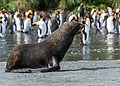
Editor’s Note: The opinions expressed here by the authors are their own, not those of Impakter.com — In the Featured Photo: Seal and Penguins. Featured Photo Credit: Paul Carroll