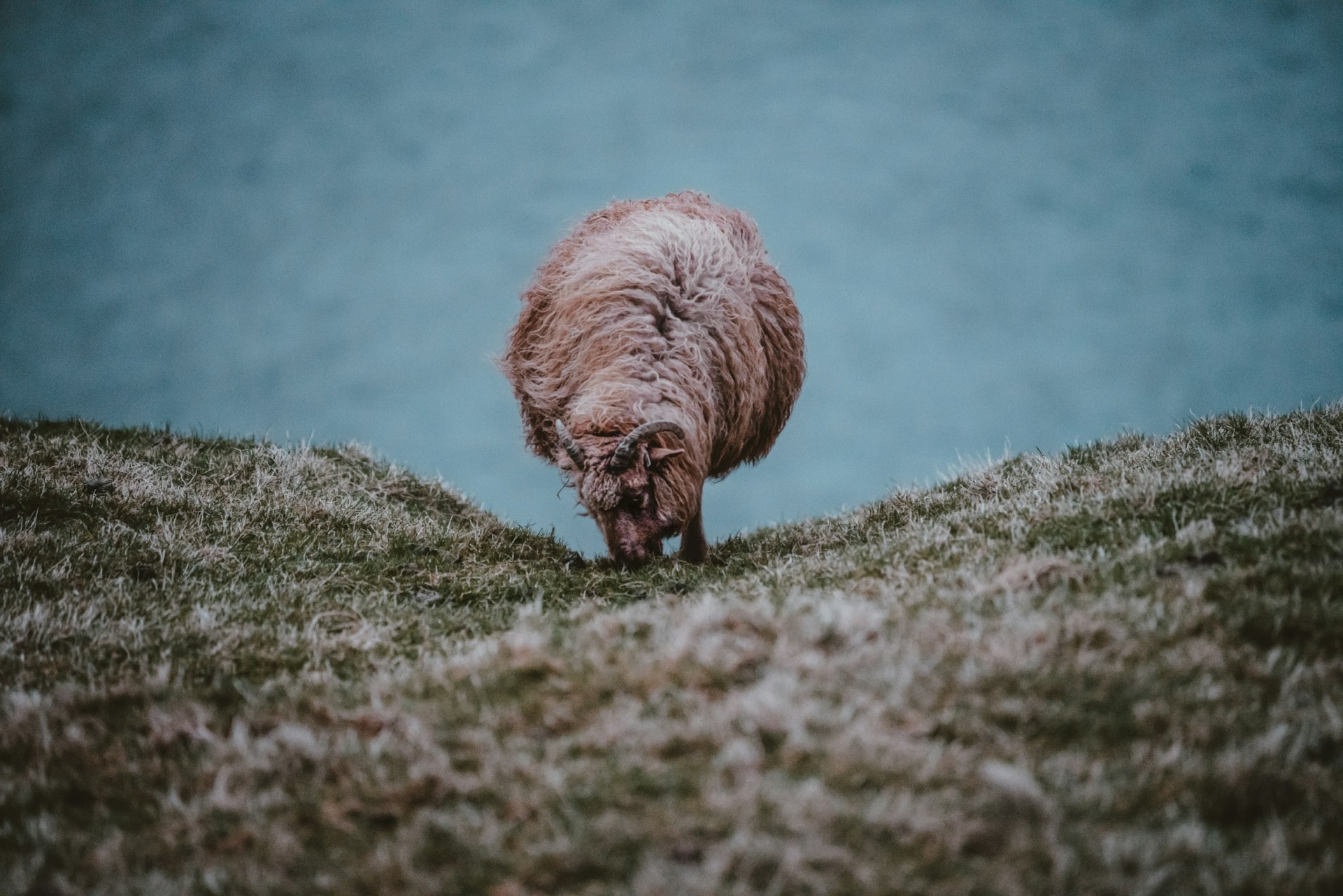
As global temperatures rise, the vast grasslands that support billions of livestock and millions of people’s livelihoods are facing threats like never before. According to a recent Potsdam Institute for Climate Impact Research (PIK) study, by the end of the century, there may not be enough suitable areas for cows, sheep, and goats to graze. This alarming projection underscored the urgency to address climate change to safeguard food security and vulnerable communities.
The PIK study identifies the concept of a “safe climatic space” for cattle, sheep, and goat grazing. These systems, which cover about a third of Earth’s surface, rely on specific environmental conditions to thrive. Researchers defined this safe space based on ranges of key factors: temperatures between -3°C and 29°C, annual rainfall from 50 to 2,627 millimeters, humidity levels of 39% to 67%, and wind speeds of 1 to 6 meters per second. If the conditions don’t match, grasslands become less viable for sustaining large herds, leading to reduced productivity and potential ecosystem collapse.

As stated in the study, climate change could result in a net decline of 36% to 50% in areas suitable for grazing by 2100. This contraction would affect up to 1.6 billion grazing animals worldwide, and put the livelihoods of more than 100 million pastoralists at risk. Grasslands represent the world’s largest agricultural production system, making their decrease a critical concern for meat and dairy supplies, which already account for around 14.5% of global greenhouse gas emissions as mentioned by the UN Food and Agriculture Organization in their report.
Based on the “safe climatic space” framework (rising temperatures and changing weather conditions), the research shows that Africa is particularly vulnerable regarding both variables. Temperatures on the continent are already close to the upper safety limits, and projections show that African grasslands could shrink by 16% — in a low emissions scenario. If emissions continue to rise, losses could be as high as 65%. Some grazing areas are expected to shift southward from regions like the Ethiopian highlands, East African Rift Valley, Kalahari Basin, and Congo Basin. However, as these grazing areas shift, the coastal grazing areas won’t have anywhere to move.

The issues spread far beyond agriculture. PIK researcher Chaohui Li says that these changes will disproportionately affect low-income countries already struggling with hunger, economic instability, political fragility, and gender inequality. From 51% to 81% of impacted populations live in such nations, where pastoralism is essential for survival. Traditional adaptation strategies, such as switching species or migrating herds, may prove ineffective against such major shifts.
Maximilian Kotz, another co-author, points out the deep environmental dependence of these systems:
“Grassland-based grazing is highly dependent on the environment, including things like temperature, humidity, and water availability. What we see is that climate change is going to reduce the spaces in which grazing can thrive, fundamentally challenging farming practices that have existed for centuries.”
Related Articles
Here is a list of articles selected by our Editorial Board that have gained significant interest from the public:
According to the PIK study researchers, the most effective way to reduce the potential damage to grasslands is rapid emissions reduction by transitioning away from fossil fuels. Without swift global action to curb greenhouse gases, the contraction of suitable grazing areas could become irreversible, threatening food security on a massive scale and worsening problems in already weak regions.
Editor’s Note: The opinions expressed here by the authors are their own, not those of impakter.com — Cover Photo Credit: Annie Spratt