Impakter
  • Environment
    • Biodiversity
    • Climate Change
    • Circular Economy
    • Energy
  • FINANCE
    • ESG News
    • Sustainable Finance
    • Business
  • TECH
    • Start-up
    • AI & Machine Learning
    • Green Tech
  • Industry News
    • Entertainment
    • Food and Agriculture
    • Health
    • Politics & Foreign Affairs
    • Philanthropy
    • Science
    • Sport
  • Editorial Series
    • SDGs Series
    • Shape Your Future
    • Sustainable Cities
      • Copenhagen
      • San Francisco
      • Seattle
      • Sydney
  • About us
    • Company
    • Team
    • Global Leaders
    • Partners
    • Write for Impakter
    • Contact Us
    • Privacy Policy
No Result
View All Result
Impakter logo
No Result
View All Result
Cash Transfers, a New Way to Provide Aid

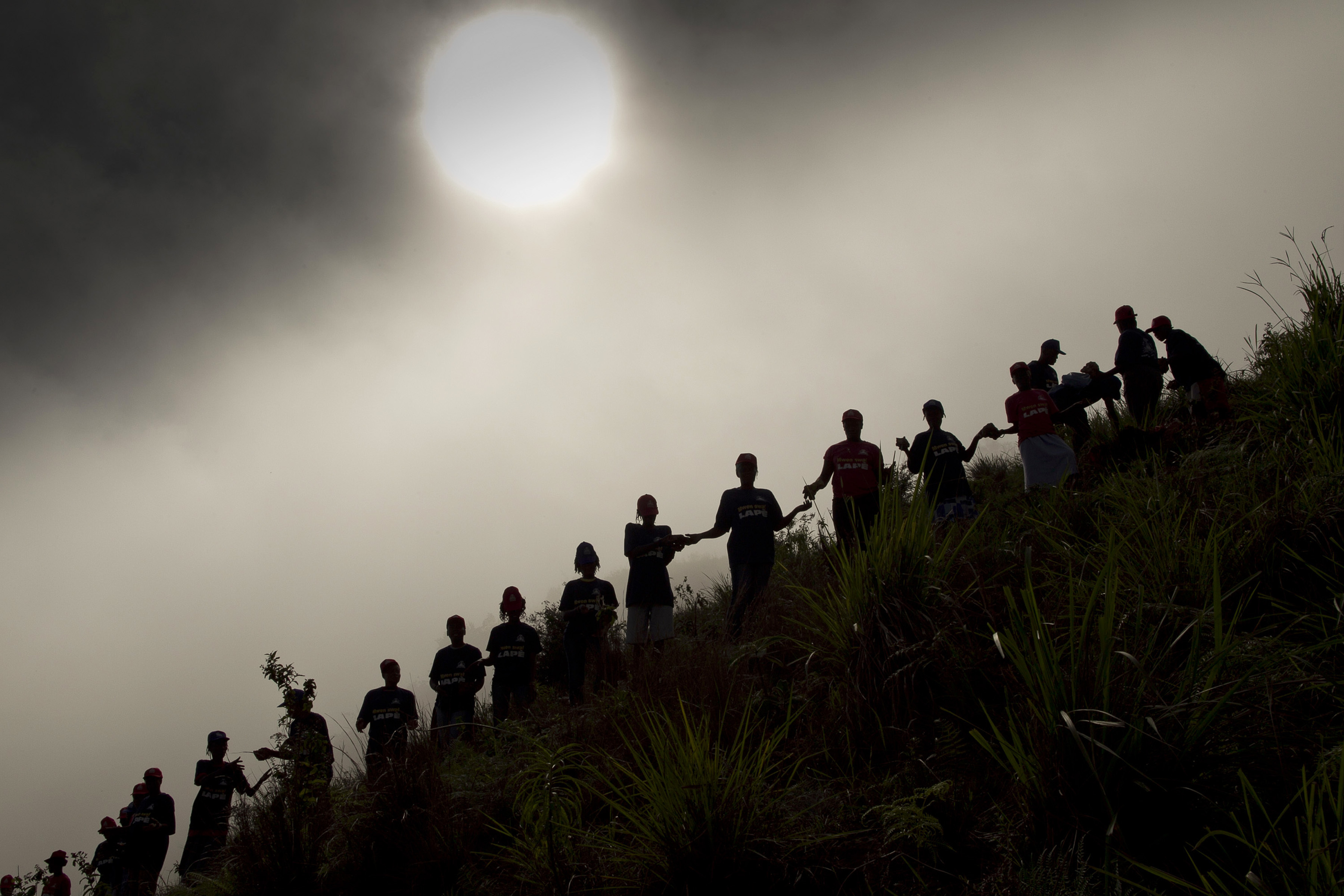
Workers pass rocks hand to hand along a line. The United Nations Mission in Haiti's Community Violence Reduction program is employing 1345 local residents in a Cash for Work program building rock walls and planting vegetation as a way of saving arable land and avoiding flooding in lower areas. Photo Logan Abassi UN/MINUSTAH

Cash Transfers, a New Way to Provide Aid

Rodrigue Vinet - Head of the Knowledge Management and Capacity Building for Action and SupportbyRodrigue Vinet - Head of the Knowledge Management and Capacity Building for Action and Support
September 12, 2016
in Philanthropy, United Nations
1

Cash Based Programmes

Strengthening the resilience of agricultural livelihoods to adverse climate events and economic shocks is a corporate priority under FAO’s current Strategic Framework, as is linking social protection programmes (including cash-based transfers) with agricultural productive outcomes. Such schemes are associated with agriculture and food security programmes that promote local markets and decent rural employment, as well as increasing access to agricultural inputs, goods, services and essential infrastructures by rural populations.

Used within emergency and rehabilitation contexts, cash-based transfer programmes are embedded within and support longer-term development and social protection initiatives.  These programmes provide opportunities to create strategic partnerships with local authorities, relevant ministries and civil society; strengthen and promote linkages with the private sector (i.e. traders, producers, financial institutions); and at the same time provide the affected populations with a sense of empowerment and dignity by allowing them to choose the goods and services they need and prefer.

Requests both by donors and recipient countries to widen the modalities for the delivery of assistance to beneficiaries, especially in crisis risk management, humanitarian and transition programming, have led to the growing use of cash transfers and voucher-based schemes by FAO – in a total of 42 countries since 2001.  The organization chooses the most appropriate type of transfer tool following a needs assessment, market analysis and review of response options and capacities.  There are four main types of cash-based transfers:

  • Unconditional cash transfers – cash is given to recipients without stipulation
  • Conditional cash transfers – cash is given to recipients based on a stipulation (e.g. a day’s work on a public infrastructure project)
  • Cash vouchers – the voucher entitles the recipient to buy a specific value of commodities or services at shops participating in the project
  • Commodity vouchers – the voucher is exchanged for a fixed quantity of commodities (e.g. seeds, agricultural tools, inputs) or services from traders participating in the project, often in the setting of an agricultural input trade fairs.

Related article: “AN EMPOWERING PATH” 


1500 workers in UNDP's Cash for Work program get paid every 15 days at the Sant Triyaj Fatra in the Kafoufey neighborhood of Port-au-Prince after which they cannot work for the program again as there is a 6000 person waiting list to become a street cleaner. Each worker is paid a little over minimum wage at 180 Haitian Gourdes per day.

In the Photo: Haiti “Cash for Work” participants receive payment. Photo Credit: UN Photo/Sophia Paris 

The May 2016 World Humanitarian Summit and the adoption of the commitments (known as the Grand Bargain) designed to improve the world’s approach to humanitarian and development challenges, reaffirmed the need to put people at the center by building community resilience through, among other things, increasing cash-based programming and using it as “the preferred and default method of support.”  Within this framework, FAO has committed to: (1) operationalize the goal of cash-based delivery of assistance as a preferred method, (2) scale up programmes on cash-based and CASH+ interventions (up to a third of its humanitarian/resilience portfolio), and (3) strengthen internal capacities on cash-based programming and implementation.

An example of the type of programmes FAO has been implementing include a cash-based approach to providing assistance to vulnerable groups, such as the resilience programme in Somalia.
6808807459_1ca8473ccb_z

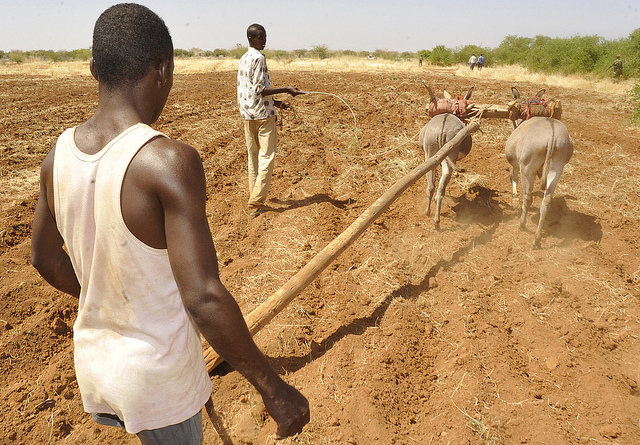
In the Photo: Dollow, Somalia – Somali small scale farmers ploughing fields using donkey traction. Photo Credit: UN Photo/Simon Maina

Case Study – Somalia

The cash for work (CFW) scheme in Somalia is part of FAO’s resilience sub-programme in the country.  While CFW projects have been undertaken by FAO Somalia since 2007, they were scaled up in 2011 in response to the famine.  These projects have a dual purpose:  (1) to provide cash support to eligible households to assure the minimum food basket, as well as to offer an alternative source of employment to mitigate the impact of crises; and (2) to rehabilitate and/or expand productive community assets (e.g. canals, feeder roads, water catchments, etc.).

In 2013 and 2014, the following activities were carried out and deliverables achieved by FAO in South Central Somalia as cited on the Evaluation of FAO’s Resilience Sub-programme in Somalia:

  • Creation of temporary employment through CFW (e.g. to expand or rehabilitate agricultural infrastructure):  temporary cash for work reached 59, 475 households with total cash transfers amounting to 4,956,586 USD, helping rehabilitate or construct 386 irrigation canals, 123 feeder roads and 517 water catchments;
  • Expansion, rehabilitation and construction of productive infrastructure through CFW or contractors:  42 km of canals were rehabilitated in South Central Somalia and Somaliland, with related small infrastructure;
  • Construction of 75 shallow wells in Somaliland and in the Dur-Dur watershed area (in collaboration with WFP).

CVR Ravine Building

In the Photo: Haitians clear and save arable land in the “Cash for Work” program. Photo Credit: UN Photo/ Logan Abassi 

In addition to these material achievements, the recent qualitative impact assessment of FAO CFW activities in Somalia carried out by Oxford Policy Management highlighted several other benefits at a community-level from this type of temporary employment:  ‘reduction of distress sales of livestock during the lean season, ability to maintain existing or build new household assets, increased households’ food security and creditworthiness of beneficiaries’.

At the same time, best practices and lessons learned from this experience and others are constantly being taken into account by FAO when designing new cash-based programmes, including them as part of larger interventions and customized as required by the situation, with a need for good coordination with other agencies and the local community; careful assessments of which type of infrastructure to rehabilitate; and careful selection of able workers to ensure the inclusion of those fit for work but marginalized.


Recommended reading: “‘THE REPROACH OF HUNGER’ BY DAVID REIFF” 


_ _

Featured Image Credit: UN Photo/Logan Abassi 
Tags: africaAidcashcash based programmedevelopmentFAOFood and Agriculture OrganizationImpakterOxford Policy ManagementRodrigue VinetSomaliathingserUNUnited NationsWorld Humanitarian Summit
Previous Post

A Poem By Sergio Sarano

Next Post

SDGs: the tyranny of an acronym?

Related Posts

soil
Biodiversity

To Prevent Ecological Collapse, We Must Start With the Soil

Soil is the single most biodiverse habitat on Earth, home to at least 59% of all species, including over 80%...

byMarcela Quintero - Associate Director General of Research Strategy and Innovation at the Alliance of Bioversity International and CIATand1 others
January 15, 2026
ESG News regarding China restricting industrial renewable exports, UN warning that US climate treaty exit harms economy, UK firms lowering wage forecasts despite inflation, Meta partnering with TerraPower for new nuclear reactors.
Business

To Save the Grid, China Forces Industries to Go Off-Network

Today’s ESG Updates China Limits Grid Exports for New Industrial Solar & Wind: China is encouraging companies to store green...

byEge Can Alparslan
January 9, 2026
ESG News regarding Trump backing sanctions on Russian oil buyers, Norway’s oil and gas output declining, dog food linked to UK emissions, Trump climate treaty exit facing legal scrutiny
Business

U.S. Targets Russian Oil Buyers with New Sanctions Bill

Today’s ESG Updates Trump Backs Sanctions on Russian Oil Buyers: A bipartisan U.S. bill would impose tariffs of up to...

byAnastasiia Barmotina
January 9, 2026
Impakter’s Most-Read Stories of 2025
Society

Impakter’s Most-Read Stories of 2025

In 2025, as in previous years, Impakter readers turned in large numbers to stories examining climate change and pollution, environmental...

byImpakter Editorial Board
December 31, 2025
US President Donald Trump
Politics & Foreign Affairs

Trumps ‘America First’ Policy in Africa: The Consequences

The Trump Administration’s “America First” doctrine prioritizes transactional relationships and reduced engagement abroad (theoretically), which has resulted in consequential shifts...

byRichard Seifman - Former World Bank Senior Health Advisor and U.S. Senior Foreign Service Officer
December 29, 2025
Freshwater
Environment

Renewable Water Availability per Person Plunges 7% in a Decade as Global Scarcity Deepens

Renewable water availability per person has continued to decline by a further 7% over the past decade, while pressure on...

byThe Food and Agriculture Organization of the United Nations (FAO)
December 23, 2025
ESG News regarding the UK’s Updated Environmental Improvement Plan, modernizing Mauritania’s railway system, the EU carbon border tax, and the EU’s cross-border energy projects
Business

UK Unveils Updated Environmental Improvement Plan

Today’s ESG Updates UK Accelerates Nature Recovery: The government commits £500m to Landscape Recovery and targets 250,000 hectares of restored...

bySarah Perras
December 1, 2025
Transboundary Animal Diseases Pose Urgent Threat to Global Food Security
Biodiversity

Transboundary Animal Diseases Pose Urgent Threat to Global Food Security

The Director-General of the Food and Agriculture Organization of the United Nations (FAO), QU Dongyu, urged Member Countries to reinforce...

byThe Food and Agriculture Organization of the United Nations (FAO)
December 1, 2025
Next Post
SDGs: the tyranny of an acronym?

SDGs: the tyranny of an acronym?

Please login to join discussion

Recent News

Green Energy Without Panels: A Homeowner’s Guide to 100% Renewable Power in 2026

Green Energy Without Panels: A Homeowner’s Guide to 100% Renewable Power in 2026

January 23, 2026
Dental Office desk

How to Spot and Prevent Embezzlement in Your Dental Office

January 23, 2026
News regarding the environmental impact of dog food

The Environmental Impact of Dog Food — and How to Reduce It

January 23, 2026
  • ESG News
  • Sustainable Finance
  • Business

© 2025 Impakter.com owned by Klimado GmbH

No Result
View All Result
  • Environment
    • Biodiversity
    • Climate Change
    • Circular Economy
    • Energy
  • FINANCE
    • ESG News
    • Sustainable Finance
    • Business
  • TECH
    • Start-up
    • AI & Machine Learning
    • Green Tech
  • Industry News
    • Entertainment
    • Food and Agriculture
    • Health
    • Politics & Foreign Affairs
    • Philanthropy
    • Science
    • Sport
  • Editorial Series
    • SDGs Series
    • Shape Your Future
    • Sustainable Cities
      • Copenhagen
      • San Francisco
      • Seattle
      • Sydney
  • About us
    • Company
    • Team
    • Global Leaders
    • Partners
    • Write for Impakter
    • Contact Us
    • Privacy Policy

© 2025 Impakter.com owned by Klimado GmbH