As part of their five-month investigation following last year’s UN Climate Change Conference in Glasgow, the Guardian’s climate journalists pieced together the clearest possible picture of planned future oil and gas projects. Based on this research, the world’s major fossil fuel firms are quietly planning “carbon bomb” projects which the Guardian estimates are set to obliterate global climate targets with 646 billion tons of carbon emissions, “swallowing up the world’s entire carbon budget” and triggering “catastrophic climate breakdown.”
Perhaps the most striking revelation in this investigation is that these huge investments in new fossil fuel production could pay off only if countries fail to rapidly slash carbon emissions, which implies that these companies are betting on the world ultimately failing to reduce emissions.
The projects on their own would emit enough planet-heating gases into the atmosphere to take the planet’s temperature way over the 1.5°C limit set forth by the Paris Agreement in 2015. Unsurprisingly, the country with the most emissions planned is the United States, with a total of 22 “carbon bombs.”
As the Guardian explains, these 22 American “carbon bombs” would account for over a fifth of potential emissions from all the planned “carbon bombs” globally.
“What will happen in the U.S. will impact the world, and the decisions made about these projects will determine the climate for generations to come around the planet. If 140 billion metric tons of CO2 is released from the U.S., that will have global ramifications for many years to come,” said Oliver Milman, a reporter for The Guardian who co-wrote the report.
The term “carbon bomb” has been widely used in climate circles for the past decade to describe large fossil fuel projects. The new research sets a specific definition: Projects capable of pumping at least 1bn tonnes of CO2 emissions over their lifetimes.
The oil and gas industry is extraordinarily profitable, particularly when prices are high globally, as they are at present. ExxonMobil, Shell, BP and Chevron have made almost $2tn in profits in the past three decades, with the recent price increases leading the head of BP to describe the company as a “cash machine.”
Although electric alternatives are quickly coming onto the market, the global switch won’t come right away. The world is still dependent on the fossil fuel industry, which means that there is still plenty of demand for oil and gas.
While it’s crucial at this stage of the climate crisis to look at long-term consequences of fossil fuel funding, the motivations of oil and gas companies remain to be driven by short-term profits.
The Guardian report: What it found precisely
Among other things, the Guardian’s investigation found that:
- The fossil fuel industry’s short-term expansion plans involve the start of oil and gas projects that will produce greenhouse gases equivalent to a decade of CO2 emissions from China, the world’s biggest polluter;
- These plans include 195 carbon bombs, gigantic oil and gas projects that would each result in at least a billion tonnes of CO2 emissions over their lifetimes, in total equivalent to about 18 years of current global yearly CO2 emissions;
- The twelve biggest oil companies are on track to collectively spend $387m a day for the rest of the decade exploiting new fields of oil and gas. Six of the twelve biggest oil companies are totally or partly owned by governments who have agreed to the Paris Agreement’s goal of 1.5 degrees Celsius of warming, all while simultaneously planning fossil fuel projects that will make that goal impossible to achieve;
- The US, Canada and Australia are among the countries with the biggest expansion plans and the highest number of carbon bombs. These three countries also give some of the world’s biggest subsidies for fossil fuels per capita.
Despite the urgent warnings from scientists that greenhouse gas emissions will have a highly negative impact on the world’s climate, 60% of these gigantic oil and gas projects have already started. Governments have the power to stop the remaining 40% of the projects that have not started yet.

In response to the “carbon bombs,” several hundred climate protestors gathered on Wednesday to blockade the Salle Pleyel in Paris, France, where the TotalEnergies Annual General Meeting of Shareholders (AGM) was to be held. They demanded that the French oil and gas major puts an immediate end to new fossil fuel projects and retreats from Russia, where it still holds significant stakes.
TotalEnergies’ short-term expansion plans involve the start of gigantic oil and gas projects across the globe.
In addition, a recent study led by Kjell Kühne from the University of Leeds in the UK, and published in the journal Energy Policy, showed that few months after many of the world’s politicians positioned themselves as “climate leaders” during the COP26 conference in Glasgow, green light was given by some of them to a massive global expansion of oil and gas production.
“There’s this lack of alignment between what governments are promising and what the industry is doing. We’re making a lot of promises as a planet on dealing with climate change, but in terms of the reality of what’s happening, we’re moving rapidly in the wrong direction,” said Oliver Milman, co-writer of the report.
The conclusion of the latest Intergovernmental Panel on Climate Change (IPCC) report is clear: The moment is “now or never” for governments and companies to implement policies that will effectively and swiftly cut down carbon emissions globally. Yet, the exact opposite is happening: Gas and oil majors worldwide keep pushing fossil fuel extraction and exportation projects of colossal scale, promising to trigger an environmental collapse.
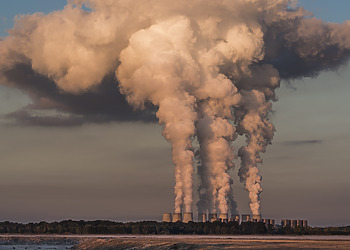
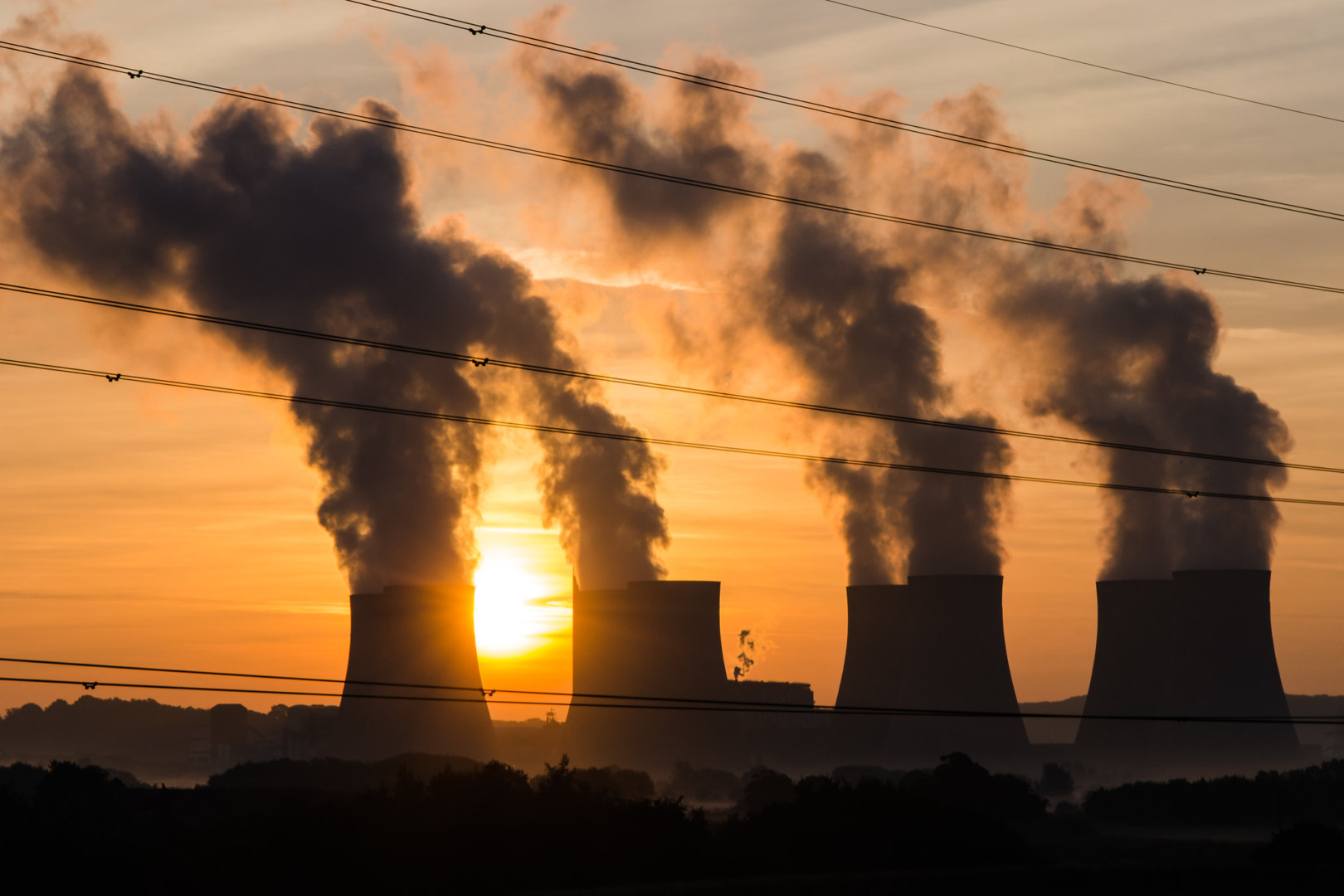
Editor’s Note: The opinions expressed here by Impakter.com columnists are their own, not those of Impakter.com — In the Featured Photo: Fossil fuel air pollution. Featured Photo Credit: Flickr.com