Impakter
  • Environment
    • Biodiversity
    • Climate Change
    • Circular Economy
    • Energy
  • FINANCE
    • ESG News
    • Sustainable Finance
    • Business
  • TECH
    • Start-up
    • AI & Machine Learning
    • Green Tech
  • Industry News
    • Entertainment
    • Food and Agriculture
    • Health
    • Politics & Foreign Affairs
    • Philanthropy
    • Science
    • Sport
  • Editorial Series
    • SDGs Series
    • Shape Your Future
    • Sustainable Cities
      • Copenhagen
      • San Francisco
      • Seattle
      • Sydney
  • About us
    • Company
    • Team
    • Partners
    • Write for Impakter
    • Contact Us
    • Privacy Policy
No Result
View All Result
Impakter logo
No Result
View All Result
Can Science-based Targets Truly Guide Sustainable Development?

Can Science-based Targets Truly Guide Sustainable Development?

Max Opray - Content Specialist for MetabolicbyMax Opray - Content Specialist for Metabolic
April 16, 2019
in Science, SDG Series
1

What lines can we not afford to cross when it comes to our impact on the planet? As the world races to achieve the UN’s 17 Sustainable Development Goals (SDGs) by 2030, it is vital that the pursuit of sustainable development is undertaken within the absolute limits of what the earth can support.  

For answers, many are turning to science-based targets, which are already being employed in the effort to reduce carbon emissions. A range of collaborators including the UN Global Compact are behind the Science Based Targets initiative (SBTi), which has introduced quantifiable targets based on sound science. It has been adopted by 169 major corporations in order to tackle climate change. Lise Kingo, CEO and Executive Director of the UN Global Compact has linked science-based targets to the realization of SDG 13 (Combatting Climate Change).

However, carbon emissions are just one of the many ways in which humans impact the environment. Genuine sustainable development thereby needs to avoid endangering other crucial planetary life support systems, such as biodiversity, soil nutrients, and freshwater. Where the SDGs can provide a vision of a world in which both the human and natural ecosystems thrive, science-based targets can quantify what this world looks like in practice. 
Last year, Future Earth Executive Director Amy Luers described the development of broader science-based targets as the “missing link” in achieving the SDGs, while Greenbiz Chairman and Executive Editor Joel Makower facilitated a workshop on the best ways to develop science-based targets for other SDGs at the World Economic Forum’s Sustainable Development Impact Summit. The Science-Based Targets Network has formed to develop a framework and goals for a range of environmental challenges.

A range of initiatives are underway to advance science-based targets in other areas, including a project commissioned by WWF NL and plant-based food and drink producer Alpro to develop methodologies for setting science-based targets for biodiversity, water, land use and soil nutrients via a pilot project with Alpro’s almond and soy supply chains. A consortium of research institutes coordinated by sustainability experts, Metabolic worked with WWF NL and Alpro on the project.
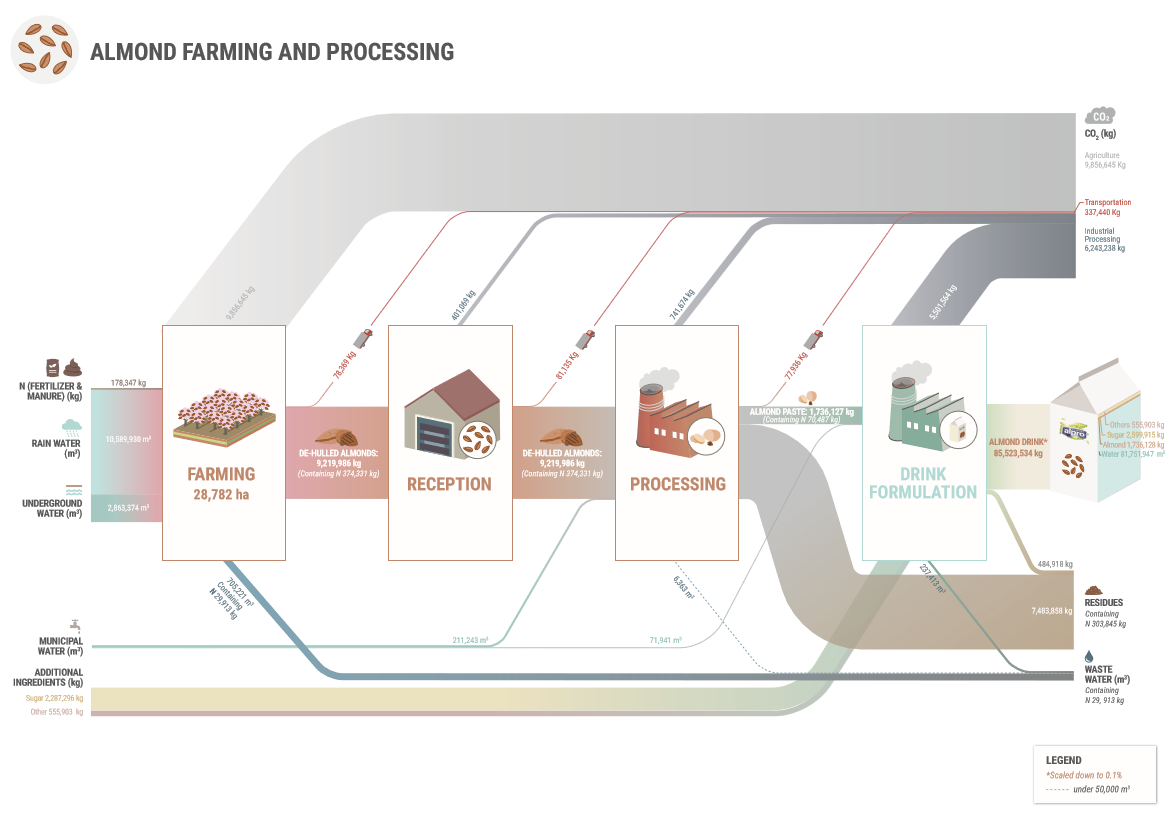
In the Photo: The project analyzed Alpro’s entire supply chain for their almond drink, with particular focus on the farms. Photo Credit: Metabolic.
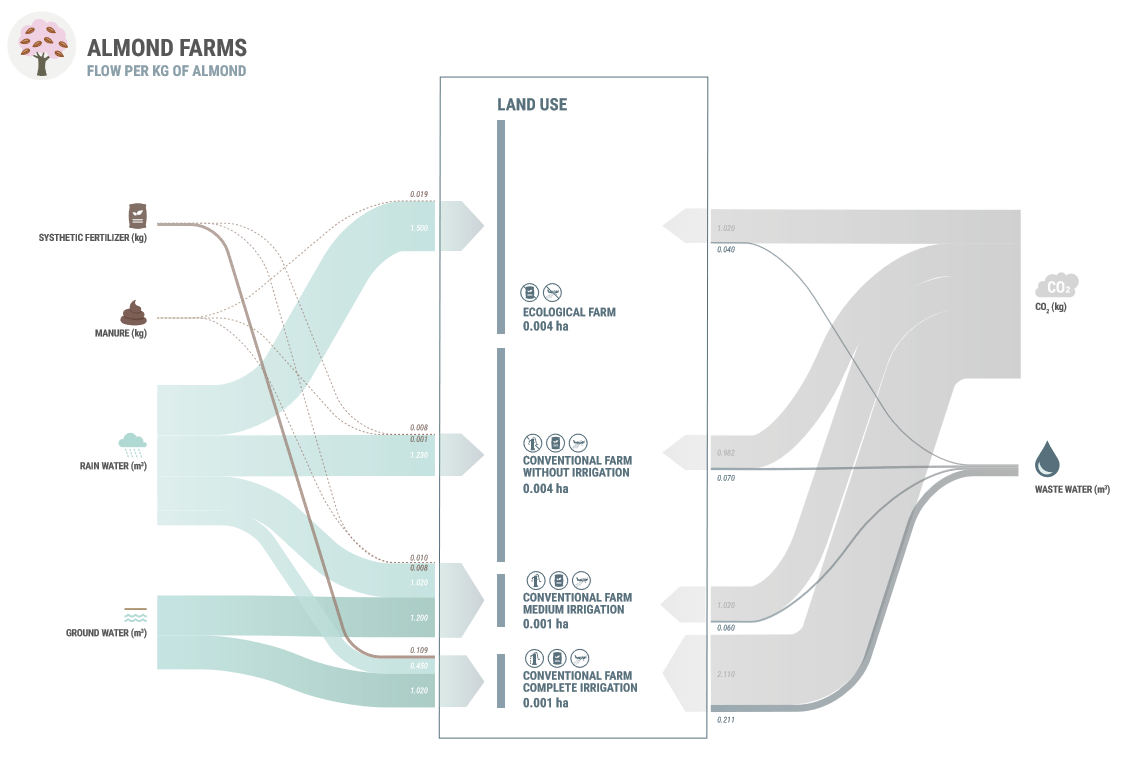
In the Photo: The project compared the impact of organic farms versus conventional farms with varying levels of irrigation. Photo Credit: Metabolic.

Metabolic sustainability consultant Brian Shaw said that the project could help address the synergies and trade-offs between SDG 2 (Zero Hunger), which will require a rise in food production, and SDG 15 (Life on Land), which aims to protect natural ecosystems. “Using science-based targets, we can understand what a landscape needs to be able to function as an ecosystem, which gives a clear indication of the space we have to farm and produce the material we need,” he said. “Science-based targets provide a pathway to optimise SDGs in a limited planetary space.” 
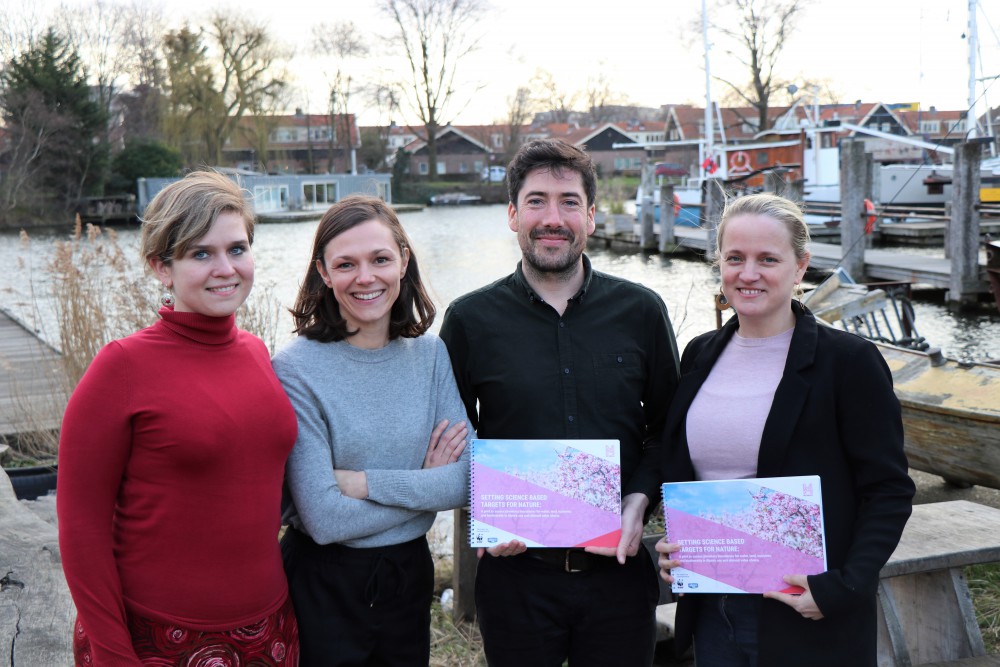
In the Photo: The handover of the report in Amsterdam. Pictured (from right to left): WWF NL Project Leader Jorien van Hoogen, Metabolic Sustainability Consultant Brian James Shaw, Alpro Senior Sustainable Development Manager Greet Vanderheyden, and Metabolic CEO Eva Gladek. Photo Credit: Metabolic.

By closely examining a business’s impact in the context of the nine planetary boundaries the world cannot afford to cross, the path to sustainable development becomes clearer. One key outtake from the study included how Alpro’s almond farms could capitalize on their location near Mediterranean forests, woodlands, and scrub ecosystem types that are under threat globally by introducing measures on its farms to create corridors of biodiversity that increase connectivity with surrounding natural habitats. Other findings include how organic farms that perform well on water and nutrient depletion could improve their footprint on land by increasing irrigation or alternative forms of fertiliser use.


Editor’s Picks – Related Articles: 

“Science for Good: A New Breed of Entrepreneurs with Science-Based Solutions for a Positive Impact”

 

“An Enabler to SDGs’ Attainment: Linking Science with Human Rights“


By developing science-based targets that entreprises can apply to their business models, we can more clearly define what work needs to be done in order to achieve the SDGs. We can realize SDG 1 (Ending Poverty) and 8 (Decent Work and Economic Growth) without threatening the objectives of SDG 13 (Climate Action), SDG 15 (Life on Land), and SDG 6 (Clean Water and Sanitation), which make up the planetary life support systems necessary for our survival. 

EDITOR’S NOTE: The opinions expressed here by Impakter.com columnists are their own, not those of Impakter.com. — In the Featured Photo: A study examined Alpro’s almond and soy drink supply chains. — Featured Photo Credit: Metabolic.
Tags: AlprobiodiversitybusinessClimate ChangeEcosystemEnvironmentenvironmental sustainabilityfarmsGigiMetabolicSciencescience-based targetsSDGs
Previous Post

Re-Designing Refugee Camps

Next Post

ASX: Building the Next Generation of Sustainable VTOLs

Related Posts

Protests arise against Wall street’s oil deals, Big tech accounts for half of global clean energy, EU proposes stricter standards for corporate vehicles, DHL introduces new portfolio offerings for reducing scope 3 impacts
Energy

Activists Protest Against Wall Street’s Oil Deals

Today’s ESG Updates Protests' Strategies Change Amidst Banks' Inaction: Wall Street fossil fuel deals push climate groups to shift tactics,...

byFedor Sukhoi
February 24, 2026
De-Extinction: Can Science Really Bring Species Back to Life?
Biodiversity

De-Extinction: Can Science Really Bring Species Back to Life?

Since the dawn of modern biology, extinction has been treated as a final, permanent full stop in Earth’s evolutionary history....

byNmesoma Ezetu
February 23, 2026
Coal plants get reprieve on mercury limits, Striking unions fail to halt Milei's sweeping labor bill, Sweden's regulator reviews Swedbank's compliance controls, France backs INEOS decarbonization with €300M
Business

Trump Admin Weakens Coal Plant Mercury Regulations

Today’s ESG Updates: Coal Plants Get Reprieve on Mercury Limits: Trump's EPA is rolling back mercury emission limits to cut...

byEge Can Alparslan
February 20, 2026
How Climate Change Is Reshaping Arctic Geopolitics
Climate Change

How Climate Change Is Reshaping Arctic Geopolitics

Once a remote and largely inaccessible region, the Arctic has become the focus of far-reaching international developments. In recent years, competition among...

byPier Paolo Raimondi - Senior Researcher at the Energy, Climate and Resources (ECR) Program of the Istituto Affari Internazionali (IAI)
February 20, 2026
How an Intersectional Approach Can Help Us Address Vulnerability to Climate Change
Climate Change

How an Intersectional Approach Can Help Us Address Vulnerability to Climate Change

Different forms of discrimination and marginalization — such as racism, ableism, and discrimination on the basis of gender identity —...

byInternational Institute for Sustainable Development (IISD)
February 20, 2026
Underwater Wall to Protect the ‘Doomsday Glacier’: Necessary Intervention or Costly Distraction?
Climate Change

Underwater Wall to Protect the ‘Doomsday Glacier’: Necessary Intervention or Costly Distraction?

Thwaites Glacier in Antarctica earned its dramatic nickname, the “Doomsday Glacier,” because its collapse could trigger a catastrophic rise in...

byBenjamin Clabault
February 19, 2026
biodiversity loss
Biodiversity

The Economics of Biodiversity Loss

In the 1990s, India’s vulture population collapsed due to the unintended knock-on effect of a veterinary drug for cattle, with...

byStefano Giglio - Professor at Yale Universityand2 others
February 19, 2026
ESG news on TotalEnergies climate trial, Heathrow SAF incentives, Shein EU probe, EU climate resilience gap
Business

TotalEnergies Climate Trial Shock

Today’s ESG Updates TotalEnergies Climate Trial: French prosecutors intervene to defend TotalEnergies in a landmark climate lawsuit, challenging environmental groups’...

byEve Rogers
February 18, 2026
Next Post
ASX: Building the Next Generation of Sustainable VTOLs

ASX: Building the Next Generation of Sustainable VTOLs

Please login to join discussion

Recent News

Deep Sea Mining

The Quiet Financial Backers Behind Deep-Sea Mining

February 24, 2026
Protests arise against Wall street’s oil deals, Big tech accounts for half of global clean energy, EU proposes stricter standards for corporate vehicles, DHL introduces new portfolio offerings for reducing scope 3 impacts

Activists Protest Against Wall Street’s Oil Deals

February 24, 2026
New U.S. Tariffs and One Health: The Likely Consequences

New U.S. Tariffs and One Health: The Likely Consequences

February 23, 2026
  • ESG News
  • Sustainable Finance
  • Business

© 2025 Impakter.com owned by Klimado GmbH

No Result
View All Result
  • Environment
    • Biodiversity
    • Climate Change
    • Circular Economy
    • Energy
  • FINANCE
    • ESG News
    • Sustainable Finance
    • Business
  • TECH
    • Start-up
    • AI & Machine Learning
    • Green Tech
  • Industry News
    • Entertainment
    • Food and Agriculture
    • Health
    • Politics & Foreign Affairs
    • Philanthropy
    • Science
    • Sport
  • Editorial Series
    • SDGs Series
    • Shape Your Future
    • Sustainable Cities
      • Copenhagen
      • San Francisco
      • Seattle
      • Sydney
  • About us
    • Company
    • Team
    • Partners
    • Write for Impakter
    • Contact Us
    • Privacy Policy

© 2025 Impakter.com owned by Klimado GmbH