
The COVID-19 crisis has affected many aspects of society, but perhaps none in such a complex and poorly understood way as in black markets, from booming sales of fake medicines and guns in the U.S. to rising illicit export of wildlife and poaching in Africa.
Black markets are not only responsive to the economic shock but are in many ways deeply influencing how we experience it and the pandemic itself. The intersections between COVID-19 and black markets are enormously complex, and will often differ dramatically based on whether the country in question is a net exporter or importer of the black market good or service in question.
In the US and many wealthy countries, black market imports include illegal drugs, human trafficking in all its forms, counterfeit medication, and unsanctioned medical supplies. Common exports include wildlife in Africa and guns in the US.
Illegal drugs (in the US)
The United States is famously a net importer of illegal drugs, so the slump in global trade has tamped down on supply. Supply in drugs tends to be elastic, but demand is less elastic due to addiction: if prices rise, addicted buyers may be more limited in the short run by their ability, rather than willingness, to pay.
That means that drops in imports will tend to raise prices greatly – further incentivizing suppliers foreign and domestic, and potentially giving rise to greater domestic production. However, just as the supply of drugs may boost its own demand through addiction, a longer trade slump might conceivably help end addictions.
Related topics: The G20’s Responsibility for Arms Control – Coronavirus Harms Economies Worldwide – Pandemic and Democracy. A Troubled Relationship
For instance, the lack of access to opiates reportedly ended many opiate addictions among US soldiers returning from the Vietnam War.
However, supply shortages may also prompt substitutions to other, more accessible substances. The mounting economic catastrophe – real unemployment could already be around 25 percent with effects lasting years – has generated an epidemic of depression and a lot of idle hands: ingredients for boosting both the demand for and supply of a black market in illegal drugs within the US at a time when an opioid public health crisis was already underway.
A wide variety of lesser-known addictive drugs stands to take up any slack caused by the pandemic. Breaking out seizures by month since October 2019, we see that the month of March 2020 witnessed an enormous spike in the seizures of “other” drugs – evidence of a dramatic substitution effect. The transition of use to these other drugs could prove extremely dangerous, such as in the 2015 Indiana HIV outbreak, when the transition of use from prescription opioids to heroin injection drug use led to one of the worst domestic HIV outbreaks in decades.
 Indexed monthly drug seizures by economic volume of six illegal drug classes, October 2019 – April 2020 (average = 100). Source: CBP.
Human Trafficking
The lockdown on national borders is most likely also dampening cross-border human trafficking for labor and sex. Total actions taken against “inadmissibles” identified by US Border Patrol and the Office of Field Operations have declined by over 30 percent over their previous three-year averages, though this statistic may well be a poor proxy for trafficked people, a subset of a broad category consisting mostly of willing migrants (also reduced in number), asylum seekers, and refugees.
Demand for sex and labor is likely to be more elastic than for drugs, however; prices may not rise as steeply in response to falling supply as they might in the latter case. The demand for labor is likely lowered dramatically given the associated economic downturn. Nevertheless, the Pan-American Health Organisation has warned that school closures put more children at risk for exploitation and that the electronic forms of supply capable of overcoming borders at little personal risk or expense – e.g. child pornography websites – are on the rise.
Moreover, humans being smuggled or trapped outside their country of origin may find themselves at higher risk of abuse by host communities and their smugglers or stuck in transit countries where the COVID risk may be elevated.
Fake, counterfeit and unsanctioned medications and equipment
Due to conflicting information coming from positions of authority, including US President Trump, international attention has recently focused on the use of hydroxychloroquine, a medication approved for use in treating arthritis, lupus, and malaria, to treat SARS-CoV-2. With demand soaring (despite lack of scientific evidence on efficacy and potentially deadly side effects), the black market has picked up the slack, offering pills at 43 times their usual rate. However, hydroxychloroquine is not the only drug subject to black-market exploitation.
A parallel cyber trade of questionable COVID-19 “cures”, medical supplies, and therapeutics have created a wave of misinformation, scams, and possible public harm on the internet. Penetration of these suspect products ranges from FDA warnings against the use of colloidal silver products, multiple claims of herbal products to treat and cure COVID-19, and even claims that oregano, cow dung, and cocaine can be used with positive effect against the disease.
Fake COVID-19 testing kits have also been detected in large volumes on social media platforms such as Twitter and Instagram, at a time when demand for these products clearly outstrips availability due to the uneven roll-out of testing in the US.
Recently, US CBP seized over 1,000 counterfeit COVID-19 rapid tests, found on an individual traveling from Mexico, as just one example of increasing seizures of unsanctioned COVID-19 products and supplies. The problem is widespread, with popular commercial platforms such as Amazon and eBay also attempting to detect and remove this content with mixed success.
Similarly, opportunities for trade of fake medications have also activated other digital black markets, such as the Darkweb, with studies and our own research finding availability of several COVID-19 drugs such as hydroxychloroquine, fake vaccines, and even blood plasma from recovered COVID-19 patients.
 A listing for hydroxychloroquine on a dark web marketplace.
An uptick in demand for wildlife (in Africa)
One would hope that the reassertion of national borders and dampened trade would also dampen human demand for endangered species and other wildlife. Unfortunately, the overall supply seems to have increased. The collapse in megafauna tourism (“safaris”) in sub-Saharan Africa has already economically devastated many local economies.
Many traditional tourist areas are now affected by rhino poaching that was previously protected by tourists’ presence and spending. The former discourages poachers; the latter encourages locals to preserve and invest in their biotic patrimony rather than liquidate it. The black market has substituted for the beneficent, licit one. Evidence abounds that economies once geared toward war are difficult to wean off of it; the same might be argued of those geared toward violence against non-humans.
A boom in gun sales (in the US)
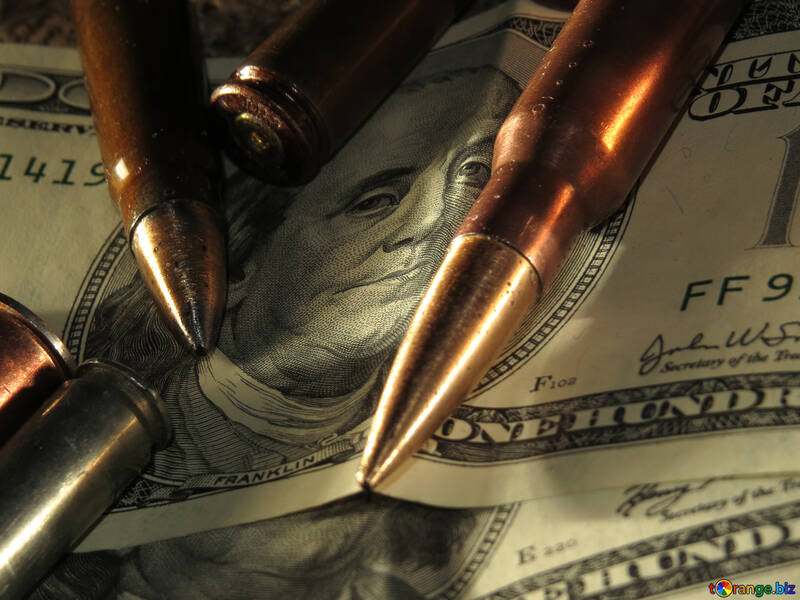
Small arms manufacturers in the US produce (and export) more guns by economic volume than those in any other country in the world – about as many as those in the next four largest country producers combined (Russia, France, Germany, and Spain, respectively). Demand for guns abroad has slumped, thanks to declines in violent conflict (down by about 20%) and criminal violence around the world.
Despite expectations that the pandemic might exacerbate social unrest, it coincides with significant declines in the incidence of battles between state and non-state groups, violence against civilians, and even riots and protests in many conflict-affected countries. Government quarantines and curfews also contributed to sharp reductions in homicide, violent assault, and most forms of property crime, including in many US cities. But the US is also the world’s largest consumer of small arms and has by far the largest civilian market in arms.
COVID-19 has prompted a rush on arms within the U.S. – sales were up by 85 percent in March over the previous year according to Small Arms Analytics and Forecasting. This boom has rocketed the stock market valuations of publicly traded arms companies at rates enjoyed by, say, Zoom: Smith & Wesson was up over 60 percent over the two months after 10 March, when COVID-19 lockdown fears began to mount in the US. This is not the black market, though it spills over.

Reports are emerging that the National Instant Background Check System is experiencing a backlog of tens of thousands of would-be purchasers. Incredibly, if a background check stalls for over three business days, the store is usually legally permitted to proceed with the sale.
As a result, the COVID-19 crisis may facilitate the spread of literally hundreds of thousands of poorly monitored sales, including many that end up in the wrong hands.
This is troubling both because of the thriving cross-border black market that supplies US guns to Mexico and other Latin American countries, and due to the interactive effects that unemployment, isolation, and firearms may have on suicide rates.
Meanwhile, the pandemic has hindered the United Nations Office of Drugs and Crime programs aimed at preventing small arms trafficking in developing countries.
Black markets facilitate the transfer of numerous goods and services that violate human and animal rights, promote violence, and degrade health. As we seek effective policy approaches to slow and stop the pandemic, we must be cognizant of their unintended consequences on these illicit trades.
About the author: Topher McDougal is an Associate Professor of Economic Development & Peacebuilding at the Joan B. Kroc School of Peace Studies at the University of San Diego, and co-founder of the Small Arms Data Observatory, a platform for original research on small arms markets and use. Timothy Mackey is an Associate Professor at UC San Diego’s School of Medicine and CEO and co-founder of healthcare startup S-3 Research funded by the NIH to detect and characterize illicit drug diversion on social media platforms and the dark web.
EDITOR’S NOTE: The opinions expressed here by Impakter.com columnists are their own, not those of Impakter.com.