
Today’s ESG Updates
- Anthropic Warns of AI Use in Military and Surveillance Operations: Actors linked to China, Russia and other countries used Claude to develop military systems, conduct cyberattacks and support weapons research.
- UGermany and UAE Deepen Energy Cooperation: New agreements cover offshore wind, energy storage and LNG as the countries advance a broader €40bn investment partnership.
- Global Cleantech Investment Falls 17%, driven by China slowdown: China accounted for 33% of global cleantech manufacturing investment in Q2, down from 71% at its 2023 peak.
- Hungary’s Central Bank to Consider Climate Risk in Rate Decisions: Record drought and rising food-price risks are prompting the bank to consider making climate-risk scenarios a permanent part of policymaking.
Claude AI used in weapons, cyber and surveillance operations, Anthropic Says
Anthropic said its Claude AI models were used in a range of weapons, surveillance and cyber operations, according to a threat intelligence report published Thursday.
China-based actors allegedly used Claude to develop air-defense and anti-torpedo systems, while Russia-based actors used it to develop software for autonomous attack-drone swarms. Anthropic also identified five cases involving attempts to use its models for research that could support biological weapons development.
In cyber operations, Chinese-speaking operators used Claude against about 50 organizations, including foreign government networks. Anthropic said AI-driven workflows helped identify vulnerabilities, develop exploits and conduct intrusions with limited human supervision.
The company also reported AI-assisted surveillance targeting Uyghurs, dissidents and political groups. In Mali, Claude helped build a system capable of monitoring data linked to about 25 million SIM cards across the country’s three mobile operators.
The cases highlight the growing challenge for AI developers of preventing increasingly capable models from being adapted for military, intelligence and criminal purposes.
Klimado – Navigating climate complexity just got easier. Klimado offers a user-friendly platform for tracking local and global environmental shifts, making it an essential tool for climate-aware individuals and organizations.
Germany and UAE expand energy ties with offshore wind and LNG agreements
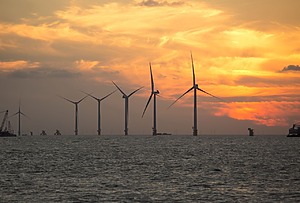
Germany and the United Arab Emirates have deepened energy cooperation through agreements covering offshore wind, energy storage and liquefied natural gas. The development forms part of a broader €40 billion investment partnership aimed at supporting German industry.
German power producer RWE and UAE-backed renewable energy company Masdar signed a memorandum to explore joint participation in Germany’s 2027 offshore wind auctions, involving potential investment of more than €3 billion. Masdar and German energy infrastructure investor Luxcara will separately explore more than €5 billion of joint investments in energy storage and offshore wind.
RWE and UAE state energy company ADNOC also plan terms for up to two LNG offtake agreements from the early 2030s, supplying Germany and other European and Asian markets. ADNOC’s international arm XRG and German state-owned energy company SEFE will separately explore broader cooperation in natural gas and LNG.
Related Articles
Here is a list of articles selected by our Editorial Board that have gained significant interest from the public:
Global cleantech investment falls 17% as China slows
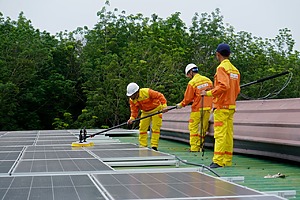
Global investment in clean technologies fell 17% to $770 billion in the first half of 2026, according to a new report by the Rhodium Group.
China’s shift towards market-based renewable power pricing drove much of the decline, following a rush of investment ahead of the policy change in 2025. Solar manufacturing investment fell 62% to $8.8 billion, while solar generation investment dropped 33%.
China’s share of global cleantech manufacturing investment fell to 33% in the second quarter, down from 71% at its 2023 peak. Meanwhile, India’s share of new investment rose from 2% to 7%, while Europe’s increased from 6% to 16%.
The decline brought global investment back to roughly 2024 levels, although announced manufacturing and industrial investment showed signs of picking up again in the quarters ahead.
Hungary’s central bank may include climate risks in monetary policy decisions
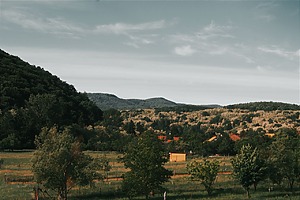
Hungary’s central bank is considering adding climate-risk scenarios to its policy framework as a record summer heatwave threatens inflationary pressure.
Hungary recorded its driest summer since the start of the 20th century this year, while median temperatures were the second-highest on record. The drought has hit agriculture, with maize production among the hardest affected.
Deputy Governor Zoltan Kurali said the damage could weigh on economic growth and fuel inflation through higher food, fuel and fertilizer costs.
The central bank is considering making climate-risk scenarios a permanent part of policymaking, including their impact on growth and inflation. Kurali said the challenge is reconciling long-term climate models with the bank’s 18–24-month policy horizon
Editor’s Note: The opinions expressed here by the authors are their own, not those of impakter.com — Cover Photo Credit: Planet Volumes