
Today’s ESG Updates
- Aker, Microsoft Partner to Advance Carbon Capture Projects: The companies join forces to accelerate the maturity, bankability, and delivery of CCS and CDR projects worldwide.
- Mantel Raises $18M to Scale Carbon Capture Solution: The MIT spin-out’s molten-salt system aims to cut carbon capture costs and energy losses for heavy industry.
- responsAbility Closes $461M Asia Climate Fund: The Zurich-based firm’s largest-ever climate fund channels private credit into renewable energy and mobility across South and Southeast Asia.
- Australia Proposes Reforms to Ease Climate Reporting Burden: Treasury consults on delaying assurance requirements and clarifying Scope 3 value-chain information requests for companies.
Microsoft to advance carbon capture projects through Aker partnership
Aker Solutions and Microsoft have announced a new partnership to advance the maturity, bankability, and delivery of carbon capture and storage (CCS) and carbon dioxide removal (CDR) projects worldwide. Under the partnership, the energy-centered company said it will engage with developers, emitters, and governments to reduce execution risk and strengthen investment readiness. This initiative will help push towards final investment decisions (FID).
The partnership combines Microsoft’s digital technologies, AI, and monitoring, reporting, and verification (MRV) capabilities along with Aker’s advisory and engineering, procurement, and construction expertise. This project aims to develop a single pathway from early feasibility through operations, accelerating credible carbon capture and removal solutions across the value chain.
Klimado – Navigating climate complexity just got easier. Klimado offers a user-friendly platform for tracking local and global environmental shifts, making it an essential tool for climate-aware individuals and organizations.
Mantel raises $18 million to scale carbon capture technology
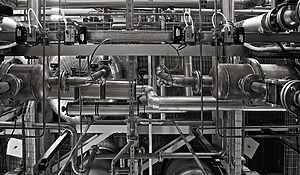
Carbon capture startup Mantel has raised $18 million, including strategic investments from Constellation Technology Ventures and Azimut Investments, to support commercial deployment of its decarbonisation solution for heavy industry. Based in Massachusetts, the company is developing a high-temperature, liquid-phase carbon capture system with a molten-borate salt loop. This is designed to cut energy losses by 97% compared to conventional technologies while operating at less than half the industry-average cost per ton.
This new funding brings Mantel’s total capital to $50 million. It will further support commercial projects across power generation, oil and gas, and pulp and paper, which include deployments in Canada, West Virginia, and Québec. Constellation senior vice president Kate Norman said the company remains “committed to supporting new technologies that will help drive the U.S. transition to a clean energy future.”
Related Articles
Here is a list of articles selected by our Editorial Board that have gained significant interest from the public:
responsAbility closes $461 million Asia Climate Fund to scale private credit

In a move to expand on climate infrastructure and businesses across Southeast and South Asia, responsAbility Investments has closed its Asia Climate Fund at $461 million. This makes it the firm’s largest closed-end climate investment fund to date. It includes several investors such as big institutions, family offices, foundations, and development finance institutions in emerging Asian climate markets.
The blended finance structure mobilised more than five times its concessional capital in commercial funding. The fund provides private credit to companies in renewable energy, electric mobility, energy efficiency, and circular economy sectors across Southeast and South Asia. It has already committed approximately $204 million across 17 portfolio companies, with investments expected to deliver around 16 million tonnes of lifetime CO2 reductions. Stephanie Bilo, Chief Client & Investment Solutions Officer at responsAbility, called the close “a strong vote of confidence from our investors,” reflecting Asia’s growing relevance as a climate investment opportunity.

Australia proposes reforms to ease climate reporting burden
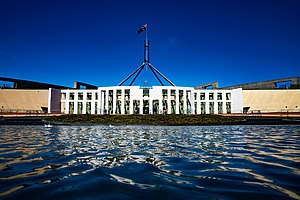
Photo credit: Marcus Reubenstein
In a series of “efficiency-enhancing measures” within the sustainability framework, Australia’s Treasury launched a consultation to reduce compliance costs for companies to provide mandatory climate-related financial disclosure. This aims to ease the information-request burden, especially for SMEs in corporate value chains. Key measures include eliminating or delaying the planned shift from limited to reasonable assurance and providing clearer guidance on the boundaries of Scope 3 value-chain information requests.
In 2024, Australia set out a new law that targets climate-related reporting requirements for large and medium-sized companies. The new reforms follow this law and build on earlier 2026 Budget plans to raise reporting thresholds and reduce supplier information burdens. The other proposals include applying reasonable assurance only to “mature” metrics like Scope 1 and 2 emissions. Further, it also includes expanding public emissions factor data and offering more guidance and workshops to help companies navigate reporting flexibility mechanisms.
Editor’s Note: The opinions expressed here by the authors are their own, not those of impakter.com — Cover Photo Credit: Angel Bena.