
The UN’s climate science body, the Intergovernmental Panel on Climate Change (IPCC), has been hugely influential in shifting government and public opinion around the world. Now as we approach the conclusion of the IPCC’s sixth assessment cycle, policymakers need to pay more attention than ever on how to put these learnings into practice. The IPCC’s warnings will be dire, but the solutions they propose are in our grasp.
It is useful to look back at how the IPCC has changed the international community’s understanding of climate change and related issues, to see how climate science has evolved and what it tells us about the future of the climate crisis and our global response.
How much has UN science shaped policy?
IPCC reports provide a comprehensive assessment of the scientific evidence on climate change. The several-thousand-page reports are written and reviewed by thousands of scientists and experts from around the world — including some from WWF. The reports have gathered considerable media attention, which also helps raise awareness and shape public opinion. But, maybe more importantly, their 30-odd page ‘Summary for Policymakers’ has a sense of ‘ownership’ by UN member states as it goes through a line-by-line approval process by government delegations. This is what is happening for the ‘Synthesis Report’ in Switzerland next week.
On 20 March, the #IPCC will be releasing the final part of its Sixth Assessment Report, #ClimateChange 2023: The Synthesis Report.
Stay tuned for media updates ➡️ https://t.co/5cDBMmMU9W
Interested media should visit our Media essentials website ➡️ https://t.co/5SXaVFwR8Q pic.twitter.com/mWCHAtRkvD
— IPCC (@IPCC_CH) March 9, 2023
Looking back, we can see just how instrumental IPCC’s assessment reports are in shaping the climate narrative around the world. The Fifth Assessment Report (2013-14), provided the scientific basis for the international climate talks that led to the Paris Agreement in 2015. The landmark Paris Agreement aims to limit global warming to ‘well below 2°C’ above pre-industrial levels and pursue efforts to limit this to 1.5°C.
The IPCC’s Special Report on Global Warming of 1.5°C (2018) influenced climate targets in many countries. The report highlighted that every fraction of a degree of warming matters — with much worse climate risks resulting from 2°C compared to 1.5ºC of global warming, including more frequent and severe extreme events such as heatwaves, droughts, and floods. The report also found that limiting global warming to 1.5°C above pre-industrial levels would require ‘rapid, far-reaching, and unprecedented’ transitions in all aspects of society to reduce CO2 emissions to net zero by 2050.
The influence of IPCC reports can be seen in the domestic climate policies of a few countries. The United Kingdom and France set reaching net-zero greenhouse gas emissions by 2050 into national law right off the back of the IPCC 1.5°C report. And, according to Net Zero Tracker, 88% of global emissions are now covered by a net-zero pledge. That said, no countries are yet on track for a 1.5ºC pathway — policy development and its implementation has simply not achieved what the IPCC findings imply is needed.
The evolution of climate science
The reports also help us track changes over time. One of the most significant changes in the IPCC reports has been the increasing certainty about the man-made causes of the climate crisis. Since the Second Assessment Report concluded in 1995 that “the balance of evidence suggests that there is a discernible human influence on global climate,” subsequent reports have been increasingly clear that human activities are the main driver of climate change. The Working Group I report for the Sixth Assessment says “It is unequivocal that human influence has warmed the atmosphere, ocean and land. Widespread and rapid changes in the atmosphere, ocean, cryosphere and biosphere have occurred.”

As the understanding of climate change has improved, the IPCC reports have provided more detailed and regional information on impacts and vulnerabilities – from the Arctic to Africa to small island states. Improved modelling and projections mean that we have a better understanding of a range of possible futures, and that choices that we make and actions that we take now will have huge implications for future decades, for example in terms of future temperature changes, sea-level rise, and extreme weather events.
Related Articles: Landmark High Seas Treaty Agreed, Ushering in New Rules for Two-Thirds of the Ocean | Climate Change’s Catch-22 | High Seas Treaty Deep Dive: What’s the Plan to Protect the Ocean?
Scientists have also increasingly taken more of a big-picture perspective, with the realisation that climate change affects everything, and in turn, is affected by many other policies, including social, economic, and environmental. At WWF, we use a ‘Triple Challenge’ framing to better understand interactions between climate change, nature and people. The latest IPCC reports better emphasise the interconnectedness of climate change with other global challenges such as sustainable development and nature loss. This perspective was practically absent in the previous assessments, and is now increasingly reflected by the convergence of climate and biodiversity agendas, including at the UN level.
An interlinked crisis
There has also been an increased focus on social, economic and ecosystem impacts and on solutions and not solely the physical science of climate change. The Sixth Assessment Synthesis Report is expected to include a detailed analysis of the impacts of climate change on human societies and ecosystems, including the potential for displacement, food and water shortages, and increased conflict. An analysis of the costs and benefits of, and trade-offs between, different climate mitigation and adaptation measures, including those that consider ecosystems, highlights the economic opportunities of transitioning to a low-carbon economy. Addressing climate change requires policies that take into account complex interactions between climate change, nature and other systems. For example, policies that promote renewable energy and energy efficiency can not only reduce greenhouse gas emissions, but also create new jobs and economic opportunities. Policies that protect natural ecosystems such as forests and wetlands can not only mitigate greenhouse gas emissions, but also provide critical benefits such as biodiversity conservation and climate adaptation.
Leaders must heed the science
This new report will once again make the scientific case for climate action crystal clear. It will also provide a variety of response options and illustrative pathways to limit warming. But the IPCC is not policy-prescriptive, so the exact policy pathways countries should take to reduce emissions are still their choice. This means it is the responsibility of governments to translate the science into the bold decisions necessary to avert climate disaster and implement solutions tailored to their country’s context that also benefit people and nature.

IPCC-assessed climate science has historically shifted policy and opinion. However, we have not yet seen a response at the speed or scale needed to avert the ever more disastrous climate futures described in these reports. Leaders must heed the science and act urgently to decarbonise economies and to safeguard and restore nature. Conditions to make positive change have never been so good. Costs of solutions such as solar, wind and batteries have decreased by up to 85% over the last decade, often making them a cleaner and cheaper alternative to fossil fuels. Of the six IPCC assessment cycles, this is the first where we’ve seen evidence of sustained emission reductions in over 20 countries. If urgent and decisive climate action is taken now, hopefully the seventh assessment cycle will be the first to show we’ve successfully bent the emissions curve globally.
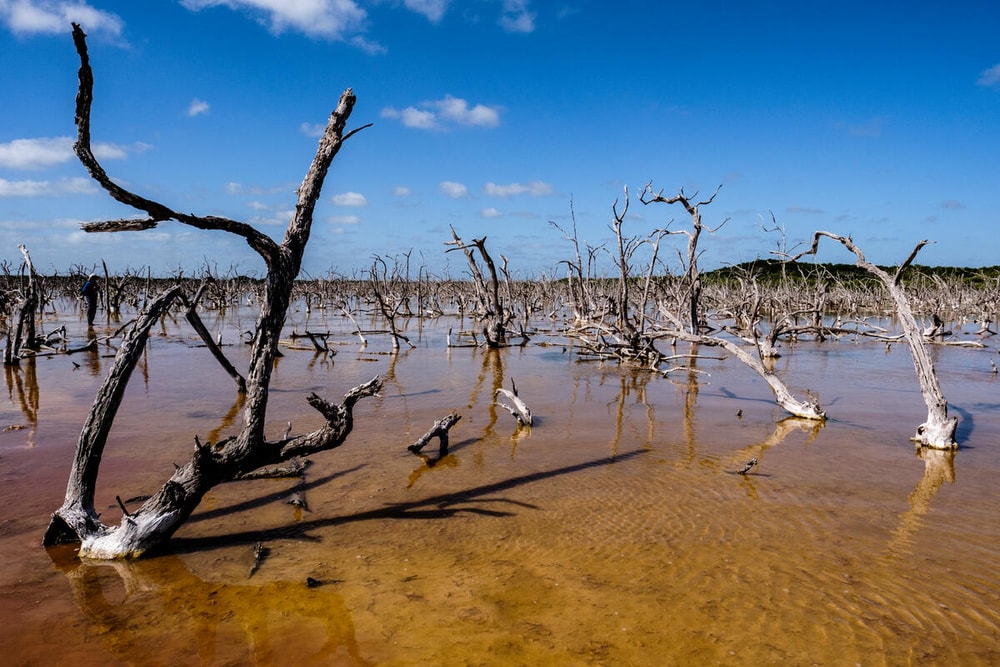
Editor’s Note: The opinions expressed here by the authors are their own, not those of Impakter.com — In the Featured Photo: An area of mangroves that were destroyed by hurricanes in an area impacted by development (aquaculture ponds, etc.) which did not allow them to recover properly. In the Dzilam State Reserve, Yucatan, Mexico. From a monitoring, evaluation, and learning (MEL) trip focused on mangrove conservation in Yucatan, Mexico. Featured Photo Credit: © Jason Houston / WWF-US.